Table of Contents
What Defines Horror Anime?
Horror anime, known as horā (ホラー) in Japanese, is a distinctive subgenre that fuses the chilling elements of horror fiction with the expressive visual language of Japanese animation. Unlike live-action horror, horror anime uses exaggerated character designs, surreal backgrounds, and fluid motion to craft experiences that can be more unsettling than what is physically possible in real life. At its core, the genre aims to evoke fear, dread, and suspense, but it frequently goes deeper, exploring existential questions, psychological vulnerabilities, and cultural anxieties. A prime example that demonstrates the genre’s unflinching intensity is Corpse Party: Tortured Souls, a series that pushes the boundaries of gore and supernatural despair.
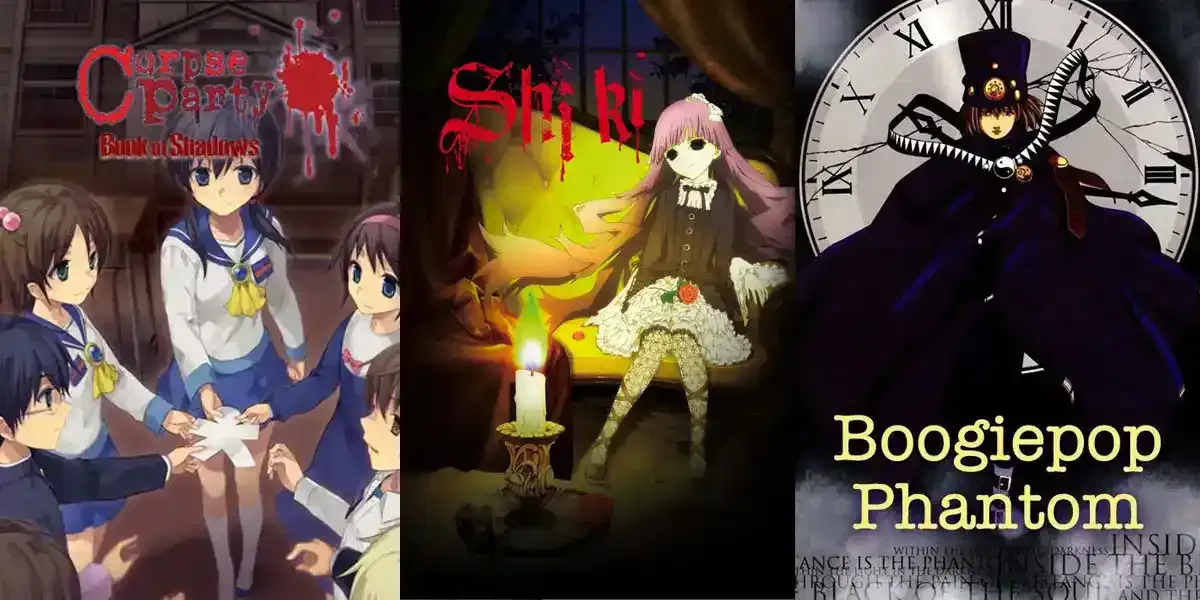
The power of horror anime lies in its ability to bypass the rational mind and tap directly into primal emotions. It can be deeply atmospheric, often relying on slow-burning tension and an ever-present sense of wrongness rather than simply relying on jump scares. Sound design, color palettes, and pacing all work together to create a world where the viewer feels constantly on edge. From vengeful spirits drawn from Japanese folklore to futuristic nightmares born from technology, the genre offers a vast landscape of frights that appeal to a wide spectrum of fans.
The Earliest Horror Anime: From Folklore to GeGeGe no Kitarō
Horror did not suddenly appear in anime; it evolved from Japan’s rich tradition of ghost stories and supernatural folk tales. The word horā itself is a loanword from English, but the cultural roots run deep into kaidan (怪談) — Japanese ghost stories — and yōkai (妖怪) lore. When animation began to explore these themes, it found a natural home. The first significant horror anime traced back to 1960, when manga artist Shigeru Mizuki brought his love of the supernatural to the screen. His creation GeGeGe no Kitarō (ゲゲゲの鬼太郎), originally serialized as Hakaba Kitarō, became the first horror anime movie and set the template for blending traditional yōkai with modern storytelling.
GeGeGe no Kitarō introduced audiences to a young yōkai boy who navigates a world where spirits and humans intersect, often with grim consequences. This series normalized the idea that animation could be a vehicle for horror, not just children’s entertainment. Throughout the 1960s and 1970s, more horror-themed anime began to surface, drawing from the vast well of Japanese mythology while slowly incorporating modern fears. These early works were foundational, establishing that animation could disturb as effectively as any live-action film.
The Evolution of Horror Anime Through the Decades
As technology and storytelling techniques advanced, horror anime underwent a dramatic transformation. The 1980s and 1990s marked a shift away from folklore-infused horror toward darker, more psychologically complex narratives. The rise of the OVA (original video animation) allowed creators to target mature audiences with fewer restrictions, leading to a boom in explicit and experimental horror. Titles like Wicked City and Vampire Hunter D fused horror with cyberpunk and dark fantasy, while Perfect Blue blurred the line between psychological thriller and pure terror, dissecting the fragility of identity in the face of obsession.
This era also saw horror anime embracing body horror and cosmic dread, influenced by Western horror cinema while maintaining a distinctly Japanese sensibility. The animation style itself became a tool of horror: distorted facial expressions, unnatural movements, and sudden shifts in art direction could unsettle audiences in ways that realistic visuals could not. By the early 2000s, the genre had diversified further, with series like Higurashi no Naku Koro ni (When They Cry) demonstrating that cute character designs could mask unspeakable cruelty, and Mononoke using avant-garde visuals to tell layered supernatural mysteries.
The 2010s and beyond brought streaming platforms into the equation, allowing horror anime to reach global audiences instantly. This exposure not only revived interest in classic titles but also encouraged bold new series such as Devilman Crybaby and Junji Ito Collection, which adapted the iconic manga artist’s disturbing visions. Today, horror anime continues to evolve, blending genres and pushing the medium into ever more unsettling territory.
Core Characteristics That Make Horror Anime Unforgettable
While horror anime spans many styles, several elements consistently elevate the genre above simple shock value. Understanding these characteristics helps explain why the best examples linger in the mind long after the screen goes dark.
Psychological Dread Over Jump Scares
Many acclaimed horror anime prioritize a slow, creeping dread rather than sudden frights. Series like Serial Experiments Lain and Perfect Blue build their horror through atmosphere, ambiguity, and the disintegration of the protagonist’s perception of reality. The terror comes from the gradual realization that something is fundamentally wrong — a technique that makes the experience deeply personal and hard to shake off. This psychological approach often leaves viewers questioning their own interpretation of events, blurring the boundary between what is real and what is imagined.
Supernatural Forces Rooted in Culture
Japanese folklore provides an endless well of inspiration. Vengeful spirits (onryō), cursed objects, and shape-shifting entities appear frequently, but they are rarely treated as mindless monsters. Instead, they carry tragic backstories and complex motivations. Mononoke and Mushishi (which leans toward atmospheric unease) show how supernatural forces can embody human emotions — regret, rage, jealousy — turning them into existential threats. These stories often explore the consequences of breaking taboos, desecration of sacred spaces, and the lingering power of unresolved grudges.
Body Horror and the Fragility of Flesh
Few mediums depict the transformation and violation of the human body as viscerally as anime. Series like Parasyte and Tokyo Ghoul center on protagonists whose bodies are invaded or forcibly changed, forcing them to confront their own humanity. The visual flexibility of animation allows for grotesque metamorphoses that would be impossible in live action. Tendrils, shifting organs, and impossible contortions become a language of horror that is both repulsive and fascinating, reflecting fears about loss of control and identity.
Isolation and Paranoia
A recurring trope in horror anime is the isolated environment — a village cut off from the world, a school after dark, a spaceship adrift. This physical detachment amplifies psychological tension because help is unavailable and escape impossible. Shiki takes place in a remote village slowly dying under the influence of vampire-like creatures, while Another traps its characters within a cursed classroom. The claustrophobia of these settings mirrors the mental entrapment of the characters, making every shadow a potential threat.
Must-Watch Horror Anime: 5 Essential Entries
For those looking to explore the genre, starting with critically acclaimed and widely discussed series is a smart move. The following five anime span different horror styles, offering a well-rounded introduction to what makes horror animation so powerful. Each entry is ranked for its impact, storytelling, and lasting fright factor.
1. Another
Based on Yukito Ayatsuji’s novel, Another is a masterclass in atmospheric horror that turns a middle school into a death trap. When transfer student Kōichi Sakakibara joins class 3-3 at Yomiyama North Middle School, he notices that his classmates and even the teacher ignore a quiet girl named Mei Misaki. He soon learns that in 1972, a beloved student died, and the class responded by pretending the student was still alive. This denial sparked a curse that has haunted class 3-3 for decades, manifesting as a string of gruesome, seemingly accidental deaths among students and their relatives. The series layers mystery upon mystery as Kōichi and Mei race to uncover the “extra” person in the class before more lives are lost.
Its use of impersonal, almost mechanical death scenes, combined with the eerie silence surrounding Mei, creates an overwhelming sense of inevitability and dread.
2. Parasyte: The Maxim
Parasyte reinvents the alien invasion narrative by embedding the threat within the protagonist’s own body. When worm-like aliens descend on Earth and burrow into human brains to hijack their hosts, teenager Shinichi Izumi narrowly avoids becoming a puppet — the parasite lodges itself in his right arm instead. Naming it Migi, Shinichi is forced into an uneasy coexistence as the two learn to fight other parasites who view humans as mere food. The series swiftly moves beyond body horror into probing philosophical questions about humanity’s place in the food chain, the nature of empathy, and whether compassion is a weakness or a strength. The visceral transformations and intense combat sequences are balanced by quiet moments of introspection, making Parasyte a thought-provoking horror that doesn’t sacrifice its bite.
3. Tokyo Ghoul
Few anime have captured the tragedy of monstrous transformation as memorably as Tokyo Ghoul. College student Ken Kaneki’s life shatters when a date with the alluring Rize Kamishiro turns out to be a predator’s ambush. Surviving the encounter through an emergency organ transplant, Kaneki finds himself transformed into a half-ghoul — craving human flesh while still clinging to his human morals. The series follows his struggle to hide his new identity and fit into the secret ghoul society centered around a coffee shop called Anteiku. Beyond its graphic combat and iconic kagune (predatory limbs), Tokyo Ghoul excels at portraying the psychological horror of identity dissolution.
Kaneki’s descent into a brutal world forces the viewer to ask where the line between monster and human truly lies.
4. Kaidan Restaurant
While many horror anime target older teens and adults, Kaidan Restaurant (Thriller Restaurant) proves that you can deliver genuine chills to a broader audience. Each episode is structured like a three-course meal: the Appetizer presents a short, eerie vignette; the Main Dish is a longer ghost story with a twist; and the Dessert features characters sharing spooky tales through the traditional game of Hyakumonogatari Kaidankai. Despite its younger presentation, the series doesn’t shy away from disturbing implications and moral comeuppances. Its anthology format allows for incredible variety — from cursed dolls to vanishing towns — and the recurring spirits remind viewers that horror can be both fun and fundamentally unsettling.
5. Shiki
Adapted from Fuyumi Ono’s novel, Shiki is a slow-burning vampire epic set in the sleepy village of Sotoba. When a mysterious family moves into a long-abandoned European-style mansion atop a hill, a wave of deaths begins to spread through the village during a sweltering summer. Doctor Toshio Ozaki initially suspects an epidemic, but he and teenager Natsuno Yuuki soon uncover a ghastly truth: the deaths are the work of shiki, undead beings that rise at dusk to feed. What makes Shiki so memorable is its relentless escalation and its refusal to paint either side as purely monstrous. As the village descends into paranoia and brutal retribution, the series becomes a grim meditation on survival, prejudice, and how easily humans can become the very monsters they fear.
What Makes These Horror Anime So Effective?
While each series on the list approaches horror from a different angle, they share common threads that elevate them. Their narratives rarely rely on shock alone; instead, they build rich emotional contexts so that when horror strikes, it carries weight. Visual storytelling — from the oppressive color palettes of Shiki to the fluid biological grotesqueries of Parasyte — creates a palpable sense of wrongness. Sound design, from distorted voices to unnerving silence, completes the immersion. These titles also benefit from the strengths of serialized storytelling: the ability to develop characters over many episodes means that their suffering is not abstract but deeply felt.
The combination of psychological tension, cultural folklore, and the limitless possibilities of animation cements these anime as touchstones of the genre.
Why Horror Anime Continues to Thrive Globally
Horror anime has never been the most commercially dominant genre, yet its fanbase is among the most passionate. Part of its global appeal lies in its distinct cultural perspective. Western horror often operates on a framework of sin and redemption; Japanese horror frequently explores spiritual contamination, societal pressure, and the porous border between worlds. This fresh angle intrigues audiences seeking something other than slasher formulas. Additionally, the visual inventiveness of anime allows creators to visualize the unfilmable — the abstract psychological landscapes of guilt, the merging of flesh and metal, the eerie beauty of a cursed grove — all rendered with breathtaking clarity.
Streaming platforms have accelerated the genre’s reach, making it easier than ever for newcomers to discover classics and for niche productions to find audiences. Communities on forums and social media dissect hidden symbolism, share unsettling screenshots, and keep the conversation alive long after a series ends. As the medium continues to mature, horror anime is poised to remain a vital outlet for both cultural expression and the universal human need to confront fear in a safe space.

Related: What is Seinen Anime?
If you’re looking to understand which demographic labels shape anime’s storytelling boundaries, check out our guides on Shonen anime and Shojo anime.