Table of Contents
When you watch a character in an anime slowly transform from villain to hero—or at least to someone seeking atonement—you often feel a profound emotional weight that many Western stories struggle to replicate. Redemption arcs in anime are not just about a character turning good; they are layered narratives of internal struggle, communal healing, and the long, painful road to making things right. The depth you experience comes from a blend of cultural values, meticulous storytelling, and visual artistry that treats redemption as a journey rather than a single decisive act. This article explores why anime’s approach to redemption resonates so deeply, contrasting it with Western tropes and examining the narrative techniques that make these arcs unforgettable.
Cultural Foundations of Redemption in Japan
To understand why anime redemption arcs feel more profound, you must look at the cultural soil in which they grow. Japanese society historically operates within a framework of shame culture rather than guilt culture, as anthropologist Ruth Benedict famously described. In a shame culture, the fear of social disapproval and the loss of honor drive moral conduct. A character who has transgressed does more than violate an inner moral code; they rupture the harmony of their community, creating a debt that personal remorse alone cannot erase. Redemption, therefore, becomes a public and relational act.
The wrongdoer must not only change internally but also visibly restore trust and balance to the group they harmed.
This collective orientation is reinforced by concepts like wa (social harmony) and giri (duty). An anime character seeking redemption often carries a heavy obligation to make amends not just to an individual but to an entire village, family, or team. For instance, when Gaara in Naruto transitions from a murderous jinchūriki to the Kazekage, his arc involves not just personal healing but also earning the trust of the Sand Village he once terrorized. The villagers’ gradual acceptance and his own public acts of service become the measure of his redemption, reflecting a cultural emphasis on restoring the communal fabric. In contrast, Western stories frequently lean on a guilt culture model, where individual confession and a heroic sacrifice can absolve past sins privately, often without extended communal reintegration.
The influence of Buddhist and Shinto thought also colors anime redemption. Impermanence, suffering, and the potential for all beings to awaken provide a philosophical backdrop. Characters are rarely beyond saving because deep change is always possible, even if it takes lifetimes. This spiritual underpinning encourages narratives where redemption is a slow, cyclical process of making mistakes, facing consequences, and inching toward betterment—a path that feels immensely human and earned.
The Role of Narrative Pacing and Gradual Change
One of the most tangible reasons anime redemption arcs feel deeper lies in the medium’s capacity for long-form storytelling. A serialized anime can dedicate dozens of episodes—or even entire seasons—to a single character’s transformation. This expanded timeline allows writers to depict redemption not as a sudden reversal but as a rocky, two-steps-forward-one-step-back journey. You witness the character at their lowest, see them confront their past, struggle with temptation to relapse, and slowly build new habits of thought and action. That extended exposure creates a sense of investment and realism that short-form Western media often cannot match.
Consider Prince Zuko from Avatar: The Last Airbender. While technically an American production, the series is heavily influenced by anime aesthetics and storytelling philosophy, making it a perfect bridge example. Zuko’s redemption unfolds across three seasons. He makes early choices that seem virtuous, then backslides due to pride and desperation. He loses his honor, gains it back, and then realizes that the honor he sought was hollow.
This slow, painful recalibration lets the audience feel each internal victory and defeat. In many Hollywood films, a villain’s redemption is compressed into a third-act turn, often triggered by a single event like saving the protagonist. The brevity can make the change feel imposed rather than organically developed.
Anime’s long arcs also allow for moments of quiet reflection. Scenes of a character alone, wrestling with guilt under the rain or during a train ride, build a meditative atmosphere. These pauses serve as windows into the character’s psyche, letting you absorb their sorrow and hope without the pressure of immediate plot progression. Such pacing aligns with the Japanese aesthetic principle of ma—the meaningful use of empty space or silence. In visual storytelling, these gaps become fertile ground for emotional connection, making the redemption feel like a lived experience rather than a narrative shortcut.
Visual and Symbolic Storytelling Techniques
Anime’s visual language amplifies the depth of redemption arcs through deliberate artistic choices. Color palettes often shift to mirror a character’s inner state. A villain might be bathed in cold, dark blues and harsh reds, but as they begin to change, the lighting softens and warmer hues creep into their scenes. In Rurouni Kenshin, the protagonist’s vow to never kill again is visually reinforced by the rurouni’s simple, earth-toned clothing compared to the blood-soaked past glimpsed in sepia flashbacks. These visual cues operate on a subconscious level, making the arc feel holistic and deeply embedded in the world.
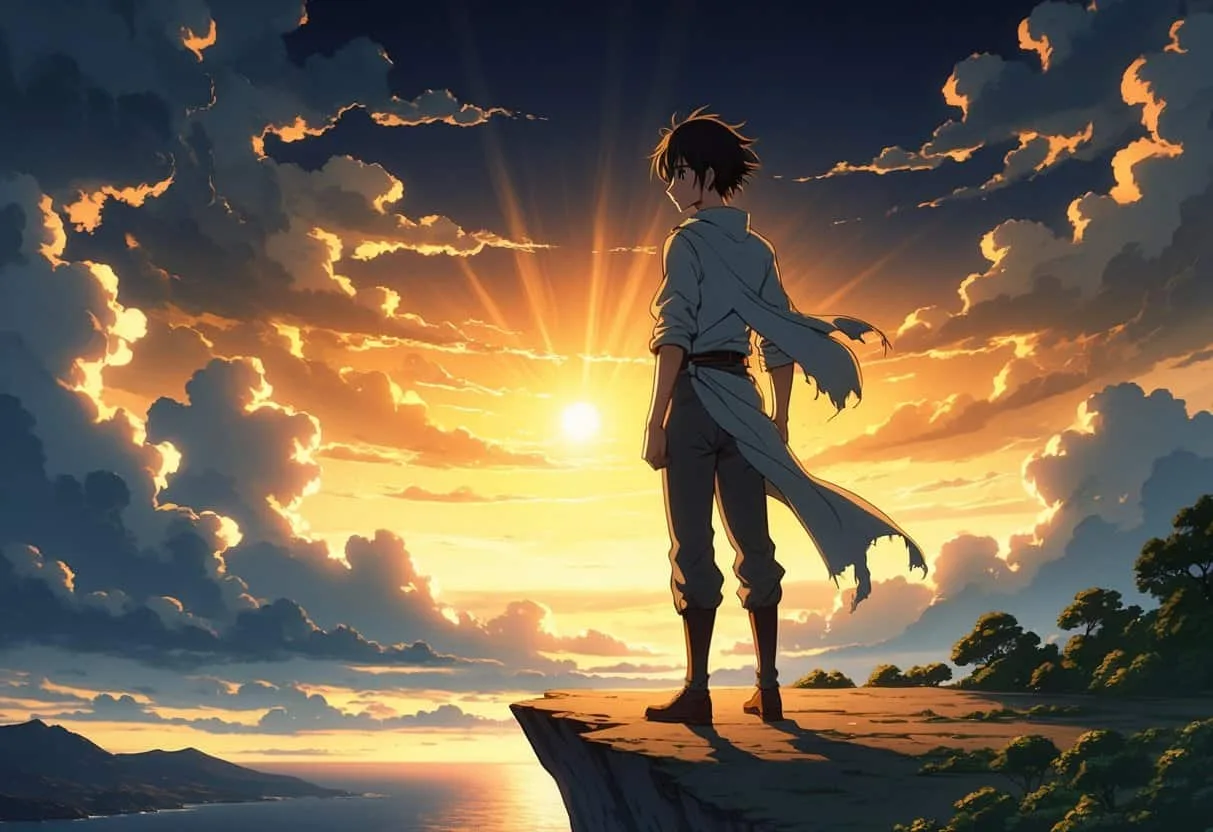
Symbolic imagery is another powerful tool. Falling cherry blossoms often signify transience and new beginnings, rain can represent cleansing or sorrow, and broken mirrors may reflect a fractured identity. When a character reaches a turning point, the environment around them frequently shifts—sunrise breaking through storm clouds, a wilted flower blooming, or a cracked object mended. These symbols don’t just decorate the scene; they tell a parallel story of renewal that resonates on an intuitive level. Combined with a moving soundtrack, the sensory experience can make a redemption moment unforgettable.
| Character | Anime / Series | Key Change | Visual / Symbolic Cue |
|---|---|---|---|
| Prince Zuko | Avatar: The Last Airbender | From exiled prince seeking honor through capture to sacrificing everything to help the Avatar | Scar slowly hidden less frequently as he finds true honor; firebending shifts from rage to dragon-fire balance |
| Vegeta | Dragon Ball Z / Super | From planet-conquering killer to protective family man and Earth’s defender | His Saiyan armor evolves to reflect pride in his family; final atonement explosion surrounded by pure light |
| Itachi Uchiha | Naruto Shippuden | From clan murderer and traitor to self-sacrificing hero who protected the village in secret | Crow imagery and the Sharingan’s pain; posthumous truth reveals a figure bathed in tragic sunset light |
| Reiner Braun | Attack on Titan | From infiltrating enemy to broken soldier seeking purpose and forgiveness | Split persona shown through literal split-screen framing; heavy shadows and guilt-ridden close-ups |
| Lelouch vi Britannia | Code Geass | From vengeful prince to demon emperor who orchestrates his own death for world peace | Zero’s mask as both disguise and ideological symbol; final scene with the crowd’s tears and sunlight |
Redemption Through Sacrifice and Atonement
Sacrifice is a cornerstone of anime redemption, but the form it takes often differs markedly from Western conventions. In many Hollywood narratives, a villain’s redemption is sealed by a single, often fatal, act of self-sacrifice. This can be moving, but it frequently absolves the character of having to live with the consequences of their past actions and rebuild relationships. Anime frequently embraces a more demanding model: the character must survive and dedicate their life to atonement. This ongoing penance is a harder, quieter path that yields richer emotional dividends.
Itachi Uchiha’s story in Naruto upends the traditional redemption arc entirely. He doesn’t openly seek forgiveness because his “crimes” were engineered to protect the village from a coup. He sacrifices his reputation, his brother’s love, and his health to shoulder a burden that nobody knows about. The audience only fully understands his motives long after his death, transforming him from a hated figure into a tragic hero. This reframes redemption as something that can exist independently of public recognition—a deeply Japanese concept where inner integrity and duty to the collective matter more than external validation.
Another variation is the living atonement. Kenshin Himura from Rurouni Kenshin opts for a pacifist life as a wanderer, using a reverse-blade sword to protect without killing. His journey is not a dramatic turn but a daily discipline of suppressing his lethal skills. Each time he resists the urge to revert to the “Battousai,” he reaffirms his redemption. This quiet struggle is far more relatable than a grand finale sacrifice, and it paints redemption as a lifestyle rather than a climactic event.
Comparing Eastern and Western Anti-Heroes
Anti-heroes in Western media—think Walter White from Breaking Bad or Tony Soprano—often drift deeper into their vices, and if they achieve any redemption, it is typically ambiguous and internal. Their arcs explore moral decay and the impossibility of true change, which makes for powerful drama but can leave you with a sense of nihilistic resignation. Anime anti-heroes, while similarly complex, are more likely to be offered a path to genuine restoration, even if they fail to walk it completely. The cultural openness to forgiveness and restoration means that even the most lost characters can find a way back.
Light Yagami in Death Note is a fascinating inversion. He begins as a brilliant student with a twisted sense of justice and steadily descends into a god complex. While many viewers see his arc as a corruption story rather than a redemption attempt, the series keeps the door open for him to choose differently until the very end. He never takes that door, but the tension lies in the possibility. This ambiguity forces you to reckon with the idea that redemption must be chosen, not granted.
In comparison, a Western show might have killed the character off in a blaze of self-destruction, closing the moral question abruptly.
Spike Spiegel’s journey in Cowboy Bebop offers a subdued take. He isn’t seeking forgiveness for past sins in a conventional sense; instead, he is learning to face his own emotional numbness and the ghost of a lost love. His “redemption” is his final acceptance that he is, as he says, “the one who’s going to die,” and his decision to confront his past on his own terms. It doesn’t fix anything outwardly, but it brings him personal peace. This inward-facing resolution aligns with a more existential Eastern viewpoint, where redemption is about reconciling with one’s own karma rather than winning societal approval.
The Importance of Community and Relationships
In anime, you rarely see a character redeem themselves in isolation. The presence of steadfast friends, known as nakama, is often the catalyst and the sustainer of the transformation. This relational dynamic adds another layer of depth because redemption is depicted as a communal process. The wrongdoer must earn back trust, and those they hurt must choose to offer it. The emotional labor is distributed, making the arc feel more collaborative and demanding.
Naruto Uzumaki’s relentless pursuit of Sasuke is a prime example. Despite Sasuke’s descent into darkness, betrayal, and attempted murder, Naruto never gives up on him. This isn’t presented as naive foolishness but as a profound belief in bonds that transcend wrongdoing. Sasuke’s eventual turn is not a sudden epiphany but the cumulative weight of seeing Naruto’s unwavering loyalty and the memory of his own family’s love. The arc resonates because the healing happens in the context of a relationship that must be painstakingly repaired.
The Straw Hat Pirates in One Piece demonstrate a similar dynamic with Nico Robin. When she initially seems willing to sacrifice the crew to protect them from her own dark past, the crew doesn’t abandon her. Instead, they declare war on the world government to prove that she deserves to live. This unconditional acceptance becomes the foundation for her reclaiming her will to survive. The message is clear: redemption is not something you achieve alone but something that is offered by others who believe in your capacity to change.
Western stories often emphasize rugged individualism even in redemption, but anime reminds you that healing is relational.
The Audience’s Role Through Fan Culture
The depth of anime redemption arcs is also amplified by the participatory nature of otaku culture. Fans do not passively consume these arcs; they analyze them frame by frame, produce fan fiction that imagines alternative redemptions, create art that captures pivotal emotional beats, and engage in long debates about character motivations. This collective interpretation mirrors the communal healing within the narratives themselves and makes the arcs feel even more lived-in and significant.
For example, the complex legacy of Itachi sparked years of discussion about whether his actions were justified and whether he truly found redemption. Fan theories, video essays, and fan-made comics have expanded his story, filling in emotional gaps and reinforcing the themes of sacrifice and hidden love. This ongoing cultural conversation transforms a fictional arc into a shared emotional experience. In many Western fan spaces, such discussions exist but often center on plot logic rather than the nuanced moral and relational recovery that anime fans dive into.
This communal engagement echoes the Japanese concept of honne and tatemae—the contrast between one’s true feelings and the public facade. Through fan works, the private, emotional truths of these arcs are explored and exposed, creating a richer understanding of the characters’ inner journeys. When a redemption arc feels like something a community has collectively felt and constructed, its emotional impact deepens exponentially.
Ambiguity and the Unfinished Journey
Western storytelling often craves definitive closure: the redeemed hero receives a medal, rides into the sunset, or dies in a blaze of glory that punctuates their arc with finality. Anime, by contrast, frequently embraces ambiguity and the idea that redemption is never fully complete. Characters may achieve a measure of peace but still carry scars, and the story doesn’t always tie a neat bow around their future. This lack of finality can feel more honest because real personal growth doesn’t have a finish line.
In Attack on Titan, Reiner Braun’s arc remains deeply troubled even as he fights alongside former enemies. He endures severe PTSD and suicidal ideation, and his so-called redemption is more about finding a sliver of purpose than becoming a shining hero. The narrative refuses to offer him easy absolution, and the world around him continues to be merciless. This refusal to sanitize the aftermath of wrongdoing gives his arc a gritty, adult texture that lingers long after the story ends. You are left to sit with the discomfort, reflecting on what redemption could possibly mean in such a broken world.
Similarly, Vinland Saga follows Thorfinn’s transformation from a revenge-obsessed warrior into a man seeking to build a peaceful colony. His arc spans years and is marked not by a single dramatic moment but by countless small choices to reject violence. Even then, the story questions whether true pacifism is possible or if it merely invites more suffering. This philosophical uncertainty makes the journey feel like a genuine human struggle rather than a storybook resolution. It respects the audience’s intelligence by not forcing a tidy moral conclusion.
Why It Resonates So Deeply
Ultimately, anime redemption arcs feel deeper because they mirror the messy, relational, and ongoing nature of real personal change. They are rooted in a culture that values collective harmony, long-term accountability, and the belief that even the most broken person can find a way back if they are willing to do the hard work. The medium’s long-form storytelling, rich visual language, and thematic preference for living atonement over instant absolution create a narrative ecosystem where you truly earn the emotional payoff.
When you watch these characters stumble, hurt others, and slowly piece themselves back together with the help of those who refuse to give up on them, you aren’t just seeing a plot device. You are witnessing a profound exploration of what it means to be human—flawed, capable of terrible things, yet still deserving of connection and hope. That is a message that transcends culture, but anime’s storytelling traditions deliver it with a unique, lasting impact that many Western tales only brush against. The next time you find yourself moved to tears by a former villain’s quiet act of kindness, you’ll understand the intricate web of cultural values, narrative craft, and visual poetry that made that moment feel so deeply true.