Table of Contents
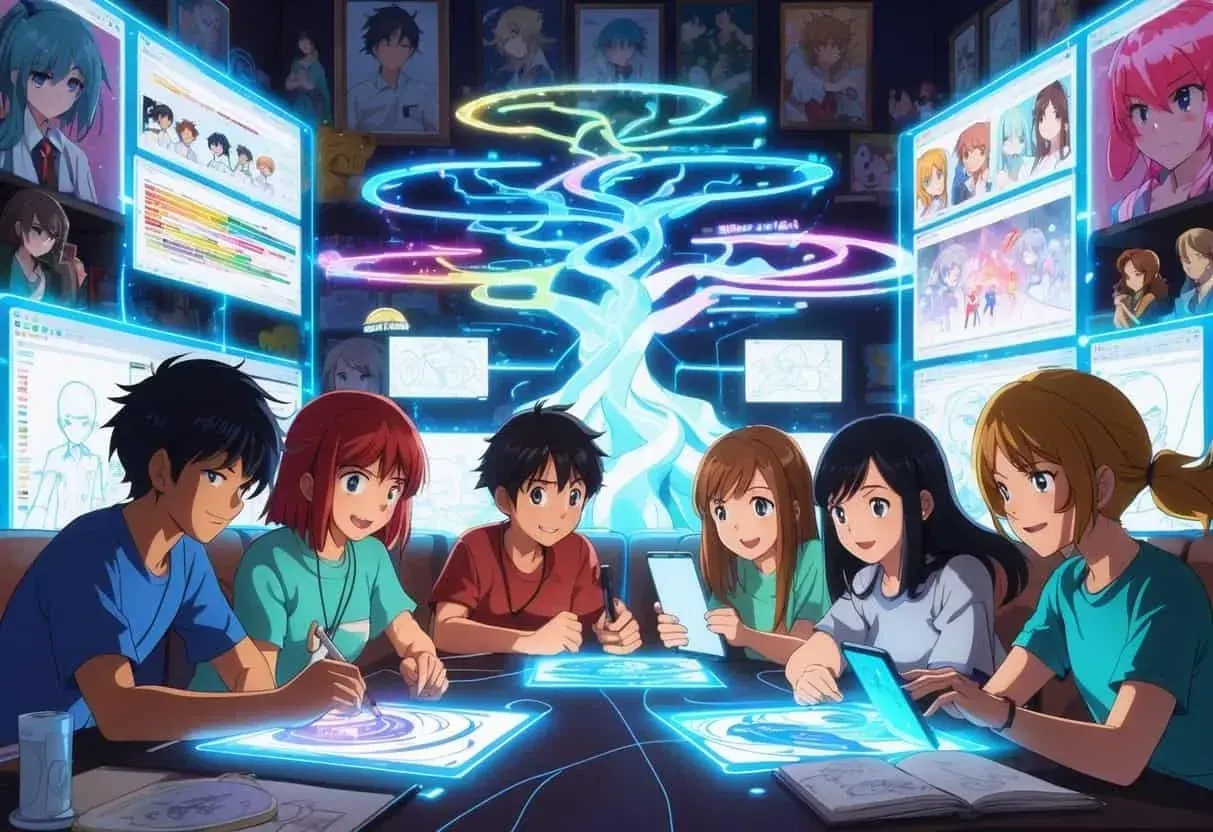
Anime fandom has always been a space of intense creativity, but now artificial intelligence is unleashing an unprecedented wave of narrative experimentation. Fans are no longer just passive spectators of their favorite series; they are active co-creators, using AI to rewrite dialogue, remix entire plot lines, and breathe alternative lives into beloved characters. By leveraging these advanced tools, you can craft entirely new versions of iconic anime, reshaping story arcs, altering character motivations, or even swapping genres on a whim. This fusion of technology and fandom is not only redefining personal expression but also forging stronger, more collaborative communities around the world. From casual hobbyists to dedicated fanfic writers, AI is lowering barriers to entry and offering a digital canvas where imagination truly knows no limits.
This movement represents a significant shift in how you engage with popular culture. Instead of simply consuming a linear narrative, you can explore infinite “what if” scenarios—envisioning how a dark fantasy epic might unfold as a lighthearted school comedy, or how a heroic protagonist could walk a path of moral ambiguity. Platforms designed for collaboration make it easy to remix and share these AI-generated creations, turning solitary daydreams into communal experiences. Beyond story editing, AI tools are enhancing animation quality and character design, allowing your rewritten sagas to feel visually and narratively polished. As you delve deeper, you’ll discover how this technology is empowering a new generation of fans to push the boundaries of entertainment, from the adventure and action genres to romance, horror, and beyond.
The Evolution of Anime Fandom and AI Integration
From Niche Subculture to Global Phenomenon
Anime fandom traces its roots back to mid-20th century Japan, where artists like Tezuka Osamu laid the groundwork for a distinct visual and narrative language. After World War II, the medium became a vessel for cultural expression and national identity, slowly gathering domestic communities around televised serials. By the 1980s and 1990s, with the rise of VHS tapes and early internet forums, anime crossed borders and ignited passionate fan bases in the West. Clubs, conventions, and message boards transformed isolated viewers into a cohesive global community, where fans exchanged fanart, translated scripts, and wrote elaborate fanfiction. Today’s fandom is a sprawling, diverse ecosystem, spanning every imaginable genre and demographic.
This foundation of communal creation made it ripe for a technological revolution.
The AI Catalyst: A New Era of Fan Creativity
The introduction of artificial intelligence has acted as a catalyst, radically accelerating and expanding the creative capacities of this community. What once required hours of hand-drawn animation or painstaking scriptwriting can now be prototyped in minutes. Fans use AI for more than just novelty; they employ it to generate intricate background art, animate keyframe sequences, and produce coherent dialogue that maintains a character’s unique voice. This democratization of tools is shifting the power dynamic within fandom. You no longer need a full animation studio to see your alternate storylines come to life.
Learn more about the underlying natural language processing models that make this possible. While some traditionalists worry about a loss of the human touch, many embrace AI as a collaborative partner that amplifies artistic intent rather than replacing it. The result is a vibrant hybrid culture where nostalgia and innovation coexist, pushing the very definition of fan labor from simple appreciation to active, technologically augmented authorship.
Techniques and Tools for AI-Powered Story Remixing
Generative AI Models: From Text to Animation
Your journey into AI remixing typically begins with large language models, which can generate text based on prompts. Tools like GPT-4 can rewrite entire episodes, create new dialogue, or construct original plot twists based on a few sentences of input. But the toolkit extends far beyond text. Image generators such as Stable Diffusion and Midjourney allow you to visualize reimagined characters and settings, while video synthesis models are beginning to animate these stills. By feeding an AI a rich prompt—detailing the desired tone, character traits, and key events—you can generate a narrative synopsis or even a full script in seconds.
The AI handles the structural flow, but your creative oversight remains essential. Editing the output to remove clichés, fix inconsistencies, and ensure logical pacing is what transforms a raw generation into a compelling remix.
Prompt Engineering for Narrative Control
The art of guiding AI is called prompt engineering, and it is the cornerstone of effective storytelling. You can instruct the AI to adopt a specific genre, mimic a particular character’s speech pattern, or maintain a consistent emotional arc. For example, you might write: “Rewrite the final battle of *Neon Genesis Evangelion* as a slice-of-life comedy where the Eva units are replaced by giant, friendly robots from a children’s cartoon.” This level of control lets you explore tonal shifts that would be jarring if handled poorly, but become refreshing when crafted with care. Effective prompting is an iterative process; you refine your instructions, test the output, and layer additional constraints until the narrative clicks.
This back-and-forth dialogue with the machine fosters a unique kind of co-creativity, where human intuition directs the AI’s raw generative power.
Character and Genre Swapping with AI
One of the most popular remixing techniques involves porting characters across different universes or genres. AI tools can help you imagine how a stoic samurai from *Rurouni Kenshin* would behave in the high-tech world of *Psycho-Pass*, or how a magical girl might navigate a gritty cyberpunk dystopia. This process goes beyond simple cameos; you can restructure the fundamental logic of a story. Swap a horror anime’s antagonist into a romantic comedy, and the AI can generate dialogue that turns chilling menace into awkward courtship. Similarly, adding fantasy elements like mythical creatures or magic systems to a grounded sci-fi plot broadens its appeal and explores new emotional landscapes.
The key is to tell the AI exactly which elements to transfer and which core themes to preserve, ensuring the final mix feels intentional and coherent rather than chaotic.
LoRA and Fine-Tuning for Style Consistency
For those seeking a deeper level of technical customization, tools like LoRA (Low-Rank Adaptation) offer a way to fine-tune AI models to understand specific character designs and art styles. A LoRA model can be trained on a collection of images of a particular character, enabling the AI to reproduce that character’s uniform, hairstyle, and facial features across a wide range of new poses and settings. This technique is invaluable for maintaining visual consistency in your remixed stories. Instead of generating a generic-looking hero, the AI places the exact character you envision into your new narrative. Explore community guides on creating and using LoRA models to unlock this capability for your projects.
Such technical advancements mean that your rewritten narratives are not just text on a page but can be accompanied by a visual corpus that feels authentic to the source material.
Collaborative Fan Communities and Crowdsourced Storytelling
Dedicated Platforms for AI Fanfiction
The social dimension of AI remixing is flourishing on dedicated fansites and online forums. Platforms like AO3 have long been havens for fanfiction, but new spaces are emerging that specifically integrate AI tools into the creative pipeline. On these sites, you can find communities hosting weekly challenges where members use AI to generate stories based on a shared theme, such as “alternate endings” or “reversed character roles.” These hubs serve as laboratories for experimentation, where you can observe how different prompt strategies affect narrative output and share your own workflows. Discussions often revolve around blending AI capabilities with the nuanced craft of traditional fanfiction, debating techniques for seeding emotional depth or avoiding the narrative stutters AI can sometimes produce.
This collective wisdom accelerates the learning curve, turning the act of AI storytelling into a communal, recreational pursuit.
Web3 and Decentralized Ownership in Fan Projects
A more radical evolution is occurring at the intersection of AI and Web3 technology. Some platforms are experimenting with blockchain-based systems that allow fans to contribute to a collective story world while retaining a degree of ownership over their contributions. In these crowdsourced initiatives, you might add a chapter to a sprawling anime multiverse, design a new character, or tweak an existing lore element, with blockchain tokens crediting your creative stake. This model incentivizes collaboration and blurs the lines between fan work and original intellectual property. It’s a pioneering approach to managing rights and compensation in fan-made content, fostering a democratic ecosystem where the community directly governs the narrative’s evolution.
This fusion of AI generation and decentralized governance represents a bold new frontier for fan-driven media.
Ethical and Creative Integrity in AI-Assisted Remixing
Originality vs. AI Assistance: Navigating Authorship
As AI becomes more deeply integrated into the creative process, fundamental questions about originality and authorship emerge. When a language model generates 80% of a story’s dialogue, who is the true creator? Some argue that the fan who provides the creative prompt and curates the output retains full authorship, much like a film director does with a script. Others contend that the AI’s training data, which includes countless uncredited works, taints the commercial viability and artistic purity of the result. Read about ongoing legal discussions on AI-generated art and copyright to understand these complexities.
In fan communities, these debates are often less about legal frameworks and more about ethics—respecting the original creators while celebrating the transformative nature of fan work. The consensus is moving toward transparency, encouraging you to clearly label AI-assisted works so that audiences can appreciate the unique hybrid of human and machine effort.
The Impact on Original Creators and the Anime Industry
The rise of AI remixing also sends ripples back to the anime industry itself. Some studios view it as free marketing, a testament to the passionate engagement of their audience. Others, however, see it as a threat to intellectual property and a potential canibalization of official media, especially if AI remixes become monetized or confused with canonical works. Creators like manga artists and anime directors have expressed mixed feelings—flattered by the attention but wary of losing control over their narratives. In response, a few forward-thinking companies have begun exploring official AI-driven platforms where fans can create and share content within sanctioned boundaries, providing a legal and ethical middle ground.
This delicate balance between empowerment and protection will likely shape future fan-studio relationships for years to come.
The Expanding Influence of AI on Anime and Media Culture
Cross-Media Connections: Manga, Comics, and Film
AI’s influence is not confined to anime alone; it serves as a bridge between manga, Western comics, and film. By training on the visual lexicons of Marvel, DC, and traditional Japanese manga, generative models can produce cross-over artwork that feels seamless. You can use AI to storyboard a scene that blends the kinetic action of *Dragon Ball Z* with the noir aesthetics of a Frank Miller graphic novel. In the film industry, AI-assisted tools are already being used for pre-visualization and even full animated sequences, accelerating the adaptation of beloved print stories to the screen. This cross-pollination enriches the entire media ecosystem, making anime’s influence on global popular culture more tangible and interactive.
The rise of genres like steampunk and science fantasy in anime is now often a result of this rapid, AI-enabled fusion of style libraries.
Parody, Myth-Making, and Democratic Storytelling
Beyond remixing plots, AI empowers you to engage in cultural myth-making and parody on a grand scale. You can feed a model the tales of ancient Japanese kami and ask it to reinterpret them as a modern cybernetic conflict, or twist the legend of King Arthur into a magical girl saga. This process transforms timeless stories into vehicles for contemporary commentary and humor. AI-generated parodies that play on tired tropes—the overpowered isekai hero, the endless filler arc—become a form of communal critique and bonding. This democratization of storytelling shifts cultural production away from centralized studios and towards a more participatory model.
You, and countless other fans, become bards of a new age, constantly retelling and reshaping the foundational myths of your communities with the assistance of advanced technology. Explore more on how AI is reshaping the landscape of fiction to see these trends in a broader context.
Future Trends and the Path Ahead
AI Voice Acting and Automated Dubbing
Looking ahead, the next frontier for AI-powered anime remixing lies in audio. Voice cloning and synthesis technologies are maturing rapidly, allowing you to generate dialogue in a character’s original voice actor’s tone or in any accent you choose. This can revolutionize the dubbing industry, enabling instant, high-quality multilingual versions of fanmade episodes. Imagine rewriting a chilling monologue for your favorite villain and having it spoken aloud with perfect emotional resonance by a synthetic voice model trained on hours of footage. While this raises profound ethical questions about consent and misuse, the creative possibilities are vast.
It could enable fans to produce full-fledged audio dramas or complete animated shorts that are indistinguishable in production quality from official releases, all from a home computer.
Hyper-Personalized Anime Experiences
Ultimately, the convergence of these AI technologies points toward hyper-personalized anime. In the not-too-distant future, you might interact with a story engine that adapts the plot in real-time based on your reactions. Using a combination of generative narrative AI, real-time rendering, and even biometric feedback, an anime episode could branch off into infinite directions, ensuring no two viewings are the same. Your preference for romance over action, or your d iscomfort with certain tropes, could subtly guide the story into a path uniquely tailored to you. This is the logical extreme of the remix culture: a fluid, living narrative where the boundary between creator, viewer, and character dissolves entirely.
Read about the future of personalized entertainment driven by AI to understand how close we are to this reality.
Glossary of Key Terms in AI Anime Remixing
| Term | Meaning |
|---|---|
| LoRA | A model fine-tuning technique used by AI to learn and replicate specific character art styles or attributes. |
| Keyframe | A foundational drawing or CGI frame that defines the start and end points of a smooth transition in an animation. |
| Remix | The act of reworking or combining pre-existing story elements, character traits, or plots into a new creation. |
| Fan Empowerment | The process of giving fans the tools and platforms to actively create, modify, and share content rather than just consume it. |
| Democratization | Making creative and production tools accessible and usable by a wide, non-professional audience. |
| Myth-Making | The modern practice of creating new legends or reinterpreting classic folk stories through contemporary media lenses, including AI. |
Understanding these terms will deepen your appreciation for the complex machinery behind AI-augmented fandom. They are the building blocks of a new creative lexicon being forged by passionate communities worldwide.
The fusion of artificial intelligence and anime fandom is not a passing trend but a permanent evolution of how stories are told, shared, and loved. By placing powerful creative tools into your hands, technology has made every fan a potential author, every daydream a potential epic. As you explore these tools, you become part of a global movement that is redefining the boundaries between tribute and original work, between the personal and the communal. The stories of tomorrow are being written today, and your keyboard is part of the quill.