Table of Contents
Capturing the essence of anime inside a video game demands far more than a coat of cel-shaded paint. The titles that truly feel like interactive episodes of your favorite series rely on a careful fusion of visual identity, narrative structure, and emotional pace. Distinctive art—the oversized expressive eyes, vivid palettes, and animated flourishes—grabs your attention first. Yet the soul of the experience comes from the stories being told, the way characters evolve, and how the game invites you to become part of that world. Personal growth, friendship tested by conflict, and life-altering battles are not just plot devices; they become the emotional fuel that drives every choice you make.
When a game aligns a strong anime aesthetic with resonant, character-driven storytelling, the result feels authentic, almost as if the screen has become a page of a manga you can step inside.
What makes this blend work is a commitment to both style and substance. The visual language—from line quality to character silhouettes—establishes a tone even before a single line of dialogue is spoken. Meanwhile, the narrative architecture pulls from decades of manga and anime conventions, building arcs that reward patience and emotional investment. This combination transforms a game from a simple action title into a transportive experience. You do not simply watch a hero’s journey; you steer it, and the interactive layer deepens the connection in ways that passive media cannot match.
The following sections unpack the components that, when handled with care, allow a game to feel not just anime-adjacent, but like a genuine extension of the medium.
Defining Anime-Inspired Video Games
Anime-inspired video games form a category that transcends any single genre. They are united by a shared heritage in Japanese animation and comic art, borrowing both stylistic rules and narrative frameworks. These games often prioritize distinct visual signatures—high-contrast outlines, saturated color spectrums, and deliberate exaggerations in anatomy and motion. Beyond looks, they inherit a storytelling rhythm that favors episodic escalation, introspective monologues, and character relationships that develop organically over dozens of hours. Players step into worlds where the line between fantasy and emotional truth is intentionally blurred, and where cultural values like perseverance, group loyalty, and self-discovery are woven into the mechanics.
Core Characteristics of Anime Aesthetics
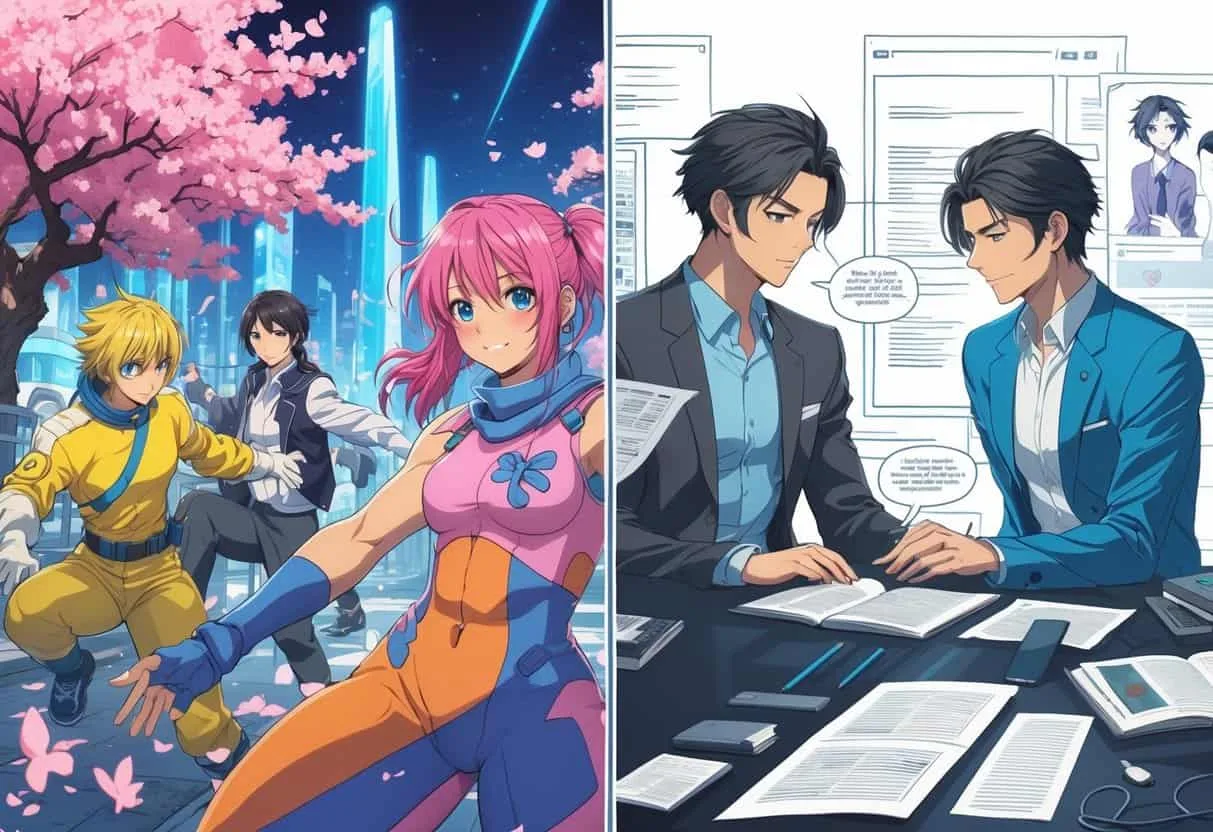
You know an anime-inspired game the moment you see it. Character designs lean into large, luminous eyes that act as emotional barometers, while hair defies physics in color and shape to communicate personality before a word is spoken. Models are stylized rather than photorealistic, often using clean contours and flat or softly graded shading techniques that echo hand-drawn animation. Backgrounds vary from lush, hand-painted vistas to neon-drenched cityscapes, but they always aim for a heightened sense of place—somewhere between a dream and a travel poster. The real magic lies in the animation language: actions are punctuated by sharp smears, lingering impact frames, and dramatic camera sweeps that translate manga’s dynamic panel layouts into real-time motion.
Lighting and rendering choices reinforce the visual identity. Many titles employ cel-shading to flatten shadows and emphasize contour lines, ensuring models read clearly at any angle. This deliberate simplification prevents the visual clutter that can dilute a scene’s emotional focus. Texture work, when used, is often restrained or stylized—a brick wall might appear as a watercolor wash rather than a photoreal surface. The goal is consistency: every frame should feel like it could be pulled from a high-budget anime broadcast.
When these elements combine, the game world becomes a living illustration, and your eyes accept its rules as naturally as they would a beloved show’s.
The DNA of Japanese Animation and Manga
The influence of manga and anime extends deep into structure and pacing. Games borrow the practice of breaking stories into clear narrative arcs, complete with cliffhangers and character-focused interludes that mirror how an anime season unfolds week by week. Cutscenes often adopt comic-book framing: split-screen reactions, speed lines that telegraph motion, and dramatic “page-turn” transitions between locations. Dialogue is loaded with the same blend of earnest monologue and sharp banter found in shonen or slice-of-life series, making the writing feel instantly familiar to fans of the source material.
Beyond visuals, these titles replicate the rhythm of serialized storytelling. A long role-playing game might dedicate several hours to a side character’s backstory, trusting that you will invest in their arc just as you would a favorite anime’s supporting cast. This episodic patience pays off when the main plot calls back to those moments, creating a web of emotional consequence. Even combat systems echo anime’s action choreography: flashy ultimate moves, exaggerated reaction shots, and the dramatic pause before a final blow are direct translations of animated fight sequences into interactive form. The result is a genre that understands its audience wants not just a game, but the feeling of actively participating in a multi-season epic.
Cultural Themes and Emotional Resonance
Japanese cultural touchpoints give anime-inspired games a distinct emotional register. Themes such as gaman (endurance in the face of hardship), nakama (the unbreakable bond between comrades), and the journey from innocence to wisdom recur in both narrative and mechanics. Set pieces frequently draw on folklore, Shinto symbolism, or the rituals of school life—cherry blossom viewings, festival fireworks, and rooftop confessions become stages for character development. These familiar backdrops ground the fantastical elements, making it easier for you to project your own experiences onto the cast.
Because the stories favor internal growth over external spectacle, the emotional payoff often feels earned rather than manufactured. A protagonist’s quiet realization or a party member’s tearful farewell carries weight because the game has spent hours building context. This emphasis on emotional truth allows games to tackle complex ideas—identity, sacrifice, moral ambiguity—without losing accessibility. When a title invokes a cherished cultural motif while making you feel personally responsible for a character’s fate, it achieves a form of resonance that goes far beyond mere visual imitation.
Aesthetics: Visual Language and Sonic Identity
If narrative is the heart, audio and visual design are the skin and voice of an anime-inspired game. Every artistic choice—from the bounce of a character’s hair to the key of the main theme—reinforces the emotional temperature of the moment. These elements do not operate independently; they lock into a unified sensory contract that tells you exactly what kind of adventure you are embarking on. Neglect one pillar, and the anime illusion falters. Balance them, and the game world breathes with the same vitality as a hand-drawn cel.
Character Design and Modelling
Characters are the player’s primary anchor, and their designs carry immense weight. Anime-inspired games prioritize strong silhouettes that make each party member instantly distinguishable even in a chaotic battle. Sharp, sweeping lines define the figure, while details like hair volume, eye shape, and costume folds are exaggerated just enough to feel iconic rather than impractical. Color palettes are chosen with narrative intent: a fiery red protagonist signals passion and recklessness, while cooler blues and silvers denote calm or mystery. 3D models, when used, are typically constructed with cel-shaded materials and edge detection to preserve the 2D illusion under changing light conditions.
Facial animation places special emphasis on the eyes and mouth. A subtle shimmer in the pupils or a trembling lip can communicate pages of inner turmoil. Developers often supplement skeletal animation with blend shapes or frame-by-frame drawn textures for key expressions, ensuring that emotional beats land with anime-level clarity. Even UI elements—menus, dialogue boxes—adopt the ornate, stylized look of manga sound effects. The entire visual package persuades you that you are not looking at a handful of polygons, but at a living, breathing cast drawn by a studio artist.
Art Styles and Animation Techniques
The choice of art direction is rarely neutral. Many games deliberately restrict their color ramp to mimic a particular anime genre—pastel washes for a romantic comedy, stark contrasts for a psychological thriller. Lighting follows suit: soft gradients suggest a gentle tale, while harsh backlighting and rim shadows signal tension. Environmental artists lean into stylized perspective and selective detail, painting backgrounds that feel like production art from a theatrical anime film. This curated approach prevents the world from ever becoming generic.
Animation principles imported from traditional 2D work are evident in every motion. Characters exhibit anticipation before a strike, follow-through on a swing, and squash-and-stretch on exaggerated reactions. Special attacks explode with motion graphics, impact lines, and dynamic camera cuts that recall the direction of a seasoned anime sakuga animator. Even idle stances incorporate shifting weight, hair sway, and blinking—all micro-animations that keep the scene alive. These techniques signal that the game prioritizes expressive impact over raw realism, which is precisely what fans of the aesthetic demand.
Music, Voice Acting, and Atmosphere
Sound is the emotional accelerator. Soundtracks move deftly between sweeping orchestral themes for monumental moments and intimate piano or acoustic pieces for quiet conversations, mirroring the dynamic range of anime scores. Leitmotifs tied to characters or relationships evolve as the story progresses, deepening your subconscious bond with the material. Openings and endings often feature vocal tracks—complete with animated sequences—that function like a series’ theme song, establishing mood and expectation before you press start.
Voice acting is delivered with theatrical precision. Talented performers match the exaggerated emotional swings of the script, lending sincerity to speeches that might otherwise sound overwrought. Subtle efforts—a quiver in the voice, a breath before a confession—are preserved in the recording to maintain authenticity. Ambient audio layers further seal the atmosphere: cicadas in a summer countryside, echoing footsteps in a school corridor, the distant rumble of a mecha hangar. Together, these sonic choices construct a world that sounds exactly as it looks, completing the sensory loop that makes the anime illusion feel unbroken.
Narrative: Compelling Stories and Emotional Depth
An anime aesthetic without a meaningful story is little more than a screensaver. The games that linger in your memory are the ones that make you feel something—frustration at a betrayal, warmth during a reunion, or the bittersweet ache of a final goodbye. These responses are not accidental; they are engineered through careful pacing, character-driven arcs, and a willingness to let quiet moments speak as loudly as spectacular ones.
The Hero’s Journey and Shared Belonging
The archetypal hero’s journey permeates anime-inspired games, but it is almost always filtered through a lens of collective struggle. Protagonists rarely stand alone; they are bound to a party of allies whose own dreams and flaws become central to the plot. Adventure is as much about exploring the inner landscapes of these companions as it is about traversing physical maps. Side quests, campfire conversations, and optional story branches create a fabric of interdependence that elevates the stakes far beyond saving the world—you are saving the specific people you have come to care about.
Exploration itself becomes a narrative act. A misty forest encountered early in the game might reappear later, transformed by story events and your characters’ growth, and the emotional weight of that return hits harder than any new dungeon. This spatial storytelling rewards attention and deepens immersion, turning the world into a character in its own right. When the final confrontation arrives, it carries the cumulative force of every mile traveled and every quiet talk held along the way.
Emotional Catharsis and Player Connection
Developers in this space understand that unearned emotion feels hollow, so they build toward catharsis with restraint. Tensions simmer across multiple chapters before boiling over. A character might suppress a secret for half the game; when the truth finally emerges—complete with a rain-soaked confession and a swelling score—the release is overwhelming because you have shared the secret’s weight. Pacing is everything. Quiet moments of respite—a fishing trip, a festival night—act as emotional resting points that make the subsequent drama cut deeper.
Player agency intensifies these feelings. When a dialogue choice, tactical decision, or relationship investment alters an outcome, the resulting joy or sorrow is uniquely yours. You are not just an observer of a tragedy but a participant in its unfolding, which can make character deaths or romantic resolutions feel startlingly personal. The best titles blur the line between scripted storytelling and emergent player narrative, ensuring that the emotional arc belongs to you as much as to the protagonist.
Fairy Tales, Fantasy, and Symbolism
Anime-inspired games frequently drape their themes in the language of fairy tales and high fantasy. Magic swords, cursed bloodlines, and ancient prophecies are not mere set dressing; they are symbolic shorthand that lets the story explore complex ideas about destiny, free will, and transformation. A witch’s curse might represent the anxiety of adolescence, while a journey to a spirit realm becomes a metaphor for confronting repressed memories. These symbolic layers give games a dual accessibility: younger players enjoy a colorful adventure, while older audiences grasp the deeper allegories at play.
Using fantasy removes the constraints of the mundane world, allowing emotional conflicts to be literalized as monsters, dungeons, and elemental forces. This externalization of inner turmoil—a character’s fear manifesting as a shadow boss, for instance—follows a tradition that runs from Japanese mythology straight through modern anime. When a game embraces this device, it invites you to confront emotionally charged material in a safe, metaphorical space, which often makes the resolution feel more profound than a purely realistic treatment ever could.
Interactivity and Genre Fusion
What sets games apart from anime is the ability to turn passive admiration into active participation. The way a title handles combat, progression, and player choice is what transforms a beautiful artbook into a living story. Anime-inspired games excel at mixing and matching genres, blending role-playing growth with fighting game precision or strategy title tactics, all while preserving the flashy, visceral feel of an animated sequence.
Role-Playing and Combat Systems
Character progression systems—levels, skill trees, equipment—are rarely dry number games in this space; they are storytelling tools. Learning a new technique might be tied to a narrative revelation or a mentor’s training session, making power growth feel earned and personal. Combat itself is choreographed to emphasize style. Whether turn-based or real-time, the systems incorporate dramatic freeze frames before decisive blows, dynamic camera angles during special moves, and audio stings that mirror anime sound design. You are meant to feel not just effective, but cool.
Mechanical depth matters. A well-tuned battle system creates moments where a perfectly timed block or a resourceful combination of abilities mimics the rush of an outsmarting antagonist in a pivotal episode. When the tactile feedback from the controller aligns with an on-screen explosion of color and motion, the barrier between player and anime hero dissolves. Some titles have even experimented with motion controls—think of the immersive sword swings available on platforms like the Wii—to layer physicality onto the RPG framework, offering yet another bridge between your body and the character’s actions.
Fighting Games and Strategy Hybrids
The intense, one-on-one duels of anime fighting games distill the aesthetic to its kinetic essence. Titles in this subgenre prioritize fluid combos, air juggles, and over-the-top super moves that look like final attacks ripped straight from a tournament arc. Learning a character’s move set becomes an act of choreography; landing a long chain at the right moment produces the same thrill a viewer feels when a protagonist finally defeats their rival. These games often feature robust story modes that lean even further into visual-novel-style narration, blurring the line between fighter and JRPG.
On the strategy front, hybrids that fuse real-time or turn-based tactics with role-playing elements allow you to orchestrate battles on a grand scale while still zooming in for character-driven moments. Commanding a squad through a war-torn battlefield, issuing orders from a command map, and then watching the anime-style attack animation play out creates a rhythm that captures the scope of an epic series. This cross-pollination of genres reflects anime’s own flexibility—the medium can be a martial arts saga one moment and a military drama the next—and gives you the tools to engage with both the big picture and the personal stakes simultaneously. For a closer look at how genre boundaries are being reimagined, you can explore discussions on game design innovation that delve into hybrid mechanics.
Sequels, Fan Culture, and Enduring Appeal
Sequels in anime-inspired franchises walk a tightrope between comfort and evolution. A returning cast and familiar art style rekindle affection, but a sequel must also push systems forward—offering new combat dynamics, deeper customization, or unexplored narrative territory. The most successful follow-ups treat their predecessors like a first season of a show, expanding the lore and raising the stakes without discarding the emotional groundwork that fans have already laid. When a sequel surprises you with a twist that recontextualizes an earlier game’s events, the entire series can feel like one sprawling, interconnected anime.
Fan communities are the lifeblood that keeps these worlds spinning long past their release dates. From elaborate fan art and fan fiction to gameplay mods that introduce new storylines or characters, the audience actively participates in extending the experience. Online hubs and social media groups dissect character motivations, debate power scaling, and organize community events, mirroring the passionate discourse surrounding weekly anime broadcasts. This sustained cultural presence turns a single game into a living franchise, and the developers who listen to that energy often find their creations outlasting any initial sales window. The appeal endures because the games, like the anime they emulate, are designed to be revisited, reinterpreted, and shared.
The Sum of Its Parts
Making a game feel like anime is never about checking boxes on a list of tropes. It is an ongoing negotiation between art, sound, story, and play. When the visual direction works so seamlessly with the narrative voice that you forget you are holding a controller, when the soundtrack swells at exactly the right moment to match a carefully built character beat, and when the interactive systems invite you to express yourself within the world’s rules—only then does the illusion solidify into something genuine. The games that achieve this balance become touchstones, the titles you recommend to friends who want to understand why you love both anime and the medium that lets you live inside it. That authenticity, far more than any single design choice, is what makes them unforgettable.