Table of Contents
Lo-fi anime remixes sit at the crossroads of sound and screen, merging gentle, atmospheric beats with visuals drawn from fan-favorite animated series. These remixes are more than background music; they are a lens through which modern fandom expresses identity, memory, and community. Their rise signals a shift in how audiences participate in the cultures they love, transforming passive consumption into an active, creative, and emotionally resonant practice.
A lo-fi remix can turn a familiar anime scene into a study soundtrack, a nostalgic reverie, or a shared digital campfire. By pairing iconic dialogue, sound effects, and OST samples with dusty drum loops and washed-out synths, fans craft something that belongs as much to the streets of Shibuya as to a bedroom in São Paulo. This hybrid form reflects the global, networked nature of fan culture today.
Key Takeaways
- Lo-fi anime remixes fuse music and visuals to create immersive, emotionally layered experiences that go beyond mere entertainment.
- Fans use remix culture to build communities, navigate nostalgia, and shape their own creative identities.
- The blend of Japanese pop culture with hip‑hop production techniques reveals a borderless fandom that thrives on collaboration and digital platforms.
Origins and Rise of Lo‑fi Anime Remixes
The Birth of Lo‑fi Hip‑Hop and Its Anime Connection
Lo‑fi hip‑hop emerged in the late 1990s and early 2000s, rooted in instrumental hip‑hop, jazz rap, and the beat scene pioneered by producers like J Dilla, Nujabes, and DJ Shadow. The genre’s hallmark—intentionally imperfect sound quality, vinyl crackle, tape hiss—was not a flaw but a feature, evoking warmth and intimacy. Nujabes, in particular, became a touchstone. His work on the Samurai Champloo soundtrack stitched together dusty breakbeats and live instrumentation, setting a template for how anime and lo‑fi could coexist. You can hear his influence in nearly every mix that layers a rainy cityscape over a mellow kick‑snare pattern.
A deep dive into Nujabes’ legacy shows how a Japanese producer from the underground became the spiritual godfather of a global movement.
For many early remixers, anime was more than an aesthetic accessory. Soundtracks from Cowboy Bebop, Neon Genesis Evangelion, and Ghost in the Shell provided rich material: wistful horn lines, crystalline synth pads, and spoken‑word interludes. Producers sampled these elements the way hip‑hop had long sampled soul and funk records, treating anime OSTs as a legitimate crate of sonic history. The result was a cross‑cultural dialogue—American beat culture meeting Japanese animation, mediated by the internet.
Japanese Soundscapes and the Nostalgia Factor
Lo‑fi anime remixes draw heavily on the textures of contemporary Japanese life. Field recordings of train crossings, convenience store chimes, and vending machine hums nestle alongside melodies that echo city pop and Shibuya‑kei. These sonic fragments act as audio postcards from a real or imagined Tokyo, tapping into a widespread fascination with Japanese popular culture. The music becomes a form of virtual tourism, one that feels personal and unhurried.
Nostalgia plays an outsized role. Many listeners grew up watching anime on late‑night TV or trading VHS fansubs, and the remixes reframe those memories. A slowed‑down sample of a Sailor Moon ending theme or a Dragon Ball Z fight cue can trigger a rush of childhood feeling. This isn’t mere throwback; it is an active process of cultural recycling that places older media in a new, emotionally safe context. The low‑fidelity aesthetic itself mimics the imperfections of analog media, reinforcing a longing for simpler times, even among those too young to have lived through them.
How YouTube and TikTok Propelled the Phenomenon
No platform has been more central to the spread of lo‑fi anime remixes than YouTube. The now‑iconic Lofi Girl channel—known for its continuous stream of beats overlaid with an illustration of a girl studying with her cat—became a cultural institution. At any hour, hundreds of thousands of listeners tune in, creating a shared, borderless listening room. The visual loop, anime‑inspired and endlessly looping, is as important as the music, reinforcing the genre’s mood.
TikTok gave the remix culture a second wind. Short‑form video invites rapid, creative reuse: users set anime clips to lo‑fi beats, adding captions, effects, and memetic twists. A single viral sound can spawn thousands of remixes, each layering new anime scenes or personal footage. The algorithmic amplification pushes these creations beyond niche fan circles, making lo‑fi anime aesthetics part of the mainstream digital vernacular. The remix is no longer a finished product but a constantly evolving conversation.
Remixes as a Form of Modern Fandom
From Spectators to Creators: Participatory Culture
Lo‑fi anime remixes illustrate what media scholar Henry Jenkins calls participatory culture. In this model, fans are not passive consumers but active producers who reshape media to reflect their own perspectives. When you slow down a Your Lie in April piano piece and weave it into a beat, you are not merely quoting the anime—you are communicating a feeling, a memory, a relationship that the original may have sparked. The act of remixing becomes a form of personal expression and a gift to the wider community.
Online platforms lower the barriers to entry. Free digital audio workstations, sample packs, and shared tutorials mean that a teenager with a laptop can produce a track that resonates with thousands. The line between artist and audience blurs. Recognition comes not from gatekeepers but from peer validation: likes, comments, and playlist placements. This democratic spirit fuels a rich ecosystem where every remix is both a contribution and a conversation starter.
The Role of Nostalgia in Shaping Fan Identity
Remix culture weaponizes nostalgia as a creative tool. Fans curate their own emotional archives, selecting scenes and sounds that represent a personal golden age. A lo‑fi take on a Pokémon town theme might speak to someone’s cherished memories of a childhood Game Boy, while a Spirited Away ambient mix can evoke the liminal feeling of moving between worlds. These choices are not random; they communicate belonging to a tribe of viewers who value specific aesthetics and emotional registers.
This nostalgic impulse is also a response to the rapid pace of digital life. The gentle, unhurried tempo of lo‑fi beats offers an antidote to endless notifications. By anchoring themselves in familiar anime imagery, fans construct a stable, comforting environment. Nostalgia becomes a strategic practice—a way to manage anxiety and carve out a mental sanctuary.
Anonymity, Community, and the Digital Campfire
Many remixers operate under pseudonyms, sharing their work on SoundCloud, Bandcamp, or Reddit without tying it to a real‑world identity. This anonymity fosters creative risk‑taking. Without the pressure of reputation or professional success, artists can experiment with obscure samples, unconventional structures, or deeply personal themes. The community responds not to who you are but to the emotional resonance of what you make.
At the same time, these anonymous spaces spawn tight‑knit communities. Dedicated Discord servers, subreddit threads, and stream chats become digital campfires where fans gather to share tracks, swap production tips, and discuss the anime that inspired them. The sense of shared enthusiasm transcends geographical boundaries. A lo‑fi remix of a One Piece opening posted by a user in Belgium can be heard by a listener in Argentina within minutes, bridging gaps through a mutual love of the source material.
Aesthetic Trends and Musical Influences
Chopped, Screwed, and Slowed: The Hip‑Hop Backbone
The chopped‑and‑screwed technique, pioneered by DJ Screw in Houston, Texas, is a foundational element of lo‑fi anime remixes. By drastically reducing the tempo and applying staggered, repetitive cuts, producers create a woozy, dreamlike atmosphere. The style originally emerged from the Southern hip‑hop scene as a way to transform existing records into something heavy, hypnotic, and deeply personal. Lo‑fi remixers borrow this approach, applying it to anime ballads or J‑pop bridges to unlock hidden emotional textures. A look at the history of chopped and screwed reveals how a regional sound became a global remix lingua franca.
Beyond tempo manipulation, the hip‑hop influence appears in the drum programming. Skittering hi‑hats, off‑kilter snares, and swing patterns reference the dusty beats of 1990s boom‑bap. Producers often layer these with manipulated vocal chops—sometimes lifted from anime dialogues—to create a call‑and‑response texture that feels both familiar and alien. The result is a sound that honors its hip‑hop roots while inventing a new vocabulary for fannish expression.
Ambient, House, and the Quest for Calm
Not all lo‑fi anime remixes lean on hip‑hop alone. Many incorporate ambient swells, gentle house chords, and funky electric piano licks. These elements add depth and warmth, making the music suitable for focused work or winding down at night. A track might start with a field recording of a rainy Tokyo street, layer a muted four‑on‑the‑floor kick, and introduce a synth lead reminiscent of early 1980s Japanese pop. The genre’s flexibility means it can absorb influence from garage, jungle, and even new wave without losing its core identity.
The pursuit of calm is central. Listeners often report using lo‑fi anime mixes to manage stress, study, or fall asleep. This functional dimension distinguishes the genre from more assertive electronic styles. The music does not demand attention; it offers a gentle hand. The anime visuals reinforce this tranquility, typically featuring soft pastel hues, slow pans over cityscapes, or characters quietly reading or walking through sakura‑lined streets.
Sampling as a Creative and Cultural Act
Sampling is the creative engine of lo‑fi anime remixes. Producers extract micro‑seconds of sound—a bass note, a character’s sigh, a door sliding shut—and repitch, stretch, and layer them into new compositions. This practice raises fascinating questions about ownership and transformation. In the fan remix space, sampling functions as a form of citation and homage, much like a literary quote. It signals deep familiarity with the source material and invites listeners to recognize the reference, strengthening community bonds.
Turntable techniques add another layer. Cuts, scratches, and manual speed adjustments bring the physicality of vinyl DJing into the digital realm. Some remixers intentionally introduce wow and flutter or emulate the sound of a worn‑out cassette tape. These choices highlight the medium’s materiality, reminding listeners that the music is crafted, not just generated. The low‑fidelity aesthetic is therefore both a sonic signature and a statement about the value of imperfection in an era of pristine digital production.
Visual Aesthetics: Anime, Fashion, and Cosplay
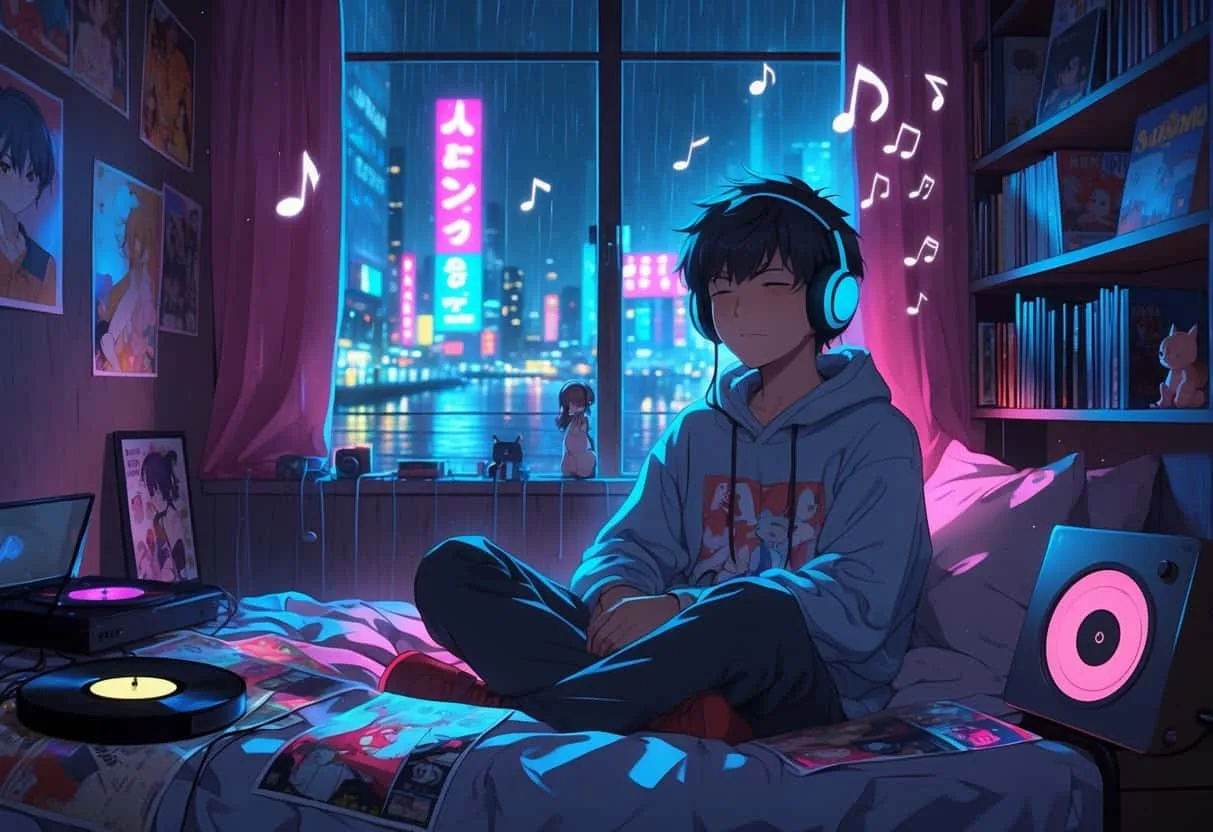
Visuals are not an afterthought; they complete the lo‑fi anime remix experience. YouTube channels often pair music with animated loops of characters sitting by a window, riding a train, or strolling through a neon‑lit street. The art style borrows from 1980s and 1990s anime—rounded linework, soft watercolor backgrounds, and a limited, moody color palette. This retro look aligns with the nostalgic music and creates a cohesive aesthetic world.
Fashion and cosplay intersect here as well. Fans adopt the cozy, introspective image associated with the lo‑fi study girl: oversized hoodies, headphones, and a warm lamp. At anime conventions, it’s common to hear lo‑fi remixes playing at artist alleys or panel rooms, while attendees drift through in cosplay that blends traditional anime characters with streetwear influences. This visual culture feeds back into the music, inspiring new remix videos and even live performances where VJs mix anime clips in real time. The boundary between listener and performer, watcher and participant, dissolves into a multisensory fan experience.
Cultural Impact and Future Directions
Academic Perspectives and Media Criticism
Scholars in cultural studies, media anthropology, and musicology have taken note of lo‑fi anime remixes as a site of contemporary fan production. Researchers at institutions like the University of Southern California analyze how these remixes negotiate consumer culture, identity, and globalization. The practice raises questions about fair use, cultural appropriation, and the ethics of sampling, but it also illustrates how grassroots creativity can thrive outside traditional industry structures.
Critics point out that the genre’s reliance on Japanese imagery can sometimes veer into exoticism or shallow aestheticization. However, the most compelling remixes are those that engage genuinely with the source material, demonstrating an understanding of narrative context and emotional weight. As academic discourse grows, it will likely push the community toward more thoughtful and self‑aware production, while still honoring the playful spirit at its core.
From Convention Halls to Daily Soundtracks
Lo‑fi anime remixes have moved from niche internet corners into the fabric of everyday life. Coffee shops, co‑working spaces, and even wellness apps incorporate the genre into their ambient soundscapes. Anime conventions program entire panels about remix culture, and live lo‑fi DJ sets with synchronized anime visuals draw large crowds. The music provides a unifying thread, connecting attendees who might not speak the same language but share a common passion.
Corporate brands have noticed the trend, collaborating with lo‑fi artists for marketing campaigns that target Gen Z and millennial consumers. While some fans view commercial partnerships with suspicion, others see them as an opportunity for artists to earn from their work. The tension between underground authenticity and mainstream co‑optation is a familiar one, and it will shape how lo‑fi anime remixes evolve over the next decade.
Fandom as a Bridge Between Leisure and Productivity
One of the most striking developments is how lo‑fi anime remixes transform fandom from pure leisure into a tool for productivity. Countless students, remote workers, and creative professionals use these mixes as concentration aids. YouTube study streams featuring anime visuals and live chat communities turn solitary work into a collective event. This blending of fandom and function redefines what it means to be a fan: your love for anime and lo‑fi music becomes part of your daily routine, supporting your goals rather than distracting from them.
The trend points toward a future where fan practices are seamlessly integrated into work and self‑care. AI‑assisted remixing tools may let even more people create personalized soundtracks that respond to their mood or task. Virtual reality environments could offer immersive anime‑styled listening rooms where fans interact avatars. The essence, however, will likely remain the same: a desire to slow down, connect, and find comfort in a handmade world of sound and story.