Table of Contents
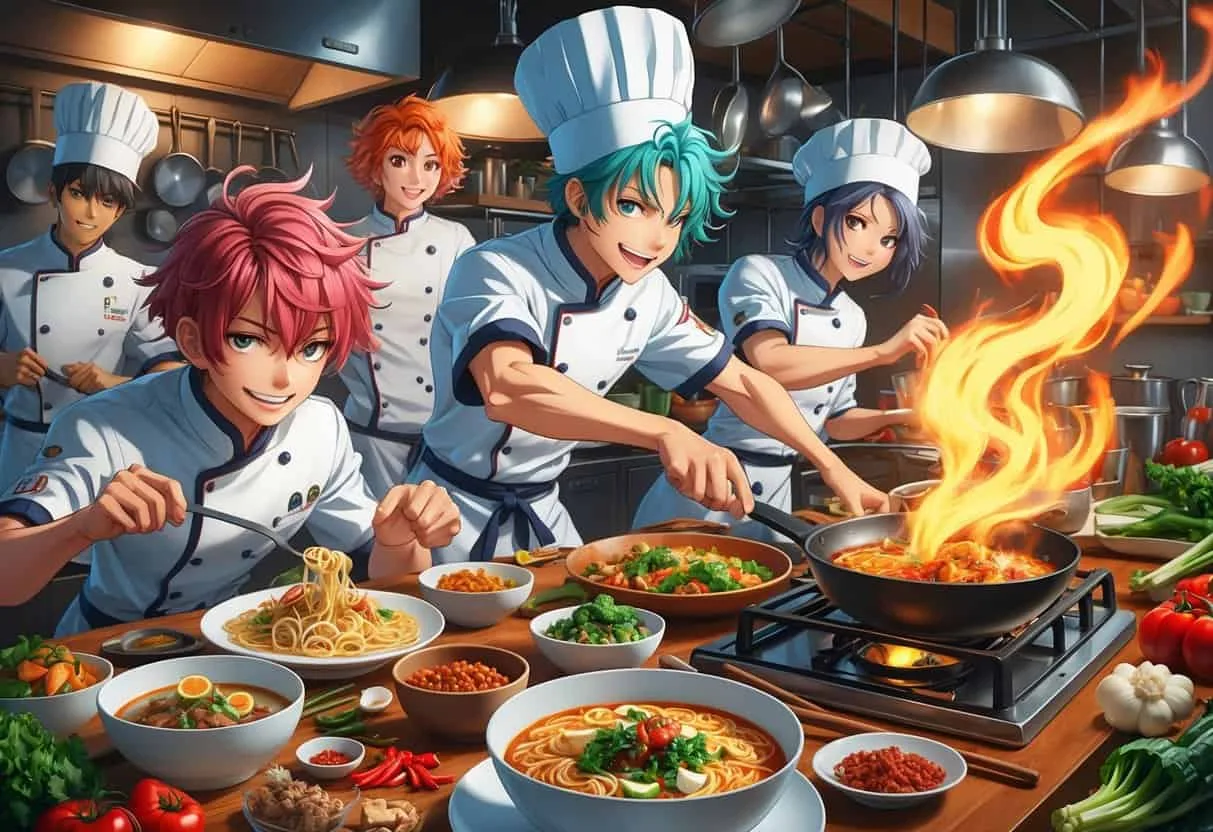
Anime has a remarkable ability to transform everyday activities into gripping spectacles, and nowhere is this more evident than in the cooking genre. These series transcend simple recipe tutorials, weaving together high-stakes competitions, cultural exploration, and character-driven narratives that revolve around the preparation of food. A perfectly animated dish—with its glistening sauces, delicate steam curls, and vibrant colors—can trigger a tangible craving, making these shows a feast for both the eyes and the imagination. Whether you're a seasoned home cook or someone who just appreciates a good meal, cooking-themed anime offers an immersive, sensory-rich experience that connects deep emotional beats with the universal need to eat.
The genre’s power lies in its detail-oriented approach to food art. Artists painstakingly render every ingredient, from the marbled fat in a premium cut of meat to the individual grains of rice, using shading and motion to suggest texture, temperature, and aroma. This isn't just about looking good; it's about communicating flavor through visual cues. The sizzle of a pan, the crackle of dough frying, and the exaggerated, joy-filled reactions of characters tasting a dish all work in concert to build a world where you can almost smell and taste what’s on screen. Beyond the spectacle, these stories often double as coming-of-age tales, explorations of cultural identity, and meditations on the artistry and science of cooking itself.
Why Cooking Anime Captivates Audiences
The appeal of cooking anime is built on a foundation of relatable human drama and specialized knowledge. At their core, these shows are about perseverance and growth, following protagonists who dedicate their lives to mastering a craft. The kitchen becomes a battleground for personal demons, rivalries, and the pursuit of perfection. This narrative structure is deeply satisfying because it mirrors real-world skill development, where failure is a stepping stone to success. The structure of a shokugeki (cooking duel) in series like Food Wars! formalizes this, turning culinary innovation into a tactical, high-pressure conflict where the stakes feel as monumental as any physical fight.
At the same time, these anime serve as informal educational tools. They demystify complex techniques, from the emulsification of sauces to the chemistry of baking, often through inner monologues or judge commentary. Yakitate!! Japan breaks down the fermentation science behind bread, while Silver Spoon explores the agricultural supply chain that precedes the kitchen. This blend of entertainment and information creates a dedicated fanbase of viewers who watch not only for the plot but to learn something new.
The result is an interactive viewing experience where you’re encouraged to appreciate the hidden labor and expertise behind every meal.
Must-Watch Cooking-Themed Anime
The following titles are foundational entries in the genre, offering a mix of intense culinary showdowns, heartfelt slice-of-life moments, and richly detailed food art. Each one brings a distinct flavor, from the bombastic and theatrical to the quiet and comforting.
Food Wars! (Shokugeki no Soma)
Food Wars! is the benchmark for high-octane cooking anime. It follows Soma Yukihira, a brash and inventive young cook who enrolls in the ultra-elite Totsuki Culinary Academy, where students bet their futures on formal cooking duels called shokugeki. The series is renowned for its explosive, often humorous reaction sequences—colloquially known as "foodgasms"—that visually represent the sheer ecstasy of tasting sublime dishes. However, beneath the fan service lies a rigorously researched examination of global cuisines, molecular gastronomy, and restaurant management. Soma’s experimental dishes, often inspired by his humble diner roots and his rivalry with the prodigious Erina Nakiri, emphasize practical creativity and resourcefulness.
The series not only makes you crave elaborate multi-course meals but also inspires a mindset of fearless experimentation in your own cooking. You can stream this series on Crunchyroll and Netflix.
Sweetness and Lightning (Amaama to Inazuma)
If Food Wars! is a roaring flame, Sweetness and Lightning is a gentle hearth fire. This slice-of-life series centers on Kouhei Inuzuka, a widowed high school teacher struggling to connect with his young daughter, Tsumugi, after the loss of his wife. Their journey toward healing begins in the kitchen, where they learn to cook proper, home-made meals alongside one of Kouhei’s students, Kotori Iida. There are no culinary battles here; instead, conflict arises from the simple, poignant challenges of single parenthood and the grief of loss. The show focuses on foundational Japanese comfort food—curry, hamburg steak, nikujaga—rendered with a soft, inviting animation style.
It’s a powerful reminder that cooking is an act of love, and that sharing a meal can rebuild fractured bonds. The detailed step-by-step preparation scenes are designed to be followed by viewers, making it a practical gateway for novices wanting to replicate the dishes at home.
Cooking Master Boy (Chūka Ichiban!)
Set during a fictionalized 19th-century China, Cooking Master Boy follows the journey of Liu Mao, a supernaturally talented young chef striving to become a legendary master. The series is a deep dive into the vast landscape of Chinese cooking, incorporating real regional cuisines from Sichuan, Canton, Shanghai, and Beijing into its narrative. Every cooking challenge sees Mao drawing on profound traditional knowledge and innovative techniques to create dazzling dishes that often have near-magical effects on those who eat them. The visual style, with its classic 90s animation aesthetic, uses dynamic lighting and surreal imagery to convey the ethereal flavor profiles of legendary foods like Mapo Tofu or the mythical "Chef's Dragon." It’s a culinary history lesson wrapped in a shonen adventure, highlighting philosophies of seasonality, balance, and the healing power of food.
Yakitate!! Japan
Yakitate!! Japan takes a hyper-specific focus—bread—and turns it into a wildly entertaining competition saga. The protagonist, Kazuma Azuma, possesses the legendary "Solar Hands," naturally warm hands that are perfect for dough fermentation. His quest is to create a national bread for Japan that can stand toe-to-toe with rice as a staple. The show is a masterclass in baking science, explaining the roles of gluten formation, yeast activity, and sugar content in a way that is both hilarious and illuminating.
Reactions are judged through outlandish puns and reality-bending visuals, where a great bread might literally transport the taster to a heavenly paradise. For anyone interested in baking, the series provides an unexpectedly thorough education on everything from brioche to naan, all while maintaining a rapid-fire comedic pace that never takes itself too seriously.
The Visual Feast: How Anime Animates Delicious Food
A dish in a cooking anime is never just a drawing; it is a carefully constructed visual symphony designed to stimulate appetite. Studios employ dedicated food art directors and use a specific color palette dominated by saturated reds, golden yellows, and glossy highlights to mimic hedonistic richness. Steam is animated with flowing, translucent layers implying freshness, while sauces shimmer with pronounced specular reflections to emphasize viscosity and texture. The act of eating is stretched out in slow motion, capturing the exact moment a crispy crust shatters, a runny egg yolk breaks, or a slab of butter melts into a hot crevice. Techniques like "ekaki" (a stylized text overlay of a sound effect) combined with crisp foley audio pull the viewer deeper into the sensory illusion, transforming a 2D medium into a multi-sensory suggestion.
This meticulous attention to detail has a documented psychological effect on viewers, often referred to as "virtual taste" or "screen-induced appetite." By hyper-focusing on the textural properties of food—the stretch of cheese, the char on grilled meat, the condensation on a cold glass—anime triggers mirror neurons associated with the viewer's own eating experiences. Shows like Isekai Izakaya amplify this by grounding fantastical ingredients in familiar cooking processes, creating a bridge between the otherworldly and the recognizable. The visual language becomes a shared vocabulary between the creator and the audience, where a single drop of moisture on a fresh vegetable can convey everything about its crisp freshness.
Unique Cooking Experiences in Anime
Some of the most memorable cooking anime break free from restaurant kitchens and culinary schools, placing food creation in survival scenarios, high fantasy dungeons, or interdimensional doorways. These settings use cooking as a tool for problem-solving and world-building, creating narratives where a well-prepared meal is literally a lifeline.
Campfire Cooking in Another World With My Absurd Skill
This isekai series follows 27-year-old salaryman Mukouda Tsuyoshi, who is accidentally summoned to a fantasy kingdom. Deemed useless due to his unassuming "Online Supermarket" skill, he leaves the royal capital only to discover that his ability to purchase modern Japanese ingredients and tools is staggeringly powerful in a medieval world. The show is a masterclass in low-stakes survival comfort. Mukouda sets up camp, summons a luxurious ingredient from another dimension, and transforms simple campfire cooking into a gourmet event. The joy here is in the process—watching cubes of Wagyu sizzle on a portable grill or rice cook perfectly in a cast-iron pot, all set against a pastoral fantasy backdrop.
It’s a celebration of ingredient quality and the pure, unadulterated pleasure of eating well in the great outdoors.
Delicious in Dungeon (Dungeon Meshi)
In a radical twist on the dungeon-crawling RPG genre, Delicious in Dungeon asks what happens when a party of adventurers decides to source their meals from the monsters they slay. After a near-wipe leaves one of their group members deep inside a dragon, the swordsman Laios, elf mage Marcille, and halfling Chilchuck must descend back in with no food or money. Their salvation comes from Senshi, a dwarven cook who has spent decades perfecting the art of preparing monster cuisine. The series operates on a strict nutritional logic system, calculating the calories, protein, and minerals provided by creatures like giant scorpions, walking mushrooms, and slimes. It treats cooking as a form of ecological engagement, exploring a dungeon's food web with scientific curiosity.
The result is a weird, darkly funny, and intellectually stimulating anime that makes you look at a treasure bug and wonder if it might taste like shrimp.
Restaurant to Another World (Isekai Shokudou)
Every seven days, the humble Western Restaurant Nekoya opens its doors to a magical realm, welcoming a bizarre and hungry clientele ranging from dragon queens to noblewolves. Restaurant to Another World is less about the act of cooking and more about the nostalgic, mystical power of specific dishes. Each episode is typically a vignette focused on a single menu item, such as pork cutlet curry or chocolate parfait, and the otherworldly patron who becomes obsessed with it. The kitchen work is shown with soothing routine, focusing on the chef’s muscle memory and the crisp plating. This series beautifully illustrates how food can be a cultural ambassador and a source of peace, bridging vastly different species and social statuses over the simple, democratic pleasure of a well-cooked meal.
Mastering Culinary Arts: Skill Development Through Anime
For viewers seeking more than just entertainment, many cooking anime double as immersive educational experiences. They meticulously chart the learning curve of mastering a craft, emphasizing patience, ingredient understanding, and the iterative process of failure and refinement.
Silver Spoon (Gin no Saji)
From the creator of Fullmetal Alchemist, Hiromu Arakawa, Silver Spoon is an autobiographical-inspired tale that grounds cooking in the hard realities of agriculture. Yuugo Hachiken runs away from urban academic pressure to enroll in Ooezo Agricultural High School in Hokkaido. He knows nothing about farm life, and the series follows his steep, humbling education in how food is actually produced. You’ll learn about the emotional weight of slaughtering livestock, the chemical processes of making cheese, and the back-breaking labor of a harvest. The cooking segments here are profoundly contextual; a simple pizza becomes a heroic culmination of planting wheat, growing tomatoes, and raising pigs.
The show delivers a powerful ethical framework for consumption, making you feel the gravitational pull of responsibility and gratitude attached to every ingredient on a plate.
Today's Menu for the Emiya Family (Emiya-san Chi no Kyou no Gohan)
This spin-off from the action-heavy Fate franchise is a gentle, standalone cooking series that strips away all supernatural conflict to focus on culinary craft. Set in a peaceful alternate universe, it follows Shirou Emiya as he prepares seasonal, home-style Japanese dishes for his friends, including the ever-ravenous Saber. Each episode is a full recipe walkthrough, specifying temperatures, cutting techniques, and resting times with incredible precision. You’ll see Shirou shallow-fry tofu for agedashi, debone a whole fish, and patiently simmer nikujaga. The animation is warm and hyper-detailed, lingering on the careful folding of an omelet and the precise slice of a knife through a spring onion.
The show is a practical, meditative guide that directly invites you to pause the video and cook along. It celebrates the therapeutic rhythm of prep work and the quiet pride found in a well-set table.
Emotional Stories Simmering Beneath the Surface
Ultimately, the most resonant cooking anime are containers for profound human emotions. The kitchen is a space of memory, where a scent can trigger a Proustian rush of nostalgia, and a recipe can be an heirloom carrying the essence of a deceased relative. In Sweetness and Lightning, cooking from scratch becomes a form of grief counseling, a tangible way for a father and daughter to remember a lost wife and mother through the dishes she loved. In Silver Spoon, a slab of bacon is a totem of a life a student raised and took, forcing a confrontation with mortality and maturity.
The pressure-cooker environment of Totsuki Academy in Food Wars! is a metaphor for the relentless scrutiny of any high-stakes creative career, where your worth is judged on a single piece of execution. Even the monstrous cuisine of Delicious in Dungeon serves to comment on necessity, adaptation, and the primal joy of satiety in dire straits. These series recognize that eating is never just a biological function. It’s a deeply emotional act tied to comfort, identity, and connection—and by visually exaggerating the tastiness of the food, they viscerally connect you to the characters’ internal transformations and their bonds with one another.
Where to Stream These Culinary Adventures
Accessing these shows is easier than ever, with most major streaming platforms hosting robust anime libraries. For a broad catalog, Crunchyroll remains the industry leader, carrying Food Wars!, Silver Spoon, and many seasonal offerings. Netflix has invested heavily in the genre, offering exclusive dubs of Delicious in Dungeon and popular entries like Sweetness and Lightning. For legacy titles such as the original Cooking Master Boy, you may need to explore niche services, though the more recent reboot, True Cooking Master Boy, streams on platforms like Crunchyroll. Yakitate!!
Japan and Today's Menu for the Emiya Family are often available on Crunchyroll or HiDive, through region-specific catalog rotations.
Final Thoughts
Cooking-themed anime has evolved into a rich, multifaceted genre that caters to a vast spectrum of tastes. It can be your next high-adrenaline battle shonen, a gentle lullaby for a quiet evening, or a hands-on cooking class that changes your real-world Saturday dinner plans. The connective tissue between all these stories is a profound respect for the craft of cooking and the emotional weight it carries. As you watch a character plate a dish that took an entire episode to perfect, you’re not just seeing a meal; you’re witnessing an act of creation, communication, and love. These shows will leave you with a fresh-found hunger—not just for a snack, but to step into your own kitchen, pick up a knife, and pour a little more intention into your own cooking.
Hit play, keep your ingredients handy, and don't be surprised if your viewing sessions always end with a rumbling stomach and a late-night trip to the refrigerator.