Table of Contents
Anime’s loner characters pull you in because their isolation feels strangely familiar. They aren't just side characters who dislike crowds; they are often the emotional core of the story, and their personal battles with connection resonate with anyone who has ever felt misunderstood. Their appeal lies in the quiet authenticity of their struggles—making growth feel earned rather than scripted. These characters don’t always find salvation in friendship or grand heroic arcs. Instead, they navigate the messiness of human interaction on their own terms, and that raw vulnerability hits harder than any explosive battle scene.
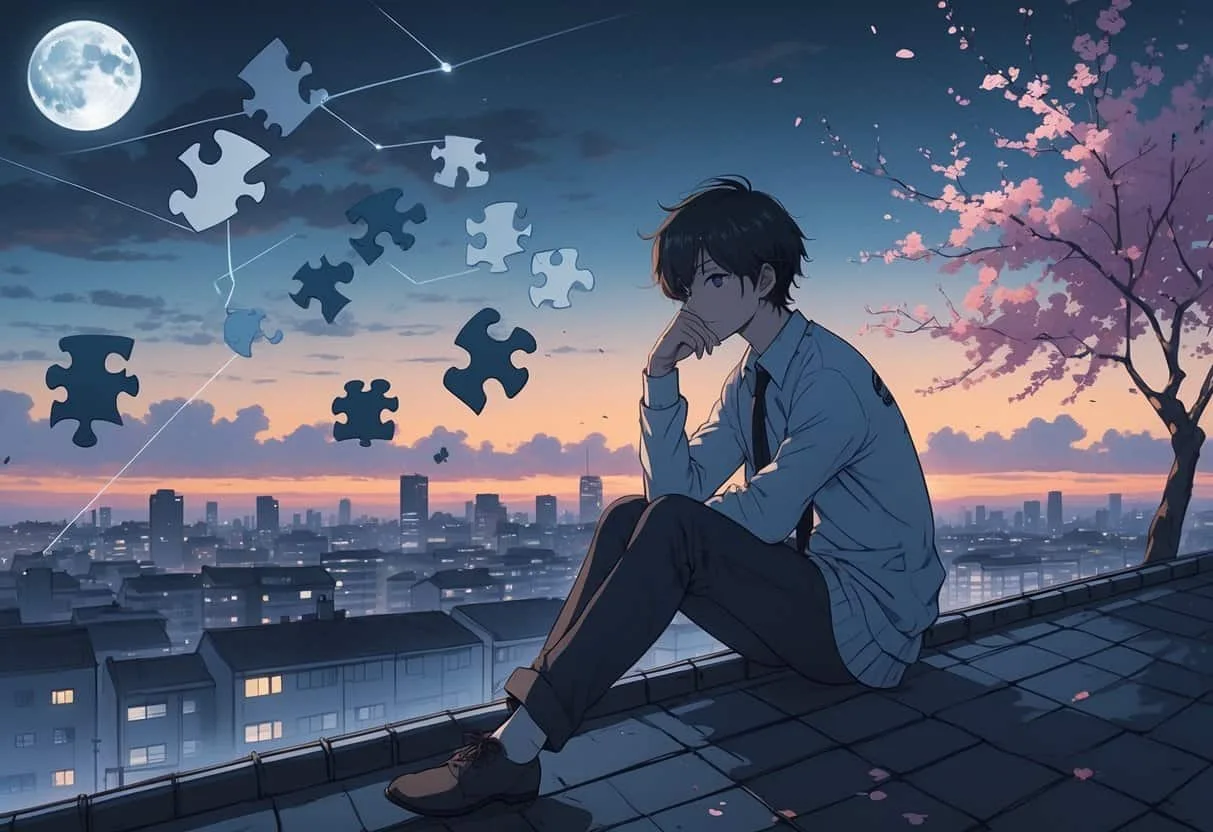
What sets anime apart is its willingness to root that loneliness in something real. Trauma, social anxiety, systemic neglect, or even a philosophical rejection of superficial relationships—these become the bedrock of a character’s isolation. When a loner finally lets someone in, the moment lands with a weight that’s earned over dozens of episodes. That psychological depth invites viewers to reflect on their own emotional walls, making the screen feel less like a barrier and more like a mirror.
Defining the Anime Loner: Traits and Archetypes
Loner characters in anime are not a monolith. They range from brooding anti-heroes to awkward introverts who can’t read a room, but a few core traits unite them. They often exist on the periphery of social groups, observing rather than participating, and they carry a dense internal world that the audience is gradually allowed to access. Their isolation isn’t a quirk tacked on for coolness—it’s a deliberate narrative choice that shapes every relationship and decision.
The Quiet Observer and the Internal Dissonance
Many iconic loners are defined by a gap between what they feel and what they show. They’re masters of the blank expression, but their inner monologues crackle with self-doubt, longing, or simmering anger. This dissonance creates a magnetic tension: you watch them sit through a noisy classroom scene or a team meeting, and you feel the weight of everything they aren’t saying. It’s a technique that makes you lean in, waiting for the mask to slip. The contrast between a still exterior and a chaotic interior is a hallmark of anime’s visual storytelling—sweat drops, shadowed eyes, and the sudden cut to a memory flash all communicate what dialogue never does.
Voluntary Isolation vs. Forced Exclusion
Some loners choose their solitude. They’ve built walls as a form of self-preservation after being burned by trust. Others are pushed to the margins by circumstances: a supernatural power that terrifies their neighbors, a family history that brands them as cursed, or the simple cruelty of schoolyard hierarchies. The distinction matters because it shapes how they view the world. A character who isolates herself to protect others from her perceived toxicity—like many tragic loners in fantasy anime—carries a different kind of pain than someone who was exiled against his will.
Anime explores both angles, often blurring the line so that even voluntary solitude starts to feel like a cage.
The Cultural Roots of Anime's Lone Wolves
The loner archetype doesn't exist in a vacuum. Japan’s cultural landscape—with its high value on harmony, group identity, and honne versus tatemae (true feelings versus public façade)—naturally generates characters who bristle against conformity. When the pressure to fit in is immense, the person who can’t or won’t becomes a figure of both pity and fascination. Anime draws on real social phenomena like hikikomori, where individuals withdraw from society entirely, sometimes for years. These are not outlandish fictional inventions; they reflect an ongoing national conversation about isolation and mental health.
Historically, Japanese literature and theater are filled with lone ronin, wandering monks, and tragic outcasts—figures who forge meaning away from the group. Anime carries that lineage into a modern context, replacing the wandering swordsman with the high schooler who sits alone on the rooftop at dusk. The cultural resonance is amplified by the visual language: empty train stations, classrooms after everyone has left, and single figures framed against sprawling urban backdrops all evoke a specifically Japanese melancholia that has found a global audience.
Psychological Depth: Loneliness, Agency, and the Human Condition
Beyond aesthetics, anime loners function as case studies in emotional survival. They wrestle with questions that don’t have easy answers: How do you keep moving when you feel invisible? Is there justice in a world that seems indifferent to suffering? Their stories validate the complexity of loneliness instead of treating it as a problem to be solved by making one friend.
Depression, Numbness, and the Feeling of Invisibility
A striking number of anime loners display symptoms of clinical depression—persistent numbness, loss of motivation, and a flat affect that others misread as arrogance or aloofness. Shinji Ikari’s listless stare and repeated refusals to pilot the Eva aren’t just teenage angst; they’re a psychologically faithful portrayal of someone who has internalized the belief that nothing he does will change anything. This representation functions as a form of validation for viewers who have felt the same weight. When an anime character spends three episodes unable to leave his room, it’s not bad pacing—it’s an honest depiction of the paralysis loneliness can cause.
The Quest for Meaning and Justice
For some loners, isolation fuels a relentless drive toward a personal code. Light Yagami’s descent into godhood isn’t born from a desire to be loved; it’s a reaction to a world he finds corrupt and empty. His loneliness becomes philosophical—a conviction that only he can see clearly, and that emotional attachments would cloud his judgment. This dynamic echoes real psychological patterns where moral rigidity and isolation reinforce each other. The loner’s quest for justice is often a double-edged sword: it gives them purpose but severs the very connections that might have kept them grounded.
Emotional Push-Pull: Cycles of Isolation and Connection
Rarely does a loner remain entirely alone for the length of a series. Instead, they cycle through phases of reaching out and pulling back, a pattern that closely mirrors attachment anxiety. They’ll form a tentative bond, feel a flash of hope, and then sabotage it when vulnerability becomes too scary. Spike Spiegel’s interactions with the Bebop crew are a masterclass in this push-pull: he’s there, but he’s never fully present, always keeping one eye on the past that made him run in the first place. Watching that tension play out is as compelling as any action sequence, because it rings true for anyone who has struggled to trust after being hurt.
Iconic Loner Case Studies: An Emotional Anatomy
Certain characters have become the gold standard for loner psychology in anime, each embodying a different facet of the experience.
Shinji Ikari: The Reluctant Pilot of His Own Psyche
Neon Genesis Evangelion thrusts Shinji into a world where the fate of humanity rests on a boy who can barely string together a sentence of self-worth. His loneliness is compounded by a cycle of abandonment: summoned by a father who has no affection for him, surrounded by colleagues who see him as a tool, and burdened with a duty he never asked for. The show’s surreal imagery—the Entry Plug filling with liquid, the endless train car scenes—externalizes his internal state so viscerally that you don’t just sympathize with him, you start to feel the claustrophobia yourself. Shinji’s story argues that heroism isn’t about courage; sometimes it’s just about managing to stay in the room when everything in you wants to flee.
Light Yagami: The God Complex and the Solitude of Power
In Death Note, isolation is a ladder to power. Light’s intelligence already set him apart before the notebook arrived; afterward, he detaches entirely from ordinary human concerns. The Shinigami Ryuk becomes his only genuine interlocutor—a creature who can’t offer moral grounding or emotional warmth. Light’s descent illustrates a brutal psychological truth: power pursued without relational anchors warps identity. Each time he manipulates someone who trusted him, a little more of his humanity erodes, until there’s nothing left but the cold logic of his “new world.”
The tragedy is that he believes this isolation makes him special, when it actually makes him hollow.
Spike Spiegel: Existential Drifting and Unresolved Grief
Spike’s loneliness is quieter, masked by lanky grace and a cigarette lazily perched in his fingers. But Cowboy Bebop reveals that his whole bounty-hunting life is an attempt to outrun a past he can’t accept. The lopsided smile he flashes at Faye or Jet never quite reaches his eyes, because part of him is still stuck in that rainy churchyard. He’s a loner by traumatic necessity—he lost the person who anchored him, and now he drifts, unwilling to fully land anywhere new. His final confrontation isn’t a redemption arc; it’s the logical endpoint of a man who never learned to share his pain.
Naruto Uzumaki: From Ostracized Child to Community Builder
Naruto’s case flips the script: his loneliness is imposed by a village that sees him as a monster. Unlike many loners who retreat inward, he channels his pain into a desperate, loud bid for recognition. Every prank, every shouted boast, is a cry of “see me, I exist.” The psychological journey of Naruto is one of transforming isolation into empathy—once he finds people who accept him, he’s able to recognize that same loneliness in enemies like Gaara and Sasuke. His growth doesn’t erase his early trauma, but it proves that a foundation of rejection can sometimes become a foundation for fierce, protective love.
Hachiman Hikigaya: The Cynic’s Loneliness
A more recent addition to the loner pantheon, Hachiman from My Teen Romantic Comedy SNAFU represents the self-aware, intellectualized isolation of someone who has turned his disappointments into a worldview. He rationalizes his loneliness as a sensible response to a society full of hypocrites, all while craving the very connections he rejects. His internal monologues are sharp, bitterly funny, and painfully recognizable to anyone who has ever used sarcasm as a shield. The series slowly dismantles his defenses not by making him the hero, but by showing that his constant self-sacrifice for others is another form of running away from genuine intimacy.
Cultural Impact and Global Resonance
Anime loners don’t just live on the screen; they’ve reshaped how audiences around the world think about solitude and strength. Their influence shows up in fan art, fashion, and even in the way Western creators now approach their own lone wolf characters.
Influence on Western Media and Storytelling
For decades, the American hero model prioritized extroverted charm, team dynamics, and clear moral lines. Anime loners introduced another paradigm: the protagonist whose primary battle is internal. You can trace the fingerprints of characters like Spike and Shinji across shows like Avatar: The Last Airbender (Zuko’s prolonged inner turmoil) and even into the Marvel Cinematic Universe’s more introspective moments. The quiet, slow-burn character study—once a rarity in Western animation—has become far more accepted as anime’s global audience has grown, documented in cultural analyses of the medium’s worldwide reach.
Fandom, Cosplay, and the Celebration of the Outsider
The loner archetype has fueled an entire aesthetic. Cosplayers gravitate toward characters like L (from Death Note) or Rei Ayanami—figures whose quiet intensity translates into striking visual presence. Fan communities spring up around analyzing every micro-expression and decoding the psychological subtext of their favorite isolated heroes. This isn’t just consumption; it's a form of communal processing. When a fan dons a trench coat and slouches through a convention hall as Spike, they’re not just dressing up—they’re inhabiting a version of resilience they admire, one that says you can be deeply wounded and still move forward.
Anime as Soft Power and Cultural Exchange
The international popularity of these psychologically complex characters has become a significant driver of Japan’s soft power. The same themes that resonate with Japanese viewers—social pressure, the search for identity, the fear of never truly being known—resonate just as strongly in Brazil, France, or Indonesia. Anime conventions, streaming platforms, and online communities have turned niche character studies into global conversation starters. This exchange goes beyond entertainment; it introduces international audiences to Japanese concepts of mental health, community, and the self, fostering a kind of cross-cultural empathy that official diplomacy rarely achieves.
The Psychology of Audience Identification: Why We See Ourselves in the Shadows
At its core, the staying power of the anime loner isn’t about escapism—it’s about recognition. These characters articulate something that many people struggle to name: the experience of feeling fundamentally separate from the people around you, even in a crowd.
Emotional Catharsis and Mirroring
When you watch Shinji break down or Hachiman deliver a monologue about the uselessness of youth, you’re engaging in a form of emotional catharsis. The character carries the weight so you can release your own, if only for a moment. This mirroring effect is amplified by the way anime externalizes internal states—through color shifts, fractured screen angles, or the sudden absence of background music. The visual grammar of isolation makes the emotion feel tangible, which can be profoundly validating for a viewer who has never seen their own loneliness represented so precisely.
Redefining Strength and Vulnerability
Anime loners challenge the idea that strength means stoic independence. True strength, in these narratives, often looks like admitting you’re not okay, accepting help even when it terrifies you, and continuing to exist in a world that has shown you cruelty. Naruto’s insistence on acknowledging his pain, rather than burying it, becomes the very thing that enables him to break cycles of hatred. It’s a quiet revolution in character writing: the loner doesn’t have to be “fixed” by becoming the life of the party. They can remain introverted, guarded, and still find a form of belonging that doesn’t erase who they are.
Anime’s most iconic loners endure because they offer a language for experiences that are often too difficult to voice. They map the terrain of social anxiety, grief, and existential exhaustion without promising easy resolutions. In a world that constantly celebrates extroversion and connectivity, these characters stand as a reminder that solitude can be a crucible—a place where identity is forged, not merely endured. And for every viewer who has ever sat alone on a rooftop at dusk, wondering if they’ll ever be understood, that on-screen reflection might just be enough to make them feel a little less invisible.