Table of Contents
The Rise of Anime Culture on TikTok
Anime has always thrived on passionate communities, but TikTok has supercharged the way fans discover, celebrate, and reshape their favorite series. In 2024, the app is not just a reflection of what’s popular—it actively dictates what breaks into the mainstream. Shows like Chainsaw Man, Jujutsu Kaisen, and Spy × Family have amassed billions of views not through traditional marketing alone, but because fans turned their wildest moments into snackable, shareable content. TikTok’s unique ecosystem of short video, instant audio remixing, and algorithmic promotion gives anime an unprecedented cultural foothold. When a clip of Denji’s chaotic grin or Anya’s awkward smirk goes viral, it’s more than a trend—it’s a signal that these characters have embedded themselves into the collective consciousness of a generation.
The sheer speed at which a series can go from niche interest to global phenomenon is staggering. A single well-timed edit set to a trending sound can introduce millions of viewers to a show they might never have encountered otherwise. This organic, fan-driven buzz often eclipses official promotional efforts, making TikTok a critical barometer for what audiences genuinely crave. In this environment, the line between passive viewer and active participant dissolves. Every stitch, duet, and green-screen reaction adds a layer to the story, turning anime into a living, collaborative art form.
The Most Viral Anime TikTok Trends Right Now
TikTok feeds on a handful of repeatable formats that fans consistently remix. While the specific shows in the spotlight shift, the underlying trend types remain the engine of anime’s presence on the platform. Understanding these formats explains why some series blow up overnight and others fizzle out.
Dance Challenges Set to Anime Openings and Soundtracks
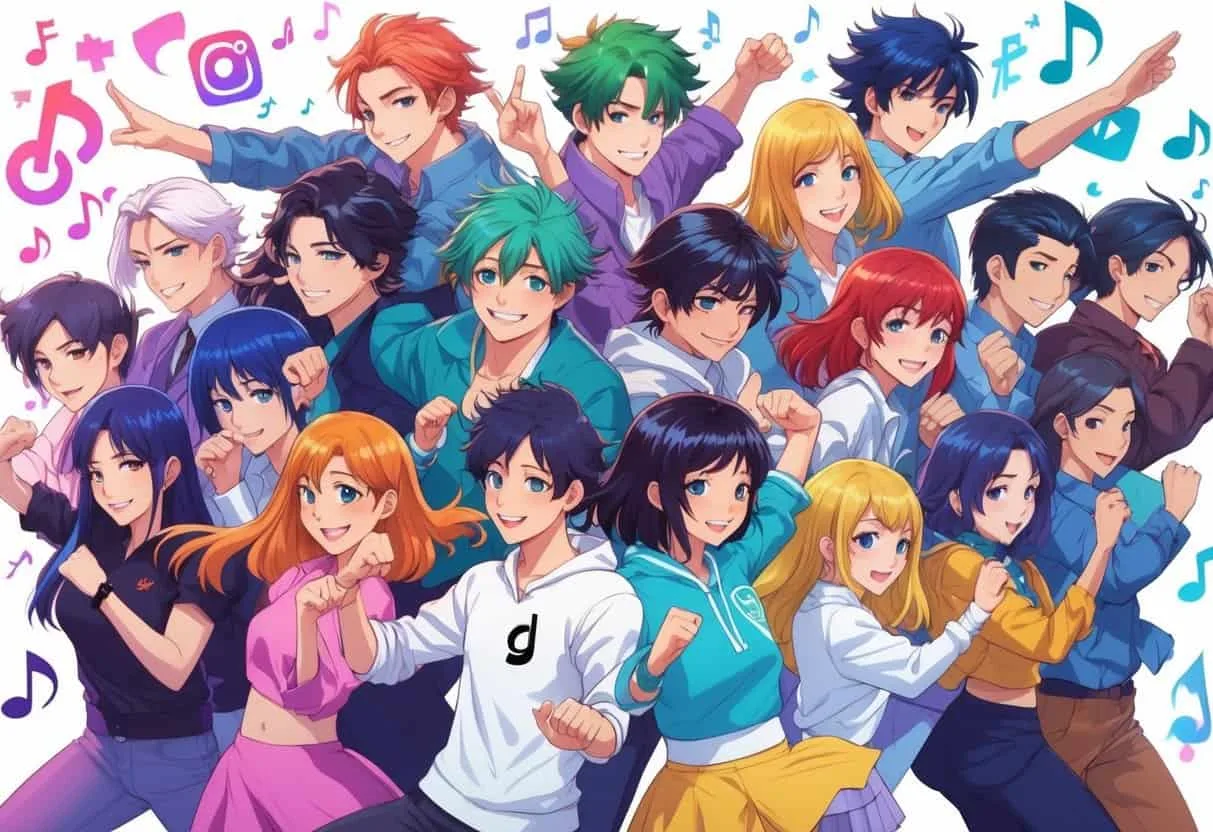
It’s impossible to scroll through anime TikTok without encountering a choreographed routine to a hit opening. Demon Slayer’s “Gurenge” and the infectious brass of Jujutsu Kaisen’s “Kaikai Kitan” have become templates for countless dance challenges. Creators often incorporate signature attack poses—Tanjiro’s Water Breathing stances or Gojo’s hand signs—into the moves, transforming a simple dance into a tribute. These routines feel accessible; the steps are designed to be learned in an afternoon, which encourages mass participation. When a major influencer joins in, the challenge cascades across For You pages worldwide, pulling in viewers who might never watch anime otherwise.
The Crunchyroll team has documented how anime songs now regularly top TikTok’s trending audio charts, solidifying the link between music discovery and fan engagement.
Cosplay Transformations and the “Before/After” Hook
Cosplay content has found its perfect medium in TikTok’s quick-cut transformation format. A creator might start in casual clothing, then—after a snap or a camera spin—appear fully transformed into Satoru Gojo, complete with blindfold and glowing contacts. The sharp contrast feeds the platform’s appetite for visual payoff. Characters from Spy × Family, especially Yor and Loid in their civilian and assassin guises, are popular choices because the duality mirrors the transformation trope. Makeup artists and prop builders use these videos to showcase their craft, often breaking down the process in subsequent posts.
This not only elevates the art of cosplay but also creates a feedback loop where fans see the human effort behind the fantasy. The result is a deeper appreciation for the characters and the artisans who bring them to life. A recent analysis on Anime News Network highlighted how these transformation videos have dramatically increased convention attendance and cosplay supply sales, proving the offline impact of online trends.
Anime Edit Compilations: The Art of the Micro-Tribute
For fans who want to relive a show’s emotional peaks in under 60 seconds, edit compilations are essential. These videos splice together the most visually stunning or emotionally charged sequences—Levi’s blades whirling through Titans, Makima’s eerie calm, or Isagi’s game-winning goals in Blue Lock—and sync them to meticulously chosen audio. The best edits employ color grading, velocity shifts, and beat drops to elevate the source material into something almost musical. They function as argument pieces too: “This is why this character is the best,” or “This fight scene was a masterpiece.” The comment sections become battlegrounds for debate, deepening viewer investment.
Shows like Attack on Titan benefit enormously from this format, as every twist and sacrifice gets reframed through a new lens, keeping the series alive in conversation long after its finale. Creators often gain substantial followings purely from their editing style, and their work can shift public perception of a character or arc. In a sense, these compilations become the unofficial canon of fan sentiment.
Viral Reaction Memes and the Shared Emotional Language
TikTok has turned raw, unfiltered reactions into a global dialect. When something shocking happens in an anime—Kaguya-sama’s love war, a Chainsaw Man character death, an impossible Blue Lock goal—fans record their live responses or pair iconic scenes with exaggerated face filters. These memes resonate because they’re instantly relatable. The experience of screaming at a plot twist is universal, and seeing someone else mirror your shock validates your own obsession. The format also lowers the barrier to entry: you don’t need editing skills or a costume, just your genuine reaction.
This authenticity fuels rapid spread. Studios have started to recognize the power of these organic moments, sometimes even releasing spoiler-free clip packages designed to provoke exactly the kind of gasps that become the next big meme. The cycle now feeds itself: a scene is written to be meme-worthy, and the meme guarantees the scene’s immortality.
Audio Remixes and the Voiceover Renaissance
Beyond typical lip-syncing, anime TikTok has embraced a wave of original voiceover work where fans re-dub scenes in different languages or humorous tones. An iconic Gintama gag might be reimagined as a Gen Z office meeting, or a tender Your Name moment gets a completely out-of-context monologue. This trend draws on the existing pool of talented impressionists and voice actors who use TikTok as a portfolio platform. The result is often absurdly funny and shares the same remix culture that keeps the community inventive. Audio clips from these videos then detach from the original anime and become standalone TikTok sounds, used across non-anime content, further blurring the line between niche fandom and general pop culture.
It’s a testament to how anime narratives are malleable enough to survive—and thrive—when reinterpreted through infinite creative filters.
What the Biggest Trends Tell Us About Fandom Dynamics
These trends are not random; they form a map of what drives modern anime fandom. By analyzing which characters and moments dominate, we can decode the mechanics of obsession and the collective priorities of viewers.
Character Obsession and the New Economy of “Best Boy” and “Best Girl”
TikTok’s algorithm amplifies character-centric content with frightening efficiency. When a character like Gojo Satoru dominates edits and dances, it’s because fans have formed a parasocial bond strong enough to demand constant tribute. The platform quantifies that bond: high like counts and shares on a Gojo cosplay aren’t just vanity metrics, they signal to the algorithm that this character is a cultural asset. Studios and streaming services notice. VIZ Media has observed that merchandise for Gojo consistently outsells the protagonist Yuji Itadori, a direct reflection of the disproportionate mindshare he commands on social media.
Fandom culture has evolved into a participatory marketplace where how much you “stan” a character directly influences their canonical importance. Creators receive death threats if their favorite isn’t given enough screen time, and TikTok becomes the outlet for that intensity—a space where fans can argue, defend, and, most importantly, create more content to keep the character alive in perpetuity.
The Lifecycle of a Meme: From Key Scene to Universal Shorthand
Memes don’t just capture funny frames; they condense entire emotional arcs into a reusable format. The “Eren looking at the sea” moment from Attack on Titan, once a symbol of hope, has been remixed into a thousand memes about disappointment and shattered dreams. This transformation mirrors the fanbase’s own journey from naive optimism to bitter realization. As a meme evolves, it becomes a coded language that only initiated viewers understand, strengthening in-group identity. Newcomers encounter the meme first, get curious, and watch the series to gain the context, only to emerge and contribute their own remixed version.
This cycle drives sustained viewership years after a show has finished airing. TikTok’s trend cycle accelerates this process, turning a single frame into a cultural reference within days. The “Nah, I’d win” panel from Jujutsu Kaisen reached that status almost instantly, proving that in the TikTok era, a single line can define a character’s legacy as much as a 20-episode arc.
TikTok as the Engine for Global Community Building
Anime fandom used to be siloed by language and region; TikTok has bulldozed those walls. A trend that starts with a Japanese creator can be stitched by a Brazilian fan, duetted by a German editor, and eventually land on a Kenyan user’s For You page, all within hours. This cross-pollination creates a genuinely global conversation where the shared visual language of anime transcends subtitles.
Algorithm-Powered Discoverability and the Revival of Legacy Titles
The platform’s recommendation system doesn’t care about a show’s release date—it cares about engagement velocity. When a creator posts a sharp edit of Berserk or an obscure scene from Monster set to a haunting track, the algorithm can push it onto millions of screens if early viewers engage heavily. This has sparked renewed interest in older, critically acclaimed series that lacked a TikTok presence during their original runs. A single viral clip often sends the manga or streaming numbers soaring. For example, Berserk volumes repeatedly chart on bookstore bestseller lists whenever a profound Guts quote circulates.
This algorithmic time machine rewards quality and emotional weight over recency, encouraging fans to mine the past for hidden gems. It also pressures platforms like Netflix and Crunchyroll to keep legacy libraries accessible, knowing that a TikTok moment can turn a 20-year-old show into the next big binge.
Fan Collaboration and the Dissolving Line Between Creator and Consumer
TikTok’s duet and stitch features turn passive viewing into active dialogue. A fan can literally insert themselves into a scene, reacting alongside the characters or providing real-time commentary. This blurs the traditional relationship between studio and audience. When thousands of fans collectively storyline a character through skits and POV videos, they’re engaging in a form of distributed fanfiction that the original creators can observe. Some studios, like those behind Spy × Family, have begun to interact with this content, liking and sharing fan edits, which further incentivizes production.
The community builds a shared ownership over the narrative. The “Anya Heh” face, for instance, became a universal reaction image not because the studio marketed it, but because fans saw infinite comedic potential and executed it tirelessly. This co-creation model means the fandom’s collective creativity now shapes the public identity of a show as much as the official art.
Monetary Waves: How TikTok Trends Drive Streaming Numbers and Sales
The cultural impact inevitably translates into hard economics. A trend can directly boost weekly streaming rankings on platforms like Crunchyroll, HIDIVE, or Netflix. When a Chainsaw Man dance challenge peaks, episode rewatches spike, merchandise pre-orders surge, and the manga’s available volumes sell out at retailers. Market analysis from GfK reveals that anime merchandise sales saw a 22% year-over-year increase in markets where TikTok engagement is highest, correlating directly with trend cycles. Streaming services now monitor TikTok’s trending audio and hashtag volumes to inform licensing decisions and commission slate.
In a very real sense, the TikTok fandom has become an unspoken focus group that validates a series’ commercial viability without any formal survey. This feedback loop rewards shows that are inherently “clippable”—packed with visually striking, emotionally charged moments that beg to be turned into short-form content. Some studios now storyboard with these shareable beats in mind, closing the circle between production and platform.
Anime on TikTok is far more than ephemeral entertainment. It’s a dynamic, self-sustaining ecosystem where fan passion directly influences cultural relevance and financial success. From a simple dance to a heartbeat-synced edit, every contribution adds another thread to the vast, ever-expanding tapestry of fandom. As long as the algorithm listens, the voices of millions of fans will continue to decide what the world watches next.