Table of Contents
The Silent Architects of Modern Animation
When audiences think of anime, they often picture visionary directors like Hayao Miyazaki or blockbuster franchises spearheaded by male creators. However, the vibrant worlds and emotionally resonant stories that define the medium owe an immeasurable debt to the women working tirelessly behind the scenes. From ink and paint to digital compositing, from script supervision to full direction, women have long been the silent architects of some of the most beloved works in Japanese animation. Their contributions challenge the persistent myth that anime is a male-driven industry, revealing a robust network of collaboration where female creativity and technical skill are indispensable.
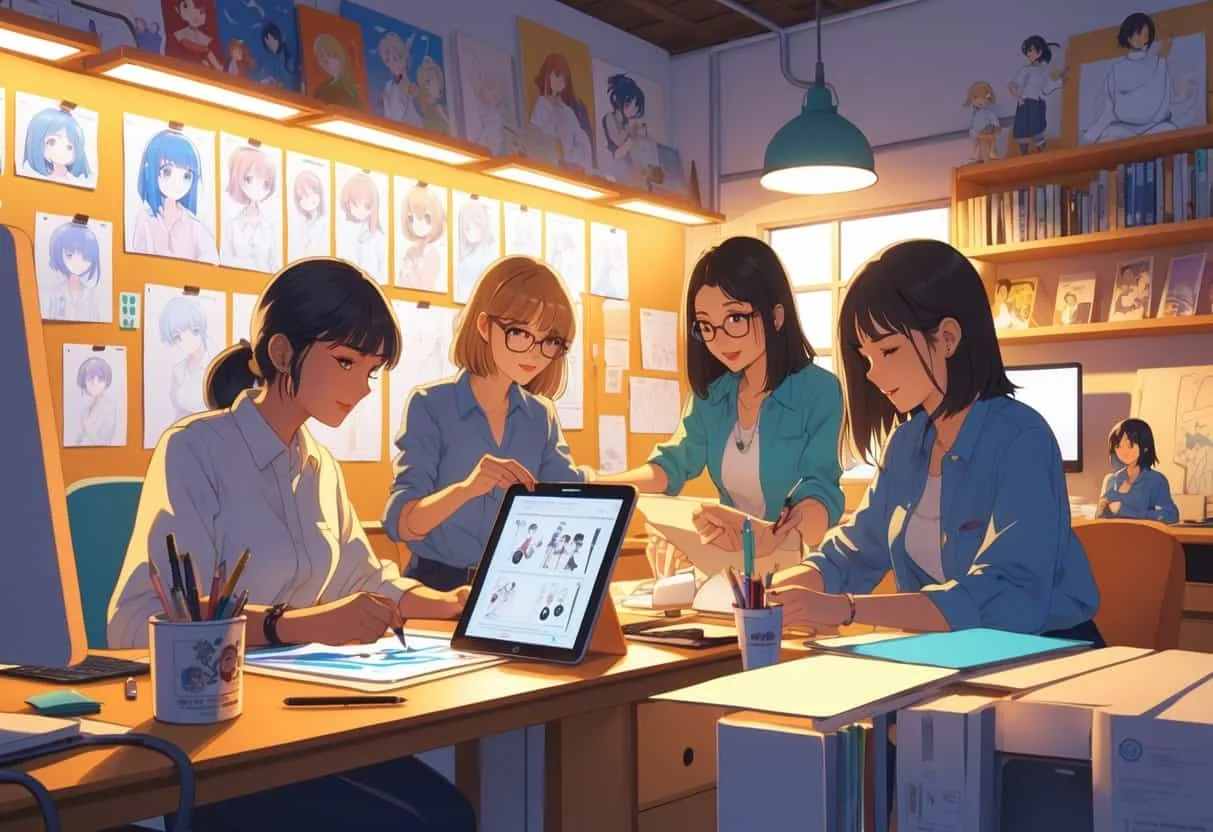
This behind-the-scenes influence spans every stage of production. Female animators bring nuanced gestures and lifelike emotion to characters; writers craft storylines that subvert tropes; producers navigate complex schedules and budgets to bring ambitious projects to life. Yet, despite their critical input, these professionals often labor in anonymity, their achievements overshadowed by a culture that historically prioritized male leadership. As the global fanbase for anime grows more diverse and demanding, the push to acknowledge and support these women has never been more urgent. This exploration covers their historical legacy, contemporary impact, systemic challenges, and the digital avenues they now harness for visibility.
Historical Foundations: Pioneers Against the Grain
The roots of female participation in anime stretch back to the medium’s embryonic days in the mid-20th century. In the 1960s, as studio systems like Toei Animation formalized production, women primarily entered the field in low-paying, labor-intensive roles. Jobs such as in-betweening—drawing the thousands of intermediate frames that create fluid motion—and tracing and painting cells were often deemed "women's work," analogous to assembly-line tasks. This gendered division of labor kept many talented artists confined to the margins, but it also provided an essential entry point.
One of the most iconic early figures is Reiko Okuyama, who joined Toei in 1966 and became the studio’s first female key animator. In an era when senior artists doubted a woman’s ability to handle action sequences or sustain the relentless pace, Okuyama persisted. She eventually contributed to classics like Dragon Ball and Panda! Go, Panda!, proving that skill knows no gender. Her presence opened doors for subsequent generations, even if progress remained slow.
For a deeper look at such pioneers, resources like Anime News Network’s profiles of female animators offer valuable historical context.
Beyond animation, women found leverage in the parallel manga industry, which frequently fuels anime adaptations. The Year 24 Group, a collective of female manga artists in the 1970s including Moto Hagio and Keiko Takemiya, transformed shojo manga by introducing complex psychological themes and fluid gender presentations. When their works were adapted into anime like The Rose of Versailles, they imported a new sophisticated sensibility that permanently reshaped the medium’s narrative range. These crossover influences underscore how women’s creative labor, even when indirectly channeled, has continuously expanded the scope of anime storytelling.
Contemporary Roles: A Spectrum of Influence
The modern anime production pipeline is a labyrinth of specialized departments, and women now occupy critical positions across this entire spectrum. While gender parity in top leadership roles remains elusive, the footprint of female professionals is unmistakable in the texture and quality of today’s shows.
Animation and Art Direction
In the digital era, the craft of animation has evolved, but the fundamental need for acute observation and emotional intelligence endures. Female animators are often celebrated for their ability to capture micro-expressions and deliberate, character-driven movement. Artists like Noriko Takao, known for her work on Clannad and key animation for The Anthem of the Heart, demonstrate how women excel in rendering the intimate, unspoken moments that forge viewer attachment. Their focus is not limited to “soft” scenes; women increasingly work on action sequences and mecha, dismantling old biases about what female artists can depict.
In art departments, women serve as color designers and background artists, establishing the visual mood of entire series. A well-composed background can communicate isolation, joy, or tension before a single line of dialogue is spoken. This craft requires a deep understanding of color theory and lighting, areas where many women have quietly set the standard. The result is a more immersive viewing experience that often goes uncredited beyond a name in the rolling staff list.
Writing and Storyboarding
The narrative soul of an anime often rests in the writer’s room. Female screenwriters and series composers have been instrumental in crafting stories that resist flat characterization. Mari Okada, for example, has penned emotionally charged originals and adaptations like Anohana: The Flower We Saw That Day and Maquia: When the Promised Flower Blooms. Her work is renowned for its raw exploration of grief, motherhood, and identity, themes that resonate universally but are infused with a perspective rarely foregrounded in male-authored scripts.
Storyboarding, or e-konte, is another domain where women’s contributions are vital. Storyboarders translate scripts into the blueprint for animation, directing shot composition and pacing. Female storyboarders often bring a distinct lens to action and drama, thinking carefully about spatial intimacy and character power dynamics. This labor shapes the entire visual narrative, yet storyboarders remain the unsung backbone of production.
Systemic Hurdles: The Persistent Gender Gap
Despite these achievements, the anime industry presents a formidable landscape of systemic barriers for women. The structure of studio hierarchy, demanding production schedules, and ingrained cultural biases coalesce to hinder career advancement. Understanding these obstacles is key to recognizing the resilience of the women who persevere.
One of the most pervasive issues is the glass ceiling in leadership. Women remain significantly underrepresented as chief directors, studio heads, and lead producers. Even when they prove their merit, they are often steered toward certain genres—shojo, slice-of-life, or romance—while being tacitly excluded from high-profile shonen or mecha titles. This pigeonholing limits both their earning potential and creative range.
Workplace harassment and a toxic “passion tax” culture further disproportionally affect women. The anime industry is notorious for brutal deadlines and low pay, but female workers face additional scrutiny. A 2021 survey by the Japan Animation Creators Association highlighted that a substantial number of female animators experienced gender-based harassment, ranging from dismissive attitudes about their skill to unwanted advances. The normalization of overwork can make it difficult to speak out, as protest is framed as a lack of dedication. Financial instability remains rampant, with many women forced to leave the industry after a few years, starving the talent pipeline of experienced artists.
The pay gap is another concrete barrier. On average, women in anime production earn less than their male counterparts, even when performing identical roles. This discrepancy is exacerbated by the fact that women more frequently occupy the lower-paid, contract-based positions such as in-betweening, a role that studios rarely convert into stable, salaried employment. The combination of economic precarity and limited upward mobility creates a leaky pipe, where only the most determined or independently supported women can sustain a lifelong career.
Reimagining Character: From Objects to Agents
The influence of women behind the scenes is nowhere more apparent than in the evolution of female character design and writing. As more women participate in creative decisions, the days of the one-dimensional “damsel in distress” or the purely fetishized warrior are giving way to a richer, more diverse range of personhood.
This shift is not about erasing sex appeal or strength but about contextualizing it within an internal life. Writers and directors such as Sayo Yamamoto, who directed Yuri!!! on ICE and Michiko & Hatchin, have demonstrated a knack for creating characters whose existences do not revolve around male approval. Her women are messy, ambitious, loving, and flawed. In the realm of enormous mainstream hits, shows like Jujutsu Kaisen feature women like Nobara Kugisaki, whose toughness and emotional authenticity are penned with a depth that signals a departure from pure stereotypes. While the head writer on such projects may be male, the growing presence of women on writing teams as episode scriptwriters and consultants exerts a collective pressure for authenticity.
The “male gaze” still heavily dictates camera angles and costume design in countless productions. However, the pushback is strengthening. When female animators and directors are empowered to lead, as seen with Naoko Yamada’s work on A Silent Voice and Liz and the Blue Bird, the visual language itself shifts. Yamada’s acclaimed focus on characters’ legs and body language, for instance, frames the body not for objectification but as a vessel of awkwardness, tenderness, and unspoken connection. These auteurist touches demonstrate that gender diversity in the production room fundamentally alters the art form.
For more on how visual storytelling is gendered, academic analyses of the female gaze in anime offer a deeper theoretical framework.
Digital Amplification: Social Media, Community, and Advocacy
The internet has become a double-edged sword for women in anime, offering unprecedented platforms for self-promotion and solidarity while also serving as a battleground for misogyny. Social media channels—particularly Twitter, Instagram, and YouTube—have democratized the ability to share one’s portfolio, bypassing traditional industry gatekeepers.
Female creators now build dedicated followings directly. On YouTube, animators and illustrators post speed-paints, tutorial series, and studio vlogs that humanize the production process. This direct-to-fan pipeline creates economic independence, reducing reliance on rigid studio structures. Simultaneously, hashtags like #AnimeToo have emerged, inspired by global movements, allowing industry workers and actresses to share experiences of harassment and push for accountability. These digital campaigns force studios into public relations crises, compelling them to issue statements and, in some cases, implement new workplace policies.
The visibility of female-led initiatives like the Women in Animation (WIA) organization, with a growing presence among Japanese creators, provides mentorship opportunities, networking, and advocacy for equitable hiring. However, the digital landscape also incubates targeted harassment. Outspoken women in the industry frequently face coordinated attacks from hardcore fans who bristle at any perceived “political” intrusion into their entertainment. Female creators who critique the fanservice status quo or advocate for better working conditions are doxxed or deluged with abuse. Navigating this toxic environment requires resilience and a strong peer network, turning community building from a luxury into a survival mechanism.
Case Studies: Directors Forging New Paradigms
To concretize these abstract dynamics, examining a few contemporary luminaries is instructive. These directors have not only delivered critically acclaimed works but have also altered production culture around them.
Naoko Yamada is perhaps the most prominent name in the new guard. Rising from Kyoto Animation, a studio paradoxically infamous for its demanding, insular culture, Yamada has carved a space for contemplative, emotionally embodied storytelling. Her debut feature, A Silent Voice, navigated bullying, disability, and suicidal ideation with a delicate touch that could only arise from a deeply empathetic production ethos. Her insistence on using real-life reference footage to capture the micro-shifts in teenage body language created a new visual lexicon within the studio. Yamada’s influence extends to mentoring younger female animators, proving that star power can be wielded to reshape studio dynamics from the inside out.
Chiaki Kon, another powerhouse, has directed segments of series like The Unlimited – Hyōbu Kyōsuke and the energetic seasons of Pretty Guardian Sailor Moon Crystal. Kon’s career trajectory—from episode direction to series direction—demonstrates the slow but steady route many women navigate. Her ability to balance faithful manga adaptation with modern pacing and character focus shows a directorial hand that understands both fan expectation and narrative necessity. The trajectory of these leaders is documented by outlets dedicated to the craft, such as Full Frontal, which provides in-depth features on anime production staff that regularly highlight overlooked women.
Moving Forward: Structural Changes and Grassroots Efforts
The path toward a more equitable industry is not solely reliant on a few superstar directors. It requires structural reforms and grassroots efforts that target the pipeline from education to retirement. Production committees, the financiers who greenlight anime, must start tying their funding to diversity and labor standards, just as some global streaming platforms have begun demanding from overseas partners.
Educational initiatives are also critical. Art schools and vocational anime programs in Japan are beginning to address the confidence gap that discourages young women from pursuing technical or directorial roles. Workshops led by veteran female creators help students visualize a viable career path. Simultaneously, scholarship funds specifically for women in animation can help offset the economic barriers that drive talent away.
For fans, the most direct impact comes from conscious consumption and advocacy. Supporting anime that prominently credits women in leadership, purchasing art books that celebrate female key animators, and financially backing studios known for ethical labor practices can send market signals. Avoiding piracy and funding official releases ensures that more money flows into the ecosystem, with the collective demand for transparency pushing back against exploitation.
Conclusion: The Unfinished Narrative
The story of women behind the scenes in anime is one of quiet resilience, immense creativity, and an ongoing struggle stubbornly defying the odds. From the paint rooms of 20th-century studios to the message boards of 21st-century social media, their presence has been a thread weaving innovation and humanity into the medium. The industry confronting its misogyny problem is not just an issue of fairness—it is an artistic and economic imperative. When female talent is excluded or burned out, the medium loses stories that could have been told, visual styles that could have been invented, and characters who could have felt more real.
Progress is perceptible but painstaking. Every time a woman takes the director's chair, leads a storyboard team, or publishes her own independent animation online, she carves out space for the next generation. The next time you sit down to watch a new series, glance at the credits scrolling by. The name you might not recognize likely belongs to someone whose vision has subtly shaped your experience, demanding that we all expand our definition of what an anime creator looks like.