Table of Contents
Key Takeaways
- Dragon Ball Z, Pokémon, and Naruto remain the undisputed pillars of German anime fandom, consistently dominating local viewing statistics and merchandising sales.
- Streaming platforms such as Netflix and Crunchyroll are the primary drivers of anime consumption, making thousands of episodes accessible with German dubbing and subtitles.
- 2025 trends show a sharp rise in demand for fantasy and shonen titles like Demon Slayer and My Hero Academia, reflecting a younger, digitally native audience.
- Anime is no longer a niche interest; the German market has seen over a 100% surge in demand since 2020, cementing its status as a key European hub.
- Fan engagement extends beyond the screen through manga reading, merchandise collecting, and massive community-driven events like AnimagiC and Connichi.
The Rise of Anime in Germany
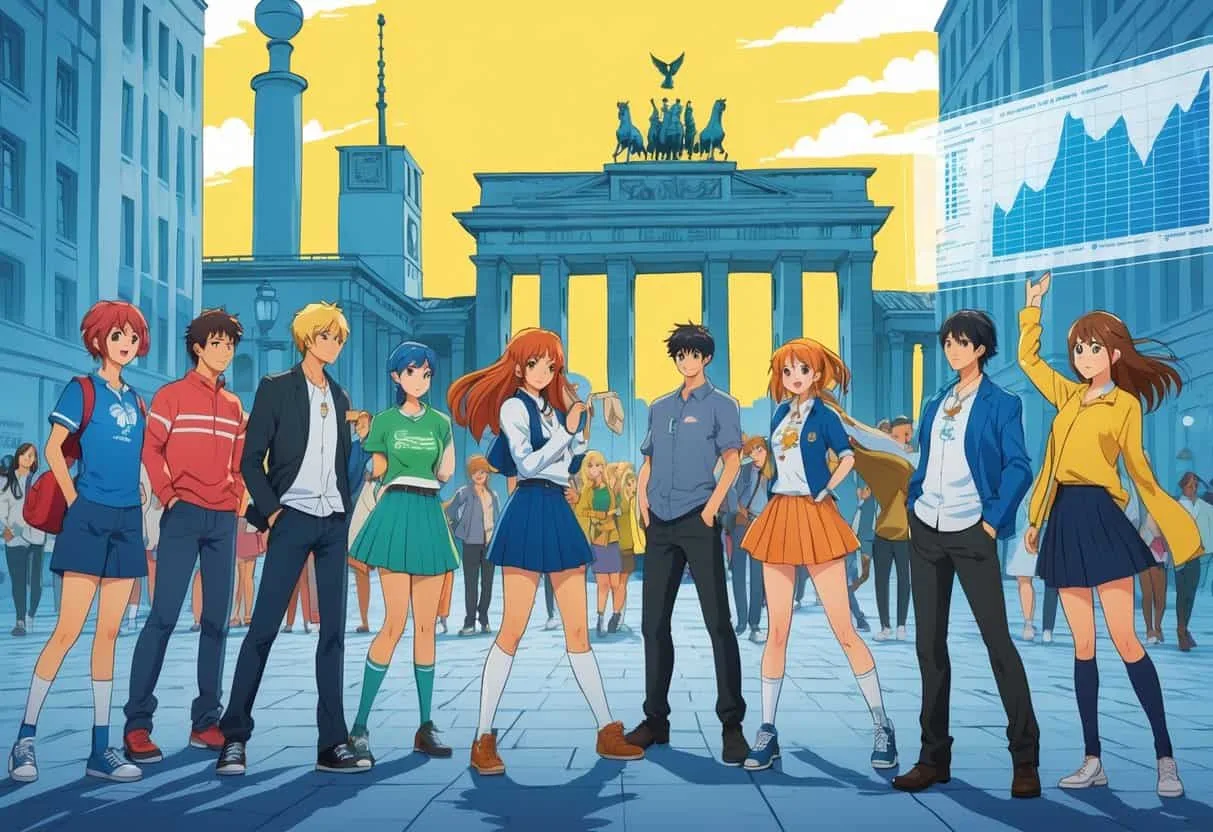
Anime has carved out a permanent home in German living rooms, and the numbers from 2024 and early 2025 only confirm that the medium is far from a passing fad. The journey from niche hobby to mainstream entertainment has been decades in the making, but the recent explosion in viewership is unlike anything the local market has seen before. According to a Statista analysis of the German anime market, demand for anime content more than doubled between 2020 and 2024, with no sign of a slowdown heading into 2025. That kind of triple-digit growth is rare for any entertainment category, and it underscores how deeply Japanese animation has embedded itself into the daily media diet of Germans across generations.
The foundation was laid back in the 1990s when series like Ranma ½ and Sailor Moon first aired on German television, often in heavily cut versions that still managed to captivate a young audience. Those early broadcasts normalized anime as a cartoon format, but it wasn't until the rise of uncut DVD releases and the internet that German fans got access to the full breadth of the art form. Now, with streaming platforms delivering thousands of episodes in high definition, complete with high-quality dubbing and subtitles, the barrier to entry has virtually disappeared. The German voice acting industry has matured alongside the boom, producing dubs that many fans argue rival the original Japanese performances in emotional impact and cultural adaptation.
Part of the market's resilience comes from its diversity. The stereotype of anime being solely for children dissolved long ago. Today, anime in Germany spans demographic lines, appealing to teenagers who binge the latest shonen battle series, young adults who dive into psychological thrillers, and older viewers who grew up with classics and now share them with their own children. The result is a multi-layered fan ecosystem that fuels everything from streaming subscriptions to convention attendance. The global anime market was valued at approximately USD 34.2 billion in 2024, and within Europe, Germany consistently ranks among the top consumers, a fact that has not gone unnoticed by Japanese licensors and international streaming services alike.
Top Anime Series Dominating German Screens
Local streaming statistics, social media engagement, and merchandise sales all point to a handful of titles that have achieved near-legendary status in Germany. While tastes evolve and new titles climb the charts, an inner circle of long-running franchises continues to define what anime means to the general public. At the same time, a wave of critically acclaimed newer series is reshaping expectations and introducing fresh visual languages to a voracious audience.
Classic Shonen Pillars: Dragon Ball Z, Naruto, and One Piece
If there is a holy trinity of German anime fandom, it consists of Dragon Ball Z, Naruto, and One Piece. These three series have moved beyond mere entertainment to become cultural touchstones. Dragon Ball Z, in particular, enjoys an almost mythic reputation. Its high-octane combat, iconic transformations, and relentless pacing captivated a generation of German children in the late 1990s and early 2000s, and the nostalgia factor keeps it at the top of local popularity polls even three decades later. Reruns on free TV channels and the availability of remastered editions on streaming platforms have introduced Goku and Vegeta to a second wave of younger viewers who were not alive during the original broadcast.
Naruto and its successor Naruto Shippuden rank consistently high in German viewer charts, thanks to a story that blends underdog determination with a sprawling ninja world. The emotional arcs and well-defined character growth resonate deeply with German audiences who value narrative depth. Fan discussions on platforms like Proxer and aniSearch continue to dissect character motivations and plot twists years after the series concluded, showing that the journey of the knuckle-headed ninja has left an indelible mark. One Piece, while often competing for the attention of the same shonen fanbase, stands apart due to its sheer scale and sense of boundless adventure. Its loyal German following prizes the epic world-building and the series’ ability to balance absurd humor with gut-wrenching tragedy.
The ongoing nature of the anime, with new episodes still airing weekly, keeps the community active and constantly speculating about future developments.
Pokémon: The Evergreen Cross-Media Juggernaut
Unlike the battle-heavy shonen titles, Pokémon appeals to an even wider demographic, from small children discovering Pikachu for the first time to adults who have been following the franchise since the Game Boy era. In Germany, Pokémon is an omnipresent force that transcends the anime itself, sustained by a powerful trinity of video games, trading card tournaments, and a seemingly endless stream of animated seasons. The anime’s continuous presence on free-to-air television and on-demand platforms ensures that each new generation of German children is initiated into the world of Ash and his companions. By 2025, the franchise shows no signs of fatigue, with special event screenings and pop-up stores regularly drawing large crowds. It is this integrated ecosystem—where watching the anime fuels card collecting, which in turn feeds video game sales—that keeps Pokémon perpetually at the top of local anime consumption lists.
Studio Ghibli’s Timeless Appeal
Separate from the long-running television series, the films of Studio Ghibli hold a distinct and revered place in German hearts. Movies like My Neighbor Totoro, Spirited Away, and Princess Mononoke are regularly broadcast on public television during holiday seasons and held special theatrical re-releases that consistently sell out. German audiences respond to the studio’s blend of whimsical fantasy and deeply human emotional storytelling, traits that align with a European appreciation for arthouse animation that treats its themes seriously. The availability of these films on Netflix Germany has introduced Ghibli’s catalog to a generation that missed the early cinema runs, while the original German voice casts, often featuring prominent local actors, have become part of the films’ identity. Studio Ghibli is frequently cited in German film criticism as a benchmark for what animation can achieve artistically, which has helped elevate the entire anime medium beyond simple entertainment in the eyes of the broader public.
Emerging Hits and 2025 Trends
While the classics retain their thrones, the German anime landscape in 2025 is being actively reshaped by a new generation of visually stunning and narratively ambitious series. The most prominent among these is Demon Slayer, which has rapidly become a phenomenon. Its cinematic-quality animation, relatable siblings-at-the-core story, and relentless emotional beats have attracted a broad cross-section of German viewers, including many who did not previously identify as anime fans. The series’ movie, Mugen Train, shattered records worldwide, and the German theatrical run was no exception, drawing packed screenings that demonstrated how far anime had stepped out of the shadows. Streaming figures for Demon Slayer on platforms like Crunchyroll and Wakanim have consistently placed it at the top of seasonal rankings, and the fan community around characters like Tanjiro and Nezuko is among the fastest-growing in the country.
Close behind is My Hero Academia, a series that has tapped into the universal love for superhero mythology while filtering it through a distinctly Japanese lens. For young German viewers, the themes of self-improvement, courage, and the tension between natural talent and hard work resonate deeply. Student and young adult fan groups on social media regularly organize cosplay meetups centered on the brightly costumed cast, and the series has become a gateway anime for teenagers who might otherwise stick to American superhero films. The strong character arcs and ever-expanding roster of heroes and villains provide endless material for discussion and fan creation, which in turn fuels platform algorithms and keeps the show perpetually visible.
Other rising titles include Jujutsu Kaisen and Attack on Titan, both of which have carved out dedicated German followings by offering darker, more morally complex narratives than the traditional shonen formula. The trend for 2025 points toward a diversification of taste: viewers are no longer satisfied with just one genre. A single fan might keep up with a lighthearted slice-of-life series like Spy x Family, a dark fantasy like Chainsaw Man, and a long-running fighting epic all in the same week. This broadening of palate is a sign of a maturing market where anime is treated not as a genre but as a medium capable of delivering any kind of story.
How Germany Streams Anime: Platforms and Access
The accessibility of anime in Germany has been the single biggest driver of its growth. In the past, fans relied on imported VHS tapes, sketchy fan-subbed downloads, or late-night television slots that often butchered content for a perceived youth audience. That era is long gone. In 2025, a German anime fan can wake up to a new simulcast episode with professional subtitles within hours of its Japanese broadcast, and often with a German dub ready within weeks. Two platforms dominate this landscape: Crunchyroll and Netflix.
Crunchyroll Deutschland remains the dedicated hub for anime purists. With a catalog that now numbers over 1,000 series and films, it offers everything from the biggest seasonal hits to obscure retro gems that would otherwise be impossible to find legally. The platform’s integration of a community discussion board and a news feed mimics the old forum culture that was once spread across dozens of independent German fan sites, now centralized in one place. Crunchyroll’s tiered subscription model, including a free ad-supported tier, means that cost is not a barrier to entry, while premium plans offer offline downloads and higher video quality. The addition of German-language dubbing for an increasing portion of its simulcasts has been a game changer, allowing younger viewers or those with reading difficulties to fully immerse themselves.
Netflix, on the other hand, brings anime to a mainstream audience that might never install a dedicated anime app. By integrating series like Vinland Saga, Cyberpunk: Edgerunners, and Studio Ghibli films alongside its standard fare of live-action dramas and documentaries, Netflix normalizes anime consumption for casual viewers. The platform’s recommendation algorithms then suggest more anime to those who show even a passing interest. The production of Netflix Original anime, often with simultaneous worldwide release and full German dubbing from day one, has further blurred the line between anime and general entertainment. Together, Crunchyroll and Netflix have created a streaming ecosystem where virtually any anime fan in Germany, regardless of budget or technical skill, can find a comfortable way to watch.
Manga, Merchandise, and the Fan Economy
Watching anime is only one part of the German fandom experience. The reading of original manga, often in high-quality German translations published by houses like Carlsen Manga and KAZÉ, provides a parallel lane of consumption that often serves as the launchpad for anime adaptations. Bookstores in major German cities now dedicate entire walls to manga, and the medium has become a stable profit center for publishers who once considered it a risky experiment. Fans who follow a manga series can engage in monthly or bimonthly anticipation cycles that mirror the weekly anime watch parties, and online communities frequently host comparison discussions between the printed and animated versions of a story.
Merchandising, meanwhile, turns passive viewing into active participation. Character figures, apparel, and accessories based on Naruto, My Hero Academia, and Demon Slayer are visible in everyday German life, from keychains on school backpacks to T-shirts worn in university corridors. This visibility creates a form of social signaling that anime culture is accepted and even celebrated. Specialty stores like Figuya and a robust online marketplace ensure that both official and limited-edition items are within reach for collectors. The annual spending on anime merchandise in Germany has grown steadily, with exclusive convention items often selling out within hours.
This physical connection to fictional worlds deepens fan loyalty and transforms a solitary viewing experience into a shared cultural marker.
Anime Events, Festivals, and Cultural Collaborations
The social dimension of German anime fandom truly comes alive at conventions and festivals. AnimagiC, held annually in Mannheim, and Connichi in Kassel are the tentpole events that draw tens of thousands of attendees from across Europe. These gatherings are a riot of color, featuring elaborate cosplay competitions, concerts, workshops with Japanese and German industry guests, and marathon screening rooms. They function as a temporary city-state built entirely around anime and manga, where friendships forged in online forums become real and where fans can express their passion without inhibition. The sharp increase in attendance over the past decade mirrors the overall market growth.
Beyond fan conventions, cultural collaboration between German institutions and Japanese studios has taken fascinating forms. The AnimagiC organization frequently facilitates guest appearances by legendary creators, and some German museums have hosted exhibitions on the art of Studio Ghibli or the history of anime. Local anime-themed cafés, pop-up shops in major shopping centers, and even anime-inspired merchandise lines in German supermarket chains have occurred. These collaborations are not just one-off stunts; they represent a sustained effort by Japanese rights holders to cater to a market that has proven its purchasing power and cultural appetite. German companies, in turn, see anime tie-ins as a way to attract a young, engaged demographic that is otherwise hard to reach through traditional advertising.
The 2025 Outlook and Lasting Influence
As 2025 unfolds, the trajectory of anime in Germany points upward with no plateau in sight. The rising generation of viewers is more digitally fluent and globally connected than any before it, and they treat anime as a natural part of the global entertainment mix rather than an exotic import. Investment in German-language dubbing and subtitling continues to expand, with artificial intelligence-assisted translation tools beginning to speed up the localization pipeline while still relying on human creative directors for quality. This efficiency could lead to even faster release cycles and a broader catalog of localized niche series.
The appeal of anime in Germany now reaches into areas that were once the exclusive domain of American blockbusters. German cinemas regularly program anime films for wide release, often with packed opening weekends that rival live-action features. The critical respectability once reserved only for Studio Ghibli has extended to directors like Makoto Shinkai, whose works now receive mainstream press coverage. Anime-inspired aesthetics have also bled into German graphic design, fashion, and even music, with local artists citing Japanese animation as a core influence.
The numbers tell a clear story: a market that has doubled in size in four years, a fan base that spans from kindergarteners to retirees, and an industry infrastructure that is increasingly self-sustaining. Anime in Germany is no longer an underground movement waiting to be discovered. It is a mature, dynamic, and economically significant pillar of the country’s entertainment landscape, and its most popular titles—whether decades-old classics or the latest shonen sensation—are woven into the very fabric of modern German pop culture.