Table of Contents
Over the past decade, isekai anime has transformed from a niche storytelling style into a global entertainment powerhouse. Entire streaming platforms now spotlight season after season of series built around ordinary characters who are suddenly thrust into extraordinary realms, and viewers keep coming back for more. This isn’t a fleeting fad. The genre speaks to something fundamental in the human imagination—the desire to leave behind the routine, to be more than we are, and to explore worlds where the rules can be rewritten. Isekai stories are a mix of familiarity and surprise: they borrow the beats of role-playing games and classic fantasy, then layer on humor, drama, and a heavy dose of wish fulfillment.
Whether you come for the sword fights or the slow-life crafting scenes, the genre has quietly become the default backdrop for modern escapist storytelling.
Why Viewers Keep Returning
- Relatable starts, unlimited potential. Protagonists are usually unremarkable before their journey, making it easy to project yourself into the story.
- Familiar frameworks, endless reinvention. The “transported to another world” premise gives writers a sandbox where they can blend high fantasy, sci-fi, and slice-of-life without breaking the core contract with the audience.
- Emotional payoff without real-world risk. Characters face high stakes, find belonging, and grow stronger—all while you enjoy the ride from the safety of your couch.
The Core Appeal of Isekai Anime
At first glance, isekai looks like pure escapism, and it is—but the grip it has on fans runs deeper. The genre balances three potent elements: the comfort of stepping into a fully realized fantasy, the thrill of watching someone gain extraordinary power, and the quiet satisfaction of seeing a flawed person figure out who they really are. Modern isekai has refined these ingredients into a formula that works across cultures, age groups, and viewing habits.
Escapism and Fantasy Worlds
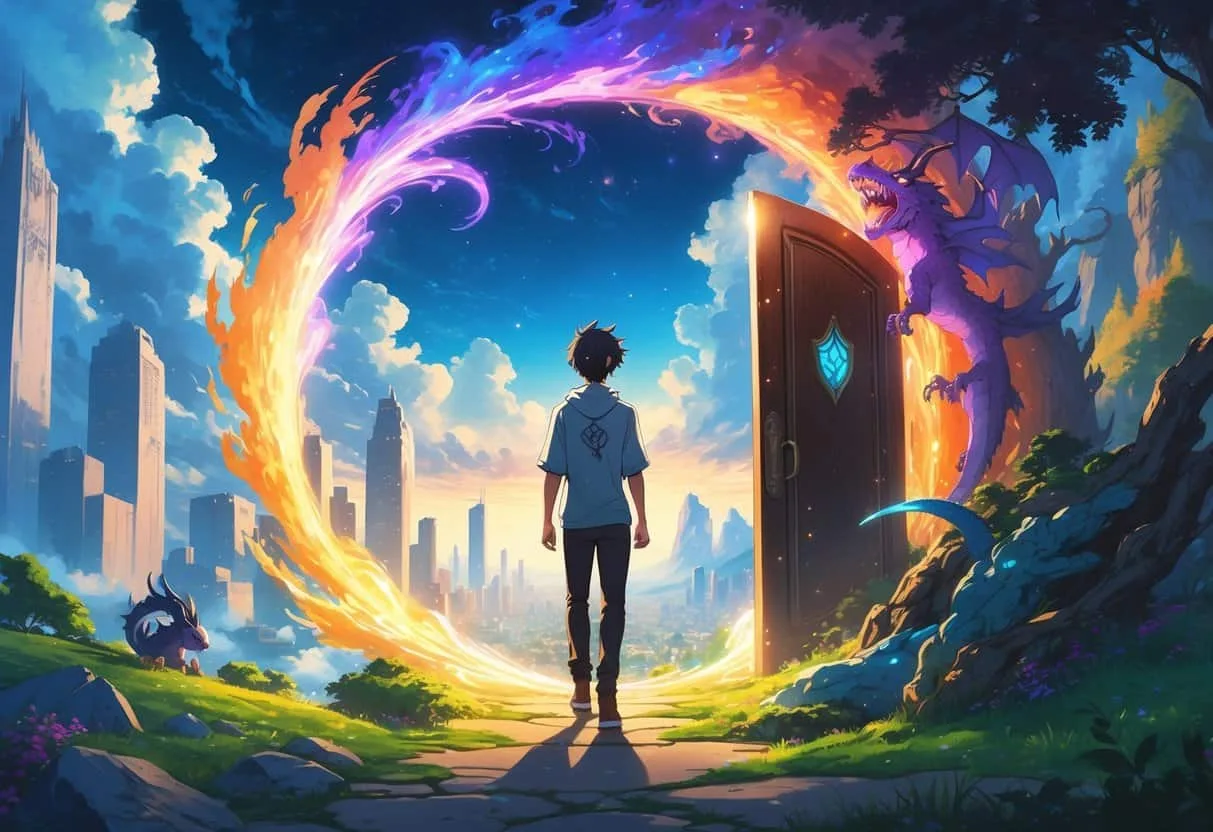
The worlds of isekai aren’t just backdrops; they function as psychological vacations. When a salaryman is reincarnated as a slime in a monster-filled forest or a shut-in high schooler is summoned to a medieval kingdom that runs on RPG stats, the departure from everyday life is total. You aren’t asked to suspend disbelief so much as you’re invited to step through a door. The magic systems, guild halls, floating cities, and creature designs create environments that feel simultaneously vast and knowable—places where the problems might involve dragon attacks, but the solutions are rarely as messy as real-life bureaucracy.
This level of immersion is amplified by meticulous art direction and sound design. Studios like White Fox (Re:Zero) and Studio Bind (Mushoku Tensei) pour resources into world-building that makes even the background shops feel alive. When a show commits to the texture of its fantasy realm, the escapism becomes tactile. It’s not just that you’re watching someone else’s adventure; you can practically taste the roasted meat at the tavern or feel the chill of a magic-warded dungeon. That sensory richness is a huge part of why fans return season after season—each new series is a chance to explore a world that looks, sounds, and feels different from the last.
The Power Fantasy Element
There’s no point in pretending otherwise: a major draw of isekai is the satisfaction of watching a protagonist become overwhelmingly capable. Whether it’s a gamer who exploits the logic of a new world, an office worker who discovers he can command an army of loyal undead, or a bookworm who awakens as a saint with world-altering magic, the power curve is often steep and deeply rewarding. This isn’t just about watching someone smash their enemies; it’s about seeing limitation shed like an old skin. In a world where many people feel stuck in their careers, relationships, or self-image, the idea of waking up with cheat-level abilities is an alluring fantasy.
But the best power fantasies in isekai don’t stop at big numbers and glowing auras. They tether that strength to identity. That Time I Got Reincarnated as a Slime gives Rimuru Tempest the ability to absorb and mimic powers, which fosters a narrative about building a nation and earning loyalty. The Rising of the Shield Hero saddles Naofumi with a defensive role that seems weak at first, forcing him to rely on strategy and eventually build a found family. These setups allow the audience to enjoy the rush of power while still feeling that the character earned their place.
The power fantasy becomes a vehicle for problem-solving and emotional growth, not just a god-mode spectator sport.
Relatable Protagonists and Personal Growth
Most isekai heroes don’t start out as heroes at all. They might be overworked, socially anxious, grieving, or simply directionless. Subaru Natsuki from Re:Zero is painfully ordinary, clinging to his only special ability—Return by Death—which is as traumatic as it is useful. Kazuma Sato from KonoSuba is a cynical shut-in whose party is a disaster, and yet his slow, grudging maturation into a semi-competent leader is one of the funniest and most endearing arcs in the genre. These characters don’t just become stronger; they become more self-aware, more resilient, and sometimes even more willing to trust others.
This emphasis on internal change makes isekai deeply resonant. You watch someone who once gave up on themselves slowly start to believe they are worthy of the second chance they’ve been given. For younger viewers navigating identity and older viewers reflecting on roads not taken, that journey lands hard. The fantasy setting acts as a metaphor: a new world demands a new you, and the process of figuring out who that “you” might be is a story we all understand. It’s no coincidence that many of the most beloved isekai protagonists are those who struggle visibly with trauma, guilt, or social rejection before they ever lift a sword.
Adventure and Exploration
Beyond survival and power, isekai captures the simple joy of discovery. The genre inherited the spirit of adventure from classic fantasy and jRPGs, and it weaponizes that sense of a map waiting to be filled in. Each new location—a sky-high library of forbidden magic, a desert kingdom where glassmancers rule, a forest that rearranges itself every full moon—promises secrets. The protagonists serve as our avatars, asking the questions we would ask and poking at corners we would be too afraid to touch. That curiosity is infectious.
Adventure in isekai also often comes with a mission, but it’s rarely the only point. Side quests, chance encounters, and moments of quiet exploration in dangerous places make the world feel lived-in. Shows like Mushoku Tensei devote entire episodes to traveling through unfamiliar terrain, showing how the land shapes its people. This balance between grand narrative and granular discovery keeps the genre from becoming a repetitive beat-’em-up. It becomes a journey, not just a series of fights, and that makes the investment feel richer.
Storytelling Elements and Popular Themes
The scaffolding of isekai is deceptively flexible, which is why the genre can sustain everything from grimdark dramas to peaceful farming sims. Beneath the surface, a handful of narrative constants keep the stories grounded even when the premises go completely off the rails. Understanding these components helps explain why isekai can feel so stable and yet so unpredictable at the same time.
Reincarnation and Portal Fantasy
The entry mechanism into the other world sets the tone for the entire series. Reincarnation stories—where the protagonist dies in our world and is reborn elsewhere—often come with a memory of modern knowledge that becomes a strategic advantage. Portal fantasies, on the other hand, keep the character’s original body but transplant them into a fantastic realm, often with a clear summoning purpose. Both approaches offer a clean break from the past and a chance to map modern sensibilities onto a pre-industrial or magically-driven society.
Reincarnation arcs, like those in Mushoku Tensei or Ascendance of a Bookworm, emphasize long-term growth from infancy, allowing for a panoramic view of the world’s culture and history. Portal entries like Gate or The Vision of Escaflowne often thrust the protagonist into immediate conflict, forcing adaptation under pressure. Both methods bypass the slow-burn origin stories that traditional fantasy might require and get straight to the hook. This narrative efficiency is one reason the genre proliferates so quickly—writers can hit the ground running with a simple premise and spend the rest of the series exploring its implications.
World-Building and Conflict
Isekai scripts are packed with carefully layered systems. Magic often operates like a programmable language with strict mana costs, elemental affinities, and hidden skills. Political landscapes can be just as intricate: rival noble houses, guild hierarchies, demon lord factions, and ancient prophecies all compete for narrative real estate. The best series treat world-building not as encyclopedia padding but as the engine of conflict. When Rimuru discovers that his slime form can nullify certain types of magical attacks, that’s not just a cool detail—it’s what lets him negotiate with otherwise hostile powers.
When Re:Zero reveals the mechanics of the Witch Cult’s authority, it reshapes the entire strategic calculus of the story.
Conflict in these worlds is rarely a simple binary of good versus evil. Many isekai antagonists are products of the systems they inhabit—nobles who exploit class divides, demon lords who were once victims, whole nations conditioned to fear outsiders. This nuance keeps the tension high and prevents the formula from feeling stale. The world isn’t just a playground; it’s a problem to solve, and the protagonist’s ability to understand and manipulate its rules becomes a core dramatic skill. That structural depth is what turns a show from a passive watch into an active puzzle box.
Character Development and Friendship
While solo power-ups dominate early episodes, the genre’s emotional core usually resides in the relationships the protagonist builds along the way. Found family, loyal knights, and quirky party members create a network of support that transforms the journey into something warmer. In Shield Hero, Naofumi’s bond with Raphtalia isn’t just a side plot; it’s the moral anchor that keeps him from sinking into bitterness after his betrayal. In No Game No Life, the unbreakable sibling connection between Sora and Shiro is both a superpower and a deep emotional refuge.
Friendship in isekai often serves a dual purpose: it provides comic relief and emotional stakes, but it also models how trust can be rebuilt after trauma. Many protagonists begin their isekai lives isolated or betrayed, and learning to rely on others is a central arc. This mirrors the way viewers might use fandom communities to build connections around shared stories. Seeing characters fight for each other, forgive each other, and grow together makes the fantasy feel meaningful rather than hollow.
Humor and Slow Life Trends
Not all isekai is high-octane action. A significant portion of the genre now leans into comedy and the “slow life” aesthetic, where the protagonist deliberately steps away from conflict to build a farm, run a shop, or simply enjoy a peaceful existence. KonoSuba set the gold standard for pure parody, mining every fantasy trope for maximum absurdity while still making you care about its disaster of a cast. More recently, Campfire Cooking in Another World with My Absurd Skill or Farming Life in Another World have turned low-stakes pastoralism into their own subgenre.
This shift speaks to a broader audience need. Not everyone wants to fight a demon lord; sometimes you just want to watch someone master the art of soy sauce brewing in a medieval world. The slow life trend validates that smaller, everyday accomplishments can be just as meaningful as saving the kingdom. It also injects a tonic of coziness into a genre that might otherwise tip too far into grimdark territory. The humor that runs through these series—whether it’s the deadpan reactions of a cooking-obsessed salaryman or the ridiculous misunderstandings of a villainess who is trying to avoid her doom—works because it’s rooted in character.
You’re not laughing at the world; you’re laughing with the people trying to navigate it.
Influence and Impact on Anime and Popular Culture
Isekai has reshaped the anime industry’s economics, fan culture, and creative pipeline. Its dominance is visible not just in seasonal charts but in the way manga, light novels, and video games now orbit the same storytelling constellations. The genre has become a cultural shorthand—a shared language that crosses national borders.
Major Isekai Anime and Their Legacy
Every wave of isekai has a handful of titans that define and redefine what the genre can be. Sword Art Online, while technically set inside a virtual MMORPG rather than a true other world, codified the “trapped in a game-like reality” template and became a global phenomenon. Its massive success proved that audiences would flock to stories about immersive digital existence, paving the way for later hits like Log Horizon and Overlord. Where SAO focused on life-or-death stakes and a central romance, Overlord took the perspective of an overpowered villain, exploring what happens when the final boss becomes the world’s reluctant ruler.
Mushoku Tensei: Jobless Reincarnation is often cited as the grandfather of the modern reincarnation boom, and its anime adaptation raised the bar for production values across the board. Studios now understand that a well-rendered fantasy world can attract viewers in the same way a prestige fantasy film does. Meanwhile, Re:Zero demonstrated that a psychological horror-inflected isekai, anchored by a deeply flawed hero, could become a cultural touchstone. Its use of reset loops to explore trauma and choice has been referenced and parodied throughout the medium. Crunchyroll’s 2023 Year in Review reported that isekai series consistently ranked among the top-viewed titles globally, with That Time I Got Reincarnated as a Slime and Mushoku Tensei drawing millions of monthly active viewers.
These aren’t just popular shows; they are the gravitational center of current anime discourse.
Expansion Through Manga, Light Novels, and Video Games
Understanding isekai’s reach requires looking beyond the screen. The genre’s lifeblood is the light novel industry, where platforms like Shōsetsuka ni Narō (Let’s Become a Novelist) have launched countless amateur works that later receive manga adaptations and eventual anime deals. This pipeline turns fan fiction-like creativity into professionally produced blockbusters with startling speed. Popular web novels such as Re:Zero and The Rising of the Shield Hero started as text on a screen, developed passionate communities, and then scaled into multimedia empires.
Video game tie-ins further strengthen the feedback loop. Titles set in the worlds of Sword Art Online or KonoSuba allow fans to inhabit the fantasy directly, turning passive consumption into interactive participation. Meanwhile, games like Genshin Impact, while not a direct isekai anime, borrow heavily from the genre’s visual language and desire to explore a strange new world, showing how deeply the aesthetic has penetrated the larger entertainment space. The synergy is remarkable: a light novel series becomes a manga, then an anime, then a mobile game, and each medium feeds audiences back into the others.
Global Reach and Appeal
The themes that make isekai resonate in Japan—reinvention, escape, the struggle to find purpose—are profoundly universal. Fans in Brazil, Germany, India, and the United States all project their own frustrations and hopes onto the fantasy template. When a character chooses to leave behind everything they know for a chance at a different life, it taps into a near-universal daydream. The genre’s emotional underpinning, rather than its cultural specificity, is what fuels its worldwide reception.
Streaming platforms have collapsed the distance between Japanese broadcast and global fandom. A series like My Next Life as a Villainess: All Routes Lead to Doom! can premiere simultaneously on Crunchyroll with subtitles in multiple languages, and within hours fan artists on social media are sharing their takes. This instant community formation deepens attachment to the shows and creates a sense of shared global experience. Anime News Network’s analysis of the genre’s popularity notes that the accessibility of the “blank slate protagonist” makes isekai one of the easiest entry points for new anime viewers worldwide. There’s no need to parse decades of niche lore; you just need to know that someone woke up somewhere else.
Isekai has also become a fertile ground for cross-cultural reinterpretation. Western animated series, webcomics, and novels increasingly use the portal fantasy structure with a distinctly modern sensibility, acknowledging the debt to Japanese isekai while infusing local humor and social commentary. This exchange keeps the genre evolving, ensuring it won’t simply burn out as a trend but will continue to mutate into new forms.
Why Isekai Endures
The longevity of isekai isn’t just about market saturation; it’s about conceptual resilience. The premise is an engine that can drive comedy, tragedy, romance, horror, and political intrigue without ever needing to justify why the protagonist isn’t from around here. Because the entry point is so flexible, creators can continuously subvert expectations: a protagonist who just wants to open a bookstore in a magic world, or a villainess who used her knowledge of the future to avoid disaster and instead revolutionizes agriculture. The genre’s capacity for self-parody through shows like KonoSuba also acts as a pressure valve, preventing the conventions from becoming too self-serious.
Moreover, isekai taps into the modern condition in a way that traditional fantasy often cannot. It acknowledges that we are, in many ways, already living in a state of fractured attention and identity—juggling online personas, gaming avatars, and the mundanity of everyday life. The fantasy of stepping through a portal is just an extreme version of logging into a virtual world, and the questions it raises about who we are in different contexts feel strikingly contemporary. Recent series like Mushoku Tensei and Re:Zero have tackled themes of self-loathing, redemption, and the ethics of starting over in a way that mirrors digital-age anxieties about anonymity and reinvention.
At the same time, isekai provides a kind of narrative comfort food that audiences crave in unstable times. The knowledge that the hero will, eventually, find a place to belong is a powerful balm. Even the darkest entries in the genre often carry an undercurrent of hope—that no matter how broken your past, a new world can offer you a second chance. That message, delivered through dragons, guild quests, and improbable cooking, is why isekai isn’t just a passing phase. It’s a cornerstone of modern fantasy storytelling, and its influence will likely continue to expand into new mediums and new cultures for years to come.