Table of Contents
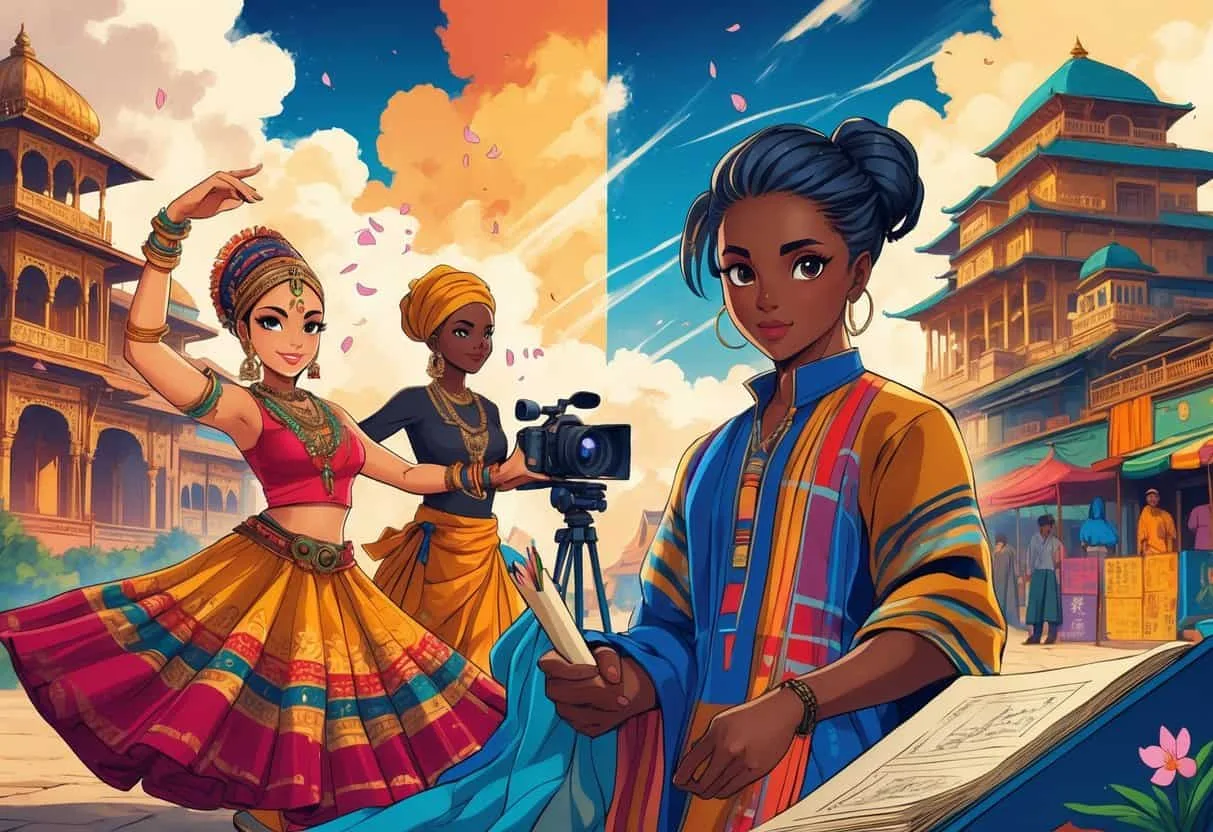
Anime’s global rise has proven that Japanese animation can absorb influences from Hollywood blockbusters, European arthouse cinema, and even K‑pop music videos. Yet two of the world’s most prolific film industries – India’s Bollywood and Nigeria’s Nollywood – remain largely untapped reservoirs of narrative energy. Bollywood’s melodramatic grandeur, rooted in ancient epics and folk theatre, and Nollywood’s raw, community‑driven storytelling, forged in the vibrant streets of Lagos, hold the power to reshape anime into a richer, more emotionally layered medium. As streaming platforms collapse the distance between cultures, the opportunity for cross‑pollination has never been greater. This article explores how the emotional cadences, visual languages, and thematic preoccupations of Bollywood and Nollywood could infuse anime with fresh narrative innovations – and what challenges must be navigated along the way.
Foundations of Bollywood, Nollywood, and Anime Storytelling
Understanding where each tradition comes from is essential to imagining a productive fusion. All three industries prioritize character‑driven narratives, but their methods, cultural anchors, and visual grammars differ sharply.
Distinctive Elements of Bollywood Narratives
Bollywood cinema is best understood as a masala mix of song, dance, romance, action, and morality. The classic Bollywood plot often revolves around family honour, star‑crossed love, or the underdog’s struggle against a corrupt system. What sets it apart is the integration of music and emotion: characters break into elaborate song‑and‑dance sequences not as mere spectacle, but as an expression of inner states that spoken dialogue cannot convey. This tradition descends from Sanskrit drama and Parsi theatre, where music signalled pivotal emotional shifts. Films like Dilwale Dulhania Le Jayenge or recent hits like RRR demonstrate how rhythm and choreography can accelerate storytelling while cementing cultural identity.
Bollywood also embraces broad archetypes – the devoted mother, the self‑sacrificing hero – that make moral conflicts universally legible despite their specific Indian context.
Nollywood’s Approach to Cinema and Folklore
Nollywood emerged not from government‑funded studios but from grassroots entrepreneurs in early‑1990s Nigeria. This origin story shaped an industry that values immediacy, relatability, and sheer volume. Today Nollywood is the world’s second‑largest film industry by output, producing over 2,500 films a year. Nollywood stories draw heavily from Igbo, Yoruba, and Hausa oral traditions, intertwining modern urban life with supernatural beliefs – ancestors, juju, and village councils. Romance, betrayal, and the quest for wealth are common threads, but the true anchor is community conscience.
A typical Nollywood plot might pit an ambitious businesswoman against her extended family’s jealousy, with dramatic consequences that are part soap opera, part moral fable. The low‑budget, straight‑to‑video aesthetic forces storytelling to rely on tight dialogue and intimate close‑ups rather than visual spectacle, creating an intense, almost theatrical immediacy.
Unique Features of Anime Storytelling
Anime draws from Japan’s own storytelling heritage – from Heian‑era picture scrolls to postwar manga – while absorbing influences from Disney, French animation, and even Hong Kong martial arts cinema. What distinguishes anime is its elasticity of genre and tone. A single series can pivot from slapstick comedy to existential dread in minutes. Visual metaphors (wilting flowers, slow‑motion hair movements) are used unselfconsciously to convey internal turmoil. Anime also thrives on serialized, long‑form storytelling that allows for character evolution over hundreds of episodes – a trait shared with the open‑ended sagas of Bollywood family epics.
However, anime has long been criticised for relying on predictable settings (high schools, mecha), and its cultural markers, while potent, are distinctly Japanese. This is precisely where Bollywood and Nollywood could inject new life.
| Feature | Bollywood | Nollywood | Anime |
|---|---|---|---|
| Story Focus | Family, love, social justice | Folklore, community, identity | Emotion, symbolism, personal growth |
| Visual Style | Vivid colours, choreographed dance, spectacular sets | Close‑up intimacy, handheld energy, raw lighting | Stylised line‑art, exaggerated expressions, detailed backgrounds |
| Industry Reach | Global Indian diaspora, soft‑power icon | Pan‑African dominance, growing Western audience | Worldwide fandom, still largely Japanese‑owned |
Major Influences Bollywood and Nollywood Could Bring to Anime
A conscious fusion of these traditions would not mean diluting anime’s identity; rather, it could unlock narrative tools that deepen emotional resonance and broaden the audience base.
Cultural Themes and Social Narratives
Bollywood has never been afraid to tackle class divides, religious tensions, and gender inequality through melodrama. Nollywood confronts corruption, the plight of widows, and the clash between tradition and modernity with unflinching directness. Anime, by comparison, often codes social issues in metaphor – think of Attack on Titan’s walls or Psycho‑Pass’s surveillance state. By borrowing the explicit yet emotionally charged approach of Bollywood or the grounded, community‑centric lens of Nollywood, anime could produce stories that feel more immediately relevant to audiences in India, Africa, and their diasporas. Imagine a slice‑of‑life anime about a Lagos market woman fighting off predatory loan sharks, animated with the symbolic flair of Mushishi but voiced with Nollywood’s earthy dialogue.
This is not just about representation; it’s about expanding the storytelling palette so that cultural diplomacy becomes organic, not forced.
Infusing Fashion, Music, and Dance
One of Bollywood’s greatest gifts to world cinema is its ability to use costume and choreography as narrative tools. A character’s sari colour, the style of a wedding dance, even the tempo of a qawwali, can signal psychological shifts. Nollywood’s soundtracks, increasingly dominated by Afrobeats stars like Burna Boy and Tiwa Savage, carry a percussive energy that could revolutionize anime score design. Anime has dabbled in music‑centric storytelling (Carole & Tuesday, Nodame Cantabile), but Bollywood’s integration of dance as emotional catharsis could inspire sequences where characters express conflict through movement rather than dialogue. Picture a mecha pilot performing a kathak‑inspired ritual before battle, or a romantic confession unfolding through a Lagos‑style street dance.
These moments would not be mere cultural ornament; they would be extensions of character psychology, respected as legitimate storytelling grammar.
Techniques in Visual Storytelling
Bollywood’s love for grandiose set pieces – massive wedding halls, monsoon‑soaked fields, slow‑motion hero entries – shares common ground with anime’s own taste for dramatic framing. The difference is that Bollywood uses real‑world textures: billowing dupattas, glittering jewellery, natural light. Anime could hybridise these elements, layering 2D characters over hyper‑detailed CG backgrounds inspired by Indian palaces or Nigerian markets. Nollywood’s gritty, almost documentary visual style, born from necessity, could inject a welcome rawness into anime’s sometimes overly polished aesthetic. A Nollywood‑inspired anime might employ deliberate handheld camera mimics, jump cuts, and direct‑to‑camera monologues that break the fourth wall, reminiscent of the “talking drums” tradition.
This fusion could help anime break free from the “manga panel” look and embrace more cinematic freedom.
Collaborative Story Arcs and Character Development
Both Bollywood and Nollywood excel at ensemble storytelling where no single character unambiguously dominates. Bollywood’s multi‑generational epics and Nollywood’s intertwined village networks model a form of collective protagonism rarely seen in anime, which often centres on a lone hero’s journey. Adopting these structures would allow anime to explore how communities, not just individuals, change over time. A long‑running series could follow a family of yōkai hunters in an alternate Mumbai, with each season focusing on a different sibling, much like a Bollywood family saga. Relationships would evolve not just through action, but through festivals, shared meals, and whispered gossip – details that ground fantasy in emotional reality.
The result would be a more empathetic, slow‑burn character development that values interdependence over solitary growth.
Challenges and Opportunities in Merging Cinematic Traditions
Any cross‑cultural endeavour risks falling into pastiche or, worse, caricature. Respectful integration demands a clear‑eyed look at the hurdles.
Balancing Cultural Authenticity and Glocalization
Bollywood and Nollywood are beloved precisely because they feel deeply rooted in their local contexts – the smells, the languages, the unspoken family codes. Global audiences have shown they can embrace hyper‑specific settings, as the success of RRR and Netflix’s Nollywood originals attests. Yet there is pressure, especially from streaming platforms, to sand down cultural edges in favour of a “universal” story. Creators must resist the temptation to turn India or Nigeria into exotic backdrops; instead, they should mine the internal tensions – caste, patriarchy, colonial trauma – that give these cultures their texture. Glocalization works best when local specifics illuminate universal emotions, not when everything is diluted into a bland global soup.
| Key Points for Authentic Fusion |
|---|
| Preserve local idioms, not just surface motifs |
| Involve creators from the source culture in decision‑making |
| Use diaspora audiences as a testbed for delicate translations |
| Let universal themes emerge from specificity, not replace it |
Addressing Cultural Appropriation and Representation
The line between inspiration and appropriation is thin. Anime has a mixed record here – early portrayals of Black characters, for instance, often relied on exaggerated caricatures. If a Japanese studio attempted a Nollywood‑inflected story without Nigerian writers, voice actors, or cultural consultants, the result could easily replicate harmful stereotypes of Africa as a monolith of witch doctors and poverty. The same goes for India: Bollywood’s own internal diversity (Punjabi, Tamil, Bengali cinemas) must not be flattened. The solution is not to avoid cross‑cultural work but to build equitable co‑productions.
When the Nigerian‑Japanese anime series Afro Samurai was produced, it featured a Black voice cast and drew on hip‑hop aesthetics, yet it remained a vision of Japanese anime creators. A more reciprocal model would have Nigerian and Indian studios as equal co‑producers, sharing not just budget but narrative authority. This approach not only safeguards authenticity but also enriches the final product, ensuring that diverse communities see themselves reflected with dignity and complexity.
Industry Impact and The Future of Cross‑Cultural Influence
The business side of anime is already pivoting toward global co‑productions, making this the perfect moment to formalize Bollywood and Nollywood influences.
Revenue Streams and Streaming Platforms
Platforms like Netflix, Amazon Prime Video, and Disney+ are aggressively commissioning anime for their global libraries. Netflix’s Castlevania and Blood of Zeus proved that Western‑inflected anime can succeed; the next step is to back projects that draw from the Indian and African zeitgeist. A Bollywood‑style anime musical could generate revenue not only from streaming but also from soundtrack sales, merchandise, and even live concert tours – much as One Piece Film: Red turned its pop‑star character into a real‑world music sensation. Nollywood’s rapid production model also might influence anime’s notoriously long production schedules, with tighter, more focused arcs aimed at the binge‑watching market. The economic incentive is clear: tapping into Africa’s young, mobile‑first audience – a market that already devours Nollywood and anime side by side.
Influence on Global Audiences and International Recognition
Anime that successfully absorbs Bollywood and Nollywood DNA could attract new viewers who currently find anime too insular or stylistically alien. Imagine the Nigerian diaspora, already raised on a diet of Nollywood melodrama, discovering an anime series about a Lagos teenager navigating supernatural powers rooted in Yoruba mythology. The cultural familiarity would serve as a welcoming bridge, while the anime aesthetic would offer something novel. International film festivals are also warming to genre‑bending animation; when Studio Ghibli’s Spirited Away won the Oscar, it confirmed that animation can wear cultural specificity proudly and still capture global hearts. A future Palme d’Or nomination for an Indo‑Japanese co‑produced anime feature is no longer a fantasy.
Opportunities for Cross‑Industry Collaborations
The most exciting collaborations may extend beyond film into music, gaming, and live experiences. Afrobeats artists could score anime series, bringing their rhythmic complexity to fight scenes or quiet interludes. Bollywood choreographers like Farah Khan or Vaibhavi Merchant could consult on dance sequences in an anime film, ensuring authenticity in movement. Video game adaptations, an increasingly lucrative side of anime, could incorporate Bollywood’s visual spectacle into RPG mechanics – imagine a Final Fantasy‑style game set in a fantastical Rajasthan. Nightlife and theatre could follow suit, with themed immersive experiences combining anime projections, live Nollywood‑style acting, and Bollywood‑inspired set design.
The fusion of these three cultural giants isn’t just a creative experiment; it’s a business ecosystem waiting to be built.
As the boundaries between film industries blur, the stories we tell will inevitably hybridise. Anime, with its boundless imagination, is the perfect laboratory to test what happens when Bollywood’s heart, Nollywood’s spirit, and anime’s visual genius converge. The result promises to be nothing less than a new chapter in global storytelling – one that honours roots while daring to grow in all directions.