Table of Contents
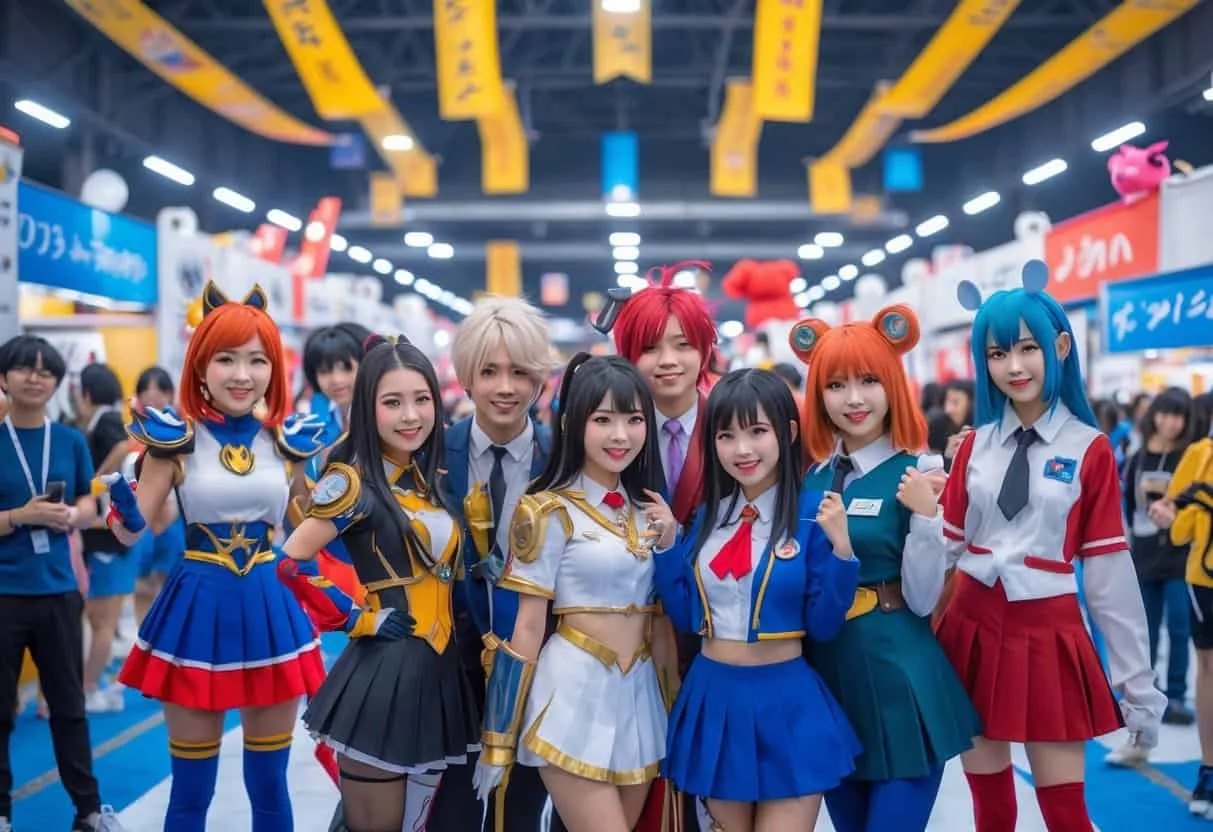
The cosplay scenes at anime conventions from 2020 to 2025 reflect a community that has rapidly matured, embracing higher standards of craftsmanship and deeper storytelling. Far from simple dress-up, modern cosplay fuses fashion design, engineering, performance art, and digital marketing into a single expressive outlet. As conventions rebounded from global disruptions in 2020 and 2021, attendees returned with a renewed hunger for creativity, and the costumes on display became more ambitious than ever. You could see it in the intricate armor sets of Genshin Impact, the hand-embroidered kimono from Demon Slayer, and the light-up props that have become standard rather than exceptional.
These years also witnessed an accelerated blending of cultural motifs. A character from a Japanese mobile game might now be reimagined through a Western fantasy lens, while a South Korean webtoon hero might appear alongside classic shonen protagonists. This cultural cross-pollination is not accidental; it is driven by algorithm-fueled content discovery, the mass localization of Korean manhwa, and the global reach of streaming services that bring anime and dramas to every corner of the world. As a result, the definition of "anime convention" has broadened, embracing a wider spectrum of geek culture.
The Pandemic Pivot: Lockdowns Forge a New Cosplay Mindset
The early months of 2020 abruptly shuttered convention halls, but cosplay did not pause—it transformed. Cosplayers pivoted to virtual conventions, Zoom photoshoots, and "closet cosplay" challenges that turned everyday household items into creative interpretations of favorite characters. Without access to convention workshops and dealer halls, makers developed resourceful techniques: papercraft armor, digital editing for virtual backgrounds, and livestreamed craft-alongs became the norm. The forced pause allowed many to invest months in ambitious builds that would have been rushed under a convention deadline.
When live events returned in 2022 and 2023, the pent-up energy exploded. Cosplayers arrived with elaborate, multi-piece costumes that had been refined over two years of off-season tinkering. The community’s bond had deepened online, and that connection fueled larger group cosplay projects, more polished skits, and a surge in prop innovation. The pandemic inadvertently raised the overall quality bar and normalized the idea that cosplay is a year-round creative practice, not just an event-day activity.
The Evolution of Character Choice: Who Gets the Spotlight
If you walked through a convention hall in 2020, you'd see a heavy concentration of characters from a handful of blockbuster anime. By 2025, that landscape has diversified enormously. While certain franchises maintain a perennial grip on the cosplay scene, the mechanisms that push a character to trending status have fundamentally changed. Social media challenges, "cosplay dubbing" on TikTok, and collaborative group shoots at conventions all fuel viral surges that can elevate a secondary character to main-event status overnight.
Anime and Manga: The Enduring Foundation
Anime and manga remain the core of convention cosplay, but the roster of popular series has expanded. Demon Slayer: Kimetsu no Yaiba dominated the early 2020s with its distinct patterned haoris and breathing effect props fashioned from translucent materials and LED strips. Alongside it, Jujutsu Kaisen brought striking school uniforms, blindfolds, and cursed techniques to life through dynamic posing and contact-lens enhancements. Chainsaw Man later introduced a grungier, prop-heavy aesthetic, with cosplayers crafting chainsaw arms from lightweight EVA foam and incorporating motorized sounds. Even older series like Naruto and One Piece witnessed a resurgence, fueled by anniversary events and live-action adaptations that drew in new fans.
The market tells a clear story. According to a market analysis by Grand View Research, the global cosplay costume market was valued at USD 4.62 billion in 2022 and is forecast to expand at a CAGR of 13.3% from 2023 to 2030. Much of this growth is driven by the rising popularity of anime streaming, which introduces series like One Piece and Attack on Titan to a global audience. As more viewers become emotionally invested in these stories, they're more inclined to express that fandom through costume.
Video Games and Fantasy: A Parallel Universe of Cosplay
Video game cosplay has carved out an equally prominent niche, often outpacing anime in terms of prop complexity. The open-world gacha game Genshin Impact became a cosplay phenomenon after its 2020 launch, with dozens of distinctive character designs that range from elegant silk robes to heavily armored knights. The game's elemental themes invite creative use of lighting and special effects—cosplayers incorporate electroluminescent wire into Pyro visions and Anemo skills, creating a sensory experience that static photos can barely capture.
Other fantasy titles like Final Fantasy XIV and Elden Ring draw crafters who revel in armor smithing. Thermoplastics like Worbla have become a staple, allowing intricate pauldrons, gauntlets, and helmets that are lightweight enough for a full convention day. The cosplay competition scene at events such as Anime Expo’s World Cosplay Summit preliminaries often features entries from these game universes, where judges evaluate not just visual fidelity but also the ambitious scale of the build.
Mainstream Crossover: When Hollywood Meets the Otaku Aesthetic
Perhaps the most noticeable shift in recent years is the seamless integration of Western pop culture characters into anime convention spaces. You’ll find Captain America shields raised between Demon Slayer swords, and Spider-Man webs threatening Gundam thrusters. The boundaries have blurred so much that "anime convention" is now a misnomer; these events have become pop culture festivals where fandoms collide.
This crossover was accelerated by the success of anime-inspired Western productions, such as Arcane (based on League of Legends) and the continued dominance of the Marvel Cinematic Universe. Cosplayers increasingly combine source materials—a "Hanbok Spiderman" or a "Cyberpunk Sailor Moon"—proving that fandom is personal, not prescribed. This fusion encourages more experimental techniques, as creators learn to adapt silicone masks, body paint, and mechanical wings regardless of the original medium.
Cultural Phenomena and Regional Echoes
The global nature of cosplay means it's deeply sensitive to cultural movements. During this period, the conversation shifted from simple appreciation to a more nuanced understanding of representation, appropriation, and authenticity. As conventions welcomed more international attendees and online spaces amplified diverse voices, cosplayers began to navigate a complex set of cultural signals.
The Japanese and South Korean Fusion
Japanese culture remains the fountainhead, but the surge of Korean pop culture—from BTS to webtoons like Solo Leveling—has added a new dimension. Korean webtoons often feature hyper-stylized fashion that is demanding to replicate but rewarding to photograph. You'll see more Solo Leveling Sung Jin-woo outfits, with their sleek dark coats and neon daggers, standing alongside Tanjiro’s haori. The K-pop effect also brings idol-stage costumes to conventions, blurring the line between performance and cosplay. This dual influence encourages fans to explore both traditional hanbok-inspired designs and modern streetwear aesthetics, making convention halls a far cry from the single-origin anime clusters of a decade ago.
Global Pop Culture Adoption
Part of cosplay's appeal lies in its adaptability. Characters from Western animation (Avatar: The Last Airbender, The Owl House), live-action series (Stranger Things, The Witcher), and classic sci-fi (Star Trek, Doctor Who) now share the same hallway space. This adoption signals that the cosplay community values character depth and visual distinctiveness above nationality. The rise of virtual YouTubers (VTubers) further muddles the line, as cosplayers embody digital avatars that are themselves cultural amalgams.
The inclusive nature of these choices has also opened doors for cosplayers who might not connect with traditional anime tropes. A fan who grew up on Disney films can now portray a live-action Cinderella with the same legitimacy as someone cosplaying a Studio Ghibli heroine. This broad acceptance is one of the healthiest developments for the community, making conventions more welcoming than ever.
Cultural Sensitivity and Respectful Cosplay
With greater variety comes greater responsibility. The cosplay community has engaged in ongoing dialogue about cultural appropriation, particularly around costumes that incorporate religious or ceremonial garments, or racially identifying features. Most convention-goers and organizers now advocate for approaches that celebrate a character’s essence without caricaturing real-world cultures. This includes avoiding skin-darkening makeup, researching the significance of traditional clothing items before crafting replicas, and choosing characters based on fandom connection rather than racial performance.
Conventions have begun hosting panels on inclusive cosplay, and many online forums actively discourage insensitive portrayals. The conversation is not about limiting creativity, but about ensuring that the joy of cosplay doesn’t come at the expense of marginalized communities. You’ll find cosplayers proudly displaying signs that explain the cultural context of their outfits, turning potential missteps into educational moments.
Innovative Design: Where Craftsmanship Meets Storytelling
Modern cosplay is as much about the build process as the final reveal. The 2020–2025 era solidified the “maker” spirit, with cosplayers sharing tutorials, 3D-printing blueprints, and sewing patterns across platforms. Material science entered the lexicon: EVA foam, thermoplastics, silicone, and programmed microcontroller (Arduino) lighting became ordinary tools rather than advanced secrets. This democratization of technique raised the baseline quality and inspired veterans to push further.
The Power of Props and Accessories
A well-crafted prop can define a cosplay. In the early 2020s, foam swords and 3D-printed guns became standard, but by 2025, you could expect interactive props that react to movement or ambient light. Some cosplayers embed Bluetooth speakers in gauntlets to play character quotes, while others use transparent resins and LED cores to simulate glowing crystals. Wigs have evolved into sculpted art pieces, with foam foundations and airbrushed gradients that mimic anime hair physics in real life.
Accessories such as contact lenses, prosthetic ears, and custom-painted armor trims reflect an obsessive attention to detail. Online marketplaces and commissions thrive on this; a single high-end prop commission can cost hundreds of dollars, while tutorials on YouTube allow budget-minded cosplayers to achieve similar results with patience and creativity. This dynamic keeps the community vibrant, as skill levels continuously rise in a positive feedback loop.
Performance and Community Belonging
Wearing a costume is only half the experience; embodying the character completes it. Cosplay performances—whether staged skits, lip-sync battles, or spontaneous hallway interactions—bring narratives to life. Theatrical techniques enter the craft: cosplayers study a character's posture, vocal cadence, and signature expressions. At masquerades and cosplay contests, judges reward not just the costume's construction but the performer's ability to convey personality.
This performance focus strengthens the social fabric of conventions. Joining a cosplay group—perhaps a Sailor Moon squad or a League of Legends team—offers a sense of belonging that extends beyond the event. Many lifelong friendships and creative collaborations begin when someone walks over and says, "Your Ganyu cosplay is stunning; can I get a photo?" Social media hashtags then extend that connection, allowing people to find each other after the crowds disperse.
The Digital Distribution Engine: How Trends Spread and Stick
Trends no longer emerge solely from convention floors; they are incubated, amplified, and sometimes manufactured online. The interplay between physical events and digital platforms defines what you see at any given convention. A single viral TikTok can propel a dormant anime into the cosplay spotlight, and as quickly as a trend rises, it can be replaced by a new meme or challenge.
Online Platforms: Instagram, TikTok, and Beyond
Instagram remains the portfolio of choice, with its grid serving as a curated gallery of a cosplayer’s best work. TikTok’s algorithm, however, is the real kingmaker. Short-form videos showcasing costume reveals, transformation transitions, and behind-the-scenes crafting generate millions of views, often sending niche characters into mainstream consciousness. A Pew Research Center survey from 2023 found that 71% of 18- to 29-year-olds use Instagram, and 62% use TikTok—these are the demographics that feed convention attendance and cosplay participation.
YouTube tutorials and Twitch streams have turned cosplay into a spectator sport. Build-alongs attract viewers who may never set foot in a convention but appreciate the engineering. This has spawned a microeconomy where cosplayers monetize content through ads, sponsorships, and Patreon subscriptions. The line between cosplayer and content creator has all but dissolved, and many cosplayers now design their costumes with "camera-readiness" in mind, considering how lighting and color grading will translate on screen.
Yahoo, News, and the Path to Mainstream Recognition
Beyond social media, traditional media outlets have begun taking cosplay seriously as a cultural and economic phenomenon. Yahoo Entertainment regularly publishes convention recaps and trend pieces, bringing cosplay to an audience that might not browse Reddit or Twitter. When Yahoo covers New York Comic Con or Anime Expo, it spotlights not just celebrities but also standout cosplayers, validating the craft for a broader public.
This media attention helps normalize cosplay and attracts sponsorships from brands like gaming companies, makeup lines, and even automobile manufacturers looking to tap into the elusive Gen Z and Millennial markets. As the coverage expands, so does the expectation of professionalism among cosplayers, who now engage with public relations, contracts, and brand ambassadorships as part of their careers.
Market Growth and What Lies Ahead
The numbers underscore the cultural shift. Beyond the billion-dollar costume market, ancillary industries—specialty makeup, 3D printing services, convention travel packages—have multiplied. By 2025, you can expect purpose-built cosplay studios in major cities, offering rental workspaces with industrial sewing machines, laser cutters, and foam storage. The professionalization of cosplay is turning a once-renegade hobby into a sustainable career path for top creators.
The next wave of trends points toward immersive technology. Augmented reality (AR) filters that enhance a costume with digital overlays—like anime speed lines or elemental effects—are already being experimented with for photo shoots. Some cosplayers incorporate tiny projectors into their props, casting patterns onto walls during hallway encounters. Meanwhile, sustainable cosplay is gaining traction, with recycled materials and upcycled clothing reducing the environmental footprint of the craft.
Inclusivity will remain a driving force. Body-positivity movements, adaptive cosplay for wheelchair users, and gender-bent reinterpretations are reshaping the definition of a "successful" costume. Conventions are responding with more accessible facilities and anti-harassment policies that make spaces safer for everyone. The community’s willingness to embrace change ensures that cosplay will continue to evolve as an art form and a social movement.
As you plan your next convention visit, the trends of 2020–2025 offer both a record of what has been and a blueprint for what's to come. Cosplay is no longer bound by a single genre, region, or skill level. It is a conversation between creator and culture, and you are welcome to join it, needle and foam at the ready.