Table of Contents
Why Anime Crossover Games Stand Apart
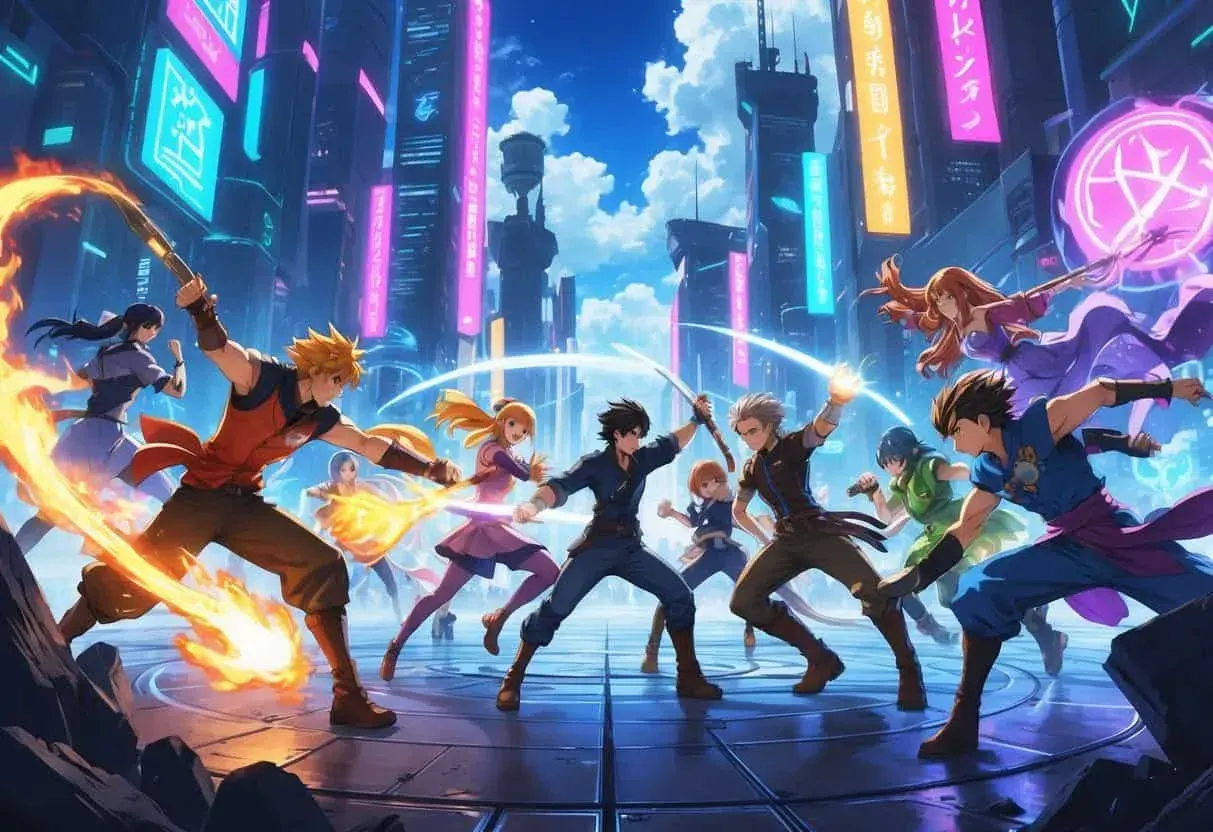
No other genre captures the electric thrill of watching Goku clash with Naruto or seeing mecha pilots from different realities join forces. Anime crossover games smash together universes that were never meant to intersect, and in doing so, they create improbable friendships, dream rivalries, and battles that fans have debated for decades. These titles don’t just borrow characters—they remix entire combat philosophies, art styles, and storytelling traditions into something that feels both nostalgic and surprisingly new.
At their core, the best anime crossover games are built on a simple promise: what if your favorite heroes and villains were thrown into the same arena, forced to team up or fight it out under a single set of rules? That premise alone explains why the genre has endured for over three decades, evolving from niche Japanese releases into global events that light up social media whenever a new collaboration is announced.
The Appeal of the Dream Matchup
For many players, the real draw is the chance to settle playground arguments in a digital space. Could Luffy’s rubber limbs outmaneuver Ichigo’s Bankai? How would Kenshiro’s pressure-point attacks fare against a Saiyan’s raw power? These games don’t answer those questions definitively, but they offer a spectacular approximation—a chaotic, flashy sandbox where the impossible becomes playable. Developers double down on this wish fulfillment by carefully choreographing every special move, victory pose, and interaction, ensuring that each character feels authentic to their source material even when surrounded by total strangers from other series.
Blending Art Styles and Mechanics
One of the quiet triumphs of a well-made crossover is how it reconciles wildly different visual and mechanical identities. A cel-shaded ninja from the 2000s can stand next to a modern 3D model of a space pirate without breaking the illusion—if the developers commit to a unifying aesthetic or, conversely, lean into the contrast for dramatic effect. Jump Force chose semi-realism for its Shonen Jump cast, a controversial decision that nonetheless made every character feel grounded in the same gritty world. BlazBlue: Cross Tag Battle converted veteran fighters from four separate franchises into a cohesive, hyper-stylized sprite system that made tag combos seamless. That kind of technical craftsmanship often goes unnoticed, but it’s what keeps the dream match from turning into a visual mess.
The Licensing Maze Behind Every Roster
Behind every character select screen is a tangled web of negotiations. Each anime series is owned by a different production committee, publisher, or studio, and convincing them all to play nice in a single product is a herculean task. A game that features Bleach, Dragon Ball, and One Piece simultaneously means securing approval from Shueisha, Toei Animation, Shonen Jump, and multiple gaming license holders, each with their own demands about how their characters are portrayed. The result is often a roster that feels incomplete—a glaring absence of a fan-favorite series that “everyone” wanted—but the ones that do make it in represent a kind of diplomatic miracle. The best crossover titles succeed not in spite of these constraints, but by telling a compelling story with the characters they have, turning a limited lineup into a focused and emotionally resonant experience.
The Gold Standard: Anime Crossover Fighting Games
Fighting games dominate the crossover conversation, and for good reason. The versus structure is a natural playground for pitting icons against one another, and the genre’s thriving competitive scene gives these clashes an enduring life outside of the single-player story. Below are the heavy hitters that defined and continue to define what an anime crossover fighter can be.
Jump Force – The Ultimate Shonen Dream
Despite a mixed critical reception, Jump Force remains one of the most ambitious crossover fighters ever made. It gathered over 40 characters from more than a dozen Weekly Shonen Jump series and threw them into a real-world apocalypse where the boundaries between universes collapsed. You could assemble a team with Goku, Yusuke Urameshi, and Jotaro Kujo, then unleash combos that blended Kamehameha waves with Spirit Guns and Stand rushes. The combat was fast, easy to pick up, and packed with enough flair to make every match feel like a highlight reel. While hardcore fighting game enthusiasts criticized its lack of depth, the massive IP mashup brought millions of casual anime fans into the fold, proving that a crossover’s true success isn’t measured in frame data alone.
IGN’s review noted that the sheer spectacle often overshadowed mechanical flaws, making it a guilty pleasure for fans of the source material.
BlazBlue: Cross Tag Battle – A Symphony of Styles
Arc System Works took a more curated approach: four distinct franchises—BlazBlue, Persona 4 Arena, Under Night In-Birth, and RWBY—collided in a 2v2 tag fighter that emphasized synergy, creativity, and accessible execution. The game’s “Smart Combo” system let newcomers pull off flashy sequences with a single button, while veterans dove deep into active switching and resonance mechanics to extend damage. The result was a crossover that honored the identity of each series without forcing them into identical gameplay templates. Persona characters fought by managing their meter-hungry Persona abilities, while Under Night fighters leaned on their distinctive GRD grid system. Cross Tag Battle demonstrated that a smaller, tightly balanced roster could be just as compelling as a massive one.
The community embraced it with regular online tournaments, and the game’s continuous DLC support kept the meta evolving for years.
Dengeki Bunko: Fighting Climax – Celebrating Light Novels
Before isekai became the dominant anime trend, Dengeki Bunko: Fighting Climax gathered protagonists from famous light novel series like Sword Art Online, A Certain Magical Index, and The Irregular at Magic High School into a 2D fighter with assist characters pulled from even more franchises. The game’s pixel-art style gave it a classic arcade feel, and its accessible combos made it a hit at local tournaments. It even included playable Sega console cameos like the Dreamcast mascot, adding an extra layer of meta-humor. Although the roster leaned heavily on light novel IPs unfamiliar to many Western players, the crossover succeeded by treating each hero as a legitimate fighter rather than a marketing gimmick. The “Impact Skill” system—a comeback mechanic that let players chain assists into devastating supers—kept matches tense until the final hit.
Community Life and Competitive Staying Power
These fighters thrive because fan communities refuse to let them die. Jump Force may no longer receive updates, but modders on PC have added custom characters and stages, while dedicated Discord servers organize periodic tournaments. BlazBlue: Cross Tag Battle still appears at major fighting game events, a testament to its solid netcode and engaging tag mechanics. The lesson is clear: a crossover fighter’s legacy is shaped as much by the people who play it as by the roster it launches with. For more on the competitive scene, EventHubs’ tier lists and community pages offer a window into how these games are kept alive by their most dedicated fans.
Strategy and RPG Crossovers That Rewrite Alliances
While fighting games celebrate conflict, crossover RPGs and strategy titles lean into cooperation. Here, heroes from different worlds must overcome their clashing personalities to face a common existential threat. These games often deliver the richest character interactions, with scripted banter, team-up attacks, and branching narrative paths that a pure fighter simply can’t match.
Super Robot Wars – Where Mecha Go to Team Up
The Super Robot Wars franchise has been the gold standard for crossover strategy games since 1991. Each entry pulls mecha from dozens of anime—Mobile Suit Gundam, Getter Robo, Code Geass, Eureka Seven—and drops them into a grid-based tactical battlefield where positioning, weapon energy, and pilot spirit commands determine victory. The real draw, however, is the extensive visual novel-style dialogue that unfolds between missions. Watching Amuro Ray debate philosophy with Koji Kabuto or seeing the cast of Macross react to an Evangelion unit is a treat for longtime fans. The games often include hidden routes, upgradeable mechs, and inter-series combination attacks that light up the screen.
With over 60 titles in the series, Super Robot Wars remains the definitive mecha crossover experience, continually adding modern series to its already bewildering roster. For a comprehensive list of featured series, Wikipedia’s franchise overview is an excellent starting point.
Project X Zone – Tactical Mayhem with a Nintendo Twist
Developed by Monolith Soft, Project X Zone and its sequel brought together Capcom, Sega, and Bandai Namco characters in a grid-based tactical RPG where battles are resolved through rhythm-like combo sequences. Pairs of heroes like Ryu and Ken, or Sakura Shinguji and Ichiro Ogami, would attack in unison while calling in support from a third reserved character. The result was a cascade of pixel-perfect animations that somehow made ninjas, samurai, and space marines move in harmony. What made the game stand out wasn’t just the sheer volume of cameos (Zombie Revenge, Valkyria Chronicles, .hack) but the witty, self-aware script that poked fun at crossover clichés. Characters frequently broke the fourth wall, complained about timeline inconsistencies, or expressed disbelief at meeting so many legendary warriors in one adventure. It’s a love letter to the absurdity of crossovers, and its strategic depth—managing team formations, positioning for counterattacks, and unleashing multi-unit specials—kept players thinking even when the dialogue was purely silly.
Hidden Gems: Cross Edge and Trinity Universe
For those willing to dig into gaming history, Idea Factory’s Cross Edge (2008) and Trinity Universe (2009) were early experiments in multi-IP RPGs. Cross Edge mixed characters from Disgaea, Ar tonelico, Darkstalkers, and others into a turn-based system with a gauge-managed combo engine that rewarded precise timing. The narrative was an original dark fantasy that used the crossover only as a backdrop, allowing interactions to feel organic rather than forced. Trinity Universe combined Atelier and Disgaea characters in a dungeon-crawling RPG where players managed two protagonists’ separate storylines that eventually converged. Both titles were rough around the edges but proved that crossover RPGs could work as full-fledged adventures, not just fan-service parades.
Mobile and Gacha: Crossovers on the Go
In the last decade, the mobile gaming space has become a booming frontier for anime crossovers. Gacha games routinely host limited-time events that introduce characters from entirely unrelated series, turning a standard RPG into a temporary all-star party. These collaborations are often more about resource management and collection than deep gameplay, but they carry the same celebratory spirit as console crossovers.
Games like Grand Summoners have built their entire identity around crossover events, partnering with properties as diverse as One-Punch Man, Kill la Kill, and Re:Zero. Crash Fever and Puzzle & Dragons similarly use collaboration dungeons and exclusive units to keep players engaged. The beauty of the mobile model is its agility: a new anime hit can appear in a popular game within months of its airing, creating a feedback loop where the game promotes the show and the show drives downloads. While these crossovers are temporary, they often feature original story vignettes and custom artwork that rivals what you’d find in a premium console title.
How to Choose the Right Crossover Game for You
With so many titles spanning different genres, picking a starting point can feel overwhelming. The key is to identify what you value most: competitive depth, story richness, or simple fan-service joy. If you want to test your skills against others and enjoy learning frame data, a fighter like BlazBlue: Cross Tag Battle is your best bet. If you prefer to invest in a long, character-driven campaign filled with tactical decisions, a Super Robot Wars entry or Project X Zone will satisfy that itch. Casual players who just want to see their favorite characters interact in quick, flashy bursts should look to mobile crossover events or the more accessible fighters like Dengeki Bunko: Fighting Climax.
Also consider platform availability and community activity. A game with a dead online scene might leave you stuck fighting CPU opponents, which dims the fun of a versus crossover. Check forums like r/Fighters or dedicated Discord servers to see if the player base is still active. And don’t overlook the importance of language support; many niche crossover titles never receive an official English release, but dedicated fan translation patches can open the door to incredible experiences otherwise locked away.
Why These Games Matter: A Cultural Crossroads
Anime crossover games do more than entertain—they function as cultural crossroads that introduce fans to series they might never have discovered. A One Piece diehard who plays Jump Force might walk away curious about Yu Yu Hakusho. A Western gamer who tries Super Robot Wars for Gundam could end up obsessed with Mazinger Z. These titles broaden horizons organically, leveraging existing affection for one franchise to spark interest in another. In an era where streaming services make it easy to binge old classics, a single crossover character encounter can set off a viewing binge that reshapes someone’s entire anime taste.
Moreover, the collaborative nature of these games often mirrors the ethos of the anime industry itself—a space where studios, publishers, and creators routinely share talent and ideas. The same huddle of licensing partners that makes a crossover game possible is what allows a studio to animate a brand-new original film with voice actors from ten different shows. By playing these games, you’re plugging into that vibrant, interconnected ecosystem.
The Road Ahead: What’s Next for Anime Crossovers
The future of anime crossover gaming looks more fluid than ever. As cloud gaming and cross-platform play become standard, the barriers that once split player bases are crumbling. The upcoming JUMP: Assemble MOBA promises to bring Shonen Jump’s entire library into a team-based competitive space, a genre that rewards coordination and character mastery in ways a traditional fighter can’t. Meanwhile, rumors of a new Project X Zone-style collaboration continue to swirl, fueled by the success of cross-promotional events in games like Super Smash Bros. Ultimate (which, while not strictly anime, operates on the same dream-match logic).
Technology will only amplify the spectacle. Real-time rendering and machine learning could one day allow dynamic crossover cutscenes that adapt based on your party composition, with characters referencing shared history or making jokes unique to their pairing. Imagine a Super Robot Wars where the dialogue tree shifts based on which mechs you deploy together, or a fighter where victory quotes acknowledge the specific matchup history from previous titles. The inevitable merging of anime crossovers with virtual reality and augmented experiences could put you inside the collaborative attack animations, standing shoulder to shoulder with your favorite heroes.
Whatever form it takes, the central promise remains unchanged: to bring together the characters you love, in ways you never imagined, and let you be part of their story. That’s a recipe that never gets old.