Table of Contents
Anime fighting games have carved a permanent spot in the competitive gaming world by blending breathtaking art with demanding mechanics. Far from simple button-mashers, the best entries in the genre ask you to read opponents on the fly, execute frame-tight combos, and manage resources that shift the tide of battle in a single moment. 2025 is a standout year for serious players because the scene has never been more accessible, yet the skill ceilings remain punishingly high. Whether you’re transitioning from a traditional 2D fighter or you’ve followed these anime adaptations for years, the current lineup delivers depth that can support thousands of hours of practice.
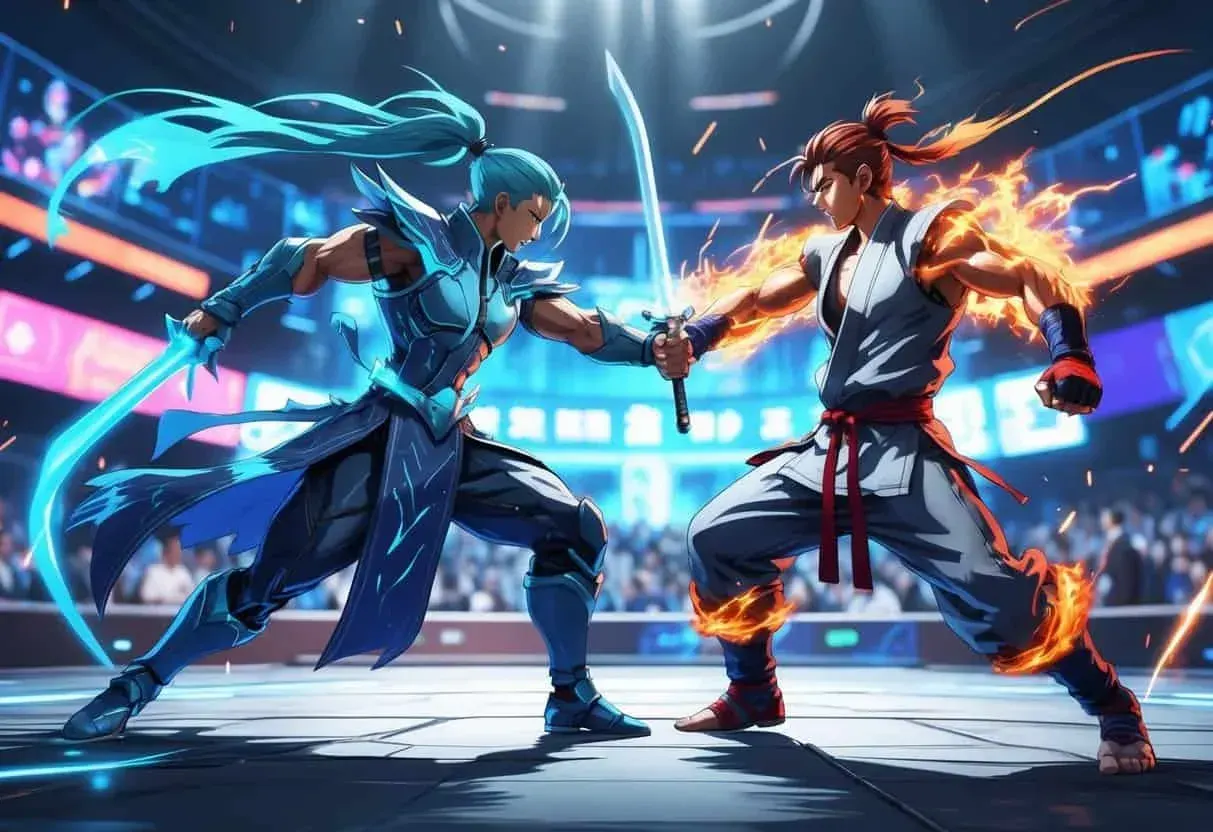
What separates a competitive anime fighter from a casual arena brawler is a carefully tuned set of systems that reward lab time and punish sloppy play. You’ll find universal mechanics like pushblocks, burst, or Roman Cancels that act as both defensive safeties and offensive shortcuts. Characters are not just skin swaps; they bring unique movement profiles, combo routes, and tools that demand matchup knowledge. This variety means you can find a main that suits your playstyle — a relentless rushdown, a patient zoner, or a setup-heavy trap character — and still face endless ways to optimize your approach. The following guide breaks down the titles and internal systems that make anime fighting games a legitimate esports category, not just a love letter to source material.
Understanding Competitive Mechanics in Anime Fighters
Competitive viability in this genre hinges on more than a large roster or slick particle effects. It’s about how the game communicates information, how it handles risk assessment, and how it lets player expression shine within a clear ruleset. The best anime fighters build every decision around three pillars: readable state changes, consistent defensive options, and a meter economy that forces difficult choices.
Core Combat Systems That Reward Knowledge
At the base, you’ll always find health bars, a tension or special gauge, and a hard knockdown or okizeme game. But the systems unique to anime fighters — air dashes, double jumps, airdashes, and sometimes triple jumps — create a neutral game that is far more vertical than traditional 2D fighters. Movement options mean you need to control space actively, using air-to-air normals and anti-air specials to zone aggressively. Many games also feature a “burst” or combo breaker mechanic: a once-per-round, or meter-dependent, escape that resets the action and forces the aggressor to build respect. Learning when to burst, bait a burst, or spend meter to extend pressure turns matches into layered mind games.
Additionally, hitstun and gravity scaling are tuned so that long combos require execution rather than simple auto-combos. While some games offer streamlined combo strings for newcomers, optimal routes demand precise timing, microdashes, and situational awareness of screen position. The gap between a basic confirm and a corner-carry combo that leads to a hard knockdown is what separates intermediate play from tournament readiness.
Accessibility Without Diluting Depth
The sweet spot for 2025’s best games is a design that welcomes fresh players while offering an ever-expanding depth curve. Titles like Dragon Ball FighterZ use autocombos that can string together flashy sequences with light auto-pressure, but those same autocombos can be canceled into manual extensions for advanced play. Similarly, simplified inputs for special moves — common in Granblue Fantasy Versus: Rising — let you focus on neutral and spacing before you need to memorize complex directional motions. The result is a fighting game that feels good in the first ten minutes but reveals impossible-to-master skill ceilings after a hundred hours.
You also see intelligent tutorial and mission modes that go beyond command lists. Games now teach you about hit confirms, safe jumps, and fuzzy defense with guided drills. This structured learning path ensures that anyone willing to put in the time can eventually understand the deeper systems, bridging the gap between casual fan and serious competitor.
How Esports Shapes Modern Design
The esports boom has directly influenced how anime fighting games are built and maintained. Developers now prioritize highly visible hurtboxes, clean hit sparks, and minimal visual noise so that both live audiences and stream viewers can follow the action. Balance patches arrive regularly, informed by win-rate data and community feedback rather than developer guesswork. Ranked modes feature refined matchmaking algorithms that prioritize connection quality and close skill ratings, making online play a viable practice ground for offline majors.
Moreover, the presence of regularly updated leaderboards and in-game tournament modes pushes players to engage in a constant cycle of improvement. This shift has turned weekend warriors into dedicated lab monsters and fostered a sustainable ecosystem where new releases are measured by their potential to be a fixture at events like EVO, CEO, and Combo Breaker.
The Best Anime Fighting Games for Competitive Players in 2025
After sorting through the healthy selection of active titles, a few emerge as definitive choices for those who want mechanical depth, large player bases, and stable online play. Each game brings a distinct flavor of anime aesthetics and systemic complexity.
Dragon Ball FighterZ
Even years after its initial release, Dragon Ball FighterZ remains a pillar of the anime fighting game community. Built as a 3v3 tag fighter, it captures the breakneck speed of the anime series while demanding mastery of team synergy. The universal combo structure — light, medium, heavy, special, and follow-up vanish — offers a consistent entry point, yet the real complexity lives in assist extensions, snapback tech, and the sparking blast system that resets combo scaling. Online, the game supports rollback netcode on PC and current-gen consoles, and the ladder is filled with dedicated players who regularly push the meta.
Guilty Gear -Strive-
Arc System Works’ flagship title continues to define modern anime fighters. Strive pared back some of the previous entries’ most esoteric options while introducing the wall break mechanic that resets neutral and rewards stage positioning. The Roman Cancel system now includes multiple variations (red, purple, blue, yellow), each altering momentum or creating mix-up opportunities. Every character feels like a boss fight you must learn to dismantle, and the tower-based ranking system keeps matches competitive. With comprehensive frame data and a massive competitive community, Strive is a game you can play for years and still discover new tech.
Granblue Fantasy Versus: Rising
Granblue Fantasy Versus: Rising turned a visually gorgeous fighter into a fully realized competitive product. The addition of rollback netcode and crossplay unified the community, while the new “Raging Strike” and “Brave Counter” mechanics added aggressive options without breaking the game’s footsies-focused groundwork. Characters are built around unique weapons and cooldown-managed skills, giving each matchup a distinct rhythm. The game’s free-to-play rotating demo characters also ensure a steady influx of new blood, making matchmaking quick at all skill levels.
BlazBlue Centralfiction
BlazBlue Centralfiction represents the culmination of a franchise known for its intricate Drive system: every fighter possesses a signature ability that defines their playstyle. You might control a puppet that attacks independently, manipulate seals for lockdown pressure, or wield a sword that drains health for amplified damage. The sheer volume of universal mechanics — like Overdrive, Exceed Accel, and active flow — gives you layers of resource management that never grow stale. While the netcode is delay-based, the dedicated player base on PC uses community tools to keep the matchmaking healthy, and the depth of the combo theory makes it a lab monster’s paradise.
Naruto x Boruto Ultimate Ninja Storm Connections
This 3D arena fighter leans heavily on the spectacle of the Naruto universe, but it includes competitive features that go beyond the casual crowd. The new “Simple” and “Normal” control modes let you choose between streamlined execution and manual combo control. Team-building becomes a strategic exercise as you assign support types and juggle awakening transformations. While the netcode still uses delay-based architecture, the ranked mode and online tournaments give structure to high-level play, and the massive roster ensures matchup variety for those willing to learn the unique 3D movement and substitution jutsu timing.
Melty Blood: Type Lumina
Type Lumina’s rapid shield and moon drive systems create an unrelenting pace that rewards fast adaptation. The game strips away high-damage autocombos in favor of manual chains that encourage creativity, while the new “Rapid Beat” edge mechanic lets you convert stray hits into full combos through smart meter usage. With rollback netcode and a vibrant grassroots tournament scene, Melty Blood sits firmly in the rotation of any serious anime fighting game player looking for a title that emphasizes reaction speed and explosive momentum.
| Game | Platforms | Key Competitive Features | Online Play |
|---|---|---|---|
| Dragon Ball FighterZ | PC, PS4, PS5, Switch | 3v3 tag, snap meta, strong okizeme | Rollback (PC/current gen) |
| Guilty Gear -Strive- | PC, PS4, PS5, Xbox | Roman Cancel variants, wall break, tower ranking | Rollback, crossplay |
| Granblue Fantasy Versus: Rising | PC, PS4, PS5 | Footsies focus, Raging Strike, Brave Counter | Rollback, crossplay |
| BlazBlue Centralfiction | PC, PS4, Switch | Unique Drive abilities, Overdrive, deep combo routing | Delay-based (community mods) |
| Naruto x Boruto Connections | PC, PS4, PS5, Switch, Xbox | 3D arena movement, support team building, awakening | Delay-based |
| Melty Blood: Type Lumina | PC, PS4, Switch, Xbox | Moon Drive, Rapid Beat, freeform chaining | Rollback |
Critical Systems That Define High-Level Play
Beyond the individual titles, the universal systems underneath the hood are what really test you. Spending time in training mode, analyzing frame data, and understanding team dynamics will raise your skill faster than grinding ranked matches alone.
Mastering the Training Mode
A fully-featured training mode is non‑negotiable for any competitor. The best versions let you record opponent actions, set wakeup timings, and display hitbox overlay. You need the ability to randomize blocking to practice hit‑confirming, and the capacity to set dummy reversal behavior so you can drill safe jump setups. Games like Strive and Granblue Rising offer exhaustive training suites that show frame data in real time, allowing you to lab exactly why a punish works or why a string is a true blockstring. Regular, focused practice sessions here translate directly into cleaner execution under tournament pressure.
Living by Frame Data
Frame data is the mathematical backbone of competitive play. Knowing that your medium punch is -4 on block, or that a specific special is plus on block only at point‑blank range, turns guesswork into calculation. You can build offense around safe moves that leave you at advantage, and you can exploit minus frames with your fastest normal to punish otherwise ambiguous options. Community‑driven wikis like Dustloop compile exhaustive tables that you can study alongside replay analysis, creating a feedback loop that tightens your decision‑making. This analytical approach is what keeps games fresh, as even a simple patch note can shift an entire matchup dynamic.
Assist Moves and Tag Team Coordination
In team‑based fighters, the assist system is not an afterthought — it’s the core framework. Calling an assist at the right time can turn blocked pressure into a mix‑up, cover a reckless approach, or extend a combo to lethal damage. Dragon Ball FighterZ players spend hours discovering optimal assist sequences that enable solo mix‑ups or meterless combos from nearly any hit. Tag systems also introduce the concept of health management and forced character changes through snapbacks, forcing you to track three separate life bars and plan your orderbased on favorable matchups. Learning to operate a team as a single cohesive unit rather than three isolated characters is the mark of a serious player.
Why Rollback Netcode Matters More Than Ever
In an era where online competition often determines seeding for major events, the quality of netcode directly impacts the competitive integrity of a game. Rollback netcode works by predicting inputs and rolling back the game state when predictions are wrong, creating a smoother online experience even at higher latencies. Games without it become a test of who can adjust to variable delay, which nullifies true skill tests. The inclusion of rollback — and increasingly, crossplay — is a non‑negotiable feature for any 2025 anime fighter that wants to sustain a dedicated player base beyond launch month. Check the official EVO schedule and you’ll see that every mainstage anime fighter now runs on rollback, reflecting community demand.
The Evolution of the Genre and Player Communities
Anime fighting games did not arrive fully formed. They grew out of a unique intersection of fandom, arcade culture, and console exclusives, and the modern landscape is the result of decades of iteration that finally placed player experience at the center.
The Stamp of Manga and Anime Storylines
What sets anime fighters apart is how faithfully they weave source material into gameplay. Moves are lifted straight from iconic panels, and dramatic finish mechanics echo season finales. This authenticity draws in players who might otherwise never touch a competitive fighter, but it also creates characters with instantly readable archetypes. You know that Goku is a well‑rounded shoto, and you expect Jotaro’s Star Platinum to control close range with punishing stand attacks. Developers like CyberConnect2 and Arc System Works use these narratives to design mechanics that feel inextricable from the character’s identity, which in turn produces a deep emotional investment that fuels tournament hype.
Casual Appeal Versus Hardcore Commitment
The modern anime fighter ecosystem is remarkably good at segmenting experiences without alienating either camp. A casual player can spend weeks exploring story modes, collecting artworks, and enjoying lobby mini‑games without ever touching ranked. A hardcore competitor, meanwhile, can disable simple inputs, dig into frame‑perfect combos, and compete in structured seasons. This dual design means that the games are financially sustainable and maintain healthy player counts, which directly benefits the competitive side by ensuring fast matchmaking and frequent content updates. You get to choose your own intensity level, and the systems accommodate that spectrum gracefully.
Trends Shaping the Future
Looking ahead, the lines between RPG progression and fighting game mechanics will continue to blur. Titles like Granblue Versus already incorporate weapon skins, co‑op modes, and story‑driven stat adjustments that appeal to JRPG fans. At the same time, the push toward standardized esports infrastructure — universal matchmaking APIs, sponsored online circuits, and integrated streaming toolkits — will make anime fighting games even more visible. You can expect more free‑to‑play entry models that gate competitive access behind a one‑time purchase or season pass, lowering the barrier for new players while maintaining a stable revenue stream for continued development.
Where to Start Your Competitive Journey
The sheer number of high‑quality titles can make picking one feel daunting, but the right choice is usually a blend of visual appeal and gameplay philosophy. If you love frantic team synergy and cinematic supers, Dragon Ball FighterZ will hold your attention for years. If you prefer grounded footsies with explosive, short combos, Granblue Fantasy Versus: Rising rewards patience and spacing. And if you thrive on lab work and infinite combo routing, BlazBlue Centralfiction offers a richness that few other games can match.
No matter which game you commit to, the common thread is that sustained growth only happens through intentional practice. Study top‑player replays, join Discord communities that post daily tech, and attend local or online brackets to stress‑test your development. Anime fighting games in 2025 are built to support exactly this kind of long‑term engagement, and the players who treat them as a craft rather than a pastime are the ones who find the deepest satisfaction in every hard‑earned victory.