Table of Contents
Psychological anime has long been captivated by the figure of the villain—not as a cardboard cutout of malice, but as a fractured mirror reflecting our own hidden doubts and dark potentials. Unlike the unambiguous evil of fantasy epics, the antagonist in a psychological thriller operates in a space where morality is not a line but a spectrum. These characters challenge you to sit with discomfort, to weigh their crimes against their context, and to ask yourself an unnerving question: would you have done any differently in their shoes? This genre's unique power lies in its refusal to provide easy answers, forcing you to engage with the narrative on a deeply personal level.
A sympathetic villain is not merely a character with a sad backstory—they are a narrative earthquake. Their presence destabilizes the hero’s journey, blurs the boundaries of righteousness, and often exposes the systemic or philosophical flaws that the “good” characters refuse to confront. In anime like Death Note, Monster, and Psycho-Pass, these antagonists become the story’s gravitational center. By examining their construction, we uncover the mechanics of empathy itself and why these broken figures linger in our minds long after the credits roll.
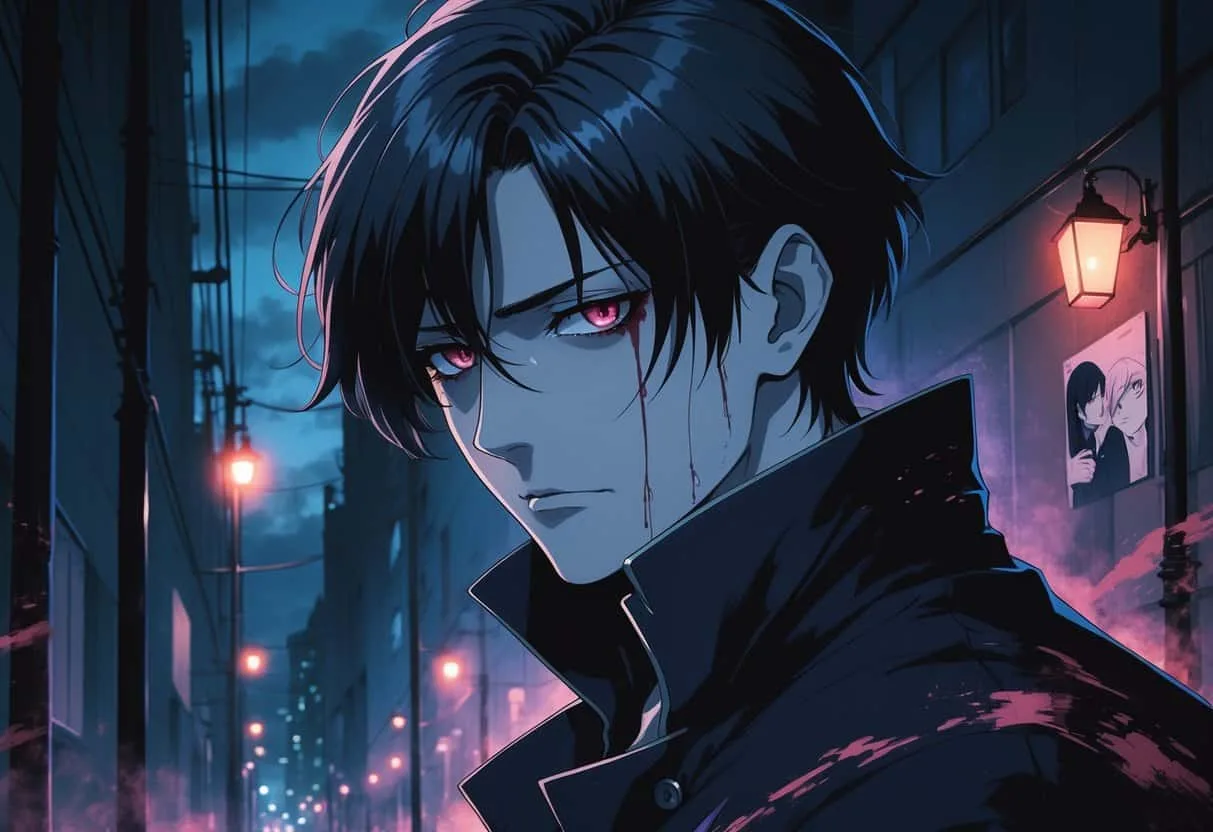
Deconstructing the Sympathetic Villain: More Than Just Sad Stories
The core of a sympathetic villain’s appeal comes from cognitive dissonance. You are presented with actions that are unmistakably harmful—murder, manipulation, systemic destruction—yet you find a part of yourself rooting for them. This psychological tension is what makes their character design so compelling. It is not about forgiveness but about understanding, a process that activates the same neural pathways as experiencing a profound piece of art. To achieve this, creators weave together several essential threads, each one drawing you deeper into the character’s flawed worldview.
A key element is the disarming contrast between their humanity and brutality. A villain who expresses genuine, tender care for a single person or a pet while dispassionately orchestrating chaos creates a fracture in your moral judgment. This isn’t a simplistic “trauma made them do it” trope; it’s a exploration of how love and violence can coexist in the same psyche. From a neuroscientific standpoint, this appeals to our brain’s theory of mind systems, which are hardwired to seek coherent narratives for behavior. When a character’s actions violate social norms but their internal framework is laid bare, the brain engages in a deeper, more effortful processing of social information, fostering a strange form of respect—or at least fascination.
This complexity allows the antagonist to function as a profound critique of society or human nature itself. They often vocalize the philosophies the story is too polite to state outright, exposing hypocrisies that the hero is conditioned to ignore. In this way, they become necessary agents of chaos, forcing a confrontation with uncomfortable truths about power, freedom, and the human capacity for cruelty. You invest in them not because you endorse their methods, but because you recognize the validity of the pain or the philosophical question they represent.
The Architecture of a Sympathetic Psyche
What specific elements transform a standard villain into a sympathetic icon? It’s a careful layering of narrative techniques that invite you behind the mask. Drawing on archetypes from Jungian psychology and literary theory, these characters resist easy categorization. They dwell in the liminal space between hero and monster, a space often glossed over in less mature narratives. Below, we break down the fundamental components that elevate a character from mere antagonist to a subject of profound empathy and debate.
Tragic Memory and the Scars on the Soul
The foundation of most sympathetic villains is a history of deep, scarring pain that the protagonist rarely has to face. This isn’t about excusing their bad deeds; it’s about contextualizing them within a pattern of prolonged suffering. Whether it’s the systematic betrayal by a trusted institution, a childhood defined by the death of loved ones, or being tormented for being different, these experiences forge a worldview where aggression becomes not just a choice, but a survival mechanism. In psychological anime, this backstory is rarely presented as a neat flashback. Instead, it emerges through fragmented memories, symbolism, and haunting visual motifs, mimicking the fragmented nature of real trauma.
For example, a villain’s obsessive need for control might be traced back to a powerless childhood, making their tyranny feel like a desperate, if destructive, attempt to finally set the terms of their existence. This raw portrayal of damage forces you to see them as a product of their environment, and your empathy, however guarded, is ignited by the sheer weight of their unshed tears.
The Relatable Shadow: When Ambition Becomes Darkness
Beyond shared pain, sometimes a villain’s motivations mirror everyday frustrations magnified to a terrifying scale. They might crave recognition in a world that has dismissed them, seek to avenge a profound injustice the legal system ignored, or pursue an ideal of peace so pure that it justifies any sacrifice. This is where the concept of the “shadow self,” as coined by Carl Jung, becomes powerful on screen. The villain enacts the fantasies we suppress: the desire for absolute power, the wish for a clean slate by destroying a broken world, or the belief that you alone know what’s best for humanity. When Light Yagami in Death Note picks up the notebook, his initial thought—“I’ll cleanse the world of rotten people”—resonates with a universal, if fleeting, disgust at the injustice we see daily.
Your sympathy stirs because his origin point is not alien; it’s a thought experiment taken to a logical, disastrous extreme. You recognize the seed of his rage in yourself, and that recognition is deeply unsettling and utterly compelling.
Adhering to a Personal Code: The Anti-Villain’s Honor
A distinct type of sympathetic villain is the “anti-villain,” a character whose ultimate goal might be noble or whose methods are bound by a rigid, if twisted, ethical code. This code separates them from chaotic evil. They might refuse to harm children, despise lying, or adhere to a specific principle of fair play, even as they commit atrocities. Their morality is an inverted one, but the fact that they have a moral compass at all—however magnetically flawed—humanizes them. In Psycho-Pass, Shogo Makishima despises a society that relies on a computational system to judge human souls, believing it has stripped people of free will.
His remedy is anarchy and gruesome violence, yet his core complaint is a defense of human spirit that many viewers could intellectually, if not practically, endorse. His evil is not chaotic; it’s methodical and philosophical, making you debate his methods long into the night. This engagement is key: you aren't just watching the story; you’re placed in a dialogue with the villain’s very being.
Flashes of Humanity: Glimpses Behind the Mask
Even the most hardened villain will occasionally show vulnerability, and these moments are the lynchpin of sympathy. It could be a genuine smile when sharing a meal, a moment of quiet reflection looking at the stars, or a protective flash when someone they care for is in danger. These aren’t contradictions; they are the remnants of a self that could have been. They are the “what if?” personified. By seeing a villain tend a garden, play a musical instrument, or show mercy to a weaker creature, you are forced to acknowledge that they are not a monolith of evil.
These actions create a cognitive ripple, reminding you that the capacity for tenderness does not disappear when someone does terrible things; it simply competes with baser instincts and often loses. This failure, rooted in their pain or philosophy, becomes the heart of the tragedy, and your sympathy deepens into a profound, almost grieving understanding of lost potential.
The Narrative Engine: How Villains Drive the Story Beyond Conflict
A sympathetic villain is far more than a plot device for combat. They exist to fracture the narrative and force growth in every element of the story—from the protagonist’s arc to the audience’s own worldview. Their presence creates a storytelling environment where the central question is not “who will win?” but “who is right?” and “what would I become if I walked their path?”. This level of narrative integration elevates psychological anime to new literary heights.
The Foil As a Dark Mirror to the Hero
Perhaps the most critical story function of this villain is to act as a twisted reflection of the hero. A well-written antagonist is often what the hero could become if they lost their support systems, succumbed to their rage, or let their ideals calcify into extremism. This mirrored structure creates a powerful, constant, and often unspoken tension. Every victory the hero secures is tainted with the knowledge that they share DNA with their enemy—sometimes literally, always metaphorically. In Naruto, Gaara’s torment and early bloodlust are a direct reflection of what Naruto’s loneliness could have forged without the intervention of a few key figures.
This connection makes the antagonist’s eventual redemption (or tragic fall) land with seismic force. The villain’s arc becomes a cautionary tale that validates the hero’s struggles, making both characters feel richer and more fully realized. You can see this psychological duality explored in depth in resources like psychology’s perspective on our dark side, which helps explain why these mirrored contrasts hold such a visceral grip.
Moral Alarms and the Deconstruction of Justice
Psychological anime frequently uses its villains to pilot a wrecking ball into the comfortable structure of social morality. They are living, breathing arguments that the systems we trust are fundamentally broken. By rooting their evil actions in legitimate critiques of authority, inequality, or existential despair, the villain forces you to acknowledge the cracks in the hero’s supposedly just cause. This is not done to make the villain “right,” but to expose that in a complex world, no system of justice is flawless and no hero holds a monopoly on truth. The constant philosophical probing makes viewers uncomfortable, and it’s in that discomfort that the true art of the genre resides.
This dialectical approach makes your engagement far more active and intellectually stimulating than rooting for a simple good-versus-evil showdown. Debates in fan communities, as detailed on sites like MyAnimeList’s discussion forums, often revolve around these ethical puzzles for years, proving the lasting power of characters who make you think rather than just react.
The Arc of Transformation: Damnation, Redemption, and Immersion
Unlike a static cartoonish villain who is defeated and forgotten, the sympathetic villain usually undergoes a significant arc. This can oscillate between a descent into further darkness and a slow, painful climb toward redemption. The possibility of change keeps you invested. You watch for cracks in their armor, signs that their rigid ideology might be softening, or evidence that the little humanity they had retained is finally flickering out. This engagement is amplified by the psychological depth, where a single gesture or a quiet line of dialogue can carry the transformative weight of a full battle in another anime.
When a character like Crona from Soul Eater thrashs between crippling fear and programmed aggression, you’re less interested in their “power level” and more absorbed in the real-time fight for their soul. You watch with the heart-stopping focus of someone monitoring a fragile patient, because the victory isn’t about a physical knockout—it’s about whether empathy can successfully breach a wall built from years of unimaginable trauma.
Case Studies: The Many Faces of Sympathetic Darkness
Examining iconic figures across the genre reveals the diverse ways sympathy can be engineered. While their methods and madness vary, each compels us to look beyond the label of "evil" and see a character stained by tragedy, ideology, or madness that is all too recognizable under different circumstances. These figures don’t just haunt the screen; they become reference points for how we discuss morality in storytelling, leaving behind a legacy of thought-provoking chaos. The following table categorizes a few masterfully crafted examples who continue to dominate critical discussions and fan theories.
| Villain | Anime | Core Trait | Source of Sympathy |
|---|---|---|---|
| Light Yagami | Death Note | Utopian idealism corrupted by absolute power | His initial revulsion at societal rot is a feeling many share; his plan to purge evil starts from a place of frustrated heroism, making his downfall a slow, horrifying transformation you are forced to witness from his own perspective. |
| Johan Liebert | Monster | A living void shaped by eugenics and isolation | His monstrous nature is a perfect product of deliberate human cruelty; the horror of his existence is a mirror held up to a system that tried to create a perfect leader and instead birthed a perfect demon, raising questions about nature vs. creation. |
| Shogo Makishima | Psycho-Pass | Champion of free will in a surgically sterile world | He is fundamentally a revolutionary fighting against a system that has stripped humanity of its soul, even if his weapons are gruesome murder; your discomfort arises because the society he wants to destroy feels claustrophobic and dehumanizing, making you question where liberty ends and anarchy begins. |
| Gaara of the Sand | Naruto | Child soldier weaponized by loneliness and a trapped beast | His entire identity was built on the lack of love; the unconditional rage he shows is a direct, tragic result of a village’s fear, and his eventual struggle to rebuild a self-worth from nothing mirrors a deeply human journey from self-hatred to reluctant connection. |
Beyond these titans, the genre is littered with equally potent figures. Consider the raw, fractured psyche of Crona in Soul Eater, a victim of a lifelong experiment in psychological destruction by a parent who viewed them as a weapon. Crona’s constant shaking, confusion, and desperate bids for connection amidst programmed violence bypass logical analysis and strike directly at a primitive, protective instinct in the viewer. You don’t just sympathize; you almost physically ache for them to find safety. Similarly, obscure gems like Alien Nine feature young characters whose “evil” is a manifestation of extreme phobias and social pressure, turning the villain into a walking, suffering metaphor for adolescent anxiety.
This kind of emotional realism is why psychological anime stands apart—its monsters are born not from cosmic comic book events, but from the recognizable debris of human cruelty, neglect, and mental fragmentation. For a deeper look at character analyses across the medium, resources like Anime-Planet’s psychological anime collection offer a starting point for exploring lesser-known titles rife with similar complexity.
Why the Sympathetic Villain Is an Enduring Obsession
The powerhouse behind a great psychological anime often isn’t its hero—it’s the shadow that the hero chases. Sympathetic villains endure in popular culture because they entertain the uneasy possibility that in a different story, with a different camera angle, they would be the tragic protagonist. They represent a failure of the world as much as a failure of the self, bridging the gap between an uncaring universe and our desperate human need for narrative justice. Our fascination is not a sign of latent malice but a testament to our capacity for complex emotional reasoning. We are drawn to these characters not despite their jagged edges, but because of them.
Ultimately, the true measure of these antagonists is the way they reshape you long after you’ve finished the series. They force you to confront your own shadow and ask: what fractured philosophies am I carrying, and who could I become if my worst days were amplified by power? This is the sublime gift of psychological anime—it doesn’t just show you a story; it places an optic on your own soul. The most well-known examples, from Kira’s god complex to Makishima’s fatal love for humanity’s darkness, continue to fuel scholarly articles and debate on sites like r/TrueAnime on Reddit, proving that these characters are not fleeting confections but lasting psychological archetypes. They are our fears, our disenfranchisements, and our what-ifs given voice, and in listening to them, we might just understand ourselves a little better.