Table of Contents
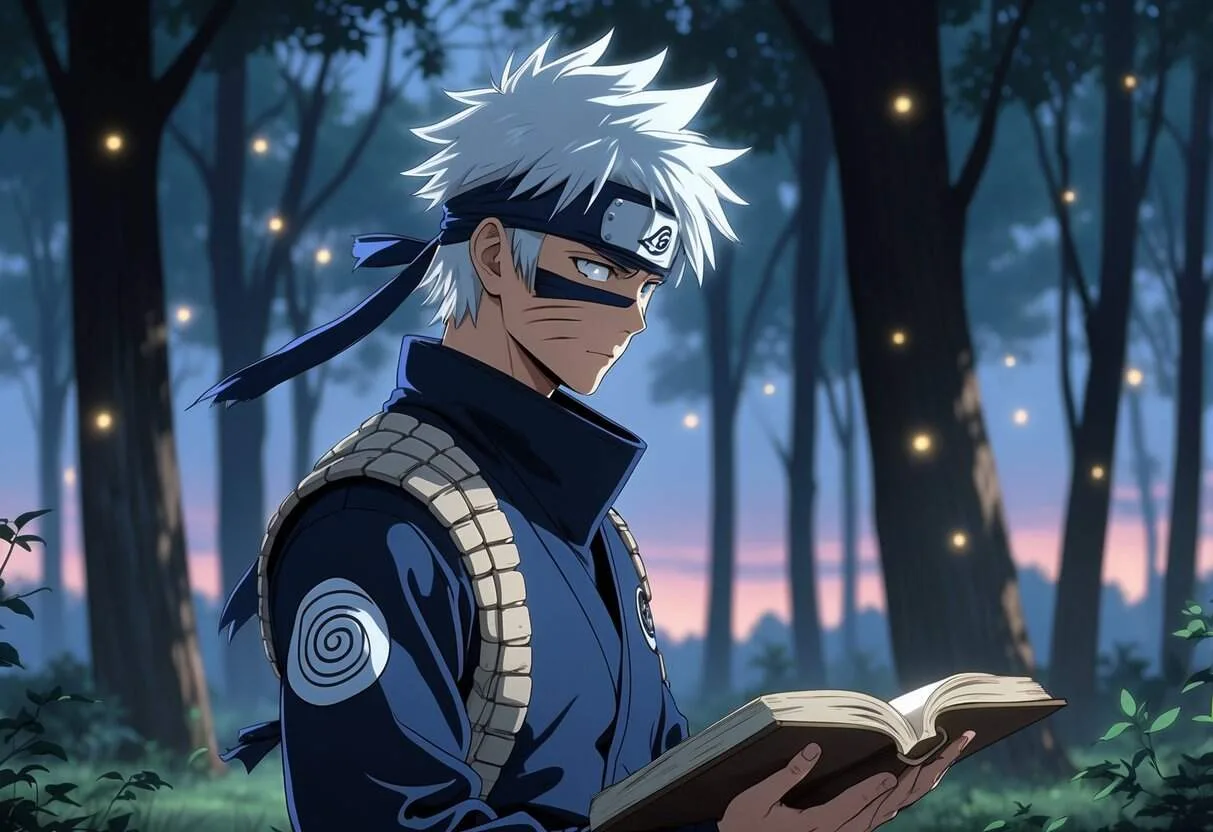
Kakashi Hatake is not merely a skilled ninja—he is an intricate tapestry of grief, resilience, and quiet mentorship woven into the very fabric of the Naruto saga. Widely recognized as the Copy Ninja, his reputation for copying over a thousand jutsu often overshadows the profound influence he wields as a teacher, a strategist, and a symbol of perseverance. To understand why he remains one of anime’s most celebrated mentors, it is essential to peel back the mask—both literal and emotional—and explore the origins, methods, and lasting impact of this enigmatic shinobi.
The Complex Origins of Kakashi Hatake
Before he became the laid-back sensei of Team 7, Kakashi’s life was a crucible of early genius and crushing loss. His childhood was defined by a sharp intellect that set him apart, yet his emotional world was shaped by tragedy that would have broken a less determined spirit.
A Prodigy’s Ascent
Kakashi graduated from the Ninja Academy at the remarkable age of six, became a chūnin at seven, and joined the elite ANBU Black Ops by his early teens. His rapid advancement was more than natural talent; it was a relentless pursuit of perfection driven by a desire to honor his father’s legacy—and later, to escape its painful shadow. His early missions demonstrated an uncanny ability to analyze and adapt, traits that would later define his fighting style. This prodigious start, however, was also a double-edged sword. It isolated him from peers and ingrained a rigid adherence to rules, a flaw that would be challenged by his own future students.
The Shadow of Loss
The course of Kakashi’s life was permanently altered by two seismic losses. First, his father, Sakumo Hatake—a renowned shinobi hailed as “Konoha’s White Fang”—chose to save his comrades rather than complete a mission, resulting in public disgrace and eventually, his suicide. The young Kakashi internalized a brutal lesson: rules must never be broken, even at the cost of humanity. This belief was later shattered when his teammate Obito Uchiha, whom Kakashi initially dismissed as a weakling, sacrificed himself to save him, gifting him the Sharingan and uttering the words that would become Kakashi’s creed: “In the ninja world, those who break the rules are scum, but those who abandon their friends are worse than scum.” The subsequent death of Rin Nohara, which Kakashi inadvertently caused, cemented a lifetime of guilt and emotional restraint.
A detailed timeline of these formative events reveals a boy genius forced to confront the cost of duty without love.
The Duality of the Ninja
Kakashi’s personality is a study in contradictions that make him endlessly compelling. On the surface, he is perennially late, one hand clutched around a well-worn copy of the Make-Out Tactics series, exuding an almost negligent coolness. In battle, this flippant demeanor vanishes, replaced by a cold, calculating focus that can perceive a dozen tactical layers in a single glance. This duality is not hypocrisy but a survival mechanism. The mask he wears—both the fabric one and his emotional detachment—protects him from further heartbreak while allowing him to care deeply from a distance.
His mentorship is rooted in this tension: he pushes his students to face their own darkness because he has spent a lifetime struggling with his own.
The Mentorship Philosophy: Tough Love for Team 7
Kakashi’s approach to guiding Naruto, Sasuke, and Sakura stands apart from the more nurturing methods of fellow sensei like Iruka or Might Guy. He operates on a principle of guided self-discovery, using a blend of unconventional tests, strategic neglect, and timely intervention to forge a team capable of surviving the brutal realities of shinobi life.
Teaching Through Adversity
Rather than lecturing on abstract virtues, Kakashi embeds his lessons in immediate, often humiliating, experiences. The iconic bell test, which he inherited from his own teacher Minato Namikaze, was never truly about taking the bells; it was a foundational exercise in teamwork that forced Naruto, Sasuke, and Sakura to prioritize their bond over personal gain. By deliberately starving them on the first day, he created a scenario where selfishness would lead to failure, planting a seed that would later bloom into the team’s unbreakable reliance on one another. Later, during the Land of Waves mission, Kakashi allowed his students to confront the lethal reality of Zabuza Momochi, stepping back to let them feel genuine terror before stepping in as an immovable shield. This philosophy is simple yet profound: a lesson that is merely heard is often forgotten, but a lesson that is lived becomes part of one’s instincts.
Strictness Wrapped in Compassion
Beneath his aloof exterior, Kakashi is remarkably attuned to the emotional undercurrents of his team. He rarely offers overt praise, preferring to acknowledge growth through action rather than words. When Naruto struggled to master the Rasenshuriken, Kakashi’s decision to teach him the concept of shadow clone training—where a thousand clones accelerate learning exponentially—was a quiet admission of his faith in Naruto’s boundless stamina and creativity. With Sasuke, he recognized the consuming fire of revenge early on. Rather than simply forbidding it, he personally taught him the Chidori, hoping to anchor the boy with a technique that required protection of precious bonds, while simultaneously warning him about the hollow victory that vengeance brings.
Kakashi’s compassion is not soft; it is the kind that steels you for the world without leaving you to freeze alone in it.
Individualized Growth for Each Student
Kakashi understood that a one-size-fits-all curriculum would fail a team as disparate as Team 7. Naruto needed help channeling his chaotic energy into controlled power, transforming his impulsiveness into unpredictable strategy. Sakura required a different push altogether: she had the raw intellect and chakra control but lacked the killer instinct and self-belief. Kakashi encouraged her path toward medical ninjutsu, a discipline that leveraged her precision and nurtured her protective nature, eventually making her an indispensable combat medic. For Sasuke, the challenge was as much psychological as physical—Kakashi had to out-strategize the curse mark and Orochimaru’s seduction, trying to show him that true strength came from comrades, not isolation.
This tailored mentorship, detailed in analyses like this exploration of Kakashi’s finest teaching moments, proved that he saw each of them not as a subordinate, but as a person with a unique path to greatness.
Jutsu Genius: The Copy Ninja’s Arsenal
While his teaching philosophy is profound, Kakashi’s reputation was built on a fearsome combat repertoire that made him a legend across the five great nations. His abilities are a direct extension of his intellect—copying, creating, and combining techniques with surgical precision.
The Sharingan and Its Toll
Gifted by Obito as a dying wish, the Sharingan transformed Kakashi into the Copy Ninja. Unlike natural Uchiha users, the transplanted eye cannot be deactivated, forcing a constant drain on his chakra reserves—a handicap that makes his achievements even more remarkable. With it, he has copied over a thousand jutsu, earning a feared reputation among enemy villages. The eye grants him heightened perception, allowing him to read an opponent’s muscle movements and mimic hand seals nearly instantly. In combat, he often couples this with subterranean tactics, such as hiding behind a low mud wall while his ninja hounds track the enemy’s scent.
Yet the Sharingan is always a reminder of the bonds he lost; using it is both an act of honoring Obito and bearing the weight of his own survival.
Chidori: A Lightning Legacy
The Chidori, or Lightning Blade, is Kakashi’s signature assassination technique—an innovation born from his failure to infuse lightning nature into the Rasengan. The resulting jutsu is a concentrated bolt of electrical energy so intense it sounds like a thousand birds chirping. The move’s immense speed requires a Sharingan to manage the tunnel vision it creates, a limitation that makes Kakashi’s tutelage to Sasuke especially poignant. Teaching Chidori to his student was a symbolic passing of the torch, but Kakashi ensured it was burdened with a moral compass: he drilled into Sasuke that this technique should only ever protect the village and those he loved. The eventual perversion of Chidori into a tool for revenge profoundly wounded Kakashi, adding another layer of sorrow to his legacy.
Mastering All Three Arts
What sets Kakashi apart from many ninja specialists is his absolute versatility across ninjutsu, genjutsu, and taijutsu. His taijutsu style, sharpened during his ANBU days, emphasizes speed and redirection rather than brute force, often using the opponent’s momentum against them. He wields genjutsu with subtle elegance; during the bell test, he trapped Sakura in a simple but devastating illusion, demonstrating that psychological warfare can be as effective as any fireball. His ninjutsu library spans elemental affinities, from the defensive Earth Style Mud Wall to the Water Style Water Dragon Jutsu. In battle, Kakashi rarely overpowers an enemy directly; instead, he uses feints, shadow clones, and environmental awareness to control the rhythm of combat, making him one of the most adaptive fighters in the series.
An examination of his tactical archives reveals why opponents like Itachi and Pain treated him as a primary threat.
War, Betrayal, and Redemption: Kakashi’s Role in the Shinobi World
Kakashi’s influence extends far beyond the training ground. His strategic acumen and emotional journey placed him at the heart of the Fourth Great Ninja War, where his past collided explosively with the present and ultimately led to a hard-won peace.
Rivalries That Shaped Him
The dynamic between Kakashi and Obito Uchiha is the emotional linchpin of Naruto Shippuden. What began as a friendship between polar opposites—the rigid rule-follower and the idealistic laggard—twisted into a tragic confrontation between two broken worldviews. When Obito resurfaced as the masked Madara, every battle between them was layered with grief, guilt, and unspoken pleas for reconciliation. In parallel, Kakashi’s friendly rivalry with Might Guy provided a much-needed counterbalance. Guy’s unapologetic exuberance and physical prowess challenged Kakashi in ways that kept him from sinking into emotional stagnation.
Their contests, often absurd and petty, masked a profound respect that culminated in Guy’s ultimate sacrifice against Madara, a moment that broke Kakashi’s usual composure and showed just how fiercely he could care.
Strategic Brilliance in the Fourth Great Ninja War
As a commander in the Allied Shinobi Forces, Kakashi’s battlefield intellect became a decisive asset. He was instrumental in coordinating the movements of diverse shinobi from the Hidden Sand, Cloud, Stone, and Mist, leveraging his reputation and calm under fire to unify fractious squads. Against the reanimated Seven Ninja Swordsmen of the Mist, his tactical leadership allowed squads to reclaim their momentum. During the confrontation with Obito and the revived Madara Uchiha, Kakashi repeatedly dissected Kamui’s mechanism, using his borrowed eye to counter Obito’s own intangibility. His strategic insight was not limited to brute tactics; he correctly deduced the emotional cracks in Obito’s persona, forcing him to confront the idealism he had abandoned.
These battlefield decisions, often made in split seconds under moonlit skies, saved countless lives and solidified his status as a future Hokage.
Sacrifice and Self-Forgiveness
Kakashi’s arc reaches its emotional zenith not when he wields dual Mangekyō Sharingan and a perfect Susanoo, but when he finally forgives himself for Rin’s death. For decades, the image of his hand piercing her chest haunted his dreams, a subconscious punishment he accepted as just. The war forced a reckoning, and through Obito’s final redemption, Kakashi was given the opportunity to say goodbye to both of his lost teammates. A mentor who hides his pain cannot truly teach others to confront theirs. By allowing himself to mourn and to accept that imperfections do not negate one’s worth, Kakashi demonstrated that the strongest ninja are those who carry their scars without letting them dictate their actions.
This internal peace enabled him to step into the role of Sixth Hokage, not as a man fleeing his past, but as one carrying its lessons forward.
The Enduring Legacy of the Copy Ninja
Long after the Fourth Great Ninja War ended and his tenure as Hokage concluded, Kakashi’s shadow continues to fall kindly over the village hidden in the leaves. His influence is not grounded in political maneuvering or raw power, but in the quiet wisdom he imparted to a generation that now leads the world.
Characters like Konohamaru Sarutobi actively emulate his cool, composed leadership, while Naruto, now the Seventh Hokage, frequently quotes his former sensei’s philosophies on teamwork and never abandoning a comrade. Cultural analysts often point to Kakashi’s reign as Hokage as a period of transformative peace, precisely because he lacked the bombastic ambition of previous leaders; he simply did what needed to be done, with wisdom and a slight, knowing smile. His legacy is a testament to the idea that mentorship is the most powerful jutsu of all—it cannot be copied by any Sharingan, only felt through the lives it transforms.