Table of Contents
Some stories don't need a flood of words to leave a lasting mark. In the realm of anime, there exists a powerful niche where silence speaks louder than any monologue, and the absence of dialogue becomes a canvas for raw emotion. These shows rely on breathtaking visuals, evocative soundscapes, and the unspoken language of human expression to pull you into their worlds. The result is an experience that often feels more intimate and profound than series packed with exposition.
Minimal dialogue anime can forge a connection that is both immediate and deeply personal, proving that sometimes, the most compelling conversations happen in the quiet spaces between characters.
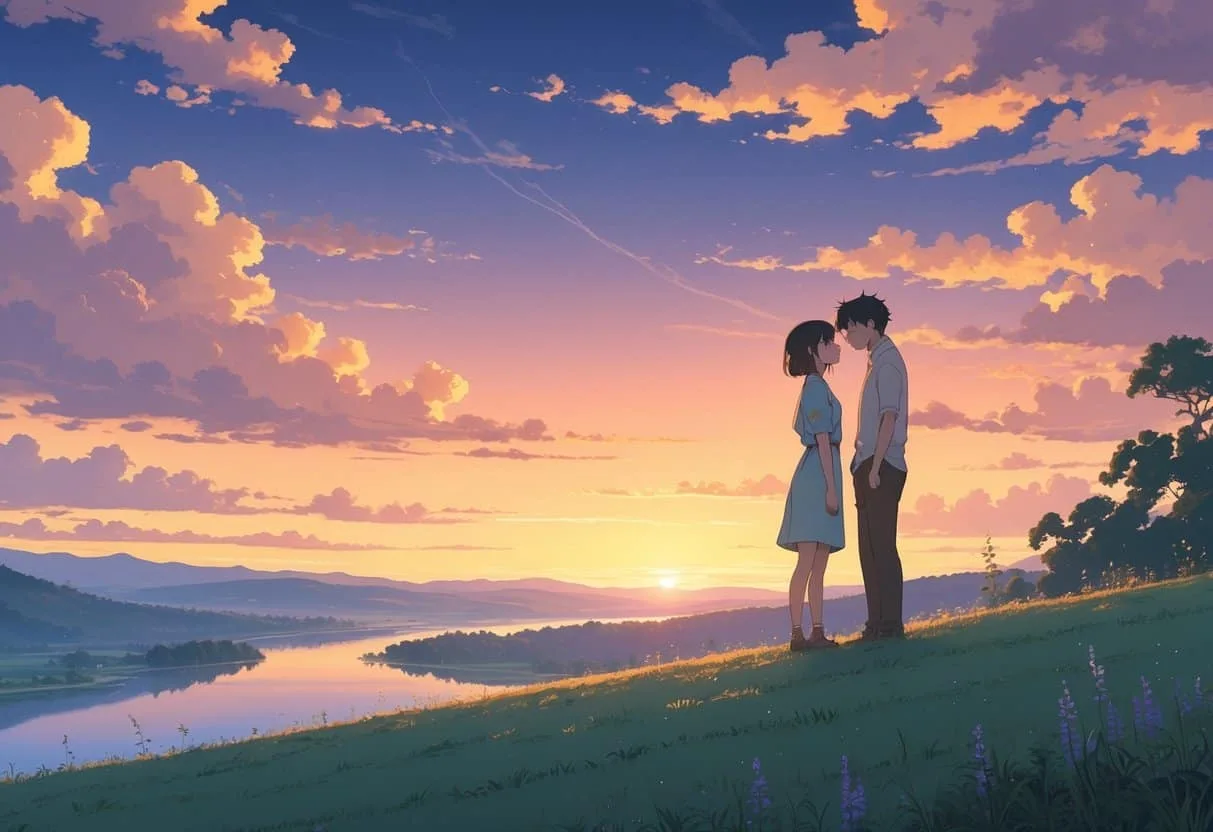
Titles like Texhnolyze, Girls' Last Tour, and Puella Magi Madoka Magica demonstrate this art form with mastery. They strip away verbal clutter to focus on atmosphere, subtle character movements, and the weight of a single glance. This approach is not just a stylistic choice—it is a deliberate narrative tool that asks you to engage with the story on a sensory level. You are not simply told what to feel; you are invited to inhabit the emotion yourself.
This method of storytelling, while less common in a medium often defined by its energetic dialogue and internal monologues, has produced some of the most enduring and thought-provoking works in anime history. The quiet stretches in these shows are not gaps but are filled with tension, beauty, or melancholy that resonate long after the screen fades to black. If you are ready to explore a different kind of anime experience, where less talking means more feeling, these selections are an ideal starting point. The simplicity of their narratives and the depth of their silent moments can fundamentally shift how you appreciate animated storytelling.
The Art of Silence in Anime Storytelling
At its core, the power of minimal dialogue lies in its ability to transmit emotion through non-verbal channels. When words are scarce, every element of a scene—from the play of light to the timing of a cut—becomes amplified. This shifts the burden of communication to the viewer, who must actively interpret visual and auditory cues. The result is a more engaged and empathetic form of watching, where you are not a passive recipient but a collaborative participant in the narrative.
Why Dialogue Isn't Always the Answer
Traditional storytelling leans heavily on dialogue to advance plot and define character. However, this can sometimes create a barrier between you and the raw experience of the story. Over-explaining can dilute the emotional impact of a moment. In contrast, a silent scene in an anime like Akira—where Neo-Tokyo's neon-drenched chaos unfolds with only a haunting soundtrack—lets you absorb the scale and terror organically. The lack of verbal hand-holding forces you to trust your own senses, making the experience more visceral and memorable.
It taps into a universal human truth: often, the deepest feelings—grief, love, awe—transcend language.
The Psychological Impact of Watching Without Words
Watching characters navigate their worlds with few words can be a surprisingly introspective activity. It mirrors real-life moments where silence conveys more than speech. A prolonged stare in Haibane Renmei or a hesitant gesture in Angel Beats can trigger a mirror response in you, evoking empathy without a single line of exposition. This form of storytelling engages your brain's emotional centers in a way that is akin to listening to music or viewing a painting; it is abstract yet precise. For some viewers, this can be a more demanding experience, but it is also one that can lead to a deeper, more personal understanding of the characters' inner lives.
You are left to fill in the blanks with your own experiences, making the connection uniquely yours.
The Pillars of Emotion in Visually-Driven Anime
Creating a powerful narrative without excessive talk relies on three main pillars: visual storytelling, unspoken characterization, and a masterful use of music and sound. When these elements work in harmony, they replace the need for dialogue entirely, constructing a rich emotional landscape from the ground up.
Visual Storytelling Excellence
When dialogue takes a backseat, every frame must serve the story. The animators become the primary narrators, using character design, background art, and camera work to convey information and mood. In Texhnolyze, the oppressive, decaying cityscape of Lux is itself a character, its crumbling infrastructure and dimly lit corridors screaming of societal collapse and despair. Similarly, the soft, watercolor-like backgrounds in The Garden of Words reflect the characters' fleeting moments of connection and tranquility, with every raindrop and shifting light pattern emphasizing an unspoken intimacy. Body language becomes critical—a slumped shoulder, a trembling hand, or a character's eyes momentarily widening can communicate entire arcs of doubt, fear, or hope.
You learn to read these visual cues as fluently as any script.
A key example is the use of visual metaphor. In Puella Magi Madoka Magica, the surreal, collage-like witch labyrinths are non-verbal representations of each magical girl's inner turmoil and eventual despair. You don't need a villain's monologue to understand the psychological horror; the animation itself is the message. This encourages a second level of visual literacy, where you begin to see meaning in color palettes—warm tones for fleeting safety, harsh blues for isolation—and inshot composition, such as characters frequently framed at a distance to suggest loneliness.
Impactful Characterization Through Action
Without words to define them, characters in these anime are built through their choices and physical reactions. In Girls' Last Tour, the daily survival routines of Chito and Yuuri—sharing a ration, repairing a vehicle, or simply looking at the star-filled sky—define their profound bond and resilient spirits far more than any heartfelt speech could. A quiet moment where one character wordlessly offers a piece of bread to the other speaks volumes about trust and care. Such actions are not plot points; they are the character itself. The same is true in Mushishi, where Ginko's calm, methodical approach to each new supernatural case reveals his wisdom and his deep, solitary connection to the natural world.
He rarely explains his empathy; he simply shows it through his unwavering patience and gentle movements. This invites you to build a profile of the character based on observed truth rather than stated fact.
The Role of Music and Sound Design
In the absence of speech, the auditory environment rushes in to fill the void. A masterfully composed soundtrack can guide your emotions with surgical precision. Joe Hisaishi's legendary scores for Studio Ghibli films like My Neighbor Totoro and Princess Mononoke are instructive here. His melodies don't just accompany a scene; they become the emotional narrator, swelling with childlike wonder or pulsing with ancient forest fury. In scenes with no talking, the music can shift from delicate piano notes to a full orchestra, telling you exactly how the emotional landscape is changing.
Similarly, the stark, ambient soundscapes of Serial Experiments Lain, filled with electronic hums and distorted voices, create an unsettling atmosphere that dialogue could never achieve. Even environmental sounds—the echo of footsteps in an empty hallway, the rustle of wind through grass, the rhythmic tapping of rain—become focal points. These sounds ground you in the scene's reality and can be just as expressive as a line of dialogue, carrying tension, peace, or impending change.
Essential Anime Where Silence Speaks Volumes
The following titles represent the pinnacle of this craft, using quietude to explore everything from epic fantasy to intimate human drama. They are windows into worlds where emotion is a visual and auditory experience.
Studio Ghibli's Quiet Masterpieces
Studio Ghibli's filmography is a masterclass in this technique. Princess Mononoke, despite its epic scope, is filled with long, dialogue-free passages where the forest God's presence is felt through visual awe and a profound, supernatural hush. My Neighbor Totoro uses near-silence to capture the lazy wonder of a childhood summer, with scenes of the girls simply exploring their new home or waiting for catbus in the rain. Spirited Away famously features the train scene across the water, a segment nearly empty of words where Chihiro silently processes her journey, surrounded by translucent, ghost-like passengers. These moments are not filler; they are the spiritual core of the films, allowing you to breathe in the world.
For more on their approach, the official Studio Ghibli site is a great resource.
Science Fiction and Fantasy That Defy Words
In sci-fi and fantasy, silence often builds atmosphere and provokes thought. Angel's Egg, a cult classic by Mamoru Oshii, is almost entirely devoid of dialogue, telling a dreamlike, allegorical story through hauntingly beautiful, slow-panning imagery of a girl protecting an egg in a desolate city. Its interpretation remains a open question, reliant entirely on your visual engagement. Kaiba, with its fluid and surreal animation style, explores memory and identity in a universe where bodies and minds can be erased and swapped. The show often lets its distorted, colorful worlds do the talking, its quiet moments laced with sorrow.
A more accessible entry is Mushishi, which reflects on the relationship between humanity and the primitive, unseen "mushi" life forms. Each episode is a meditative journey, often punctuated by silence as Ginko observes the natural world's quiet wisdom. These shows treat quietness as a philosophical space for reflection. For a comprehensive database of such titles, platforms like MyAnimeList are invaluable.
Drama and Slice-of-Life Anchored in Reality
The slice-of-life genre is fertile ground for minimal dialogue, as it mirrors the quiet rhythms of daily existence. March Comes in Like a Lion portrays the internal world of a young shogi player battling depression. Its most powerful scenes often feature the protagonist, Rei, sitting alone in his dark apartment, with only the sounds of the city filtering in to express his isolation. Later, the warmth of a household is conveyed not through long conversations but through the bustle of a kitchen and shared, silent smiles. A Silent Voice, while having dialogue, is masterful in its depiction of social anxiety and the inability to communicate; the literal "X" marks that cover people's faces and the muffled sound design place you directly into the protagonist's silent, fearful perspective.
Puella Magi Madoka Magica twists magical girl tropes with stretches of surreal, nightmarish animation that externalize suffering without a single word, relying on a stark, chilling soundtrack to amplify the dread.
Underrated Gems of Non-Verbal Storytelling
Beyond the widely known classics, some shorter works offer a pure distillation of this style. Voices of a Distant Star, a short film by Makoto Shinkai, uses text messages and vast, lonely shots of space to tell a tragic story of love separated by light-years; the dialogue is minimal, but the yearning in every frame is overwhelming. La Maison en Petits Cubes, an Academy Award-winning short, features no dialogue at all, telling the story of an old man's life through his dives into a submerged city, with each submerged level revealing a room from his past. The storytelling is entirely visual, proving that this technique can cross all language and cultural barriers.
Unpacking the Rich Themes in Silent Narratives
The themes explored in such anime often carry greater weight because they are not just spoken about; they are shown in their full, stark reality. The silence lends a gravitas that can make familiar tropes feel new and more truthful.
Existential Dread and Philosophical Inquiry
A common thread is the exploration of fundamental questions about self and world. Serial Experiments Lain is a labyrinthine journey into the nature of identity and consciousness in a digital age. Its long, quiet shots of Lain sitting in her room, surrounded by humming wires, and the eerie silence of the Wired itself, create a palpable sense of existential drifting. The philosophy is not discussed around a table; it is woven into the fabric of the animation. Similarly, Texhnolyze uses its brutal, almost wordless first episode to immerse you in a hopeless, underground society where meaning has long since decayed.
You are left to contemplate ideas of nihilism and humanity's fate not through dialogue, but through the characters' grim struggles and the world's oppressive design.
Love, Connection, and the Space Between People
When love is expressed through silence, it often feels more delicate and authentic. Makoto Shinkai's 5 Centimeters per Second is built around distance and longing. Its narrative unfolds in chapters, with long, introspective sequences where characters compose unsent text messages or ride trains through snowy landscapes, their internal monologues a counterpoint to their persistent external silence. The emotional weight comes from what remains unsaid. In Girls' Last Tour, the chaste, unconditional love between the two main characters is found in their rhythm of survival—splitting a last bit of chocolate or silently taking in a breathtaking view of a dead city.
The affection is in the action, not in grand declarations, making their bond feel unbreakable and pure.
The Trope of Isolation and Fleeting Connection
Many of these anime feature protagonists who are isolated, either physically or emotionally. The silence often mirrors their internal state. In Haibane Renmei, Rakka's journey to understand her place in the walled city is filled with questioning glances and lonely walks through the Old Home. Her connections with other Haibane grow not through lengthy talks, but through shared work and quiet companionship. This trope is powerful because it reflects a universal human experience: the difficulty of articulation when one is lost or hurt.
The eventual moments of connection—a hand held, a task shared—become monumental because of the preceding silence, offering a profound sense of catharsis that a spoken conversation might have diluted.
Practical Tips for Deepening Your Viewing Experience
To fully access the emotional depth of these shows, a certain type of viewing practice is beneficial. It requires a shift from passive consumption to active, mindful attention.
Subtitles vs. Dubs: A Subtle but Key Choice
For minimal-dialogue anime, the audio track can be a critical factor. The original Japanese voice acting often preserves delicate intonations and emotional breaths that a dubbed version might obscure, even with sparse lines. A low, weary sigh in Japanese can carry a world of fatigue that doesn't translate neatly. Watching with subtitles lets you access the director's intended vocal performance while still understanding the rare spoken lines. On the other hand, if you find reading subtitles distracting from the detailed visual nuances, a high-quality English dub can be a valid alternative, provided it respects the quiet mood.
The goal is to choose a format that allows you to sink fully into the atmosphere without friction. Services like Crunchyroll often provide both options, making it easier to test what works. Ultimately, there is no single "correct" answer—it is about removing barriers to your immersion.
Learning to Read the Frame
Since dialogue is not guiding you, every piece of the visual composition becomes a clue. Pay attention to the backgrounds. A character's messy room versus a tidy one can speak to their mental state. Notice color scripting: a sudden shift to washed-out tones often signals despair or memory. In The Tale of the Princess Kaguya, the rough, charcoal-style linework becomes more frantic and agitated during moments of emotional distress, then softens into fluid watercolors for scenes of joy and freedom.
Watch for recurring visual motifs, like the bubbles and wires in Lain or the falling cherry blossoms in 5 Centimeters per Second. These are not just aesthetic choices; they are the story's vocabulary.
Optimizing Your Audio Environment
Good sound is not a luxury for these titles—it is a necessity. The soundscape is often the primary narrative engine. To appreciate this fully, consider using a quality pair of headphones or a capable speaker system. This lets you pick up on the aural details that create the emotional tapestry: the subtle panning of a breeze from left to right channel, the faint, distant chime in a Ghibli forest, or the intricate layers of an ambient electronic score. The deep, near-subsonic hum in Texhnolyze is designed to create a physiological sense of unease, the one you would miss on laptop speakers.
Treat the audio not as background, but as the forward-facing storyteller it is intended to be. This directed focus can transform a good scene into an unforgettable one, where you are sonically wrapped in the story's mood. Understanding even the basics of sound design can be enlightening; a resource like the online magazine Animation World Network occasionally features articles on the art of audio in film.
The Enduring Resonance of Silent Stories
Anime that embraces silence and visual poetry offer a unique and lasting form of storytelling. They are not merely shows to be watched but experiences to be felt. In a media landscape that often thrives on constant stimulation and explicit explanation, these works stand as monuments to the power of restraint. They trust you to understand, to empathize, and to find your own meaning in the pauses. The memories that stick with you are not of clever lines, but of quiet moments: a girl braiding her hair under moonlight, two travelers silhouetted against a sea of stars, an old man descending into his flooded memories.
The emotional weight is immeasurable because it is not predetermined for you. By stepping away from words, these anime step closer to a universal emotional language, proving that the most resonant stories are sometimes those that are just observed, in perfect, feeling silence.