Table of Contents
Anime songs do more than accompany moving images—they forge an emotional bridge between the audience and the characters on screen. A single chord can compress years of storytelling into a few seconds, making you feel joy, grief, or hope without a word of dialogue. The most emotional anime songs of all time manage something rare: they transcend their series and embed themselves in our personal memories, forever linked to moments we’ve lived both on and off screen.
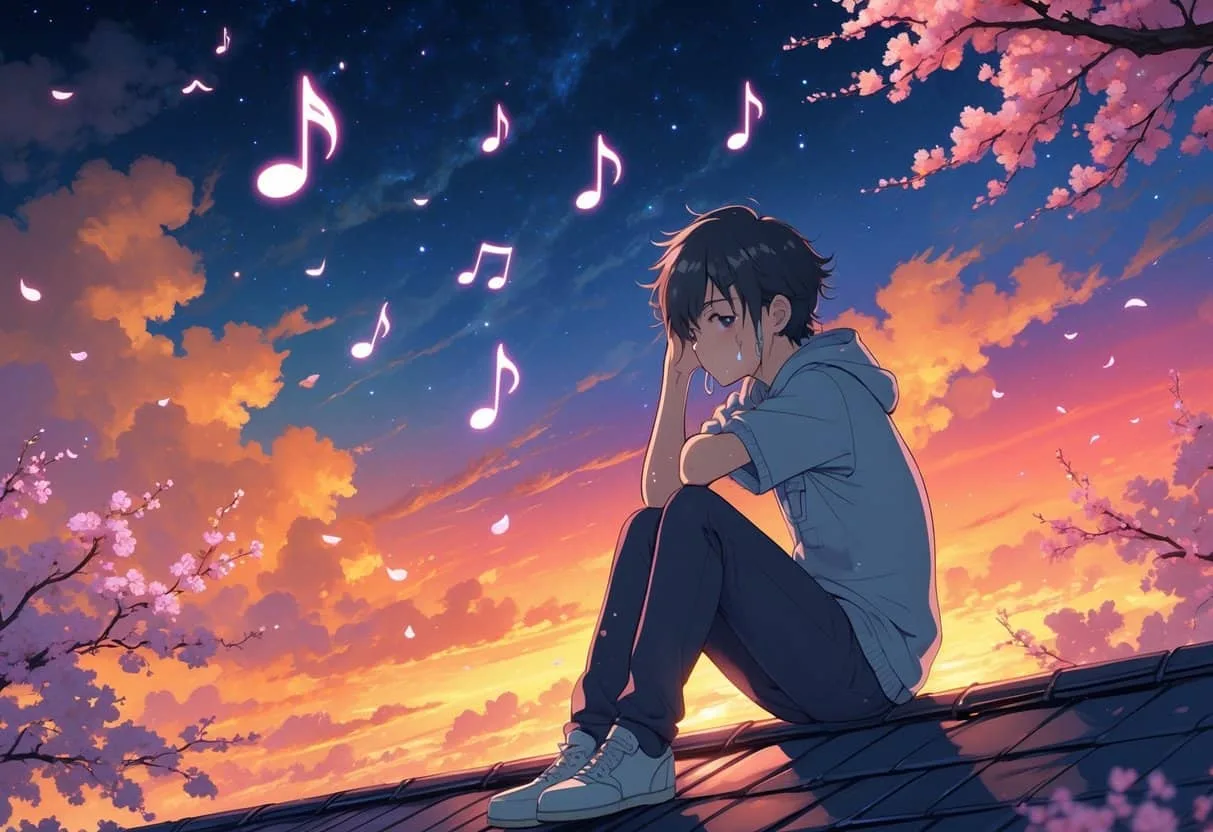
Music and memory are deeply intertwined. The right melody can suddenly pull you back to the first time you watched a character say goodbye, or a quiet confession under the stars. When "Sadness and Sorrow" from Naruto begins, the bare piano notes don’t just echo loss within the show—they summon a universal ache that many fans associate with their own heartbreak. These songs become emotional touchstones, markers of the stories that shaped our adolescence and adulthood alike. The phenomenon is not exclusive to anime; music’s power to evoke emotion has been studied extensively.
But within the anime world, the bond between soundtrack and narrative is often more deliberate and direct, with composers writing specifically to amplify a character’s internal state. A study on music-evoked emotions found that listeners often experience both positive and negative feelings simultaneously, explaining why we return to these bittersweet tracks again and again.
The Anatomy of an Emotional Anime Song
What separates a fleeting earworm from a piece of music that leaves a lasting emotional imprint? It often comes down to a careful combination of lyrical honesty, instrumental choices, and dynamic arcs that mirror the very feelings they aim to evoke. Understanding this anatomy helps fans appreciate why certain songs hit harder than others, and why some tracks remain timeless while others fade.
Lyrics That Speak to the Heart
Lyrics in emotional anime songs tend to avoid overly abstract poetry in favor of direct, relatable themes: losing someone, fighting against the odds, holding onto a fragile hope, or treasuring a fleeting moment of happiness. Tracks like "Ichiban no Takaramono" from Angel Beats! and "Secret Base ~Kimi ga Kureta Mono~" from Anohana are built around simple yet devastating lines about parting and gratitude. When the words align perfectly with a character’s journey—like the raw confession of “I was able to meet you” in Ichiban no Takaramono—the song becomes a vessel for the story’s entire emotional weight. The same can be said for "Hikaru Nara" by Goose house from Your Lie in April, where the lyrics about spring and new beginnings contrast painfully with the show’s eventual tragedy.
Instrumentation and Tempo: Building Emotional Arcs
Slow tempos and spacious arrangements allow each note to breathe, giving listeners time to absorb the feeling. Soft piano, acoustic guitar, and gentle string sections dominate this space. In "Dango Daikazoku" from Clannad, the lullaby-like melody belies the profound sadness lurking beneath, while "Thanatos" from Neon Genesis Evangelion uses a sparse, haunting piano motif to underline existential despair. Composers also employ gradual shifts in tempo and volume—a quiet verse building into a swelling chorus—to replicate the arc of crying or the release of pent-up emotion. More recent examples like "Koe" from Violet Evergarden use a similar buildup, starting with bare vocals and adding layers of strings and choir as the emotional intensity peaks.
The Power of Dynamic Shifts and Silence
Sometimes the most emotional moments come not from sound but from its absence. A sudden pause before the final refrain, or a single held note over silence, can make a scene feel suspended in time. In "Lilium" from Elfen Lied, the liturgical soprano line and unexpected silences create a sacred, sorrowful atmosphere that lingers long after the song ends. These dynamic contrasts keep the emotional experience raw and unpredictable. The same technique appears in "Merry-Go-Round of Life" from Howl's Moving Castle, where a delicate piano theme is interrupted by moments of near-silence, allowing the listener’s own imagination to fill the gap with unresolved emotion.
Timing and Context Within the Show
An otherwise pleasant melody can become devastating if placed at the right moment. The context in which the audience first hears a song matters immensely. For instance, "Brave Song" from Angel Beats! appears during a farewell scene that recontextualizes every previous listen. Similarly, "Dear You" from Higurashi no Naku Koro ni carries an innocent, almost cheerful tune that becomes horrifying after viewers understand the true nature of the story. The emotional impact is not just in the notes but in the memory of the scene attached to them.
Iconic Songs from Different Eras
While the original article focused on the 1990s-2000s and modern anthems, additional eras and specific tracks deserve recognition. Each period brought its own approach to emotional storytelling through music.
Classic Tearjerkers from the 1990s and 2000s
During this period, anime music often leaned heavily on piano and strings to articulate unspoken grief. "Thanatos" (Evangelion) and "Komm, süsser Tod" from The End of Evangelion shattered the line between soundtrack and psychological breakdown, using deceptively cheerful melodies to underscore despair. Meanwhile, "Sadness and Sorrow" from Naruto became the universal anthem for loss, its simple pentatonic melody evoking a deep, wordless sorrow that transcended language. "Dango Daikazoku" from Clannad similarly captured the bittersweet innocence of family and the fear of losing it, turning a children’s song into a crushing emotional weapon. Other gems from this era include "The Girl Who Leapt Through Time" motif (Kumiko Aoi) and "Requiem" from Fullmetal Alchemist: Brotherhood, which accompanies one of the most heartrending scenes in the series.
Modern Anthems of Vulnerability (2010s)
In the 2010s, emotional anime songs grew more lyrically explicit and sonically diverse. "Ichiban no Takaramoto" and "Brave Song" from Angel Beats! confronted death and farewells with an aching intimacy. From Violet Evergarden, "Michishirube" and "Sincerely" explored the pain of separation and the difficulty of connecting through words—themes mirrored by the show’s protagonist. The Your Name. soundtrack, especially "Sparkle" and "Nandemonaiya" by RADWIMPS, fused pop-rock energy with poetic lyrics about time, memory, and yearning, earning a place in millions of playlists worldwide. Steins;Gate gave us "Gate of Steiner", a melancholic piano piece that underscores the weight of time travel and sacrifice.
Meanwhile, Made in Abyss introduced "Hanezeve Caradhina", an ethereal duet that captures both the wonder and the horror of descent into the Abyss.
Recent Emotional Powerhouses (2020s)
The current decade continues to produce standout emotional tracks. "Blessing" from To Your Eternity uses Latin choir and a slow build to convey the loneliness of an immortal being. "Pale Blue" by milet from the same series adds a pop edge to existential longing. The Attack on Titan soundtrack, particularly "Call Your Name" and "Zero Eclipse", blends orchestral might with poignant vocals to explore loss and devotion. Even series like SPY x FAMILY have emotional high points: "Adventure" by BUMP OF CHICKEN offers a hopeful yet tearful anthem for found family.
The evolution of streaming has also made it easier to discover these songs, with platforms like Spotify dedicating entire playlists to the genre.
The Role of Opening and Ending Themes in Emotional Storytelling
Opening and ending songs aren’t mere bookends; they set the emotional temperature and offer closure. Directors carefully choose tracks that foreshadow the story’s emotional core or reflect a character’s inner world. This is especially potent when the music from the credit sequence gets replayed during a crucial episode, recontextualizing the entire series.
Openings That Set an Emotional Tone
"Again" by YUI from Fullmetal Alchemist: Brotherhood is a perfect example of an opening that simultaneously energizes and foreshadows the heavy themes of sacrifice and redemption. "Unravel" by TK from Ling Tosite Sigure from Tokyo Ghoul uses distorted guitars and a desperate vocal delivery to communicate the protagonist’s fractured identity. "Sign" by FLOW from Naruto Shippuden is a masterclass in high-energy sorrow—the driving guitars and urgent vocals mirror the desperation of Sasuke and Naruto’s bond, while the lyrics about running through the darkness become a rallying cry for fans. These openings prime the audience’s emotions, so when the pivotal scene arrives, the music has already done half the work.
Endings That Linger After the Final Frame
Ending themes often carry the burden of reflection. "Secret Base ~Kimi ga Kureta Mono~" in Anohana is the definitive example: its soft, nostalgic melody rolls in just as the episode cuts to a silent still frame, giving viewers space to cry. "Michishirube" from Violet Evergarden similarly allows each episode’s emotional realizations to settle, the gentle piano and vocal lines acting as a balm. "Let It Out" from Fullmetal Alchemist: Brotherhood offers a more upbeat but equally cathartic release. The Your Lie in April ending "Orange" by nano.RIPE wraps up each episode with a mix of nostalgia and hope that makes the climax all the more devastating.
These songs become the aftertaste of the story, replaying in fans’ minds long after the credits end.
How Fans Forge Personal Connections with Anime Music
Part of the magic lies in how these songs embed themselves into the listener’s own life narrative. The combination of relatable themes, musical craft, and the context of viewing creates an intense personal bond that goes beyond mere fandom.
Nostalgia and the Soundtrack of Our Lives
Anime songs often become involuntary memory triggers. Hearing a track like "Butter-Fly" from Digimon Adventure or "Moonlight Densetsu" from Sailor Moon can instantly transport someone back to their childhood bedroom, filled with dreams and discovery. This nostalgia isn’t just about the show—it’s about who we were when we first watched it. The music becomes a bridge to our past selves, making the emotional resonance even more profound. For many fans, a song like "Ride on Shooting Star" from FLCL symbolizes the confusion and excitement of adolescence itself.
The Science of Why Sad Songs Make Us Feel Better
Research shows that listening to sad music actually triggers the release of prolactin and oxytocin, hormones associated with comfort and bonding. When an anime ballad moves us to tears, our brain is responding to the perceived emotional pain with a self-soothing mechanism. This explains why fans willingly immerse themselves in tracks like "Komm, süsser Tod" or "Lilium"—the music provides a safe container for intense feelings, leaving us feeling lighter and more connected. A study from Harvard Medical School on music and emotion highlights how the brain’s reward centers light up when we hear personally meaningful songs, validating why the right soundtrack can feel like nourishment. Additionally, data from a large-scale emotion study showed that familiarity with a track increases the intensity of emotional response, meaning the more you revisit these songs, the more they mean to you.
The Maestros of Emotion: Key Composers
The emotional weight of these songs owes much to the composers who treat music as the unspoken voice of the characters. Yoko Kanno’s work on Cowboy Bebop and Wolf’s Rain seamlessly blends genres to articulate loneliness and longing. Joe Hisaishi’s Studio Ghibli scores, particularly the main theme of Spirited Away and the devastating "Merry-Go-Round of Life" from Howl’s Moving Castle, prove that instrumental music can carry as much emotional clarity as any lyric. Hiroyuki Sawano’s epic, choir-driven anthems from Attack on Titan often mask a deep vein of sorrow, while Yuki Kajiura’s intricate compositions for Madoka Magica and .hack//SIGN use ethereal vocals and minor keys to illustrate internal turmoil. Kensuke Ushio’s work on A Silent Voice and Liz and the Blue Bird redefines emotional minimalism, using silence and single piano notes to depict anxiety and breakthrough.
Susumu Hirasawa’s Berserk (1997) soundtrack, including "Gatsu", blends folk guitar with haunting electronica to mirror the protagonist’s struggle. For those wanting to explore how these composers work, a interview with Kensuke Ushio reveals his process of writing music that breathes with the characters.
Building Your Own Emotional Anime Playlist
Creating a personal collection of emotional anime songs can be a rewarding journey into the heart of the genre. Many streaming platforms host curated playlists that collect classic and modern tearjerkers. A Spotify playlist of emotional anime soundtracks can serve as a starting point, while YouTube uploads of full tracks like Ichiban no Takaramono offer direct access to the performances that moved millions. Apple Music also offers editorial playlists such as “Anime Heartbreak” and “Studio Ghibli Soundtracks” that highlight lesser-known gems. For deeper discovery, consider following composers’ discographies—Yoko Kanno’s “The Vision of Escaflowne” soundtrack is a hidden treasure, and Joe Hisaishi’s “Kikujiro no Natsu” contains some of his most expressive suites.
Fans can also explore covers and orchestral versions on platforms like SoundCloud and Niconico, which often bring new interpretive depth to familiar melodies.
Conclusion: The Songs That Stay with Us
Emotional anime songs are not just background music; they are the soul of the stories they accompany. They distill complex arcs into a few minutes of sound, allowing fans to carry the essence of a show with them long after watching. Whether through a gentle piano lament, a soaring vocal confession, or a silence that speaks louder than any chord, these tracks remind us why anime remains a uniquely powerful medium. The next time you find yourself tearing up at a melody, know that you’re not just feeling for the characters—you’re connecting with a piece of music that understands you, too. And in that connection, the song becomes yours, forever anchored to the moment you first heard it and the person you were then.