Table of Contents
Anime has a remarkable ability to explore the darkest corners of the human psyche. While many shows offer escapism through action or comedy, psychological anime push you to question reality, identity, and morality. These series blend mystery, suspense, and often horror to create stories that linger long after the screen fades to black.
The best psychological anime don’t just tell a story—they twist your mind and challenge your perceptions, often leaving you stunned and thoughtful.
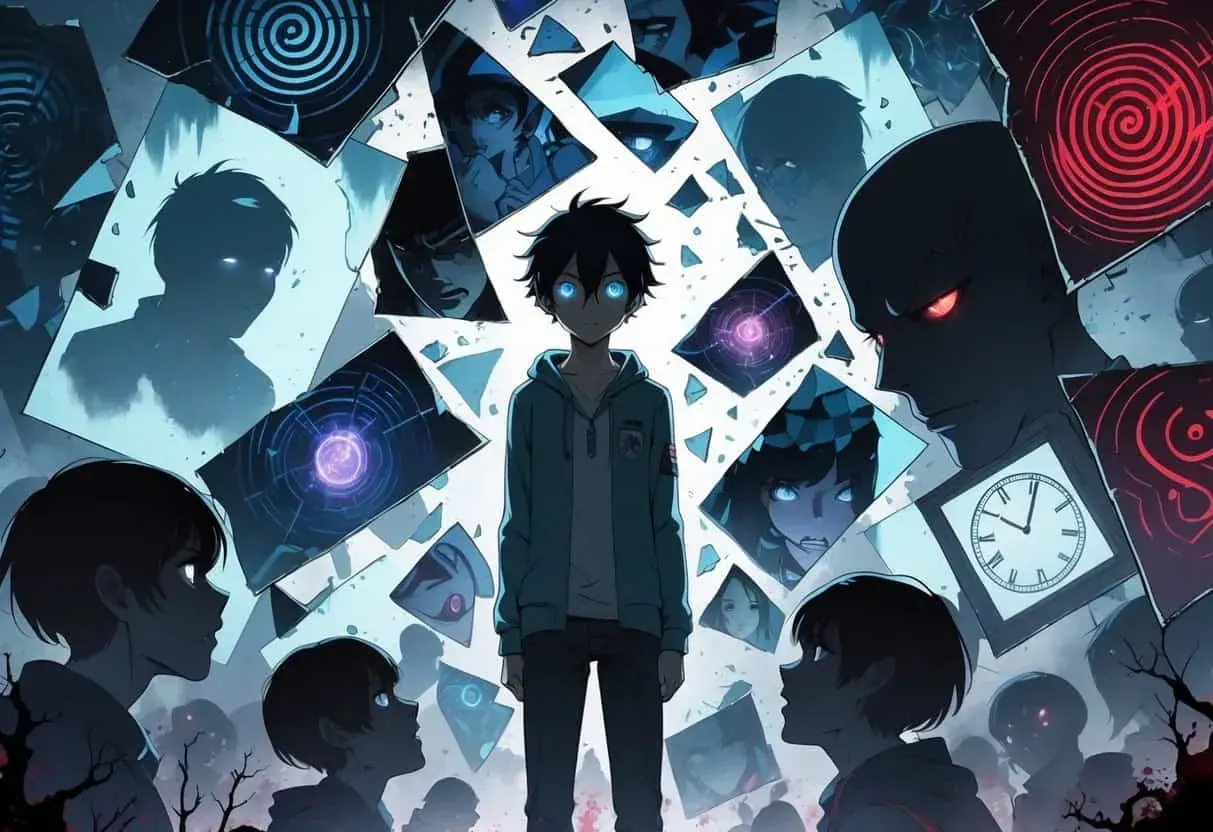
From serialized thrillers about notebooks that kill people to surreal journeys through cyberpunk realities, the genre is as diverse as it is unsettling. Many of these series explore trauma, isolation, and the fragile nature of sanity through bold storytelling and carefully crafted characters. Whether you’re a newcomer or a seasoned anime fan, diving into this category forces you to think in new ways.
Watching them can feel like navigating a labyrinth of moral dilemmas and chilling revelations. It’s thrilling, sometimes deeply disturbing, but always unforgettable.
If you’re ready for anime that will mess with your head and stay with you for days, this guide highlights essential titles—both famous and underappreciated. If you’re unfamiliar with the genre, Crunchyroll’s introduction to psychological anime gives a solid overview of what to expect.
Key Takeaways
- Psychological anime use deep themes to challenge your thinking.
- Stories often mix suspense, mystery, and complex characters.
- Both well-known and lesser-known titles offer unique experiences.
Defining Psychological Anime: Key Themes and Characteristics
What makes an anime “psychological” isn’t just the presence of mental illness or inner turmoil—it’s the way the narrative places the mind at the center of conflict. Psychological anime usually blend suspense, high-stakes emotional battles, and storylines that prioritize introspection over spectacle. You’ll see themes like existential dread, fractured identity, and the limits of sanity woven directly into the plot structure. According to Anime News Network’s lexicon, the genre emphasizes internal states, making the character’s psyche the true battleground.
Unlike their pure thriller counterparts, these shows don’t rely on physical danger alone. Instead, they build a palpable sense of unease by trapping characters inside their own fears or forcing them to confront impossible truths. The result is an experience that often feels more like a puzzle than a passive story, demanding your full attention.
Exploring Psychological Thriller and Horror
Psychological thriller anime zero in on mental conflict and uncertainty. Characters are rarely in control; they grapple with fragmented memories, paranoia, or manipulations so subtle that both they and the audience are left guessing. The tension comes from not knowing who to trust—including the protagonist.
Psychological horror takes this foundation and amplifies it with visceral or supernatural elements. Instead of jump scares, these series prefer a slow-burn dread that creeps under your skin. Think haunted spaces that mirror a character’s deteriorating mental state, or monsters that symbolize guilt and trauma. Both styles dig deep into your emotional reaction, making you question what’s real right alongside the characters.
Role of Suspense and Complex Narratives
Suspense is the driving force of psychological anime. It’s what keeps you hooked, rewinding scenes to catch hidden clues or subtle dialogue. The narratives are often layered, with revelations that reframe everything you thought you knew.
Many of these series employ non-linear timelines, unreliable narrators, or dream sequences that blur the boundary between fantasy and reality. Shows like Steins;Gate or Erased use time loops not just as sci-fi gimmicks but as vehicles for exploring regret and destiny. This intricacy rewards attentive viewers and elevates the storytelling beyond conventional genre fare.
Psychological Anime vs. Other Genres
While psychological anime often overlap with science fiction, horror, or even slice-of-life, the core focus remains on inner experience. A sci-fi show might feature advanced technology, but a psychological anime wants to explore what happens to the human mind when that technology distorts memory or free will. Similarly, a horror anime might have ghosts, but a psychological horror asks why the ghost exists in the first place—using the supernatural to externalize internal demons.
This introspective orientation sets them apart from action-heavy or comedy-driven anime. They’re less about defeating a villain and more about surviving the battlefield inside your own head. Recognizing these differences helps you pick out titles that deliver true mind games rather than just surface-level eeriness.
Top Mind-Bending Psychological Anime Series
The following series represent the pinnacle of psychological storytelling in anime. Each invites you into a world where reality bends, morality fractures, and characters undergo profound—often terrifying—transformations.
Serial Experiments Lain and the Cyberpunk Internet
Serial Experiments Lain is a masterpiece of early internet paranoia. The anime follows Lain Iwakura, a quiet schoolgirl who becomes entangled in “The Wired,” a virtual network that is slowly bleeding into the physical world. As Lain navigates this strange digital landscape, her sense of identity fractures, and the line between god and machine blurs. For a deeper analysis of its enduring themes, this Anime News Network feature is essential reading.
The show’s avant-garde visuals—static-filled screens, disembodied voices, shadowy silhouettes—create an oppressive atmosphere. It predicts many modern anxieties about online personas, data surveillance, and the dissolution of self in a hyper-connected society. Watching Lain is a philosophical deep dive that demands multiple viewings to unpack its layers.
Death Note: Kira, Villains, and Moral Dilemmas
Death Note is the ultimate cat-and-mouse thriller with a supernatural twist. High school genius Light Yagami discovers a notebook that lets him kill anyone whose name and face he knows. Adopting the alias “Kira,” he sets out to purge the world of criminals, only to find himself locked in a battle of wits with the world’s greatest detective, L. You can stream the series on Crunchyroll.
The series relentlessly questions concepts of justice, power, and the corruption of absolute authority. Light’s descent from idealistic student to megalomaniacal god is both chilling and compelling. Every episode feels like a chess match, and you’ll find yourself constantly shifting allegiances. Death Note remains one of the most accessible yet profoundly thought-provoking psychological anime ever made.
Monster: Character Development and Suspense
Kenzo Tenma is a brilliant neurosurgeon who saves the life of a young boy named Johan Liebert. That act of compassion becomes a curse when Johan grows up to be a charismatic serial killer. Monster unfurls slowly, with a deliberate pace that mirrors Tenma’s methodical quest to stop the monster he inadvertently created.
What sets Monster apart is its unwavering focus on character. Every side character is fully realized, and the story questions the very nature of evil. Is Johan a monster by nature, or did society shape him? The series excels at psychological suspense, building dread not through gore but through implication and moral ambiguity. It’s a long journey (74 episodes), but every moment contributes to an unforgettable meditation on guilt and redemption.
Neon Genesis Evangelion: Sci-Fi, Technology, and Identity
On the surface, Neon Genesis Evangelion is a mecha anime where teenagers pilot giant robots to defend Earth from mysterious “Angels.” Beneath that, it’s a devastating exploration of trauma, loneliness, and the terror of human connection. Creator Hideaki Anno poured his own depression into the script, resulting in a series that uses sci-fi trappings to dissect the psyches of its vulnerable cast.
Shinji Ikari’s struggles with self-worth, Asuka’s brittle ego, and Rei’s existential confusion form the emotional core. The series famously deconstructs genre tropes, culminating in an abstract finale that leaves viewers debating its meaning decades later. Evangelion isn’t just an anime; it’s a psychological Rorschach test.
Additional Essential: Paranoia Agent
Satoshi Kon’s only TV series, Paranoia Agent, is a surreal thriller that begins with a string of assaults by a boy on golden rollerblades—Shounen Bat. The story splinters into a social commentary on collective hysteria, media manipulation, and the way trauma spreads through a community. Each episode shifts perspective, revealing how personal delusions connect to a bigger, more terrifying truth. If you crave an anime that toys with narrative form and mass psychology, this is it.
Exploring Underrated Psychological Gems
Beyond the blockbuster titles, a wealth of lesser-known psychological anime deliver unique punches. These series often experiment with animation style, heavy dialogue, or gothic aesthetics to unsettle and provoke.
Aku no Hana: Animation Style and Character Study
Aku no Hana (The Flowers of Evil) uses rotoscoping—tracing over live-action footage—to create an unnerving, hyper-realistic look that alienates many viewers at first glance. However, this visual approach perfectly mirrors the story’s themes. Kasuga, a middle schooler consumed by forbidden desires, is blackmailed by a classmate after being caught stealing a girl’s gym clothes.
The anime spirals into an intense character study of shame, voyeurism, and the grotesque underside of adolescent longing. It’s uncomfortable viewing, but if you can stomach its aesthetic and psychological rawness, you’ll find one of the most honest portrayals of teenage anxiety in anime.
Monogatari Series: Dialogue-Driven Suspense
The Monogatari series is infamous for its rapid-fire dialogue and stylistic overload. At its heart, though, it’s a collection of psychological case studies wrapped in supernatural oddities. Koyomi Araragi helps various girls afflicted by “oddities”—physical manifestations of their emotional trauma. The conversations are dense, full of wordplay and philosophical tangents that reveal hidden fears and desires.
While the series occasionally indulges in fan service, its core strength lies in how it visualizes internal conflicts—rooms that represent minds, monsters that embody guilt. It demands an attentive ear and rewards those who decode its verbal puzzles. Starting with Bakemonogatari is the recommended entry point.
Kuroshitsuji: Ciel, Villains, and Psychological Elements
Kuroshitsuji (Black Butler) might be mistaken for a simple Victorian gothic tale, but the psychological depth of its protagonist, Ciel Phantomhive, elevates it. After his family is brutally murdered and he is subjected to horrific abuse, Ciel forms a contract with a demon butler, Sebastian. The boy earl’s calm, calculated pursuit of revenge is fueled by trauma and a hollowed-out soul.
The series uses its episodic mysteries to peel back layers of Ciel’s psyche, exploring how he manipulates those around him while being manipulated by his own despair. The visual opulence contrasts sharply with the darkness of its themes, creating a uniquely jarring experience.
Hellsing: Vampires and Psychological Horror
Hellsing (especially Hellsing Ultimate) is drenched in blood and violence, but it’s not mindless gore. The central vampire, Alucard, is a twisted being who craves death and serves the Hellsing organization out of a perverse code. The psychological horror stems from his relationship with his mortal master, Integra, and his fledgling, Seras Victoria.
The anime probes the nature of loyalty, monstrosity, and the allure of absolute power. Villains like the Nazi Major elevate the conflict into a philosophical war of ideologies. If you can handle graphic content, you’ll find a surprisingly cerebral examination of what it means to be a monster.
Adapting Psychology: From Manga to Animation
Translating the intricate internal worlds of psychological manga into fluid animation presents unique challenges. Success hinges on creative direction, vocal performances, and a willingness to break conventional storytelling rules.
Manga Adaptation Challenges in Psychological Anime
Many beloved psychological anime originate from manga filled with internal monologues and abstract allegories. Animating a character’s fractured mind state without losing narrative momentum isn’t easy. Directors often employ expressive color shifts, distorted perspective, and symbolic imagery to convey what pages of text can do in a few panels. For instance, the adaptation of Flowers of Evil used rotoscoping to externalize the protagonist’s palpable anxiety, while The Tatami Galaxy relied on rapid-fire monologue and surreal transitions.
Pacing is another hurdle. Manga readers control their own speed through dense material; anime must sustain suspense without dragging. Cutting or reordering scenes can streamline the plot but risks stripping away crucial psychological nuance. The best adaptations, like Monster, trust the audience’s patience and preserve the slow burn.
Performances and Voice Acting in Mind Games
In psychological anime, voice acting is paramount. A quiver in a line, a deliberately flat tone, or a sudden shriek can convey instability more effectively than any visual can. Actors must inhabit characters who often operate with hidden agendas or fragmented consciousnesses. The Japanese voice cast’s ability to switch between gentle and menacing in an instant adds layers of subtext that subtitles alone can’t capture.
Directors use sound design—whispers, echoes, silence—to amplify mental states. For example, in Serial Experiments Lain, the extensive use of distorted voices and electronic hums disorients the viewer, mirroring Lain’s disconnection from reality.
Slice of Life and Heartwarming Surprises
Even the bleakest psychological anime often incorporate quiet, slice-of-life moments. These scenes aren’t filler; they serve as crucial emotional breathers and deepen character connections. Watching Shinji and his classmates share a clumsy meal in Evangelion or seeing Light indulge in a normal day with his family in Death Note reminds us of the humanity at stake. These moments of normalcy make the subsequent psychological collapses more devastating, because we’ve glimpsed what the characters have lost or are about to lose.
Psychic Powers and Science Fiction Influences
Science fiction and psychic abilities are frequent devices in psychological anime, not just for flashy visuals but as metaphors. Telepathy, precognition, or mind control externalize the invisible battles within. In Kara no Kyoukai, Shiki Ryougi’s supernatural eyes allow her to perceive death lines, but the real conflict is her dissociation and identity crisis. In Psycho-Pass, a system that quantifies mental health becomes a tool of oppression, questioning whether free will can exist under constant psychological surveillance.
These genre elements push psychological exploration into extreme scenarios: how does a person remain themselves when memories can be implanted, or when an AI knows their darkest impulses better than they do? By grounding fantastical concepts in raw human emotion, these anime ask fundamental questions about the self.
The Lasting Impact of Psychological Anime
Psychological anime endure because they engage with universal fears and desires in a way that feels intensely personal. They don’t offer easy answers; instead, they force us to sit with ambiguity and moral grey zones. A series like Death Note sparks debates about justice that continue in forums decades after broadcast. Evangelion has become a cultural touchstone for discussions about mental health. These stories burrow into your subconscious and alter how you view the world.
For viewers seeking more than entertainment, psychological anime provide a mirror. They reflect our anxieties about technology, identity, and connection, often predicting societal shifts before they fully emerge. If you’re willing to be unsettled, challenged, and ultimately changed, this genre offers an inexhaustible well of brilliant, mind-bending art.