Table of Contents
Some anime series grab your attention by beginning at the story’s endpoint and then working backward to reveal how everything came to be. This approach shows you the final outcome first, then gradually fills in the missing pieces, building a persistent curiosity about the reasons behind every event. It challenges the easy forward momentum most viewers expect and asks you to piece together a puzzle where consequences arrive before their causes.
It’s a different way to experience a narrative—one that can make even familiar genres feel fresh and unpredictable.
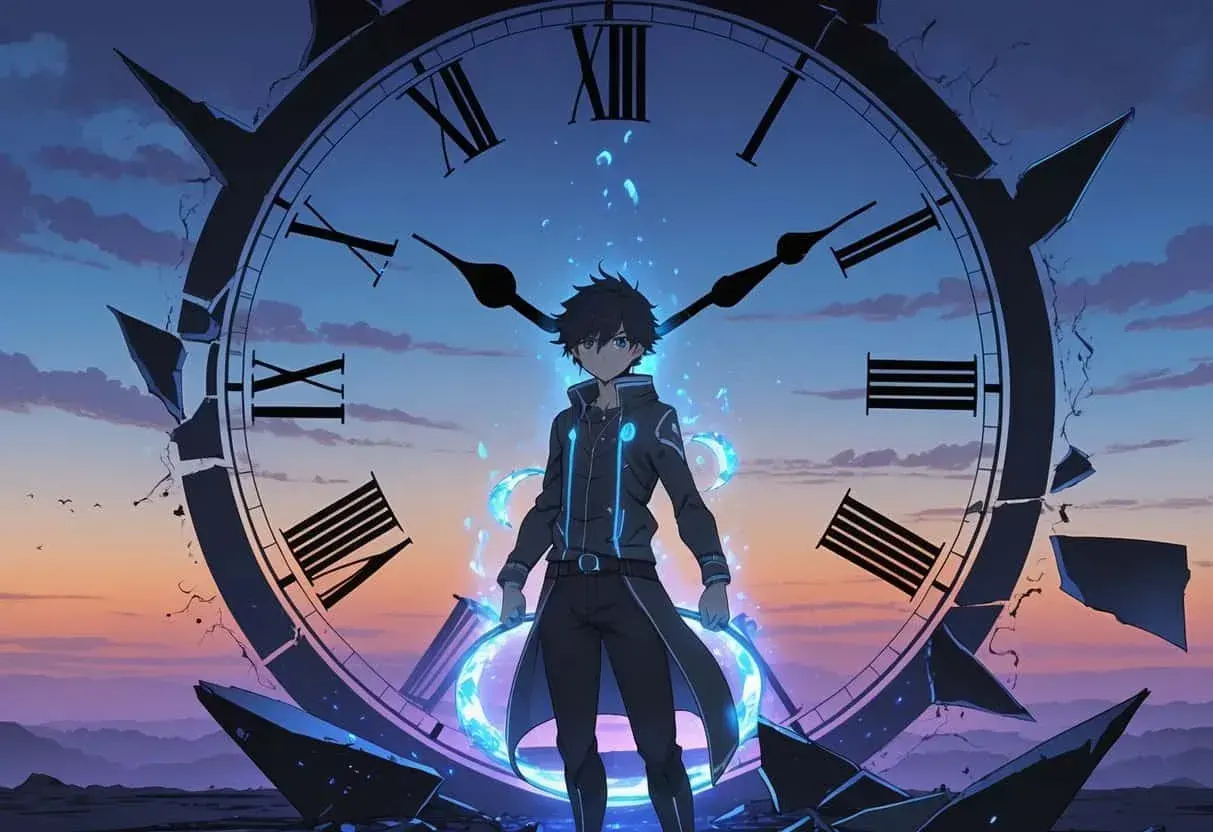
You’ll find that reverse-order anime use clever structural tricks to explore characters and plots from angles a straight timeline would never allow. By presenting the final arc first, the series compels you to question what drove the characters to that point. Every quiet glance, every explosion of violence, every confession of love or guilt reads differently once you know where the road ends. This technique often sharpens themes of fate, consequence, and mystery, turning the story into a reflection on how the past shapes—or fails to shape—the present.
If you enjoy narratives that slowly peel back layers of time, anime with backward chronology might be exactly what you’re looking for. They blend suspense with insight, making every episode a step closer to understanding the full, often tragic, picture.
Key Takeaways
- You witness the story’s outcome long before you understand its origins.
- Reversed chronology deepens mystery, empathy, and character motivation.
- The plot unfolds by revealing past events after their consequences have already been shown.
- Sound design, visual motifs, and non-linear editing work together to guide you through disjointed time.
Defining Reverse-Order Anime: Narratives That Begin at the End
In a reverse-order anime, the timeline doesn’t simply jump around; it is deliberately inverted so that the story starts at its latest point and steps backward—episode by episode or arc by arc—to uncover earlier events. This is not a flashback structure where the present occasionally dips into the past. Instead, the whole viewing experience is engineered around retrograde disclosure, and that changes how you absorb character, plot, and theme.
Understanding the Reverse Chronology Storytelling Technique
Reverse chronology demands that you engage with the narrative as a forensic exercise. Instead of watching events unfold in causal order, you see outcomes first and then discover the winding paths that led to them. A typical series might build a mystery toward a climactic reveal; a reverse-order anime hands you the climax in episode one and dares you to find meaning in the steps that came before.
This method often breaks the story into segments that run against the grain of real time. You may notice that the timeline loops backward in a controlled way—sometimes an entire episode covers a single day earlier than the previous, or a character’s full arc plays out in reverse across a season. This requires a careful viewer, because cause and effect are presented in the opposite sequence from how we normally process them. It is not a gimmick but a way to emphasize that understanding why something happened can be more powerful than simply seeing what happened.
The technique has roots in literature, from Martin Amis’s Time’s Arrow to film experiments like Christopher Nolan’s Memento. In anime, reverse chronology often reveals hidden motives, long-buried secrets, or devastating misunderstandings only after you’ve already felt their shockwaves. It asks you to hold contradictory feelings in your mind—grief for a character whose death you witnessed in the premiere, even while later episodes show that character full of life and hope. That dissonance can make the story feel more humane and more complex.
How Reverse Narratives Influence Drama and Emotional Impact
Starting with the conclusion rewires the emotional contract between you and the story. Anticipation shifts from “what will happen next?” to “how did it come to this?” That question can be far more haunting. You might feel sorrow well before you learn exactly why a friendship shattered, or you might find yourself fiercely rooting for a character whose eventual failure you have already seen.
This structure can deepen empathy because it strips away the protective layer of ignorance. You know a relationship will end badly, so every tender moment shown in reverse becomes bittersweet. You spot the early cracks that neither character can see, and you understand the full weight of choices that, in a linear telling, would pass by unnoticed. The animation and pacing often mirror this flow: scenes are designed so that key emotional beats resonate differently when you revisit them with later knowledge. A smile in an early episode (which chronologically takes place late in the story) can carry a thread of sadness once you learn what preceded it.
Sound design and voice acting also reinforce the backward emotional arc. Lines that initially seem cryptic or out of place gain clarity as the series moves toward its chronological beginning. By the finale—which is really the story’s true introduction—you have assembled a complete mosaic of feeling, and the initial despair or triumph is recontextualized into something richer.
Essential Anime Series with Reverse Chronology
Several anime have experimented with inverted or deeply non-linear storytelling, each using the technique to serve distinct creative goals. While true episode-by-episode reverse order is rare, many celebrated series rely on achronological presentation to the point where watching them in reverse, or at least heavily out of sequence, becomes a rewarding experience.
Cowboy Bebop: A Masterclass in Non-Linear Storytelling
Cowboy Bebop does not unfold in a strict backward sequence, yet it frequently manipulates time and memory in ways that mirror reverse chronology. The series drops you into the lives of Spike Spiegel and his crew as they drift through a beautifully ruined solar system, but the key to understanding each of them lies in the past—and the show releases that past on its own terms. Episodes like “Jupiter Jazz” and “Ballad of Fallen Angels” function as emotional anchor points, filling in the backstories that explain the present wounds.
Spike’s arc is the clearest example. You meet him as a laconic bounty hunter with a dead eye and a death wish, but you don’t fully grasp why until the series carefully walks you backward toward his violent history with the Red Dragon Syndicate. By the time his final confrontation arrives, you’ve already glimpsed pieces of Julia, of Vicious, of the man Spike used to be. The show’s famous closing scene lands so hard precisely because you’ve spent the whole series assembling a reverse biography from scattered memories.
Explore Cowboy Bebop’s legacy and narrative design on MyAnimeList
Boogiepop Phantom: The Definitive Reverse-Order Experience
Few anime embrace reverse chronology as boldly as Boogiepop Phantom. The 2000 series, based on Kouhei Kadono’s light novels, tells a fragmented story about urban legends, mysterious disappearances, and a supernatural being named Boogiepop. The original broadcast order jumbles the timeline so thoroughly that events from late in the story appear early, and vital motivations are withheld until you’ve already felt their echoes.
Many fans recommend watching the episodes in reverse order at least once, because the narrative was designed to be reassembled by the viewer like a broken mirror. When you do, character arcs gain a tragic clarity: you see how bullying, loneliness, and guilt fester in the dark, and why certain characters become both victims and villains. The atmospheric, almost Lynchian direction uses distorted sounds and bleached-out visuals to reinforce the sense of time slipping away. Watching Boogiepop Phantom is less like following a plot and more like conducting an autopsy on memory itself. The series shows that reverse structure is not just a stylistic trick but a philosophical statement about how trauma radiates outward from a single incident, touching lives you won’t fully understand until you trace everything back to its source.
Learn more about Boogiepop Phantom’s unconventional storytelling on MyAnimeList
Monogatari Series: Unraveling the Past Out of Order
The sprawling Monogatari series, beginning with Bakemonogatari, is famous for its achronological storytelling. While the anime does not always run in strict reverse, it habitually presents consequences before causes, especially when revealing character backstories. Koyomi Araragi’s encounters with oddities often stem from personal histories that are only fully explained after the crisis has already passed.
For instance, the emotional weight of Hitagi Senjougahara’s arc comes from seeing her cold, weaponized exterior before understanding the childhood trauma that created it. The series deliberately withholds the earlier, more vulnerable version of her until after you’ve judged her. Similarly, Tsubasa Hanekawa’s story unravels in layers, with new revelations about her home life and repressed feelings arriving long after you’ve witnessed their monstrous manifestations. This backward movement—from monster back to the wound that birthed it—makes the series a study in empathy, forcing you to reconsider every sharp word and violent confrontation.
Discover the Monogatari series and its complex timeline on MyAnimeList
Adapting Reverse Narratives from Manga to Animation
Manga often experiments with non-linear page layouts and fragmented timelines, but translating that to animation requires difficult choices. A manga reader can flip back and forth, mentally reordering panels to clarify cause and effect. An anime, bound to a strict runtime, must decide how much to rearrange while still preserving the intended mystery and suspense.
When done well, the adaptation uses cinematic tools—crossfades, color grading, musical motifs—to signal time shifts without confusing the audience. Boogiepop Phantom is a prime example of a faithful adaptation that kept the source material’s temporal disarray intact. In contrast, some series like The Melancholy of Haruhi Suzumiya played with broadcast order as a separate artistic choice, though the story’s internal logic wasn’t strictly reverse. The success of an adapted reverse narrative depends on the director’s ability to make the emotional and thematic rewards of the inverted structure legible, even when viewers can’t physically rearrange the episodes themselves. A well-executed reverse adaptation can deepen your connection to characters and story without ever feeling arbitrary.
Key Themes and Motifs in Backward-Structured Anime
Reverse-order anime repeatedly return to a cluster of themes that the inverted timeline naturally amplifies. Settings, romance, nostalgia, and music all become tools for guiding you through a story that refuses to move forward in a straight line.
Settings: From Tokyo to Distant Worlds
The environments in these anime are rarely just backdrops; they often function as emotional barometers that shift meaning when viewed in reverse. Many series ground themselves in a recognizable Tokyo—its crowded train stations, neon-lit alleys, and quiet residential streets—to create a sense of claustrophobic familiarity. When you see the same cityscapes after learning a character’s dark past, the ordinary becomes ominous. A school rooftop that once looked serene might now feel like a precipice. A convenience store’s fluorescent hum takes on a lonely, sterile quality.
Other stories leap to distant worlds or surreal, liminal spaces. In Boogiepop Phantom, the urban landscape feels stretched and hollow, as if the buildings themselves are holding their breath. In Cowboy Bebop, each planet and space station mirrors a different facet of the characters’ isolation—the rain-soaked streets of Callisto recall a private grief, while the red desert of Mars echoes a long-buried violence. Moving backward through time often reveals that these settings were chosen to foreshadow or reflect the emotional end state you’ve already witnessed. A scene of two characters laughing in a sunny park, which in a forward timeline would seem merely cheerful, becomes wracked with dramatic irony when you know that winter is coming for them.
The Role of Romance and Nostalgia
Romance in backward-structured anime is rarely straightforward. Because you usually know from the start whether a relationship survives or shatters, every early scene—every early-in-the-story scene, that is—carries the shadow of its own conclusion. A first kiss shown in the penultimate episode, after you’ve already watched the couple drift apart, no longer signals a beginning but a point of no return.
Nostalgia becomes a powerful, often painful motif. As the story moves you toward younger versions of the characters, you may feel a sharp longing for a time before everything went wrong. This retrograde motion mimics how memory works: we often recall the happiest moments most vividly when we’re standing in the wreckage. Monogatari uses this technique to devastating effect, peeling away supernatural armor to reveal the frightened children beneath. The backward flow implies that love, rather than building naturally, can be understood only through loss—and that looking back is sometimes the only way to see what mattered.
Impactful Soundtracks and Emotional Arcs
Soundtracks in reverse-order anime do more than set a mood; they anchor you in time and emotional state. Yoko Kanno’s score for Cowboy Bebop is a masterclass in this technique—a blend of jazz, blues, and folk that doesn’t just accompany the action but comments on it. Tracks like “Green Bird” and “Blue” are reprised in later (chronologically earlier) episodes, acquiring new layers of meaning once you understand the full arc. The music seems to exist outside linear time, threading through the series like a persistent memory.
In Boogiepop Phantom, the dissonant, industrial soundscape plunges you into a world already broken. The soundtrack rarely offers comfort; instead, it reinforces the sense that the catastrophe has already happened and you are merely sifting through the debris. Because the emotional arcs run in reverse, a single musical theme may first register as haunting in episode one, then become unbearably sad in episode twelve once you know why it belongs to that character. The result is a listening experience that operates almost like a palindrome—the end and the beginning are musically linked, making the whole story feel like a single, echoing lament.
Read more about reverse chronology storytelling structures on TV Tropes
Reverse-order anime ask you to let go of the safety net that linear time provides. They trade comfortable progression for a deeper, more participatory form of engagement. By meeting the end first and working your way back, you don’t just watch a story—you reconstruct it, piece by shattered piece, until the final frame finally reveals the moment it all began.