Table of Contents
The Roots of Anime’s Visual Language
Before anime started walking runways and filling your social feeds, it spent decades creating a design vocabulary that felt entirely its own. The visual DNA of anime—the oversized eyes, gravity-defying hair, and silhouettes that blend historical garments with science fiction—didn't just appear overnight. Early pioneers like Osamu Tezuka borrowed fluidity from Disney while grounding character designs in Japanese aesthetics. That tension between Western animation techniques and Eastern sensibility created something flexible enough to keep absorbing new influences for over half a century.
What often gets overlooked is how scenic backgrounds in shows like Akira or Cowboy Bebop built a parallel fashion language. Neo-Tokyo’s biker gangs popularized a genre of dystopian streetwear, while Spike Spiegel’s unstructured navy suit and yellow shirt turned a relaxed silhouette into a recognizable uniform. These scenes didn't just tell a story—they modeled a way of moving through the world that fans could replicate piece by piece. When designers talk about anime’s impact, they’re often referencing the total world-building: the architecture, the layering, the color palettes that stick in your memory long after the credits roll.
The invention of the “magical girl” transformation sequence—where a character’s everyday clothes dissolve into an ornate, combat-ready outfit—baked the idea of fashion as metamorphosis into pop culture. Sailor Moon’s iconic sailor-collared leotards weren't just costumes; they signaled a shift in identity. That concept gave regular clothing a kind of ritual significance and inspired generations to treat what they wear as an active choice about who they want to be. You can trace the modern obsession with outfit reveals and closet tours back to that same impulse.
From Cel Art to Street Style: How Harajuku Absorbed the Screen
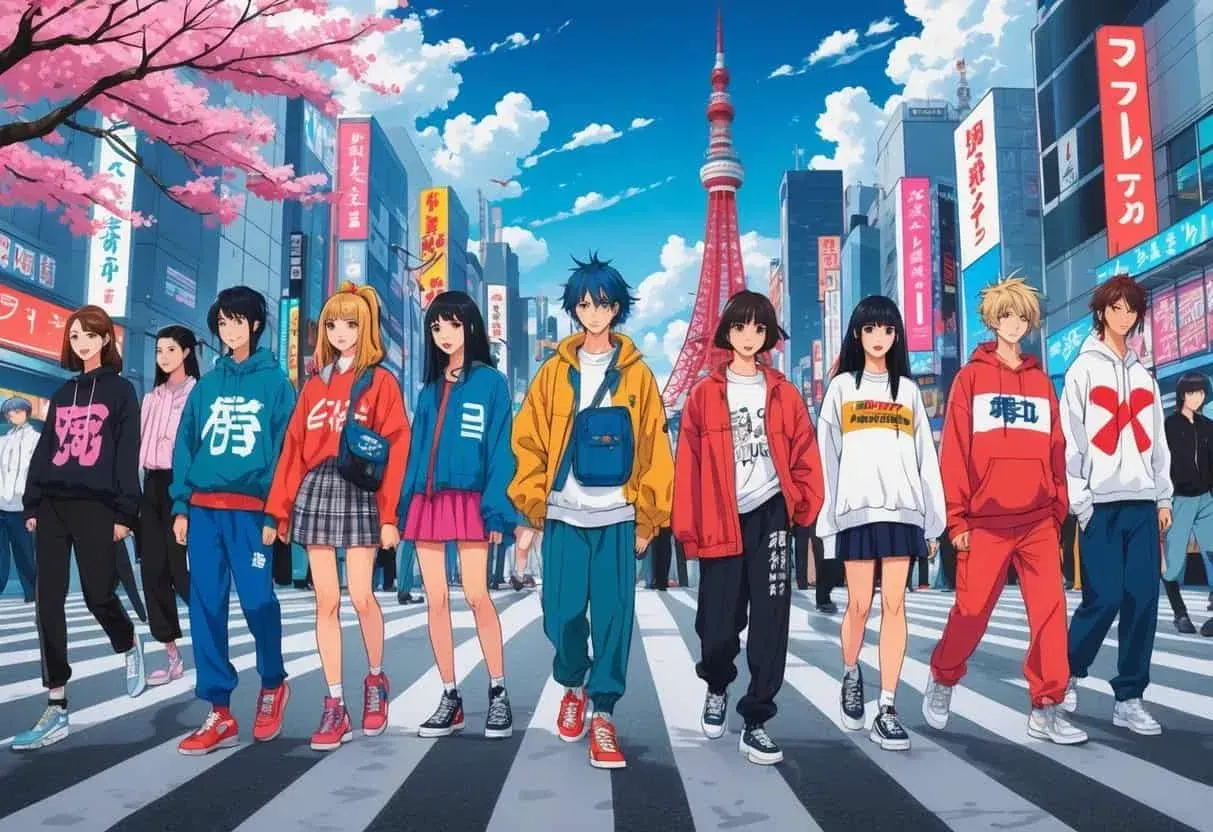
Harajuku didn't just coincidentally reflect anime—it grew up alongside it. In the 1990s, as the neighborhood became a gathering point for young people experimenting with identity, the emerging visual kei scene and anime’s bold character design fed into one another. Early Harajuku pioneers pulled directly from the exaggerated proportions and saturated palettes they saw on TV. Pinks, purples, and lime greens became just as essential on Takeshita Street as they were in a fantasy mecha series.
What makes the Harajuku connection so durable is that it never tried to be literal. You wouldn’t find someone dressed head-to-toe as Sailor Moon on a random Tuesday, but you would see layered skirts, mismatched socks, and hair clips arranged in ways that echoed the show’s playful geometry. That abstraction is the secret sauce. It treats anime not as a costume to copy but as a mood to translate. Even today, the most creative street looks from Harajuku distill entire anime genres—shoujo sweetness, mecha’s industrial edge—into one fluid outfit.
This dialogue flows both directions. Anime studios noticed what kids were wearing and started designing characters with wardrobes that could easily be sourced or stitched at home. The industry built a feedback loop: real fashion influenced onscreen fashion, which then inspired new real fashion. That cycle is why Harajuku remains less a fixed style and more a permanent workshop for blending fiction and fabric.
Cosplay as the Gateway to Everyday Design
Cosplay often gets reduced to conventions and photo ops, but its real gift to fashion is teaching an entire generation how garments work. When you spend hours constructing a Final Fantasy tunic or modifying a blazer to match a Jujutsu Kaisen uniform, you learn about garment structure, fabric behavior, and proportion. That hands-on education fuels a maker culture that spills over into daily wear. Many small indie brands that now sell globally started as cosplayers who realized the clothes they built for a con looked good enough to wear to class.
The line between cosplay and streetwear has blurred so much that the term “casual cosplay” entered the lexicon. People incorporate character motifs—like a specific color-blocking pattern from Naruto or the star-shaped brooch from Revolutionary Girl Utena—into otherwise normal outfits. This subtlety lets fans carry a piece of a story with them without needing to explain it. It’s a private language embedded in ribcage-level details, and for the people who notice, it sparks an instant connection.
Mainstream retailers have caught on. Uniqlo’s UT line regularly releases collaboration T-shirts featuring iconic scenes from One Piece or Hunter x Hunter, while Coach created an entire collection with the Pokémon franchise. These aren’t novelty items; they’re carefully integrated graphics designed to sit comfortably beside a classic trench coat or denim jacket. What was once a niche hobby is now an unremarkable stop in any mall, and that shift has normalized anime-inspired aesthetics for people who have never attended a single convention.
Global Runways and Luxury Collaborations
Luxury fashion houses didn’t stumble upon anime by accident. They noticed the skyrocketing resale value of vintage Dragon Ball merch and the way certain Neon Genesis Evangelion pieces became grails among Gen Z collectors. In 2023, Loewe’s collaboration with Studio Ghibli on Spirited Away merchandise sold out almost instantly, proving that carefully executed anime partnerships can dominate the luxury segment. Rather than slapping a character on a bag, Loewe used marquetry techniques to render Soot Sprites and Haku’s dragon form in leather, which treated the source material with artisanal respect.
Gucci’s Doraemon collection took a different route, embedding the beloved robot cat into classic GG monogram prints. That visual clash—the serene, heritage pattern disrupted by a blue cartoon figure—created something genuinely unexpected. Fashion critics initially scratched their heads, but the collection performed exceptionally well in Asian markets and earned cultural cachet globally. It demonstrated that anime iconography could coexist with luxury codes without either side losing credibility.
Smaller labels have also mined anime for inspiration in more conceptual ways. Japanese brand Undercover frequently references Akira and Ghost in the Shell in its graphic work, while streetwear giant Supreme has released capsule collections tied to Berserk and Neon Genesis Evangelion. These collaborations succeed because they treat the anime not as a property to exploit but as a creative equal. When the partnership respects the original art, fans and fashion enthusiasts both feel they’re participating in something meaningful rather than being sold a logo.
The Digital Accelerant: Streaming, Social Media, and Fast Fashion
Before streaming giants like Crunchyroll made anime globally accessible within hours of a Japanese broadcast, fashion influence moved slowly through VHS tapes and imported magazines. Now a Gen Z teenager in Brazil can watch Chainsaw Man the same week it airs in Tokyo, spot a jacket they love, and find a dupe on a fast-fashion site within days. That compression of time has transformed how quickly anime aesthetics filter into everyday clothes. What used to take years now takes weeks, and the speed shows no sign of slowing down.
TikTok and Instagram amplify this effect by rewarding outfit breakdowns, styling challenges, and thrift-flip videos that explicitly name-check anime inspiration. Hashtags like #animefashion and #cosplaytransition gather billions of views, and the algorithm pushes these looks to users who never searched for them directly. A single viral video can sell out a specific accessory—like Spy x Family’s Anya Forger hair cones—globally before the manufacturer even knows why demand spiked. Social media essentially crowdsources trend forecasting for the anime-fashion pipeline.
Fast-fashion brands have built agile supply chains to capitalize on this. Shein, Romwe, and others now release micro-collections tied to currently trending shows, sometimes within two weeks of a meme surfacing. While that raises valid concerns about sustainability and labor practices, it also democratizes access. A student who can’t afford a luxury collaboration can still wear a dress that references Demon Slayer’s kimono patterns. That accessibility makes anime fashion feel like a shared global culture, not a gatekept subculture.
Cultural Preservation Meets Futuristic Design
One of the most compelling aspects of anime-inspired fashion is how it preserves Japanese heritage while hurtling into the future. Kimono motifs, obi belts, and geta-inspired platforms surface in collections that otherwise look like they were designed aboard a spaceship. Demon Slayer, set in the Taisho era, directly revived interest in traditional patterns like asanoha (hemp leaf) and seigaiha (blue ocean waves), which now appear on contemporary backpacks, sneakers, and hoodies. The anime didn't just tell a story about demon hunters—it acted as a style archive.
Technological advances are pushing this preservation into interactive territory. Designers in Tokyo’s fashion-tech labs are experimenting with embedded LEDs that display shōji screen patterns or cherry blossom animations, controlled by the wearer’s heartbeat. These garments don't just nod to tradition; they translate Shinto concepts of animism and impermanence into programmable textiles. A dress might shift from winter pine to spring sakura as the environment changes, literally wearing the seasons as Edo-period poets described them.
Academic institutions like Bunka Fashion College now offer courses specifically examining the anime-fashion nexus, treating it as a legitimate field of design research. Students study episode-by-episode costume databases, break down color theories from specific studios, and learn to build mood boards directly from Attack on Titan’s military gear or Nausicaä’s organic armor. The results show up on store racks and in the portfolios of designers hired by both Japanese and European houses. Anime is now formally part of the fashion curriculum, not just a quirky reference.
The Secondhand Boom and Archival Obsession
Resale platforms have become a treasure trove for anime fashion enthusiasts, driving a new wave of archival appreciation. Vintage Gundam windbreakers from the 1990s, promotional jackets distributed to Evangelion production staff, and limited-run JoJo’s Bizarre Adventure collaborations with Japanese department stores now fetch eye-watering sums on sites like Grailed and Mercari. Collectors aren’t just buying a garment; they’re acquiring a piece of cultural history that connects directly to the moment an anime phenomenon peaked.
This archival frenzy has shifted how brands approach releases. Instead of mass-producing generic tees, they’re creating museum-grade lookbooks and numbered editions that acknowledge the collector mindset. The One Piece x Puma collection, for example, released detailed product stories explaining how each sneaker silhouette related to a specific character arc. That narrative depth transforms a shoe from a functional object into a conversation piece. Even people who have never watched the anime find themselves drawn to the design details and craftsmanship.
Thrift culture and upcycling further extend this trend. Young designers in Los Angeles, London, and Seoul are deconstructing old anime merchandise—cutting up bootleg Sailor Moon sweatshirts and reassembling them with vintage denim—to create one-of-a-kind pieces. This practice challenges the fast-fashion cycle and aligns with anime’s own themes of renewal and reconstruction. An old garment, like an old mecha, can be rebuilt into something more powerful.
Looking Ahead: Wearable Narrative and Emotional Fabric
The next horizon for anime-inspired fashion isn’t about louder graphics or bigger collaborations. It’s about garments that tell a story independent of the screen. Researchers are working on shape-memory fabrics that change silhouette like a transformation sequence, and photochromic dyes that react to UV light to reveal hidden patterns—the way a character might “power up” in direct sunlight. These innovations promise clothing that performs rather than just appears, giving the wearer a kinetic relationship with their outfit.
More immediately, fashion brands are studying how anime shapes emotional connections to clothing. When you love a character, that affection transfers to the clothes they wear. A plain school uniform in a romantic anime becomes aspirational; a battle-worn vest becomes a symbol of resilience. Brands are learning to design pieces that evoke that emotional charge without requiring the buyer to know the source material. This means future collections might look less like promotional tie-ins and more like subtle mood translations—color stories, texture selections, and silhouettes that capture the feeling of a Studio Ghibli afternoon or a Shonen showdown.
At the same time, anime conventions themselves are evolving into full-fledged fashion weeks. Events like Anime Expo in Los Angeles now host runway shows where independent designers premiere collections directly to thousands of potential customers. These shows bypass traditional gatekeepers entirely, launching trends that spread through attendee selfies and fan accounts rather than magazine editorials. The power dynamic has flipped: anime fans now set fashion agendas that brands rush to follow, not the other way around.
What began as a few kids in Harajuku referencing their favorite shows has grown into a self-sustaining global ecosystem. Anime doesn't just influence fashion—it is fashion for a generation that demands clothing reflect their inner worlds. And as animation continues to push the boundaries of visual storytelling, the garments it inspires will only get stranger, smarter, and more personal.