Table of Contents
The world of Yu‑Gi‑Oh! Duel Monsters is defined as much by its fearsome antagonists as by its heroes. From the moment Maximillion Pegasus invites a handful of duelists to his private island, the series establishes that behind every shadow game lies a dark personality with something to hide. Each villain carries a distinct blend of psychological menace, in‑game cunning, and often a magical artifact that tips the scales firmly in their favor.
The magic of these characters isn’t just in their card combos; it’s in how they warp the very rules of the game. Pegasus reads minds. Marik twists pain into power. Yami Bakura corrupts friendships from the inside. Understanding where they rank means examining not only their raw strength but also the terror they instill, the layers of their backstory, and the lasting impact they’ve left on the Duel Monsters universe.
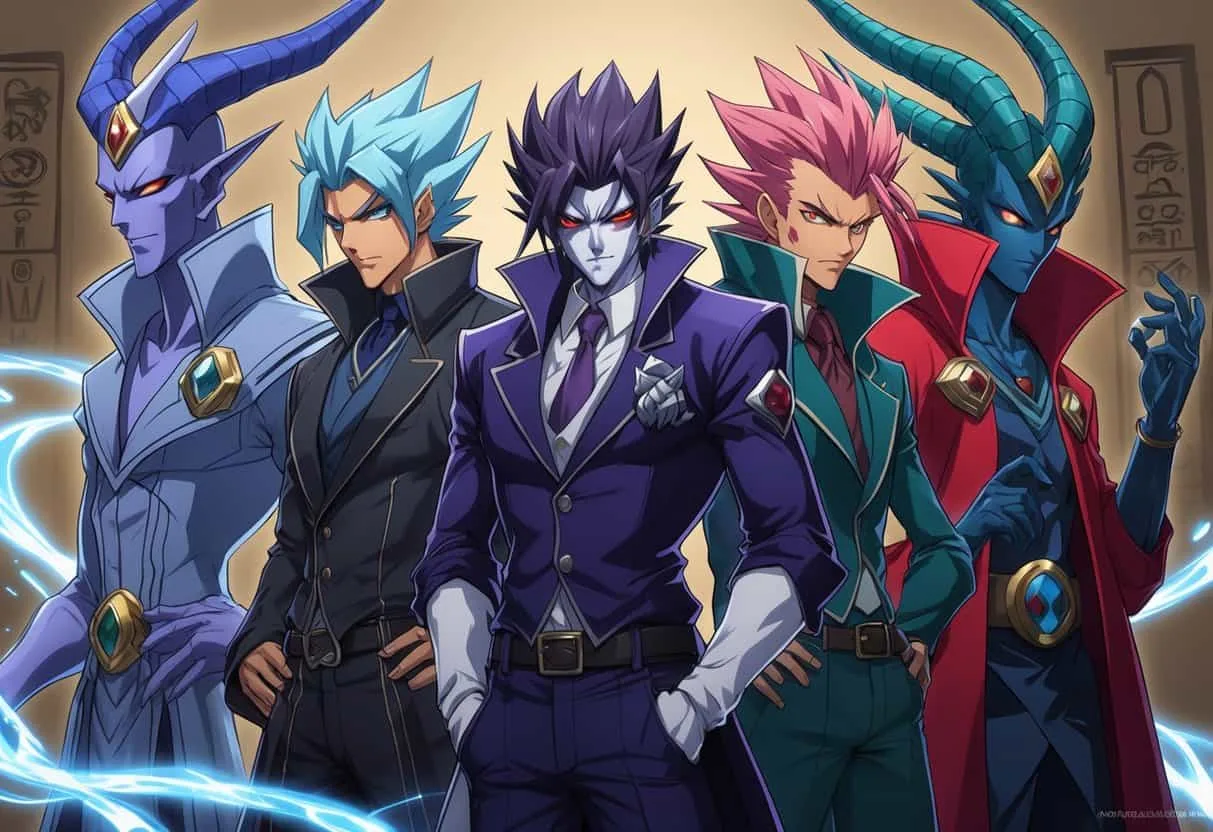
Some foes become legends because they’re unstoppable forces; others, because they’re master strategists. The following ranking explores the full spectrum of villainy that stretches from the elegant mind tricks of Duelist Kingdom all the way to the raw, blistering darkness of Battle City.
Key Takeaways
- Villains are evaluated on psychological depth, in‑duel threat level, and narrative impact.
- Magical artifacts like the Millennium Items elevate duels from card games into life‑or‑death conflicts.
- Each antagonist’s signature cards and strategies mirror their twisted personalities.
- Understanding villain lore deepens your appreciation for the anime’s highest‑stakes moments.
- The legacy of these characters extends well beyond the screen—shaping the card game, merchandise, and fan communities.
Defining Villainy in Yu-Gi-Oh!
The blueprint for a memorable Yu‑Gi‑Oh! villain is remarkably consistent: an obsessive personality, an unhealthy relationship with power, and a complete disregard for the safety of others. Yet the show keeps this formula fresh by wrapping each antagonist in a different flavor of darkness. Where Pegasus uses humor and theatricality, Marik leans into raw sadism, and Bakura operates on spectral manipulation. The result is a gallery of enemies that feel anything but repetitive.
What Makes a Yu-Gi-Oh! Villain?
A true Yu‑Gi‑Oh! antagonist isn’t just a tough opponent with a high‑ATK monster. The best villains tie their entire dueling philosophy to a personal wound. Maximillion Pegasus, for example, built the Duelist Kingdom tournament to obtain the Millennium Items and revive his lost love, Cecelia. His Millennium Eye allowed him to peer into the opponent’s hand, but it also symbolized the way grief had consumed him—he wanted to see everything except the truth that he had to let go. Meanwhile, Marik Ishtar grew up in a tomb, forced to guard the Pharaoh’s secrets; his split personality, Yami Marik, was born from that isolation and a sheer hatred for the world that imprisoned him.
In both cases, the card game becomes a battleground for their emotional demons.
What separates these figures from everyday duelists is their willingness to weaponize the game itself. Pegasus designed exclusive cards like Relinquished and Toon World specifically to mock and dismantle his enemies’ strategies. Marik unleashed the Egyptian God Card The Winged Dragon of Ra and regularly employed torture‑themed combos like Lava Golem and Nightmare Wheel. Their decks weren’t just for winning—they were instruments of control, humiliation, and outright cruelty.
Core Themes of Evil and Power
Evil in Yu‑Gi‑Oh! is rarely subtle. It manifests through domination, destruction of the spirit, and a lust for ancient magic that corrupts absolutely. Millennium Items are the primary vehicles for this corruption; each one tempts its wielder with forbidden knowledge or control over life and death. The Millennium Rod lets Marik command others, erasing their free will. The Millennium Ring hosts a fragment of Zorc Necrophades inside Yami Bakura, turning a high‑school boy into a vessel for an ancient demon.
Even Pegasus’s Eye, which could have been used for perspective, becomes a tool for invasion.
These themes of madness, pain, and obsession are balanced by a tragic irony: the villains often crave something deeply human—love, freedom, recognition—but go about seizing it in the most monstrous ways possible. That internal conflict elevates their stories beyond simple “good versus evil” and makes their duels feel personal.
Ranking the Most Iconic Yu-Gi-Oh! Villains
Ranking the antagonists isn’t just about who would win in a duel; it’s about who leaves the deepest scar on the audience and the in‑universe world. Threat level, strategic creativity, and the sheer weight of their presence all factor into this hierarchy.
Maximillion Pegasus: The Original Mastermind
Pegasus J. Crawford sets the gold standard for Yu‑Gi‑Oh! villainy. As the creator of Duel Monsters and the host of the Duelist Kingdom, he immediately established that the game wasn’t just a pastime—it was a gateway to shadow magic and ancient artifacts. His Millennium Eye let him read the opponent’s mind at will, making his duels a psychological nightmare long before the first life‑point was even taken. Yet Pegasus rarely needed to raise his voice; he oozed charm and menace in equal measure, smiling as he dismantled your carefully constructed strategy.
His deck was a reflection of his twisted personality. Toon World turned monsters into cartoonish, untouchable nightmares, while Relinquished could absorb an opponent’s monster and deal its attack points back as damage. Later, his fusion version Thousand‑Eyes Restrict locked down the entire field. Pegasus didn’t overpower you—he out‑thought you, made you feel foolish, and then entrapped your soul in a card if you lost. That combination of elegance and cruelty makes him one of the most nuanced threats the series ever produced.
Beyond the duels, Pegasus’s backstory adds layers: a man so devastated by the loss of Cecelia that he dedicated his fortune to finding a way to bring her back, only to be consumed by the very magic he sought. His role in introducing the Millennium Items and the shadow games provides the foundation for every major conflict that follows, making him the grandfather of Yu‑Gi‑Oh! villainy.
Marik Ishtar and Yami Marik: Masters of Darkness
If Pegasus is a scalpel, Marik Ishtar is a sledgehammer dipped in acid. Arriving in Battle City, Marik is a villain defined by trauma and vengeance. Having grown up as the heir of the Tomb Keepers, he was denied a normal life and scarred by the ritual that carved the Pharaoh’s secrets into his back. This suffering fractured his psyche, giving birth to the sadistic alternate personality known as Yami Marik. Where Marik himself is calculating and driven by a twisted sense of justice, Yami Marik exists purely for the pleasure of inflicting agony.
Marik’s dueling style is as brutal as his backstory. He commands the most powerful of the Egyptian God Cards, The Winged Dragon of Ra, a monster with abilities that shift based on the user’s incantations and life‑point sacrifices. Under Yami Marik’s control, Ra becomes a weapon of psychological torment—often used alongside cards like Lava Golem and Nightmare Wheel that slowly burn away an opponent’s life points while they watch helplessly. This sadistic approach turns every duel into a horror show, most memorably during his clash with Mai Valentine, where he forced her to experience extreme phantom pain even outside the game’s boundaries.
Beyond his own duels, Marik leads the Rare Hunters, an underground network of thieves and cheaters who steal rare cards and terrorize the tournament. His ability to control others with the Millennium Rod gives him a far‑reaching influence that no other antagonist can match. He doesn’t just face you one‑on‑one; he can turn your own allies against you. The combination of overwhelming mystical power, psychological sadism, and narrative impact firmly places Marik and his darker half at the top of any villain ranking.
Yami Bakura: The Phantom Manipulator
Yami Bakura occupies a completely different role: the long‑game schemer. While Pegasus and Marik operate in the open, Bakura works from the shadows, often within the body of the gentle Ryou Bakura. The Millennium Ring not only points the way to other artifacts but also hosts the spirit of the ancient thief king and a fragment of the dark god Zorc, making Yami Bakura an antagonist with a truly apocalyptic endgame. His presence is insidious—you never know when a friendly face might suddenly twist into a grinning, white‑haired adversary holding all the cards.
His duels are exercises in control and deception. Bakura famously uses Destiny Board, a card that places letters of the word “FINAL” onto the field, spelling out his opponent’s doom in an occult ritual that bypasses normal gameplay. He also wields Dark Necrofear, a monster that possesses an opponent’s creatures and turns their own strength against them. Unlike the brute force of Marik or the mental invasiveness of Pegasus, Bakura wins by corrupting the field and manipulating the rules right under your nose. He’s the type of villain you never fully defeat—only delay.
His importance extends into the final arc, where he reveals his true goal: reviving Zorc and plunging the world into darkness. Because he operates across multiple storylines and directly threatens the Pharaoh’s existence, Yami Bakura is arguably the most persistent threat in the entire Duel Monsters timeline. While he may lack the immediate visceral horror of Marik, his long‑term influence and mystery make him a top‑tier antagonist.
Other Memorable Antagonists
While the big three dominate the conversation, a host of secondary villains left their own marks. Arkana, a magician‑themed duelist employed by Marik, used a brutal Dark Magician deck and a buzz‑saw penalty game to menace Yugi. His theatrical dueling style and the psychological pressure of his trap‑laden deck made for a memorable mid‑arc battle. Dartz, the leader of the Orichalcos cult in the Waking the Dragons arc, took things to a global scale. His Orichalcos field spell not only boosted all his monsters but also threatened to devour the souls of the defeated, raising the stakes to a planetary level.
His deck featured ancient, serpentine creatures like Orichalcos Gigas and Orichalcos Shunoros, and his ritual of soul‑sealing turned every duel into a fight for literal existence.
The Big Five and Noah Kaiba also deserve mention for their roles in the virtual world arc, trapping Yugi and his friends inside a digital labyrinth where the rules of the game could be rewritten at a whim. Each member of the Big Five piloted themed decks (from penguins to judges) and forced the heroes to adapt quickly or risk being trapped permanently. Together, these antagonists demonstrate that Yu‑Gi‑Oh! never lacked creative, high‑stakes challenges beyond its central trio.
Powers, Items, and Strategies Behind the Villains
What separates a Yu‑Gi‑Oh! villain from a regular opponent isn’t simply a strong card or a clever combo—it’s the fusion of mystical power, signature monsters, and dirty tactics that make every duel feel like a brush with death. By examining these elements, you see how each antagonist crafted an identity that extended well beyond their deck list.
Millennium Items and Their Role
The seven Millennium Items are the beating heart of ancient Egyptian magic in Yu‑Gi‑Oh!, and nearly every major villain is defined by the one they hold. The Millennium Eye gave Pegasus the ability to read minds, turning each duel into a rigged chess match. The Millennium Rod allowed Marik to control the minds of others, effectively building an army of enslaved duelists and turning friend against friend. The Millennium Ring served as a compass, a prison for a dark spirit, and a weapon capable of sending fragments of one’s soul into objects—Yami Bakura used it to possess Ryou and manipulate events over multiple seasons. Even lesser items like the Millennium Puzzle and the Millennium Necklace played pivotal roles in the larger conflict, but it’s the antagonists’ artifacts that truly showcase how these relics corrupt their users.
Wielding a Millennium Item doesn’t just grant power; it breeds obsession, isolates the wielder, and often feeds the darkest parts of their psyche.
Signature Monsters and Spells
Every great villain in Yu‑Gi‑Oh! has a monster that becomes their avatar. For Pegasus, it’s the shape‑shifting Relinquished and the cartoonish army of Toon monsters that refuse to play by normal rules. For Marik, it’s the apocalyptic The Winged Dragon of Ra, a god card whose power scales with the user’s willingness to sacrifice everything—life points, monsters, and even sanity. Yami Bakura’s Dark Necrofear is a demon that slithers into the opponent’s monsters and controls them, while Destiny Board enchants the field with a countdown to oblivion entirely independent of conventional battle. Dartz’s Orichalcos monsters are immune to destruction and grow stronger with each soul captured.
These signature cards do more than deal damage; they communicate the villain’s philosophy. Pegasus turns your strengths into jokes, Marik turns your life into fuel, and Bakura turns your own resources against you. Their spell and trap lineups, from Toon Kingdom to Nightmare Wheel, reinforce the same oppressive, mind‑bending style.
Unique Battle Tactics and Equipment
Villains in Yu‑Gi‑Oh! rarely play fair, and their tactics go far beyond what’s printed on the cards. Pegasus hired a small army of eliminators to test duelists before they even reached him, ensuring that any challenger was already exhausted and demoralized. Marik’s Rare Hunters were a whole syndicate that employed counterfeit cards, ambush tactics, and even outright cheating to steal rare monsters and weaken tournament brackets. Yami Bakura’s ability to possess people meant he could strike at any moment, often using Ryou’s body to get close to the heroes before springing a shadow game. Dartz manipulated world governments and industrialists, using the Orichalcos stone to turn anyone into a fanatical soldier.
And beyond the organizational strategy, each villain brought psychological warfare: Marik’s phantom pain, Pegasus’s patronizing laughter, Bakura’s ghostly whispers. These elements, backed by ancient relics and dark rituals, ensure that a duel against a Yu‑Gi‑Oh! villain is never just about attack points—it’s a battle for your mind and soul.
Legacy and Impact of Yu-Gi-Oh! Villains
The influence of characters like Pegasus, Marik, and Bakura reaches far beyond the anime’s original run. They’ve shaped the physical card game, inspired mountains of merchandise, and continue to drive fan engagement at tournaments and events. In many ways, the villains are as much a part of the Yu‑Gi‑Oh! brand as the heroes they fight.
Influence on Card Game and Merchandise
Konami’s Yu-Gi-Oh! TRADING CARD GAME has repeatedly mined iconic villain cards for sought‑after reprints and new support. Pegasus’s Relinquished and Toon archetypes have received multiple waves of support in modern sets, turning these nostalgia‑driven themes into competitive strategies. Marik’s The Winged Dragon of Ra has been retrained into a functioning Egyptian God Card that sees fringe tournament play, complete with support like Ancient Chant and Blaze Cannon. Yami Bakura’s Dark Necrofear and the Destiny Board are a full‑fledged control deck in the speed dueling format.
The demand for these villain‑themed cards underscores their lasting appeal among collectors and players who grew up with the anime.
Outside the card game, villain merchandise is everywhere. From Funko Pop! figures of Pegasus and Marik to Lego‑style minifigure sets and premium statues, these characters anchor vast product lines. Even dedicated RPG accessories, such as dice and playmats featuring the Millennium Items, keep the iconography alive. Customer support teams regularly field inquiries about re‑releases of rare villain cards, proving that these antagonists drive real‑world economics just as effectively as they drove in‑universe shadow games.
Villainous Themes in Tournaments and Beyond
Villain influence spills into the community in creative ways. Regional and national tournaments often see players bringing decks inspired by their favorite antagonists—a Toon deck channeling Pegasus’s trickery or a Ra turbo build that mimics Yami Marik’s high‑risk style. Even when not competitively optimal, these fan‑favorite decks draw crowds and generate chatter because they tap into a shared cultural memory. Event organizers sometimes add villain‑themed side events, such as “Defeat the Shadow Duelist” challenges where participants face pre‑constructed decks designed to feel like a battle against the anime’s worst. These activities boost attendance and foster a tighter, more nostalgic community atmosphere.
Online, fan tournaments on platforms like Yu‑Gi‑Oh! Master Duel regularly feature villain‑themed cups, proving that the allure of playing as your favorite antagonist has seamlessly transitioned into the digital age.
Role in the Imagination and Experience of Fans
Villains force you to remember why you love the game in the first place. Their backstories add emotional weight to what might otherwise be a simple card game. Pegasus’s grief, Marik’s rage, and Bakura’s ancient vendetta all turn duels into confrontations that feel deeply personal. That investment doesn’t fade when the episode ends—it stays with you when you crack open a booster pack, trade cards, or dream up your own fan fiction. The moral complexity of these antagonists invites endless discussion and analysis, energizing forums and YouTube channels.
In a very real sense, Yu‑Gi‑Oh! without its villains would be a hollow shell; they provide the tension, the stakes, and the dark mirror that makes the heroes’ triumphs feel earned. The community’s continued fascination with these characters ensures they’ll remain a vibrant part of the game’s culture for decades to come.