Table of Contents
Few characters in the Yu-Gi-Oh! universe command the screen the way Seto Kaiba does. He is not a hero in the traditional sense, yet he never sinks into the one-dimensional evil of a true antagonist. Kaiba occupies that tense, fascinating middle ground where ambition, pride, and a fiercely guarded personal code collide with moments of unexpected sacrifice. His presence turns every duel into a psychological contest, and his unapologetic self-interest makes him one of the most compelling anti-heroes in anime history. Understanding Kaiba requires peeling back layers of arrogance, trauma, and genius—a task that reveals why he remains so unforgettable decades after his debut.
Kaiba’s blend of cutting intellect, blistering confidence, and selective vulnerability creates a character you cannot help but study, even when he frustrates you.
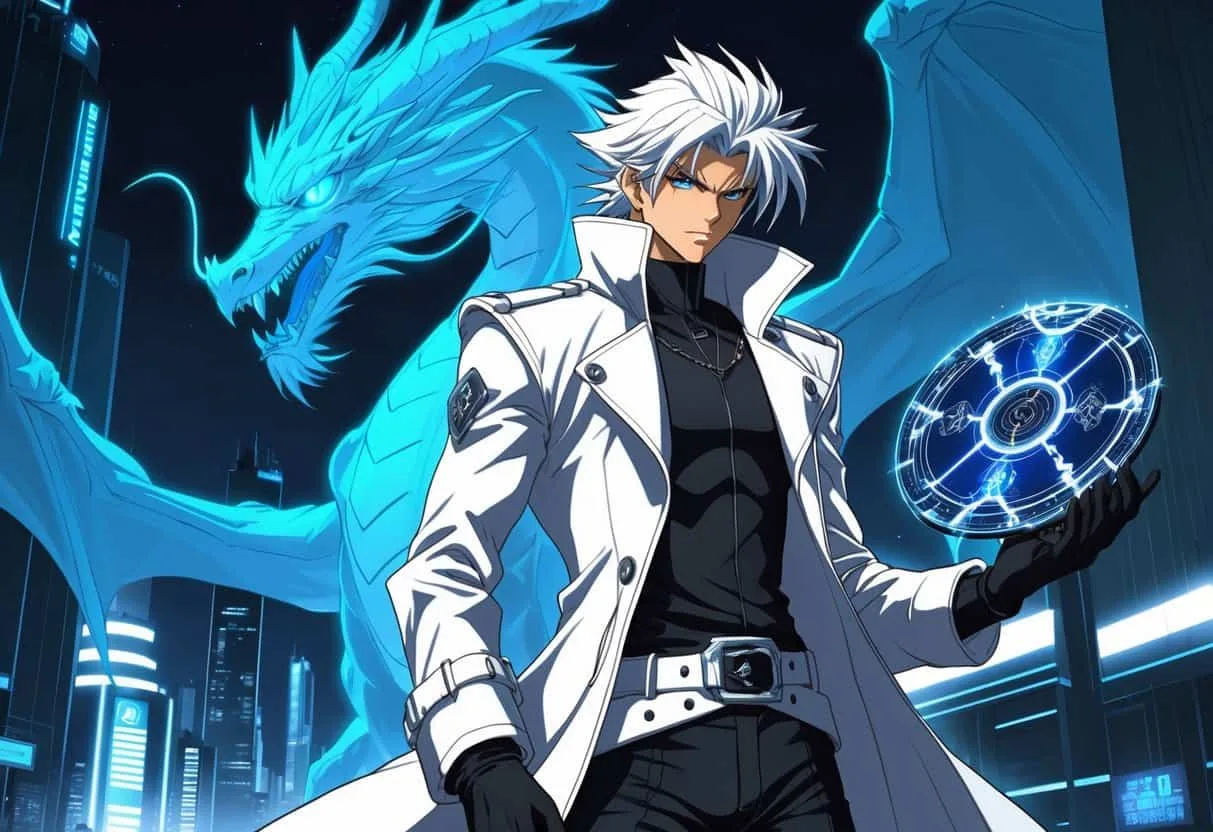
From the earliest episodes to the climactic arcs, Kaiba operates by rules only he fully understands. His story does not revolve around becoming a better person through friendship; it revolves around proving that sheer willpower and technical mastery can overcome any obstacle. That unwavering conviction, set against Yugi Muto’s faith in bonds and destiny, creates a rivalry that fuels the entire series. Kaiba’s influence extends far beyond the narrative—it lives in card collections, fan communities, and the very way dueling is imagined.
The Anatomy of an Anti-Hero: Kaiba’s Unorthodox Role
Defining the Anti-Hero in Yu-Gi-Oh!
An anti-hero lacks the conventional moral clarity of a protagonist. They may be selfish, abrasive, or morally ambiguous, yet they align with the greater good when it suits their interests—or when something they value is threatened. In Yu-Gi-Oh!, the world is generally split between pure-hearted duelists and cackling villains driven by greed or malice. Kaiba shatters that binary. He openly scorns teamwork, dismisses emotional appeals, and treats dueling as a battlefield for the powerful alone.
At the same time, he repeatedly throws himself into danger to protect his younger brother Mokuba and, on rare occasions, to preserve the world he intends to dominate.
Kaiba’s anti-hero status crystallizes in his refusal to accept mystical forces as an explanation for anything. While Yugi and the Pharaoh embrace ancient magic, Kaiba invests everything in technology, logic, and personal ability. This tension makes every conflict feel like a clash of eras and ideologies, not just a card game. Kaiba is a modernist trapped in a supernatural plot, and his skepticism is both a shield and a source of dramatic friction. You can map his entire arc along the line where pride meets pragmatism, and that line rarely crosses into altruistic territory without an ulterior motive lurking beneath the surface.
Kaiba’s Morality and Personal Code
Kaiba’s moral compass is neither broken nor absent—it is calibrated to a frequency most duelists cannot hear. His primary directive is the protection and elevation of Mokuba. Every business decision, every duelist taunt, and every technological gamble ties back to a childhood promise to shield his brother from the suffering they endured. Beyond that, Kaiba values strength, self-reliance, and the cold precision of a well-executed strategy. He measures people by their competence, not their intentions.
This utilitarian code leads him to actions that look villainous on the surface. In the manga, he rigs games, threatens opponents, and even orchestrates death-trap scenarios. The anime softens these edges, but the underlying self-interest remains. Kaiba rarely helps Yugi’s group because it is the right thing to do; he helps because a threat to the world is a threat to KaibaCorp, or because watching Yugi lose to anyone else would diminish his own eventual victory over him. He respects no one’s authority, flouting rules and traditions when they impede his objectives.
Yet within that rebellion lies a strange consistency: Kaiba never betrays his own definition of honor. He will not cheat to win a duel he believes his skill can decide. When he loses, he accepts the result—often with a bitter fury that fuels his next evolution.
His relationship with the Egyptian God Cards illustrates this code beautifully. Kaiba covets Obelisk the Tormentor not for divine reverence but as a tool to surpass Yugi. He earns the card through a tournament of his own design, underscoring his belief that power must be seized through measurable competition, not granted by fate. Even when Obelisk is sacrificed or lost, Kaiba treats the event as a strategic setback rather than a spiritual defeat. His secular ambition remains unshaken.
Conflict and Rivalry with Yugi Muto
The Kaiba-Yugi rivalry is the engine that propels Yu-Gi-Oh! through dozens of storylines. Yugi embodies empathy, trust, and the strength found in friendship. Kaiba embodies isolation, self-made power, and the cold logic of a corporate titan. Their duels are metaphysical debates disguised as monster battles. When Yugi’s Dark Magician faces Kaiba’s Blue-Eyes White Dragon, it is more than a clash of attack points—it is a collision of worldviews.
Kaiba’s obsession with defeating Yugi morphs over time. Initially, it stems from humiliation; losing to a meek boy with a puzzle is an insult to everything Kaiba has built. As the series progresses, the rivalry becomes a measure of self-worth. Kaiba needs Yugi as a benchmark. He is the only opponent who consistently pushes Kaiba to innovate, to risk everything, and to confront the possibility that his philosophy might be incomplete.
Yet Kaiba would never voice that dependence aloud. His pride locks him into a cycle of denial, rage, and reluctant cooperation that makes their interactions electric.
The emotional texture of this rivalry is what separates it from simple hero-versus-villain dynamics. Kaiba saves Yugi’s life in Battle City not because he suddenly values friendship, but because a world without Yugi would lack the one person who could push him further. That twisted respect is the heartbeat of their connection. It frustrates viewers, but it also earns a strange kind of admiration. Kaiba’s honesty about his self-interest is, in a paradoxical way, more honest than many heroes’ postures.
Character Depth and Development
Origins and Childhood
To grasp Kaiba’s adult persona, you must return to the wreckage of his childhood. Seto and Mokuba lost their mother early, then bounced through a harsh orphanage environment. Their lives were marked by instability and the constant threat of exploitation. When Gozaburo Kaiba, a ruthless industrialist, adopted Seto, it was not an act of love—it was a business transaction. Gozaburo subjected Seto to brutal academic and psychological conditioning, intending to mold him into a perfect successor who would crush competitors without mercy.
Seto endured this gauntlet, but he also plotted. Using a combination of intellect and sheer nerve, he outmaneuvered Gozaburo, seized control of KaibaCorp, and transferred the company’s focus to gaming technology. This origin story is the seedbed of Kaiba’s obsession with power, control, and self-sufficiency. He learned that emotional attachments are levers others can pull against you. The only person he allows inside his fortress is Mokuba, the one bond that predates the Kaiba name and the only relationship he considers pure.
Even that love is expressed through control—shielding Mokuba from harm, giving him everything, but rarely showing softness in public.
Psychologically, Kaiba’s armor is forged from trauma. His arrogance is a performative wall erected to convince the world—and perhaps himself—that he can never be hurt again. This background does not excuse his harshness, but it explains it. It turns his character from a cartoonish rich boy into a layered portrait of someone who clawed his way out of darkness and decided that no one would ever push him back.
Evolution Across the Anime and Manga
Kaiba’s portrayal shifts perceptibly between the original manga and the anime adaptations. Kazuki Takahashi’s manga presents a more menacing Kaiba, especially in the early chapters. He rigs a theme park death game, threatens to have Yugi’s grandfather’s soul trapped forever, and shows little remorse. The anime dials down this malevolence, repositioning him as arrogant but not irredeemable. This tonal shift makes him more palatable for a broad audience, but it also complicates his anti-hero status by introducing moments of genuine cooperation earlier.
As both mediums progress, Kaiba’s character grows in subtle ways. His obsession with the past and his refusal to believe in the supernatural are tested by repeated exposure to Millennium Item magic and the spirit of the Pharaoh. In the Battle City arc, he witnesses the power of the Egyptian Gods firsthand and still refuses to attribute it to destiny. In the Grand Championship and later arcs, he begins to show flickers of respect for opponents like Joey Wheeler—though he would never say it outright. By the time of the Darkside of Dimensions movie, Kaiba has become a man so driven that he physically seeks out the Pharaoh’s spirit across dimensions, not out of malice, but out of an insatiable need to settle their score on his own terms.
That obsessive quest is the culmination of his entire character: he refuses to let any external force, even death itself, dictate the end of his rivalry.
Struggles with Pride and Vulnerability
Pride is Kaiba’s sharpest sword and his most glaring flaw. It fuels his dueling genius, enabling him to walk into any arena believing he can win. It also isolates him. Kaiba cannot ask for help because needing assistance feels like failure. Even when he’s cornered, his instinct is to double down on his own strategy, sometimes burning bridges in the process.
This tension between self-sufficiency and the inherent limits of being human runs through every major dueling moment.
Yet Kaiba’s vulnerability seeps through the cracks. It appears in the brief, unguarded moments with Mokuba—when his tone softens, or when he risks his life without a second thought. It emerges in his silent fury after losing to Yugi at Duelist Kingdom, a fury that masks a fear of inadequacy. And it surfaces in his rare acknowledgments of others’ skills, delivered through backhanded compliments or curt nods. These moments are sparse, but their scarcity gives them weight.
When Kaiba admits that someone is strong, it means he has measured them against his uncompromising standards and they did not fall short.
This push-and-pull between pride and vulnerability is what transforms Kaiba from a simple rival into a character worth studying. He embodies the painful truth that strength and fear often coexist. His refusal to dismantle his own walls makes him tragic, but his willingness to fight for what he loves makes him redeemable. It is a balance that many fictional characters attempt; few achieve it as sharply as Kaiba does.
Iconic Duels and Signature Monsters
Blue-Eyes White Dragon and Deck Strategy
The Blue-Eyes White Dragon is not merely Kaiba’s ace monster—it is an extension of his soul. With 3000 attack points, it dominated the early metagame of the anime’s world, and Kaiba’s entire deck revolves around unleashing its power as swiftly as possible. He constructs his strategy around summoning multiple copies and evolving them through fusion into the Blue-Eyes Ultimate Dragon, a move that epitomizes his philosophy of overwhelming force. There is nothing subtle about it. Kaiba announces his intentions with the roar of a dragon, and his opponents must either match that ferocity or be destroyed.
His support cards reveal his tactical mind. Kaibaman offers a quick avenue to bring Blue-Eyes to the field without tribute, while Enemy Controller and Crush Card Virus disrupt opposing boards with ruthless efficiency. Traps like Ultimate Offering allow additional summoning, turning the tide in a single turn. Kaiba’s deck is an engine built on speed and aggression, with little room for stall tactics or passive play. It mirrors his personality: direct, impatient, and unwilling to wait for permission.
Rare cards such as Ring of Destruction and De-Fusion showcase his willingness to blow things up and rebuild them for maximum impact—a fitting metaphor for his approach to business and life. In detailed character profiles, analysts often note how Kaiba’s card choices reject the mystical synergy that Yugi’s deck enjoys, opting instead for raw mechanical advantage. This distinction cements the Blue-Eyes as a symbol of human ambition untethered from divine favor.
Memorable Battles Against Key Opponents
Kaiba’s duels against Yugi Muto are the stuff of anime legend. Their face-off in the Duelist Kingdom final, on the castle parapets, remains a high-water mark for tension and visual spectacle. Kaiba’s strategy of summoning three Blue-Eyes, only to have them confronted by Yugi’s Exodia or Dark Magician combos, becomes a ritual of thrust and counter-thrust. These battles are not just card games; they are philosophical chess matches played with holographic monsters. Each duel ends with a recalibration of their relationship, pushing Kaiba toward grudging acknowledgment while Yugi gains a deeper appreciation of Kaiba’s tenacity.
Beyond Yugi, Kaiba’s duels with Bakura and Joey Wheeler expose different facets of his skill. Against Bakura’s occult-themed deck, Kaiba leans on technology and logic to counter supernatural threats. His clash with Joey in Battle City is particularly revealing: Joey, perceived as an amateur, pushes Kaiba to the brink through sheer unpredictability and luck. Kaiba’s internal fury during that duel is palpable—he cannot reconcile his orderly world with the chaos Joey represents, and that struggle makes the victory far from satisfying. It forces Kaiba to confront the reality that raw statistics and perfect curves cannot account for the human element.
These fights, archived in discussions on official Yu-Gi-Oh! resources, demonstrate why Kaiba’s dueling style attracts both respect and frustration. He never approaches a match casually; every draw is a declaration of war, and his intensity elevates even routine tournament rounds into psychological dramas.
Kaiba’s Skill and the Role of Technology
While other duelists rely on inherited relics or mystical talents, Kaiba’s edge comes from innovation. As the head of KaibaCorp, he pioneers the Solid Vision system that brings Duel Monsters to life in three-dimensional holograms. This technological leap transforms the card game from a tabletop pastime into a global spectator sport. Kaiba’s own Duel Disk is a product of his engineering genius, designed for portability, speed, and intimidation. He consistently debugs, upgrades, and weaponizes his tech to stay ahead of opponents.
His analytical mind processes duels like a supercomputer. Kaiba memorizes card databases, calculates probability on the fly, and reads opponents’ micro-expressions to predict plays. Cards such as Snatch Steal, Interdimensional Matter Transporter, and Dimensionhole demonstrate a deep understanding of game mechanics—he removes his own monsters to avoid destruction, steals opponent’s key pieces, and manipulates the field with surgical precision. This approach contrasts sharply with Yugi’s instinctive reliance on the heart of the cards.
Kaiba’s technological prowess also extends to his personal transportation and security systems. His Blue-Eyes jet, his island fortress, and his satellite-based communication networks all reinforce the image of a man who trusts machines more than people. It is not mere spectacle; it is a worldview expressed through design. He leverages technology to insulate himself from vulnerability, yet paradoxically, his greatest technological creations are designed to project his inner passion—the dragons—for the world to see.
Anime Arcs Such as Waking the Dragons
The Waking the Dragons arc pushes Kaiba into unfamiliar territory. Confronted by an ancient magical order that threatens to wash over reality, Kaiba finds himself reluctantly allied with Yugi and his friends. The stakes are no longer about corporate dominance or personal pride; they are existential. Kaiba’s response is characteristically pragmatic: he upgrades his deck, incorporates the powerful Dragon Master Knight, and faces the threat with the same intensity he would bring to a championship duel.
During this arc, Kaiba’s dueling takes on a more desperate edge. He sacrifices monsters in ways that feel less calculated and more raw, hinting that some part of him recognizes the danger to Mokuba and the world he wants to control. The arc also expands his rogues’ gallery of opponents, pitting him against soul-stealing antagonists who cannot be bargained with or bought off. These encounters force a subtle shift: Kaiba begins to treat the supernatural not as nonsense, but as an obstacle that demands new strategies. His technological solutions meet ancient magic head-on, and the results are some of the most visually dynamic duels in the franchise.
Watching Kaiba navigate moral gray zones in Waking the Dragons is instructive. He never becomes a team player, but he learns that tactical alliances can be more efficient than solitary war. This is character development without sentimentality—the kind that feels true to Kaiba’s core. He will adapt his methods to protect what is his, but he will never apologize for who he is.
Legacy and Cultural Influence
Impact on Yu-Gi-Oh! Fandom and Media
Kaiba’s presence reverberates through every corner of the Yu-Gi-Oh! fandom. Fanart communities produce countless illustrations of his iconic white coats, sharp features, and dramatic poses. His trademark phrase, “You’re a third-rate duelist with a fourth-rate deck,” has become a meme that transcends the series, symbolizing trash-talk culture in competitive gaming. Videos and analysis breakdowns on platforms like YouTube routinely examine his dueling tactics, and cosplayers bring their best stern glare to conventions worldwide.
His connection to powerful cards extends beyond Blue-Eyes. The Blue-Eyes Toon Dragon, Toon Summoned Skull, and other Toon variants highlight his brief flirtation with the ridiculous, adding a layer of self-aware humor to his otherwise severe image. Fans debate the thematic meaning of Kaiba’s temporary use of Pegasus’s Toon World—some see it as mockery, others as a reluctant acknowledgment of a rival’s creativity. The Egyptian God Cards, too, are indelibly linked to Kaiba’s arc; though he rejects their divine connotations, his possession of Obelisk cements his status among the series’ elite duelists.
The official VIZ Media site and countless fan wikis document every card and appearance, a testament to how deeply Kaiba has integrated into pop culture. He attracts the kind of devotion usually reserved for protagonists, proving that a well-crafted anti-hero can steal the spotlight without ever asking for it.
Comparisons to Other Fictional Anti-Heroes
Kaiba’s DNA runs parallel to other iconic anti-heroes across anime and beyond. Like Guts from Berserk, he carries the weight of an abusive childhood and channels that pain into relentless ambition. Both characters are defined by a fierce protective instinct toward a singular loved one—Mokuba for Kaiba, Casca for Guts—while maintaining a bristling, hostile exterior toward the rest of the world. However, where Guts’s journey is steeped in physical agony and supernatural horror, Kaiba’s battlefield is intellectual and capitalist, making him uniquely suited to a series about a card game.
In the realm of Pokémon, the rival archetype echoes Kaiba’s dynamic with Yugi, but Kaiba exceeds the template. Most Pokémon rivals grow into friendship or mutual respect; Kaiba’s respect remains eternally conditional. He never evolves into a standard ally, preserving a friction that keeps the narrative engine running. This stubborn refusal to conform to the redemption arc cements his status as a purist anti-hero. He desires victory above companionship, and the narrative grants him the dignity of that choice without punishing him narratively.
Comparisons also extend to Western anti-heroes like Tony Stark—without the charm offensive. Both are billionaire geniuses who build their power through technology, possess towering egos, and care more about a select few people than about society at large. Stark learns to sacrifice; Kaiba sometimes sacrifices, but always on his own terms. This consistency makes him a fascinating case study: he proves that a character can be compelling without undergoing a moral makeover.
Collectibles and Card Game Popularity
Kaiba’s influence on the real-world Yu-Gi-Oh! trading card game is immense. The Blue-Eyes White Dragon is one of the most recognized and valuable cards in the hobby’s history. Special editions, anniversary prints, and championship rarity versions command high prices, and demand spikes whenever support cards are released. Kaiba-themed structure decks repeatedly top sales charts, attracting both nostalgic fans and competitive players seeking explosive power.
Deck-building communities obsess over “Kaiba-style” strategies that prioritize aggressive summoning, board-wipe traps, and fusion monsters. Cards like Chaos Emperor Dragon – Envoy of the End and Cyber-Stein carry echoes of Kaiba’s win-at-all-costs philosophy. Even the introduction of Toon World support taps into his brief comedic era, giving players options to combine silliness with lethality. The fact that a character’s thematic identity can drive sales and shape metagames underscores his enduring appeal.
Collectors seek out Kaiba’s iconic cards not just for their utility but for the emotional resonance they carry. Holding a Blue-Eyes feels like holding a piece of anime history. Tournaments frequently feature tributes to his decks, and online marketplaces buzz whenever a new Kaiba-related product drops. This commercial and cultural longevity, discussed in hobbyist circles like Konami’s official card game site, demonstrates that Kaiba is not just a character—he is a brand built on unflinching ambition and timeless design.
The Enduring Complexity of Seto Kaiba
Seto Kaiba endures because he refuses to be simplified. He is not a villain, though he performs villainous acts. He is not a hero, though he saves the world more than once. He is a prodigy, a trauma survivor, an obsessive rival, and a fiercely devoted brother all tangled together. Every layer of his personality poses a question about what drives human beings: money, power, love, pride?
Kaiba’s answer is all of them, and none of them alone.
The beauty of his anti-hero status is that it reflects something uncomfortably honest. Most of us are not purely kind or purely selfish; we are complicated creatures whose noblest acts often carry traces of self-interest. Kaiba magnifies that truth under a holographic spotlight, turning a children’s card game anime into a surprisingly deep exploration of identity. He challenges Yugi not just in duels but in philosophy, and the narrative is richer for his refusal to capitulate.
His legacy will persist as new generations discover the series. Fans will continue to debate his morality, build decks around his dragons, and post the latest meme about his scathing one-liners. In a franchise that often rewards faith, destiny, and friendship, Kaiba remains a monument to the power of the self-made soul—flawed, relentless, and impossible to forget.