Table of Contents
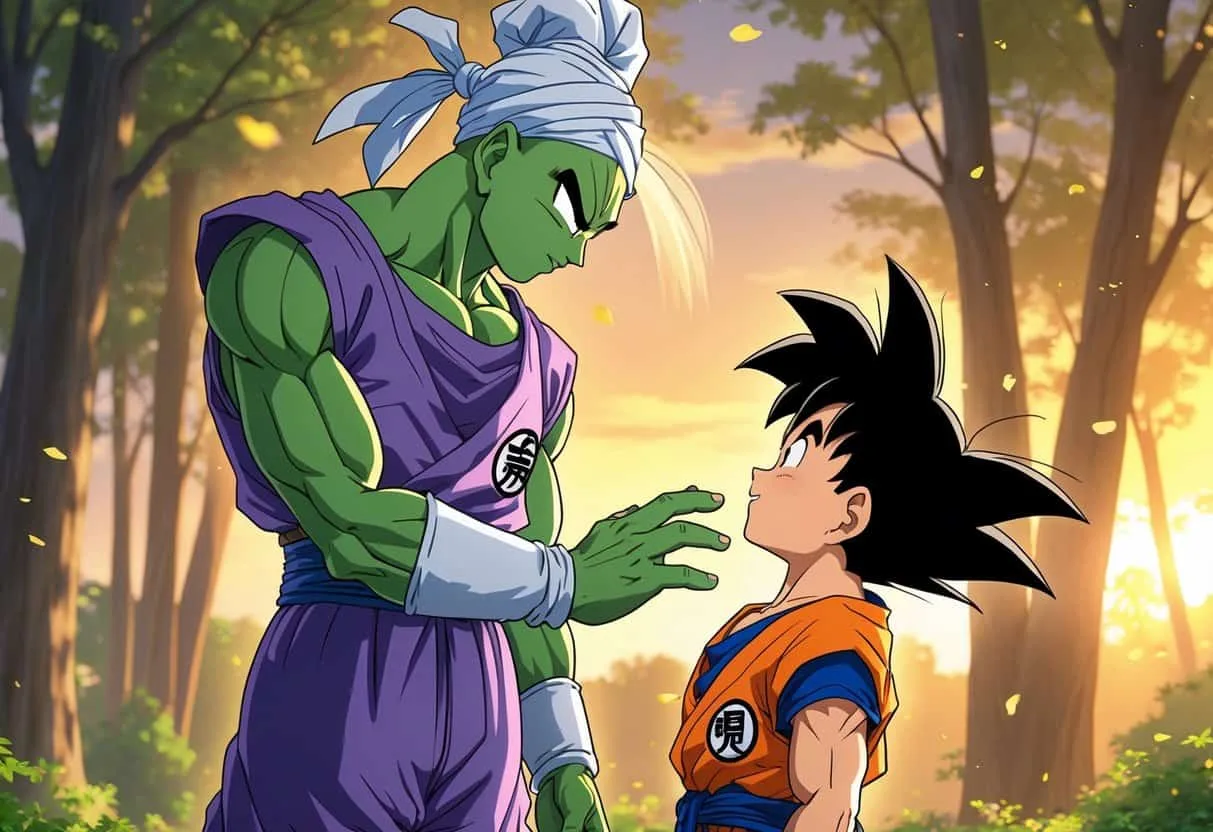
Goku may be Gohan’s biological father, and his heroic sacrifices are genuinely part of his character, but when Dragon Ball fans dissect who served as the more consistent, nurturing guide through Gohan’s formative years, the answer almost always points to one green-skinned Namekian. Piccolo’s arc from demonic villain to selfless guardian gave the series one of its most emotionally resonant relationships, and his dedication to Gohan’s development—as a warrior and as a person—is where his reputation as the better father figure truly takes root. While Goku’s parenting often orbits around his own thirst for battle, Piccolo’s involvement is steady, grounded, and built around the child standing right in front of him.
Piccolo’s Fatherly Impact on Gohan
To understand why Piccolo is elevated above Goku in the father-figure conversation, you have to look at the specific moments where he shaped Gohan’s life—not in theory, but in action. During the most vulnerable period of Gohan’s childhood, when loss and danger were constant, Piccolo provided the structure, emotional support, and moral education that a child needs to feel secure.
Mentorship Forged in Crisis
Gohan’s first real brush with death came at the hands of Raditz, and it was Piccolo who took charge while Goku lay lifeless. Rather than leave the boy to fend for himself, Piccolo abducted Gohan for a brutal survival training stint—and though the method was harsh, the intent was protectively clear. He taught Gohan to fend off wild beasts, to channel his latent power, and to tolerate the fear that would otherwise have crushed him. Throughout the Saiyan invasion, Piccolo positioned himself as Gohan’s shield, taking a fatal blast from Nappa to save him—a stunning act of self-sacrifice that, at the time, was far more direct than anything Goku had done for his son. This moment, memorialized in the Piccolo character archives, permanently altered their bond, turning the mentor-protege dynamic into a family-like allegiance.
What makes this mentorship especially distinctive is its consistency. After Goku was revived and later sidelined by injuries on Namek, Piccolo continued to train Gohan in his absence. He wasn’t merely throwing a child into combat; he was methodically building a fighter who could survive without anyone holding his hand. And when Gohan eventually stood against Frieza, the composure he exhibited had more to do with Piccolo’s groundwork than with Goku’s last-minute pep talks.
Emotional Anchor and Unwavering Support
Piccolo’s care for Gohan isn’t limited to combat readiness. Throughout the series, he consistently reads Gohan’s emotional state with a precision Goku never quite attains. During the Cell Saga, when the fate of Earth rested on an eleven-year-old’s shoulders, Goku’s strategy was to push Gohan into a corner, believing sheer stress would unlock a hidden Super Saiyan 2 transformation. Piccolo, on the other hand, recognized the cruelty of that plan. He called Goku out publicly for failing to understand Gohan’s gentle spirit, reminding everyone that the boy was not a martial arts junkie like his father—he was a child who found no joy in fighting.
That intervention wasn’t just a cool moment; it was an act of emotional advocacy that no one else offered.
Time and again, Piccolo becomes the person Gohan seeks out when doubt creeps in. Whether it’s quiet conversation during uneasy lulls or a firm hand on the shoulder before a battle, Piccolo’s presence conveys safety. In Dragon Ball Super: Super Hero, we see this bond endure into Gohan’s adulthood, with Piccolo still checking on his growth, pushing him back into training when he gets soft, and ultimately standing guard over Pan with a grandfatherly protectiveness. That kind of lifelong emotional investment is the hallmark of real parenting, not just a mentorship that ends when the student surpasses the teacher.
Instilling Discipline and a Sense of Duty
While Goku’s training sessions often feel like friendly sparring matches, Piccolo’s are grounded in discipline. The year with Gohan in the wilderness wasn't about fun—it was about forging self-reliance. Piccolo taught him to hunt his own food, endure isolation, and manage his own fear. In doing so, he instilled a philosophical framework: strength is not for ego, but for protecting the people you care about. That lesson became Gohan’s moral compass, evident when he moved from reluctant fighter to Earth’s protector against threats like Bojack and Majin Buu.
Piccolo’s strictness never came from a place of cruelty; it was always paired with a clear explanation of consequences. When Gohan hesitated, Piccolo corrected him. When he succeeded, the praise was measured but genuine. This balanced approach taught Gohan the weight of his actions, bridging the gap between raw power and responsible decision-making. In contrast, Goku’s occasional “I trust you to figure it out” philosophy, while optimistic, often left his son without the necessary tools to navigate the emotional fallout of battle.
Contrasting Parenting Styles: Piccolo versus Goku
If you line up the core tenets of nurturing a child—presence, emotional attunement, and a philosophy that places family before personal ambition—Goku’s approach diverges significantly from what most would call ideal. It’s not that he doesn’t love his sons; it’s that his version of love is filtered through a Saiyan lens that prizes combat and self-improvement above daily involvement. Piccolo, by contrast, fills the gaps Goku leaves behind.
Chronic Absence versus Steadfast Presence
Goku’s absences have become a defining meme of the franchise, and they’re not just comic relief. He died shortly after Gohan’s introduction, opting to stay in Other World for years to train with King Kai rather than return home immediately. In the Android and Cell arcs, he prioritized time in the Hyperbolic Time Chamber with Gohan but then voluntarily stepped out of his son’s life after Cell’s defeat, staying dead for seven years to “keep Earth safe.” Even in Goku’s more recent Dragon Ball Super exploits, he often leaves Chi-Chi and Goten to train with Whis or Vegeta, trusting that others will manage the family front.
Piccolo, meanwhile, is a constant. He lives in proximity to the Son family—often depicted meditating on a nearby waterfall or cliff—and remains available whenever Gohan needs him. In the Buu Saga, it’s Piccolo who steps up to train Goten and Trunks in the Fusion Dance, not Goku, who is again absent (this time dead). In Super Hero, Piccolo notices Gohan’s neglect of his training and takes it upon himself to kidnap Pan (gently) to jolt his student back into form. Each of these actions underscores a fundamental difference: Goku raises warriors; Piccolo continues to raise people.
Emotional Availability: The Quiet Listener versus the Battler
Goku’s emotional repertoire is famously narrow. He can be cheerful, excited, and fiercely determined, but he struggles to perceive the inner turmoil of those around him. When Gohan cried as a four-year-old prisoner of Raditz, Goku’s response was to tell him to be brave—not to acknowledge the terror. Piccolo, by contrast, saw a scared child and used that understanding to build trust. He didn’t pretend the danger wasn’t real; he taught Gohan how to move through it.
This emotional attunement shows up in quieter ways too. Piccolo often communicates through action rather than long speeches, but his small gestures—handing Gohan a new gi, positioning himself in harm’s way, or spending time with Pan when no one else will—speak volumes. Much of Dragon Ball’s humor comes from Goku’s obliviousness (forgetting his grandchild’s name, prioritizing a tournament over family visits), but those lighthearted jokes slice into the heart of why he rarely ranks as the franchise’s best dad. Piccolo remembers. Piccolo notices.
Piccolo shows up not because there’s a fight, but because there’s a need.
Philosophies on Strength, Family, and Personal Growth
Perhaps the most vivid illustration of their different values is the Cell Games. Goku, after fighting Cell to a near-standstill, handed the exhausted villain a Senzu bean before sending his son in to battle—believing a fair fight would bring out Gohan’s hidden power. Piccolo, aghast, called it out immediately: Goku was treating his child’s life like a training experiment. It was a striking moment of parental shortsightedness. Goku’s philosophy prioritized the challenge, while Piccolo’s instinct was to protect.
More broadly, Piccolo’s view of strength is inseparable from guarding the home. He trains not for personal transcendence but to be useful—to the Z Fighters, to the planet, and especially to the Son family. Goku, for all his love, often sees his family as a part of his world rather than its center; he’s just as comfortable flying off to another universe to train an alien child as he is staying home. That wanderlust, while endearing as a character trait, undercuts his role as a steady father figure.
Legacy and Influence Beyond Gohan
Piccolo’s fatherly attributes don’t end with Gohan. His gradual transformation from solitary antagonist to clan-like protector radiates outward, affecting the entire Z Fighter network and the next generation of warriors. This broader influence reinforces that his parenting style is not an isolated anomaly but a consistent pattern of behavior.
Evolving Bonds Within the Z Fighters
When Piccolo first merged with Nail and later Kami, he shed much of his former malevolence and gained a deeper connection to Earth. That shift allowed him to work seamlessly alongside former enemies like Vegeta and to become a strategic voice during crises. In meetings at Capsule Corp, discussions with Bulma, and collaborations with Dende to maintain the Dragon Balls, Piccolo operates as a responsible adult figure—someone who thinks about logistics, fallback plans, and the safety of non-combatants. This cooperative mindset is a direct extension of the caretaking disposition he first exhibited with Gohan.
There’s also a symbolic dimension here: Piccolo, once a demon king, now guards the son of his former greatest rival. The Namekian fusion arc wasn’t just a power-up; it was a narrative device that turned Piccolo into a guardian in the truest sense. His willingness to integrate Kami’s broader perspective made him a more complete protector, one willing to die for a world he once sought to destroy.
Mentoring the Next Generation of Warriors
When the Buu saga demanded a new generation of fighters, it was Piccolo who took Goten and Trunks into the Hyperbolic Time Chamber and taught them the Fusion Dance. Goku laid out the technique, but Piccolo enforced the grueling practice, corrected their childish antics, and ultimately guided them to a successful Gotenks. This mirrored his earlier work with Gohan: hard training masked a genuine investment in their survival. He didn’t just drill techniques; he drilled focus, timing, and the consequences of failure.
In Dragon Ball Super: Super Hero, that mentorship extended even further as Piccolo took it upon himself to awaken Gohan’s dormant potential once more and, by extension, to safeguard little Pan. Watching him improvise a “kidnapping” to spur Gohan into action was pure Piccolo—stern on the surface, fiercely compassionate underneath. These episodes cement a multigenerational legacy: Piccolo is no longer just a one-child mentor; he has become an anchor for an entire lineage.
Piccolo’s Own Transformation and Character Arc
The role of father figure didn’t merely benefit Gohan; it completed Piccolo. Pre-Gohan, he was a revenge-driven loner. Post-Gohan, he developed empathy, patience, and a willingness to sacrifice without resentment. Fans often note that his sacrifice against Nappa was the first true “heroic” death—predating Vegeta’s later redemption and standing as a turning point for Namekian representation in the series. By internalizing the needs of someone weaker than him, Piccolo stumbled into his own humanity (metaphorically speaking).
Through the Cell and Buu arcs, you see a character who started out as a literal embodiment of evil become the one character who consistently prioritizes the well-being of others over his own pride. He never fully abandons his edge, but that edge is now directed outward at threats, not inward at allies. His quiet pride in Gohan’s accomplishments, glimpsed in brief smiles or nods, tells you everything about how deeply the father role reshaped him.
Cultural Significance and Enduring Fan Debate
The “Piccolo is Gohan’s real dad” conversation is more than a throwaway meme; it’s a lens through which the fandom interprets responsibility, masculinity, and the definition of family. Dragon Ball’s narrative doesn’t explicitly compare the two father figures on a scorecard, but the community’s collective reading has made Piccolo’s paternal status a cultural touchstone within anime discourse.
Portrayal in Anime and Manga
In both the original Dragon Ball Z run and the updated Super continuities, Piccolo’s visual language reinforces his guardian role. He’s frequently drawn standing behind Gohan, arms crossed, observing—a silent sentinel. Color design often aligns Gohan’s purple gi with Piccolo’s signature hue, subtly coding their connection even when Piccolo isn’t in the frame. Key manga panels like Piccolo’s horrified reaction to Cell’s targeting of Gohan, or his relieved collapse after a training session, emphasize emotional depth over grand fights. The anime’s soundtrack choices—somber piano themes during their bonding scenes—also elevate the relationship beyond simple mentor-trainee dynamics.
Fan Perception and the “Real Dad” Meme
Online, the “Uncle Piccolo” or “Piccolo is Gohan’s real dad” trope has persisted for decades, spawning countless image edits, TikToks, and video essays. A CBR analysis even traced how the series consistently prioritizes Piccolo in emotional moments—like his death and resurrection—over Goku’s various resurrections, reinforcing the audience’s emotional investment in the Namekian bond. Fans gravitate toward Piccolo because he represents a kind of fatherhood that doesn’t demand biological ties; it demands showing up. In a franchise where world-shaking battles are routine, that simple presence resonates loudly.
Voice Acting and Adaptation
Toshio Furukawa’s original Japanese performance layers Piccolo with a low, deliberate cadence that shifts from menacing to reassuring over time—an auditory reflection of his internal change. In the English dubs, voice actors have consistently preserved that blend of gruffness and warmth, ensuring that Piccolo’s lines land with the same protective sincerity across regions. The character’s minimalistic speech style—often just a few words or a grunt—somehow conveys more emotional bandwidth than many verbose speeches in the series, making his rare displays of affection feel monumental.
Redefining Fatherhood in a Martial World
Ultimately, the case for Piccolo as the superior father figure doesn’t hang on a single heroic moment or on vilifying Goku. It rests on a pattern of behavior: Piccolo is present when it matters, emotionally aware when others are not, and unwaveringly committed to the long-term well-being of his surrogate son. He trains with purpose, protects out of love, and adapts his own personality to become what Gohan needs—first a tough coach, then a trusted confidant, and finally a true family member. In a fantasy universe where strength is often measured in power levels, Piccolo reminds us that the strongest fathers aren’t necessarily the ones who toss the biggest ki blasts; they’re the ones who never leave.