Table of Contents
Women are now a major force in the anime fandom, shaping how stories are told and which characters catch on. By 2025, nearly half of all anime fans are women, and their growing presence is changing the industry and fan culture in important ways. This isn't a fringe phenomenon. Female viewership has risen steadily over the past decade, fueled by demographic shifts, more diverse storytelling, and the explosive global reach of streaming platforms. As the once male‑dominated image of the “otaku” gives way to a broader, more inclusive picture, women are not just consuming anime — they’re driving demand, reshaping communities, and influencing the very stories that studios choose to tell.
This shift comes from more diverse stories that connect with female viewers and wider access to anime through streaming platforms. But it also reflects deeper changes in how fandom itself operates. Online communities, fan creation, and social‑media discourse have elevated previously niche interests into mainstream conversations. Women have become central to that process, bringing fresh enthusiasm and critical perspectives that push the medium forward.
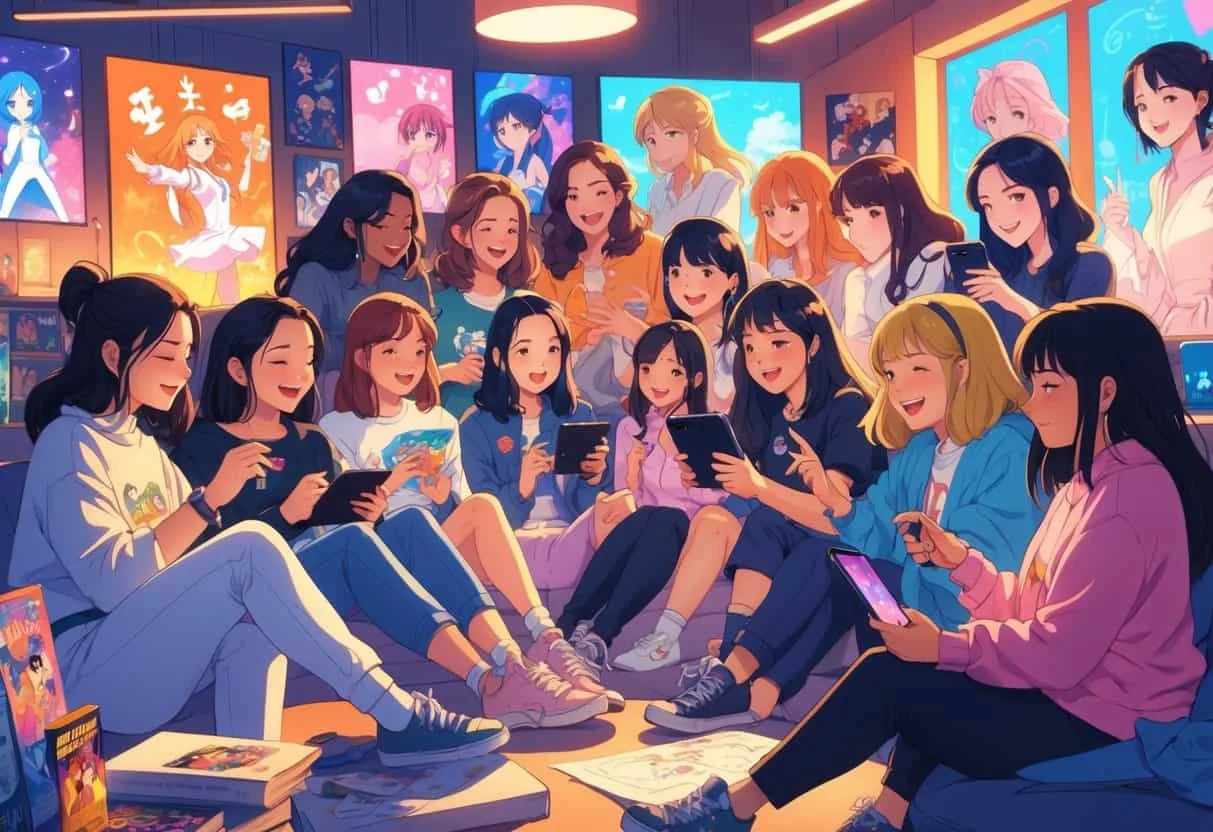
If you’ve been a fan for a while, you’ve probably noticed the content has changed. There are more strong, complex female characters and themes that speak to a wider range of people. From the emotionally layered heroines of Fruits Basket to the political cunning of The Apothecary Diaries, Japanese animation is increasingly reflecting experiences that resonate with female audiences. That’s a world away from the token love interests who once populated shonen battlegrounds.
Women leading the fandom aren’t just watching—they’re shaping what’s popular and how communities grow. The industry’s definitely noticed, and you can see it in the stories being told. Streaming data, convention participation, and merchandise sales now routinely reveal how female fans drive the commercial success of series once viewed as male territory. This article examines the forces behind that rise, from evolving demographics to the role of streaming, and explores what the women‑led fandom means for anime’s future.
Key Takeaways
- Anime fandom in 2025 includes nearly equal numbers of women and men across many regions, upending the old stereotype of the male‑dominated fanbase.
- Streaming services like Crunchyroll and Netflix have made anime more accessible to a global audience, allowing women to discover genres and narratives that speak directly to them.
- Female fans influence what anime stories and characters gain attention, from social‑media movements to purchasing power that steers production committees.
- More complex and varied female characters are appearing in anime, driven in large part by the demands of a vocal and growing female viewership.
- The women‑led fandom is reshaping convention culture, online discussion, and even professional pathways, with more women entering anime writing, directing, and criticism.
The Evolving Demographics of Anime Fandom
You’ll see a lot more diversity in anime fans these days. Women, different age groups, and people from all sorts of backgrounds are shaping what the fandom looks like in 2025. The numbers tell a striking story: multiple surveys now place women at roughly 50% of North American anime audiences, a ratio that would have been unthinkable in the early 2000s when marketing primarily targeted teen boys. That demographic shift isn’t confined to the West — similar trends are visible in Latin America, Europe, and across Asia, where female fans often drive the most visible fan activities.
These changes definitely affect the communities and content you’ll run into. When con‑floor cosplay is almost evenly split between genders, and fan‑artist alley tables are brimming with works by women, the entire emotional register of a convention shifts. Panels about representation, shoujo‑josei deep dives, and discussions of queer readings of shonen titles have become mainstays. That energy feeds directly back into the industry, where studios and publishers monitor fan sentiment more closely than ever through social‑listening tools and direct engagement on platforms like X (formerly Twitter) and TikTok.
The Growing Presence of Women in Anime Communities
Women now make up about half of anime fans in places like North America. That’s a huge change from when the fandom was mostly guys. Research from the Anime News Network in 2024 highlighted that the female audience for streaming anime has grown faster than any other demographic segment, outpacing overall subscriber growth on major platforms. This isn’t just about casual viewing: women are often more likely to attend convention panels, participate in online forums, and create transformative works like fanfiction, art, and video edits. The sheer volume of female‑led fan projects — from zines to collaborative watch parties — has redefined what it means to be an “anime community” in the social‑media age.
Female fans aren’t just more visible—they’re showing up at conventions and running online groups. Publishers have noticed and are creating more content that appeals to women or centers strong female characters. The success of titles like Yuri!!! on Ice and the ongoing popularity of Free! proved that women are a lucrative market for sports anime. Similarly, the explosion of villainess‑isekai stories — My Next Life as a Villainess, Doctor Elise, 7th Time Loop — found their initial traction overwhelmingly among female readers before being adapted into anime. These aren’t accidents; they are deliberate swings by editorial departments to capture the female wallet.
Female viewers are expected to grow the fastest between 2025 and 2030. This means you’ll see even more variety in the kinds of stories and voices in anime. Industry analysts project that women, especially those in the 18–34 bracket, will be the primary drivers of subscription growth for anime‑focused streaming services over the next five years. That growth is already incentivizing investment in josei‑manga adaptations, romance series with nuanced emotional arcs, and shows that foreground female friendship and ambition without defaulting to the male gaze.
Influence of Gen Z and Baby Boom Generations
Gen Z is leading the way in anime fandom right now. Over half of Gen Z globally say they like anime, which is honestly wild. A 2024 survey by YouGov found that 54% of U.S. Gen Z respondents identified as anime fans, a rate far higher than other age cohorts. For many in this generation, anime is as foundational as Disney or Nickelodeon was for older viewers. They grew up with Crunchyroll on their phones, Netflix dropping entire seasons at once, and TikTok edits making shows go viral overnight.
The sheer cultural normalization of anime within Gen Z means that the gender mix is far closer to parity, because there’s no historical “boys’ club” gatekeeping their entry.
If you’re Gen Z, anime probably feels as normal as music or games. Baby Boomers, while fewer, helped build the early fandom in the U.S. These pioneers — many of them women who ran the first fan clubs, published early fanzines, and organized VHS tape‑trading networks — laid essential groundwork before anime really broke into the mainstream. Their passion established structures (conventions, retail channels, subtitling norms) that the streaming generation now takes for granted. Recognizing this lineage helps explain why much of today’s female‑led fandom has an intergenerational character: younger fans inherit community expertise from older mentors while infusing the scene with Gen Z digital fluency.
Their passion laid the groundwork before anime really broke into the mainstream. Now, with both generations involved, the fanbase is multi‑age and full of different tastes. It’s common to see mothers and daughters attending cons together, or Gen X fans moderating Discord servers for twenty‑something cosplayers. This age diversity keeps fandom spaces dynamic and surprisingly resilient, mixing nostalgia for 90s classics with hype for the newest isekai. It also means that industry decisions can no longer be driven purely by what worked in the shonen demo a decade ago; the audience now spans too many life stages to ignore.
Shifts in Race and Gender Representation
Anime fandom is getting more inclusive, not just in gender but in race too. You’re seeing more fans from all backgrounds, and it’s changing the vibe in a good way. Conventions in the U.S. report that Black, Hispanic, and Asian attendees now make up a larger share of the audience than ever before, mirroring broader demographic trends. That diversity feeds into the kinds of questions fans ask: conversations about colorism in character design, the need for darker‑skinned heroes, and the desire for stories that don’t default to a single cultural lens have become mainstream in online fandom spaces. Women of color, in particular, are often at the forefront of these discussions, blending their lived experience with their love of anime to push for better representation.
There’s also more variety in gender identities. Anime fans are more likely to identify as asexual, as several recent fan surveys have documented, and there’s a real balance between male and female fans across multiple gender expressions. The fluid, expressive nature of anime character designs — think of the androgynous appeal of characters like JoJo’s Bizarre Adventure’s cast or Revolutionary Girl Utena’s legacy — provides a fertile ground for exploring identity. Women who lead fandom spaces often champion these queer and non‑binary readings, creating environments where fans of all genders feel safe to express themselves. The result is a fandom that is far more self‑aware and politically engaged than its early‑2000s image would suggest.
This mix influences what you see in anime—more diverse characters and themes that reflect real experiences. While Japanese studios still primarily serve a domestic audience, the international fandom’s demands, amplified by women, are starting to have an impact. Co‑productions, consultation with overseas publishers, and the rise of global streaming data mean that a show’s performance among female viewers outside Japan can shape marketing, and occasionally even production choices. The table below summarizes some of the measurable shifts in fandom demographics that underpin these changes.
| Aspect | Detail |
|---|---|
| Women’s share | About 50% of North American fandom (2024–2025 surveys) |
| Leading growth group | Female viewers (2025–2030 projected growth rate) |
| Gen Z interest level | 54% of global Gen Z identify as anime fans |
| Baby Boom influence | Early U.S. fandom builders; intergenerational knowledge transfer |
| Gender diversity | Balanced male/female; higher proportion of asexual and non‑binary identifiers |
| Race inclusiveness | Increasing BIPOC attendance at cons; vocal advocacy for diverse content |
Impact of Streaming Services and Global Access
Streaming has totally changed how you watch anime. It’s easier than ever to find shows and jump in, no matter where you are. The days of relying on bootleg DVDs or late‑night cable blocks are long gone. In 2025, a teenager in Brazil can watch a new episode of a seasonal show hours after it airs in Japan, with professional subtitles in Portuguese, all on their smartphone. That frictionless access has fundamentally altered the audience profile.
Women, who historically faced higher barriers to entry into male‑dominated hobbyist spaces, have benefitted disproportionately. Streaming’s algorithmic recommendations gently guide curious viewers from a breakout hit like Spy x Family into deep‑cut romance dramas or workplace comedies.
This has helped the anime market explode in the U.S., and now there’s something for everyone. Global anime revenue is projected to surpass $40 billion by 2025 according to market analyses, and streaming platforms are racing to secure exclusive content. Women have become a key battleground in that competition, because capturing female subscribers often means capturing households. When a mother and daughter both watch anime on the same account, the lifetime value of that subscription rises steeply. That economic logic is now baked into licensing decisions, influencing everything from the acquisition of shoujo romance titles to the commissioning of original series with female protagonists.
Role of Platforms like Netflix, Crunchyroll, and Amazon Prime
Platforms like Netflix, Crunchyroll, and Amazon Prime have brought anime right into your living room. Each one is investing in new series, with some exclusives you can’t get anywhere else. Netflix has moved aggressively into the space, partnering with powerhouse studios like MAPPA and Production I.G to produce original anime that often feature strong female leads — Eden, Kakegurui Twin, and Blue Eye Samurai (though technically not anime, it speaks the same visual language) are all examples of content that resonates strongly with women. Their algorithm, which surfaces shows based on viewing patterns rather than traditional genre labels, has helped break down the “shonen vs. shoujo” binary that used to segregate audiences.
Crunchyroll’s all about anime and even simulcasts episodes right after they air in Japan. With over 15 million paid subscribers, it remains the go‑to hub for seasonal enthusiasts. The platform’s curated collections — “Girl Power,” “Romance & Drama,” “Slice of Life” — signal to female viewers that there is a vast library tailored to their tastes, even if the original manga ran in shonen magazines. Crunchyroll has also invested in original series like Tower of God and The God of High School, which, while action‑heavy, feature increasingly complex female characters that draw in a mixed audience. The experience of watching simulcasts live and then joining the global conversation on social media creates a sense of event that keeps female fans deeply engaged week after week.
Netflix and Amazon Prime have bigger budgets, so they’re making original anime that appeals to a lot of people, women included. Amazon’s Vinland Saga and Dororo adaptations, for instance, attracted a notable female following because of their emotional depth and nuanced handling of trauma, fatherhood, and companionship. You can watch with subtitles or dubs in tons of languages, removing language barriers that once limited anime’s reach. Plus, these platforms let you rate shows and chat with other fans through integrated social functions, turning viewing into a communal activity that mirrors the fan‑club culture women have long cultivated.
Expansion of the Anime Market in the USA
The U.S. anime market has grown like crazy, mostly because streaming makes it so easy to find stuff you like. More women are finding shows that speak to them, which pushes companies to create even more options. In 2024, the U.S. overtook Japan as the largest single‑country market for anime licensing revenue, a milestone that underscores how central the English‑speaking audience has become. Within that market, female fans are disproportionately responsible for merchandise sales of character goods, plushies, and apparel — items that generate high‑margin revenue. It’s no coincidence that the American mall‑chain Hot Topic heavily markets anime hoodies and figurines that appeal to young women, leveraging their taste to drive foot traffic.
Anime’s not just a niche thing anymore—it’s everywhere. You’ll see anime‑inspired styles in games, fashion, and conventions. Major fashion collaborations, such as Uniqlo’s UT graphic tee line that regularly features series like Jujutsu Kaisen and Demon Slayer, are purchased in large numbers by women who style these pieces in everyday wear. Beauty brands have also gotten in on the action, with anime‑themed makeup palettes and skincare lines that explicitly target female otaku. This mainstreaming helps new fans jump in and find stories that aren’t just the usual male‑focused stuff.
The stigma that once attached to being an adult woman who loves anime has largely evaporated, replaced by a sense that anime is just another valid form of entertainment.
This spread helps new fans jump in and find stories that aren’t just the usual male‑focused stuff. Retailers and streaming algorithms now actively surface genres like josei, yuri, and romantic fantasy that had been economically marginalized in the West. The success of Fruits Basket’s 2019–2021 reboot, which became one of the most‑watched anime among female audiences in the U.S., proved that a heartfelt story about family trauma and romance could be massive. As the market expands, the economic influence of women will only grow, creating a virtuous cycle: more female viewers → more content for them → more women joining the fandom.
Accessibility and Diversity in Anime Content
Streaming services offer a wild variety of genres and styles. You can find shows with strong female leads, romantic dramas, or slice‑of‑life series that just feel real. Laid‑Back Camp, A Place Further Than the Universe, and K‑ON! are perennial favorites among women for their gentle pacing and focus on female camaraderie. Meanwhile, darker fare like Made in Abyss or Puella Magi Madoka Magica draws in women who crave psychological complexity. The range is staggering, and the algorithmic engine of services like HIDIVE and RetroCrush helps connect viewers to older classics they might never have discovered otherwise — 90s magical‑girl series, for instance, are enjoying a renaissance.
Subtitles, dubs, and apps make it easy for anyone to get started, no matter your language or experience. The proliferation of simuldubs, where English‑voice‑acted versions air shortly after the Japanese broadcast, has been especially important for women who prefer dubbed content or have visual impairments that make subtitles difficult. Voice actors like Laura Bailey, Tia Ballard, and Jād Saxton have built devoted female fanbases through their performances. Meanwhile, the accessibility features on platforms — from closed captions to adjustable subtitle sizes — remove friction points that can exclude disabled fans, many of whom are women leading advocacy within the fandom.
All this accessibility keeps women engaged and helps the fandom keep growing around the world. HIDIVE’s licensing of niche titles like Oshi no Ko (simulcast internationally) has proven that even darker, show‑business‑themed narratives have enormous female appeal. Each new platform innovation — offline downloads, multi‑profile households, curated watchlists — makes anime more woven into daily life. For many women, anime is no longer a special interest; it’s just what they watch after work or while winding down for the evening, and that integration ensures the fandom continues to broaden.
Representation and Influence of Female Characters
The rise of women in anime fandom is tied to how female characters are portrayed—and how fans connect with them. Strong women in popular anime and manga, plus active fan communities, really shape the scene. For a long time, female characters were often relegated to roles that served male protagonists: the childhood friend, the tsundere love interest, the healer in the background. The last decade, however, has seen a proliferation of heroines who drive their own narratives, and women in fandom have been pivotal in amplifying those characters. The volume of fan art, analysis threads, and cosplay built around characters like Mikasa Ackerman, Violet Evergarden, and Marin Kitagawa far exceeds what marketing alone could generate.
It’s a genuine groundswell.
That groundswell is not lost on creators. Manga editors and anime directors increasingly speak about being aware of the female fan response. Social‑media metrics — likes, retweets, trending hashtags — provide an immediate feedback loop. When a female character resonates, the franchise often pivots to give her more screen time or character development. This direct influence loop was visible in Demon Slayer, where the popularity of Nezuko Kamado among women led to merchandise lines and promotional campaigns that centered her independent of Tanjiro.
It’s a stark departure from the days when female characters were designed to be collectible waifus for a presumed male audience.
Evolution of Female Leads in Anime and Manga
Female characters have come a long way. They used to be sidekicks or background, but now you’ll see them leading the charge. The shift didn’t happen overnight. In the 90s, Sailor Moon and Revolutionary Girl Utena proved that a female‑led series could be both commercially successful and critically revered, but they were often treated as exceptions. Today, entire seasons are anchored by female‑driven narratives.
The Apothecary Diaries features Maomao, a brilliant apothecary navigating court politics with sharp intelligence and moral complexity. She’s not sexualized for the audience’s benefit; her appeal lies in her competence and her unapologetic personality. That kind of character design is becoming the norm rather than the outlier.
Shows like Attack on Titan and Fullmetal Alchemist put women front and center, with real depth and complexity. It’s refreshing, honestly. Hange Zoë’s obsessive curiosity, Riza Hawkeye’s steadfast moral compass, Mikasa’s fierce protectiveness — these are roles that women fans see themselves in, not just admire. Notably, these characters’ arcs are not primarily about romance; they are about survival, loyalty, and ideology. That storytelling choice appeals strongly to modern female viewers who are tired of seeing women defined solely by their relationships to men.
The market has responded: manga series that feature ambitious, goal‑oriented heroines are being snapped up for adaptation at a faster rate than ever before.
Now, female characters have real backstories, leadership roles, and emotional range. That’s a big reason more women feel seen and valued in the fandom. The isekai genre, once notorious for male power fantasies, has been transformed by titles like Ascendance of a Bookworm, where the female protagonist rebuilds society through ingenuity, and Reincarnated as a Sword, which focuses on a father‑daughter‑like dynamic between a swordsman and a cat‑girl who drives the action. These stories attract female readers and viewers because they center on agency, relationships, and intellectual problem‑solving — values that resonate across gender lines but feel particularly welcoming to audiences long starved for such depictions.
Impact of Iconic Titles on Female Fans
Some anime series just nail it when it comes to drawing in female fans. My Hero Academia blends action with personalities that actually feel real. While the protagonist is male, female viewers have gravitated toward characters like Ochaco Uraraka, whose arc balances heroism with family financial struggles, and Momo Yaoyorozu, a prodigy still learning to trust her instincts. Their stories aren’t afterthoughts; they are woven into the series’ fabric. The presence of powerful heroines like Mirko and the complex villain Toga Himiko keeps female viewers invested, because the show treats female strength as multifaceted — not just physical, but strategic and emotional.
Female heroes show off their strengths but also their flaws, which makes them relatable. Even classics like Pokémon or those “Top 10 Anime” lists highlight smart, brave women. The Pokémon anime’s long‑running presence of competent female companions — from Misty to Dawn to Liko — has cultivated loyalty among women who grew up with these characters. The newest protagonist, Liko, is a thoughtful, introspective girl whose gentle nature and courage have been praised as a breath of fresh air. That kind of representation, aimed squarely at young female viewers, builds intergenerational fandoms: today’s mothers who watched Misty can now enjoy Liko’s adventures with their daughters, creating a shared anime experience that crosses age lines.
This kind of representation keeps female viewers coming back for more, looking for characters that inspire or just make them laugh. The massive success of Jujutsu Kaisen among women is instructive. Nobara Kugisaki, with her brash confidence and refusal to be sidelined, has become an icon; her famous line “I love myself when I’m strong” circulates widely in feminist fan spaces. The show’s willing to let its female characters be as brutal, as emotionally scarred, and as narratively central as the men. That equality thrills female audiences and has turned Jujutsu Kaisen into a merchandising juggernaut spanning skincare collaborations and high‑end apparel — all of which sell heavily to women.
Community and Social Media Engagement
Your anime experience is shaped by the community, too. Social media and fan platforms are where women share art, opinions, and connect over favorite stories. TikTok, Tumblr, and Twitter/X have become indispensable arenas for anime discourse, and women are the most active participants. Hashtags like #AnimeEdit, #ShoujoSunday, and character‑specific tags are primarily sustained by female creators, whose edits, analysis threads, and humor posts can drive a show’s visibility. A single viral TikTok about a niche series can spike streaming numbers within days — and that virality is overwhelmingly driven by women.
The creative economy of anime fandom (fan art commissions, merch reviews, cosplay tutorials) is now significantly female‑led, and its financial impact is measurable.
These spaces help female fans feel welcome and heard. Online groups often dig into gender representation and call out negative tropes. When something like the “women in refrigerators” trope or excessive fan‑service appears in a new series, it’s often female‑led communities that first articulate the critique, leading to broader pressure on licensors and even prompting official responses. This dynamic has educated newer fans and raised the bar for what is considered acceptable in mainstream anime. It’s not about canceling shows but about demanding nuance; the cumulative effect is that studios are becoming more careful about how they frame female characters, knowing that the global online audience is watching, sharing, and judging.
This kind of engagement pushes for better content and opens the door for more female‑focused stories. In a reverse‑influence scenario, Western fan movements can even affect Japanese production. When the manga Yona of the Dawn saw a surge in popularity among international female fans thanks to fan‑art campaigns, Japanese publishers took note, leading to renewed interest in potential sequel anime announcements. Social media gives fans a voice in where anime culture is heading, and women have proven adept at using that voice strategically. From fundraising for charity through cosplay events to organizing hashtag campaigns for increased representation, the female‑led anime community is a powerful force that the industry can no longer afford to ignore.
Cultural Significance and the Future of Women-Led Fandom
Women’s growing role in anime fandom is changing how stories are shared and what they mean. It’s not just about numbers—it’s about how fans interact and what gets valued. Historically, “otaku” culture was framed as a male domain; the image of the lonely guy in a room full of figurines dominated media portrayals. Today, that picture has been rewritten. Female otaku proudly claim the term, and their participation has redefined its meaning: creativity, social connection, and a discerning critical eye are now central to otaku identity.
This evolution matters because it affects which stories gain cultural legitimacy and which voices are elevated within the anime discourse.
This connects with Japanese culture and the idea of otaku identity. It’s also going to shape where the industry goes in the next few years. As anime becomes more globally integrated, the tastes and spending patterns of female fans will continue to influence everything from licensing to original productions. The old model — aim everything at teenage boys and hope others watch — is dying out. In its place is a more nuanced approach that recognizes multiple demographics within a single series.
The idea that a show like Frieren: Beyond Journey’s End — a quiet, emotionally resonant fantasy about a female elf mourning her companions — can become a global phenomenon is proof that the women‑led fandom has shifted the center of gravity.
Japanese Culture and Otaku Identity
Japanese culture has a big influence on how fandoms work, especially with the word otaku. It used to be kind of an insult, but now it’s just what you call a superfan—and plenty of women claim it proudly. In Japan, female otaku subcultures — fujoshi (fans of boys’ love), rekijo (female history buffs), and otome gamers — are mainstream and economically significant. These groups have entire media ecosystems built around them: Yuri on Ice was explicitly pitched with fujoshi viewers in mind, and its success validated a strategy that many had previously considered niche. As international female fans learn more about these Japanese subcultures through translations and cross‑cultural exchange, they adapt and localize them, further diversifying the global fandom.
Women in the fandom bring new takes on characters and themes. You’ll see them exploring stories from different angles, finding meanings in relationships or backgrounds that others might miss. This critical approach often involves reading anime through a feminist or queer lens, which was rare in mainstream fan spaces a decade ago but is now routine. For instance, female fans were among the first to analyze the trauma‑bonding between Neon Genesis Evangelion’s characters not just as mecha‑pilot angst but as complex narratives about attachment and mental health. That depth of analysis enriches the fandom for everyone, raising the bar for discussion and pushing back against surface‑level “best girl” ranking culture.
This deeper engagement makes being an anime fan more interesting and welcoming. It’s not just for one type of person anymore. There’s also more talk about gender and identity, especially in Japanese circles. Female fans connect over shared experiences, making room for voices that weren’t always heard before. On platforms like Pixiv and Twitter, Japanese and international women jointly celebrate characters who defy gender norms — the androgynous princes of Revolutionary Girl Utena, the cross‑dressing crew of Ouran High School Host Club, or even newer figures like Moriarty the Patriot’s gentlemen.
Those conversations feed into an increasingly self‑aware industry, where representations of gender are becoming more fluid and deliberate.
Predictions for the Anime Industry in 2025
The anime industry’s seeing a real uptick in female fans and creators. More shows with complex female characters are popping up, and stories seem to be reaching a wider, more diverse crowd. In 2025, several high‑profile projects are set to debut with female directors at the helm or screenplays written by women. Sayo Yamamoto’s work on Yuri!!! on Ice paved the way, and Mari Okada’s emotionally charged films like Maquia continue to demonstrate the commercial viability of female‑driven narratives. The industry is slowly recognizing that hiring women isn’t a diversity checkbox — it’s a competitive advantage.
Studios are starting to hire more women for writing, directing, and production roles. It feels like a slow shift, but it’s happening. The Toei Animation and Science SARU, among others, have been making concerted efforts to recruit and promote female talent internationally. Meanwhile, Western companies like Netflix and Crunchyroll are stipulating gender‑inclusive staffing targets in their co‑production agreements. These moves start to erode the old‑boys‑network culture that long kept women out of decision‑making roles.
When women are in the room, the stories change: more attention to emotional detail, less gratuitous fan‑service, and a greater willingness to let female characters be messy, angry, and ambitious.
Marketing is changing, too. Campaigns are now targeting women more directly, especially through social media and online communities where women are super active. Anime Expo and Crunchyroll Expo now feature dedicated panels and activations for female fans, from josei‑manga publisher booths to networking events for women in the industry. The days of marketing anime solely through action clips and boob jokes are waning. Instead, you’ll see emotional trailers, character‑focused promotions, and collaborations with female influencers who introduce their followers to the medium.
This shift means we’ll probably see more inclusive and representative content becoming standard. Not a bad thing, honestly.
Female fans’ online participation is a big part of this growth. They share ideas, make fan art, and spark trends. That energy creates a feedback loop: when women rally around a manga like Witch Hat Atelier, its anime adaptation gets greenlit faster because the built‑in audience is demonstrably passionate. That kind of interaction between fans and creators? It’s definitely pointing toward a future where women’s voices help shape the anime we all end up watching.
As the decade unfolds, expect more anime that treat female characters not as decorations but as drivers of their own destinies — and expect that shift to make the fandom richer, louder, and a lot more fun for everyone.