Table of Contents
The Enduring Legacy of Digimon: A Franchise Built on Emotional Depth
For nearly three decades, Digimon has carved out a unique space in anime by blending coming-of-age drama with digital fantasy. Since its 1999 debut, it has told stories about children who befriend digital monsters and grow through perilous adventures. While the monster-collecting genre has become crowded, Digimon's mix of serialized storytelling, emotional weight, and ever-changing creature designs has never truly faded from collective memory. The franchise's willingness to let characters face real consequences—loss, fear, jealousy, responsibility—gives it a maturity that other shows often avoid. Unlike many of its contemporaries, Digimon understood early on that the bond between human and monster could be a mirror for the struggles of growing up, and that hard-won victories mean more when they come at a real cost.
Digimon deserves a modern anime comeback because it combines deeply resonant character-driven narrative with a mythology that is primed for reinterpretation by a generation raised on the internet, social media, and artificial intelligence. Recent entries like Digimon Adventure: (2020), the horror-tinged Digimon Ghost Game, and the narrative-heavy game Digimon Survive demonstrate this potential. A fully realized, high-budget modern series could once again make Digimon a household name—not just a nostalgia footnote. The pieces are all in place: a dedicated fanbase, a rich mythology, and a cultural moment where the digital and the human have never been more intertwined.
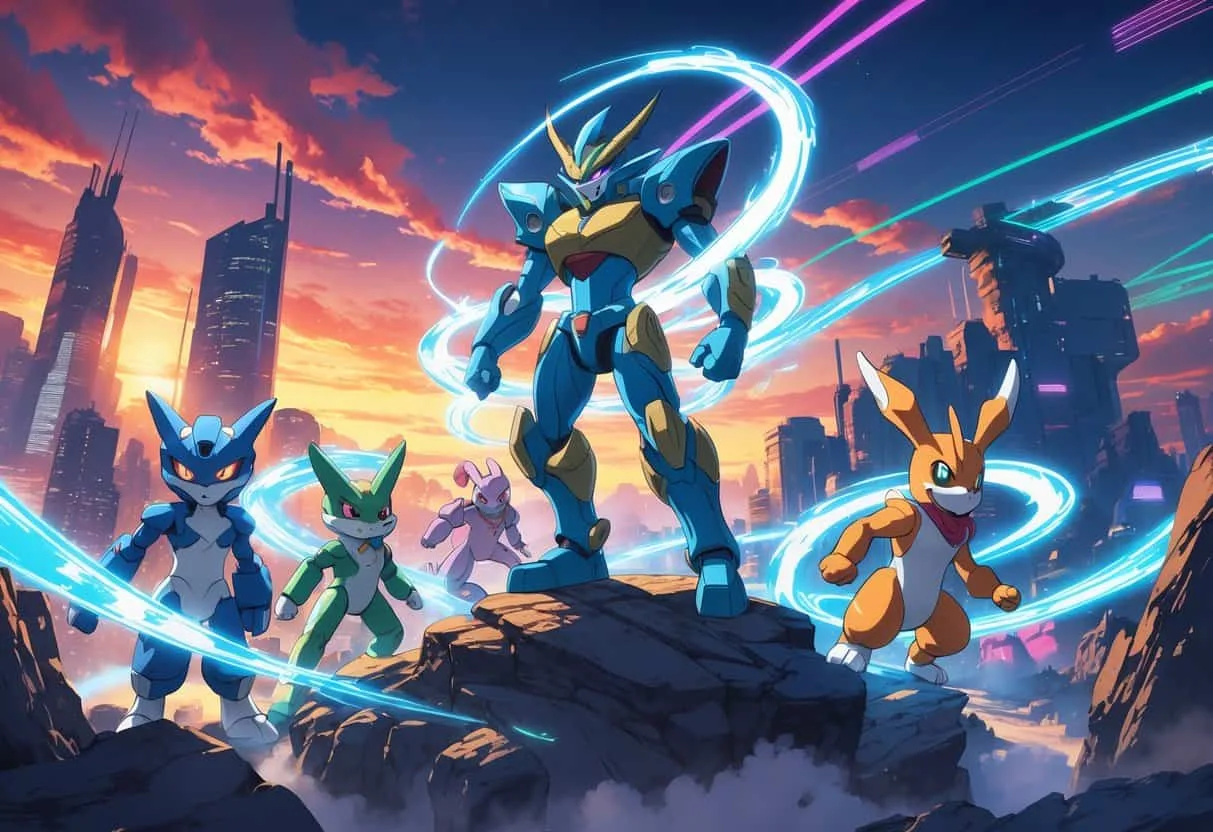
Character Bonds That Transcend Typical Monster Stories
Digimon has always differentiated itself by putting the human heart at center stage. The Digidestined kids and their partners share dynamics that go beyond simple battle commands. Tai and Agumon's sibling-like bickering and mutual support, Matt and Gabumon's quiet loyalty, Sora and Biyomon's journey toward self-acceptance—these relationships form the emotional backbone. The monsters are not tools; they are friends who mirror their partner's inner conflict and growth. This emotional realism is why Digimon resonates across age groups.
Even when the animation budget was modest, the writers understood that a meaningful conversation between a child and their Digimon could land harder than any explosion.
Unlike many shows where heroes stay static, Digimon protagonists grapple with fear, jealousy, loneliness, and responsibility. When Tai pushes Agumon to Dark Digivolve into the terrifying SkullGreymon, the series teaches a painful lesson about reckless ambition. Such moments give the adventure psychological weight that keeps viewers invested beyond the action. Modern audiences hunger for nuanced character arcs in animation. A new Digimon series could dig even deeper into mental health, identity, and the pressures of growing up in a hyper-connected world.
The bond between human and Digimon could mirror our real-life relationships with technology and digital companions, raising questions about what it means to form attachments to entities that exist only in data.
The Power of Partner Relationships in a Reboot
In a modern revival, these partnerships could explore new dimensions. Imagine a Digidestined who struggles with social anxiety, finding solace in a Digimon that embodies their inner turmoil. Or a pair where the human and monster switch roles in terms of emotional support, challenging typical power dynamics. The franchise's history of tragic moments—Leomon's death in Digimon Adventure, the emotional farewells at the end of the series—demonstrates that Digimon is willing to take risks. A new show could push that envelope further, creating bonds that feel authentically 21st-century.
What if a Digidestined's partner was a Digimon that represented their hidden strength rather than their weakness? What if the monster refused to fight, forcing the human to find a diplomatic solution? The possibilities are endless when the relationship is treated as a genuine friendship rather than a training regimen.
A Digital World Reimagined for the 2020s and Beyond
The original Digital World was a visionary concept: a parallel realm born from network data, where computer viruses could manifest as living beings. In the late 1990s, the internet was still a novelty. Today, the Digital World feels eerily prescient. A modern comeback could harness contemporary anxieties and wonders—deepfakes, cryptocurrency, quantum computing, AI consciousness—to construct a Digital World that is both familiar and unsettling. The franchise's core premise has never been more relevant.
Every day, we interact with algorithms that shape our perceptions, and the line between online and offline identity grows thinner. Digimon was always about that boundary, and now the world has caught up to its vision.
Imagine a Digimon series where a social media algorithm spawns a viral Digimon that feeds on attention, or a cloud service becomes a corrupted fortress where data is weaponized. The Digidestined might wield augmented reality Digivices that interact with the real world through smartphone interfaces, blurring the line between digital and physical even further. Digimon Ghost Game already flirted with horror-inspired digital phenomena, using mysterious "hologram ghosts" and urban legends. A full-scale revival could push that envelope, delivering a story that speaks directly to a generation that grew up with the internet as a second home—while entertaining older fans who remember dial-up modems. The Digital World could be reimagined as a sprawling, ever-changing network of micro-realms, each representing a different platform or digital ecosystem.
Technology as Both Friend and Foe
The Digital World's mythology is ripe for exploration of themes like digital identity, data privacy, and the ethics of AI. A villain could be a rogue AI that began as a discarded research project, or a "digital influencer" Digimon that manipulates public opinion. The franchise has always been strongest when the enemy is not just a monster to defeat, but an idea that forces the Digidestined to confront uncomfortable truths about their own world. That mature approach to conflict is a major differentiator from simpler monster-fighting shows. In an era where we grapple with the consequences of our digital lives daily, Digimon could serve as both entertainment and a thoughtful commentary on the world we are building.
Digivolution: Narrative Engine and Visual Spectacle
At the heart of any Digimon story lies Digivolution—the process by which a small, childlike creature transforms into increasingly powerful forms, from Baby to In-Training, Rookie, Champion, Ultimate, and Mega. This mechanic is more than a power-up system; it is a dramatic device that mirrors the characters' emotional states. The debut of WarGreymon and MetalGarurumon in the original series marked not only a visual spectacle but a culmination of the partners' trust and personal development. Every Digivolution was earned, not given, and that sense of progression made each transformation feel like a genuine milestone.
A modern anime could innovate on Digivolution in exciting ways. Branching evolution paths, already popular in video games like the Digimon Story RPGs, could be woven into the narrative, giving characters multiple potential futures based on their choices. Imagine a tense episode where a Digimon faces a moral crossroad that triggers a completely new form—a dark evolution or an unexpected heroic one. This would add an element of unpredictability and replay value for viewers. With advances in animation technology, transformation sequences could be stunningly fluid, blending 2D character art with 3D digital effects to emphasize the merger of organic and digital.
The iconic Digivolution theme could receive a remastered version that becomes a rallying cry for a new fanbase, bridging the gap between old and new.
Alternative Evolution Forms and Their Narrative Potential
Digimon has always experimented with alternate evolutions—SkullGreymon, Warp Digivolution, DNA Digivolution, Burst Mode. A modern series could introduce new mechanics like "Symbiotic Evolution" where the human and Digimon physically merge, or "Adaptive Evolution" where the form changes based on environmental data. These concepts would not only create stunning animation sequences but also deepen the emotional stakes. Each evolution could represent a character's psychological state in a visually striking way, making every battle a storytelling opportunity. The writers could even tie evolution paths to specific character flaws or breakthroughs, so that a Digimon's form becomes a direct reflection of its partner's growth.
Memorable Villains That Reflect Societal Fears
Digimon has a long history of memorable antagonists that push heroes to their limits. From the manipulative Devimon and the apocalyptic Apocalymon to the existential terror of the D-Reaper in Digimon Tamers, the franchise never shied away from threats that challenge the very nature of the Digital World and its connection to reality. The Dark Masters, each representing a different elemental fear, functioned as a gauntlet of psychological and physical trials. Diaboromon's viral replication and the race against time in Our War Game! demonstrated that Digimon could tell high-stakes techno-thriller stories years before cyberpunk became mainstream again. These villains were never cartoonish—they had philosophies, motivations, and a presence that made them genuinely threatening.
A modern revival could craft a villain who embodies the darker side of our data-driven society—a rogue AI, a digital entity that thrives on misinformation, or a corporate Digimon that monetizes human attention. The franchise has always been at its best when the enemy forces the heroes to confront uncomfortable truths about their world. That approach to conflict is a major differentiator from more simplistic monster-fighting shows and would attract older teens and adults who crave substance alongside spectacle. A villain that weaponizes data against the Digidestined, turning their own online histories against them, would feel both terrifying and timely.
Nostalgia Meets New Perspectives
The nostalgic pull of Digimon is undeniable. For many, the original Digimon Adventure and its dub on Fox Kids were a gateway to anime. The distinct voice acting, the rock-infused soundtrack, and the cliffhanger endings left an indelible mark. However, nostalgia alone cannot sustain a franchise. The key is to honor that legacy while crafting something that stands on its own.
The 2020 reboot of Digimon Adventure: showed appetite for revisiting the classic cast, but simply retelling the same story isn't enough to capture the cultural zeitgeist. Fans want something that respects the past while daring to be different.
A true modern comeback would need to either expand the universe with new characters who embody contemporary sensibilities—such as a Digidestined who identifies as nonbinary or a team that tackles digital inequality—or bring back the original Digidestined as adults, a concept briefly explored in the Digimon Adventure tri. series and the recent Digimon Adventure 02 The Beginning film. The choice of direction will determine whether the revival becomes a fleeting reboot or a lasting reinvention. A balance of old and new—familiar faces passing the torch to a fresh generation—could satisfy both camps and create a bridge between the fanbase of the 1990s and the viewers of the 2020s.
Expanding the Franchise: Games, Movies, and Global Reach
Digimon's universe extends far beyond television. Video games have been a critical component, from the classic Digimon World on PlayStation to the recent Digimon Survive, a visual novel/strategy RPG hybrid that sold over 500,000 copies worldwide and proved that mature storytelling can thrive in the Digimon brand. The Vital Bracelet fitness toy even took a page from the Pokémon GO playbook, linking physical activity to monster raising through a wearable device. These successes show that the franchise can adapt to new gaming trends and find fresh audiences beyond the screen. The card game has also seen a resurgence, with competitive tournaments and dedicated communities forming around the world.
The upcoming Digimon Adventure 02 The Beginning movie reunited the 02 cast in an original story connected to the original movie's villain, demonstrating that Toei Animation is willing to invest in theatrical releases for long-time fans. Localization efforts have become more sophisticated, with simultaneous global streaming on platforms like Crunchyroll and consistent English dubbing, so international audiences no longer wait years for new content. Localization has always been a double-edged sword—the original English dub significantly altered music, dialogue, and tone, but it also gave the series a distinct charm. A modern comeback could offer parallel experiences: a faithful subtitled release for purists and a creatively adapted dub that respects the story's emotional weight while capturing the spirit of the original localization's humor. This dual approach could unify the fragmented global fanbase and ensure that no one feels left behind.
The Role of Music and Soundtrack in a Revival
Digimon's music is iconic—the original Japanese opening "Butter-Fly" and the English dub's "Digimon Theme" are instantly recognizable. A new series could reintroduce these classics while composing fresh tracks that blend rock, electronic, and orchestral elements. The soundtrack could emphasize the digital theme with synthetic textures, evolving as the story progresses. Music has the power to anchor emotional moments, and a modern Digimon anime could use its audio palette to create memorable cues that fans will hum for years. Imagine a climactic scene scored with a haunting digital choir as a Digimon undergoes a dark evolution, or a triumphant orchestral swell as the heroes stand together against an impossible foe.
The right soundtrack can elevate even the simplest scene into something unforgettable.
Why a Full-Scale Anime Comeback Is Feasible Now
There has never been a better time for a Digimon resurgence. Anime streaming reaches millions of households, and reboots of beloved 90s and 2000s properties are finding massive success—from Sailor Moon Crystal to Bleach: Thousand-Year Blood War. The monster-collecting genre remains dominated by Pokémon, but there is space for a more narrative-driven alternative. Digimon's willingness to let its characters age, face real consequences, and even deal with loss gives it a competitive edge with older teens and adults who crave substance alongside spectacle. While Pokémon has leaned into a formula of endless adventure, Digimon has always been willing to go to darker, more emotionally complex places.
Additionally, Bandai Namco has been steadily expanding the Digimon product line, with card games, model kits, and apparel. A high-quality anime series would serve as the centerpiece of this media mix, driving merchandise sales and attracting new fans to mobile games and upcoming Digimon Story titles. From a business standpoint, a new Digimon anime is a logical investment. The fan demand is tangible—social media campaigns, fan art, and lengthy YouTube retrospectives prove that the community is active and waiting. With the 25th anniversary of Digimon Adventure behind us and the franchise showing no signs of stopping, the next step should be an ambitious, multi-season anime that combines the best elements from across the Digimon multiverse: character-driven drama, creative monster design, a forward-thinking Digital World, and a soundtrack that moves the soul.
The Digidestined are ready for a new journey, and a new generation deserves to discover the magic that made Digimon so special in the first place.