Table of Contents
Why Brazilian Fans Became a Global Force in Anime Fandom
Walk into any major anime conversation online—whether on Twitter, a Discord server, or a YouTube comments section—and you will quickly notice a distinctive energy from Brazilian fans. They are among the most vocal, passionate, and organized anime communities in the world. Their presence translates into trending hashtags, high engagement rates on streaming platforms, and a ceaseless flow of fan art, theories, and heartfelt defenses of favorite series. This global reputation is not accidental; it is the product of decades of cultural exposure, affordable access to Japanese animation, and a uniquely expressive digital culture.
Brazil’s relationship with anime stretches back further than in many Western countries. The country’s large Japanese diaspora, early broadcast deals, and a natural affinity for emotionally rich storytelling planted seeds that have grown into a fandom recognized worldwide for its intensity and influence. Whether you are scrolling through social media during a new episode drop or watching livestreams of massive convention halls filled with cosplayers, you are witnessing a community built on deep historical roots and a collective joy that refuses to stay quiet.
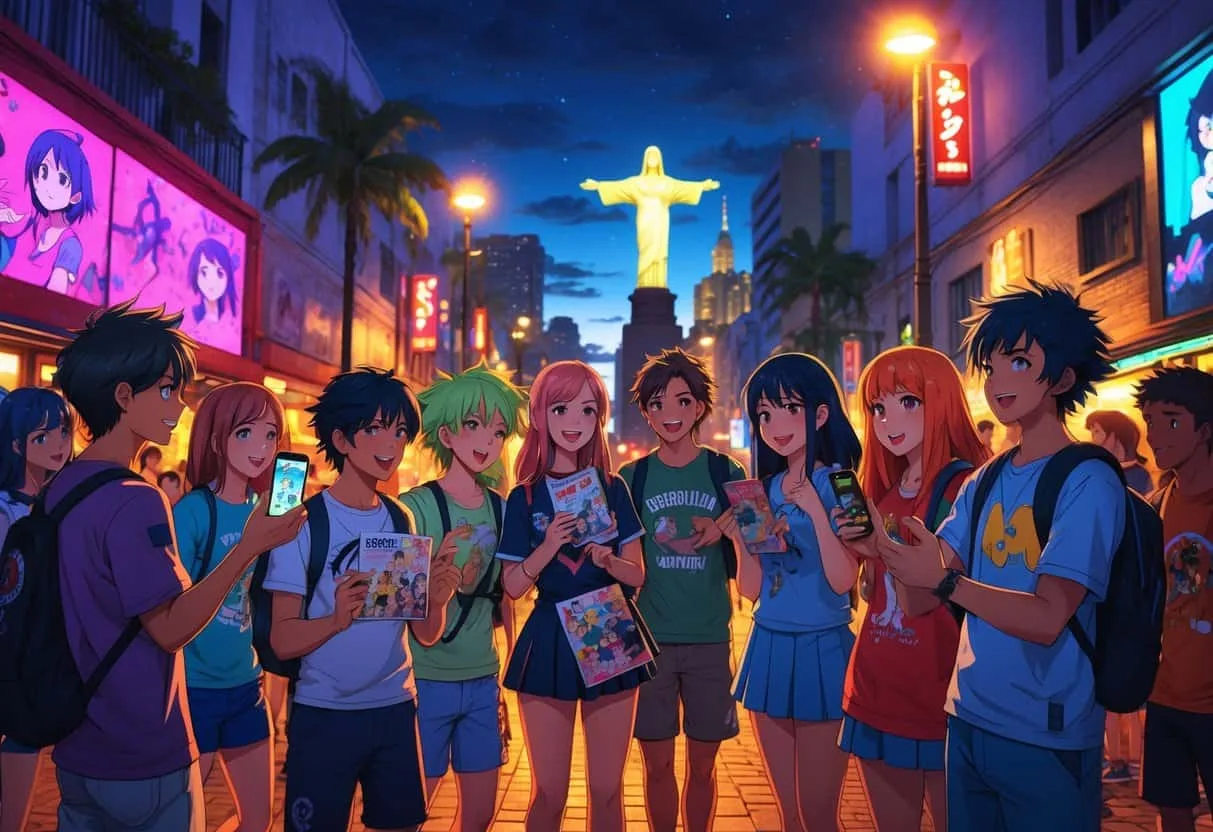
The emotional depth and intricate character arcs that define Japanese animation resonate powerfully with Brazilian audiences. Stories that explore loyalty, sacrifice, friendship, and self-discovery align with values celebrated across Brazilian culture. Events like Anime Friends, one of the largest anime conventions in Latin America, gather hundreds of thousands of attendees annually, transforming offline enthusiasm into an online echo chamber of shared moments, photos, and reactions. Your own experience as a fan is shaped by this blend of personal connection and collective celebration, making Brazil’s anime fandom impossible to ignore on the global stage.
Key Takeaways
- Early and affordable TV broadcasts introduced anime to Brazilian households decades before the global streaming boom, creating multi-generational fans.
- A powerful Japanese-Brazilian cultural bridge adds layers of heritage and personal identification that intensify fan engagement.
- Massive in-person events and a social media–obsessed population turn local fandom into a 24/7 international conversation.
- Brazilian fans’ collective voice influences dubbing decisions, streaming platform catalogs, and worldwide trends within the anime industry.
Evolution of Anime Fandom in Brazil
Brazilian anime fandom did not emerge overnight. Its evolution reflects the country’s media landscape, economic realities, and the gradual rise of digital connectivity. From grainy VHS tapes traded among friends to algorithm-driven content discovery on TikTok, the journey explains how a niche interest transformed into a driving force of online culture.
Early Exposure to Japanese Animation
The first wave of Japanese animation reached Brazilian television in the 1970s and 1980s, long before the term “anime” was commonly used. Series like Star Blazers (Patrulha Estelar) and Galaxy Express 999 aired on open channels, introducing young viewers to serialized space operas and philosophical themes rarely seen in domestic or American cartoons. These shows stood out because they treated young audiences with narrative seriousness—characters died, relationships evolved, and stories carried emotional weight.
The true explosion, however, came with Saint Seiya (Os Cavaleiros do Zodíaco), which debuted in Brazil in 1994 on the now-defunct network TV Manchete. Combining Greek mythology, armor-clad warriors, and a memorable soundtrack, the series became a cultural phenomenon almost instantly. Public spaces filled with children throwing imaginary “Meteoro de Pegasus” punches, while toy stores struggled to keep action figures in stock. For many Brazilians born in the late ’80s and early ’90s, Saint Seiya was not just a cartoon—it was a shared language of childhood. This phenomenon demonstrated that anime could generate a collective identity strong enough to ripple through generations.
Impact of VHS and Television
While television introduced anime to the masses, VHS culture deepened the connection. In the 1980s and 1990s, official anime releases on home video were sparse, so fans took matters into their own hands. Enthusiasts recorded shows off TV, copied tapes, and circulated them through clubs and informal networks. A single treasured VHS containing episodes of Robotech or Dragon Ball might pass through dozens of hands, each viewing turning into a small communal event.
Television channels recognized anime’s cost-effectiveness. The broadcast rights for Japanese series were often cheaper than those for American shows, encouraging programmers to fill morning and afternoon slots with titles like Yu Yu Hakusho, Rurouni Kenshin, and Sailor Moon. This saturation exposure created an entire generation that grew up with anime as a normal part of daily entertainment. Watching anime was not a subculture; it was mainstream. The shared experience of watching the same dubbed episodes at the same time across the country laid the groundwork for a collective memory that still fuels nostalgia-driven online discussions today.
Growth of Online Communities
With the arrival of affordable internet in the late 1990s and early 2000s, Brazilian fans found new ways to connect. Early adopters flocked to IRC channels, Orkut communities, and dedicated forums like Anime Pró and Henshin. These spaces allowed fans to discuss episodes in Portuguese, share fan fiction, and coordinate purchasing imported manga and DVDs. The language barrier that once isolated Brazilian fans from international discussions began to dissolve.
One of the most consequential developments was the rise of fansubbing groups. Teams of volunteers translated, synced, and distributed subtitled episodes with remarkable speed, sometimes releasing Portuguese subtitles within hours of a Japanese broadcast. Websites like Anbient and the legendary fansub network Nakama became pillars of the community, effectively building an alternative distribution pipeline that kept Brazilian audiences on pace with—or ahead of—viewers in other countries. This digital infrastructure cultivated a sense of ownership and agency. Fans were not passive consumers; they were active participants shaping how anime reached local audiences.
Social media later centralized these conversations. Facebook groups and pages dedicated to specific series amassed hundreds of thousands of followers. Twitter became the primary arena for real-time reactions and campaigns—something Brazilian fans mastered with a distinctive blend of creativity and persistence. The transition from isolated mailing lists to massive public platforms exponentially amplified the voice of the fandom.
Why Brazilian Anime Fans Are Exceptionally Vocal
No single factor explains the high volume of Brazilian online activity around anime. Instead, a combination of tight-knit community structures, platform-driven behavior, and geographic focal points creates a feedback loop that rewards enthusiastic participation. Understanding these dynamics reveals why you cannot scroll through a global anime trend without encountering Brazilian voices.
Passionate Community Dynamics
Brazilian anime fandom operates with a level of emotional investment that often surprises outsiders. Because so many fans discovered anime during formative childhood moments, the attachment to characters and stories runs deep. Discussions go beyond episodic reactions; they encompass nostalgic reviews of classic dubs, debates over voice acting choices, and intricate comparisons of cultural nuances lost or preserved in translation. This is not casual viewership—it is a relationship nurtured over years.
The existence of the largest Japanese community outside Japan, concentrated primarily in São Paulo’s Liberdade district, adds another dimension. Anime is not merely imported entertainment; it is part of the living heritage for hundreds of thousands of Brazilian citizens of Japanese descent. That cultural proximity fosters a sense of guardianship. Fans defend the integrity of series, celebrate traditional festivals like Tanabata with anime-themed decorations, and feel personally invested in the global perception of Japanese pop culture. When they speak up online, they do so with a conviction rooted in both fandom and cultural identity.
Influence of Social Media Platforms
Brazil consistently ranks among the countries with the highest daily social media usage in the world. According to a Digital 2024 report, Brazilian internet users spend an average of over three and a half hours per day on social platforms. Twitter (now X), Instagram, and TikTok serve as always-open arenas for anime discourse. When a major episode airs, Brazilian fans flood timelines with reactions, memes, and hot takes. Hashtags like #AnimeFriends, #Cdz (Cavaleiros do Zodíaco), or #Naruto frequently trend, not because of coordinated bots, but because of sheer organic volume.
Streaming platforms also contribute to this ecosystem. Crunchyroll and Netflix have invested heavily in Portuguese subtitles and dubs, recognizing Brazil as a priority market. Access to simultaneous releases fuels time-sensitive conversations. Brazilian fan accounts on Twitter and YouTube often post reviews and scene breakdowns minutes after a simulcast ends, attracting global attention. The combination of easy access, a large mobile-first user base, and a culture that values public expression creates a perfect environment for vocal fandom.
Role of São Paulo and Regional Hubs
São Paulo functions as the beating heart of anime culture in Brazil. The Liberdade neighborhood, with its Japanese-style street lamps, sushi restaurants, and specialty shops selling manga and figures, acts as a physical gathering point. Annual events such as the Anime Friends convention and the Festival do Japão draw tens of thousands of attendees, generating content that spills into digital spaces for weeks afterward. Cosplayers, artists, and influencers based in São Paulo produce the majority of Brazilian anime content that goes viral internationally.
Regional hubs like Rio de Janeiro, Belo Horizonte, and Curitiba also support vibrant local scenes, but São Paulo’s concentration of resources—studios, dubbing companies, event infrastructure—acts as a megaphone. City-based influentials set trends that the rest of the country follows online, ensuring that the most energetic voices are amplified far beyond Brazil’s borders. When you see a Brazilian fan defending a classic anime on a global forum, there is a good chance their journey started at a Liberdade screening or a Paulista Avenue meetup.
Cultural and Entertainment Influences
Understanding Brazilian fandom requires looking beyond screens and into the broader cultural and media fabric. The adoption of Japanese traditions and the craft of voice acting are two pillars that have turned casual viewers into lifelong advocates.
Adoption of Japanese Culture in Brazil
Japanese immigration to Brazil began in 1908, and today Brazil is home to over 1.5 million people of Japanese descent. Over generations, elements of Japanese culture—from culinary habits to martial arts—became woven into Brazilian society. It is not unusual to find bon odori dance festivals in neighborhoods far from São Paulo, or to see Brazilians of all backgrounds participating in matsuri celebrations. This long-standing intercultural exchange created fertile ground for anime.
When Dragon Ball Z aired on Brazilian TV in the late 1990s, its themes of perseverance and self-improvement resonated with a populace familiar with Japanese storytelling tropes. The connection felt organic. Many Brazilian fans have become so immersed that they study Japanese, travel to Japan on pilgrimage tours of anime landmarks, or work in industries bridging Brazil and Japan. The shared cultural fabric means anime discussions often transcend entertainment and touch upon identity, immigration stories, and cross-cultural appreciation. You see this richness in the depth of Brazilian fan analysis, which frequently draws connections between narrative themes and historical or cultural context.
Localization and the Role of Voice Actors
Localization in Brazil is not a mere translation task; it is an art form that shapes how entire generations experience a series. Voice actors like Wendel Bezerra (the voice of Goku in Dragon Ball), Marli Bortoletto (Sailor Moon), and the late Mauro Ramos (who voiced Master Splinter and many anime characters) achieved celebrity status within the fandom. Their performances became inseparable from the characters themselves. When a Brazilian fan remembers a favorite scene, they hear the Portuguese voice cast in their head.
The Brazilian dubbing industry earned a reputation for high-quality adaptations that often preserved humor and emotional tone while making the content accessible. Fans fiercely defend their dubs against any perceived inferiority compared to the original Japanese or English versions. Online debates about which version is “better” can produce thousands of comments, with fans analyzing inflection, translation accuracy, and nostalgia factors. Localization studios continue to hold casting events and panel discussions at conventions, reinforcing the bond between voice actors and the community. This relationship ensures that voice acting remains a hot topic in every corner of Brazilian anime social media.
Impact of Events, Media, and Ratings
The strength of Brazilian fandom is evident not only in online chatter but also in the scale of real-world events, the historical role of dedicated broadcast blocks, and the vibrant content creation scene. These tangible measures of engagement show how fan passion translates into economic and cultural influence.
Significance of Anime Conventions
Anime conventions in Brazil are among the largest in the world. Anime Friends, held annually in São Paulo since the early 2000s, now routinely attracts over 120,000 attendees. The event features concerts, cosplay competitions, meet-and-greets with international guests, and exclusive merchandise launches. For many fans, the convention is an annual pilgrimage that validates their passion in a public, celebratory setting.
These gatherings generate a wave of online activity. Attendees share photos and videos in real time, using event-specific hashtags that trend on Twitter. Cosplayers showcase elaborate costumes on Instagram and TikTok, often going viral and drawing international attention to Brazilian creativity. The influence is cyclical: online buzz drives ticket sales for future events, and the events feed the content machine. Conventions like CCXP (Comic Con Experience) further demonstrate how fandom culture has become a major segment of Brazil’s entertainment economy.
In a report by Omelete, CCXP’s organizers noted that the festival’s massive scale depends heavily on the core anime and manga fandom that originally drove Brazilian pop culture conventions.
Legacy of Adult Swim and Broadcasts
The programming block Adult Swim, aired for many years on Cartoon Network, introduced a more mature anime catalog to Brazilian audiences late at night. Series like InuYasha, Fullmetal Alchemist, and Death Note reached viewers who had aged out of children’s programming but still craved sophisticated storytelling. This strategic scheduling expanded the demographic and demonstrated that anime could hold prime slots against live-action content. It also created a sense of exclusivity—staying up late to watch Adult Swim became a ritual that fans still reminisce about online.
Even as streaming services disrupted traditional TV, the broadcast legacy left an imprint. Many of today’s most vocal adult fans trace their loyalty back to those late-night blocks. The memory of waiting all week for a single episode fuels a collective appreciation that shapes their online behavior. They champion anime with a depth that new fans may not immediately understand, sharing personal anecdotes alongside crisp analysis.
Engagement Through Videos and Online Content
YouTube and other video platforms have given Brazilian fandom a global stage. Channels like Pipoca e Nanquim, Jovem Nerd, and Omeleteve produce anime reviews, theory breakdowns, and curated lists that attract millions of views. These creators act as community anchors, setting the tone for what gets discussed and how. Reaction videos, in particular, thrive; Brazilian reaction channels often amass huge followings by capturing raw emotional responses to major plot twists, which resonate with the famously expressive fan base.
Short-form content on TikTok and Reels has introduced anime to a new generation, with Brazilian creators leading trends in cosplay transitions, trivia, and dub comparisons. The ease of content creation means you no longer need to be a professional critic to influence the conversation—any fan with a smartphone can post a take that sparks thousands of comments. According to a Statista overview of YouTube in Brazil, the country ranks among the top global markets for hours watched, and anime-related content consistently performs above average in viewer retention and share rate. This video ecosystem ensures that Brazilian fandom’s voice is not only loud but also visually immediate and globally accessible.
As the lines between content consumer and content producer blur, Brazilian fans continue to shape the international perception of anime culture. They debate canon fiercely, celebrate every well-localized joke, and hold the industry accountable when it misses the mark. The combination of historical access, cultural kinship, large-scale events, and an irrepressible social media culture means the world will keep hearing Brazil’s voice whenever an anime topic goes viral. For a community that built itself from dubbed VHS tapes to trending hashtags, staying quiet was never really an option.