Table of Contents
Australian anime fans exist at a fascinating crossroads where Japanese visual storytelling meets Western pop culture sensibilities. This isn’t simply a matter of watching shows from two different hemispheres—it’s a lived cultural practice that reshapes how people dress, create, socialize, and think about identity. From the way a cosplayer reimagines Sailor Moon through a punk aesthetic to the local artist who blends manga panel layouts with Australian outback landscapes, the community has turned what could be a passive viewing habit into a dynamic, participatory culture.
The enthusiasm for both Eastern and Western styles may seem contradictory at first glance, but for many Australians it feels entirely natural. The country’s multicultural fabric, historical exposure to diverse media imports, and a strong DIY fan tradition have all contributed to a fandom that doesn’t just tolerate hybridity—it actively seeks it out. This article explores the roots of that blend, how it manifests across different realms of fandom, and why the Australian anime scene looks the way it does today.
The Australian Anime Fandom: A Unique Cultural Blend
Historical Context of Anime in Australia
Anime’s initial foothold in Australia came not through specialty retailers or internet subcultures, but through free-to-air television. During the late 1980s and early 1990s, networks like the ABC and SBS broadcast dubbed series such as Astro Boy, Kimba the White Lion, and later Pokémon and Dragon Ball Z. These early broadcasts were heavily edited and localized, often stripping cultural references to make the content palatable for a mainstream Australian audience. Despite this, they planted seeds that would grow into a dedicated fanbase.
Simultaneously, a parallel underground scene emerged. Specialty video stores and comic shops began importing raw Japanese VHS tapes and manga volumes for enthusiasts who craved the unaltered originals. The Australian chapter of the international anime club network, particularly through university clubs, provided a space for fans to trade tapes, debate subtitling quality, and share art. This duality—mass-market accessibility on television versus an obsessive, community-driven collector culture—established a pattern that persists today: Australian fans embrace both the broad Hollywood-style appeal of Western animation and the niche, culturally specific depth of anime.
The arrival of the internet in the mid-1990s turbocharged this evolution. For the first time, Australian fans could connect directly with Japanese fandoms via forums, fan sites, and early streaming platforms. This not only accelerated the dissemination of anime knowledge but also allowed local fans to participate in global conversations about canon, shipping, and animation techniques. Crunchyroll, launched in 2006 and now a household name, gave Australians legal, near-simultaneous access to seasonal anime, further blurring the line between “Japanese” and “international” content. The historical arc—from heavily edited TV airings to same-day streaming—shaped a fanbase comfortable with cultural translation and eager to see their own identity reflected in the media they consume.
Emergence of a Distinctive Otaku and Fan Community
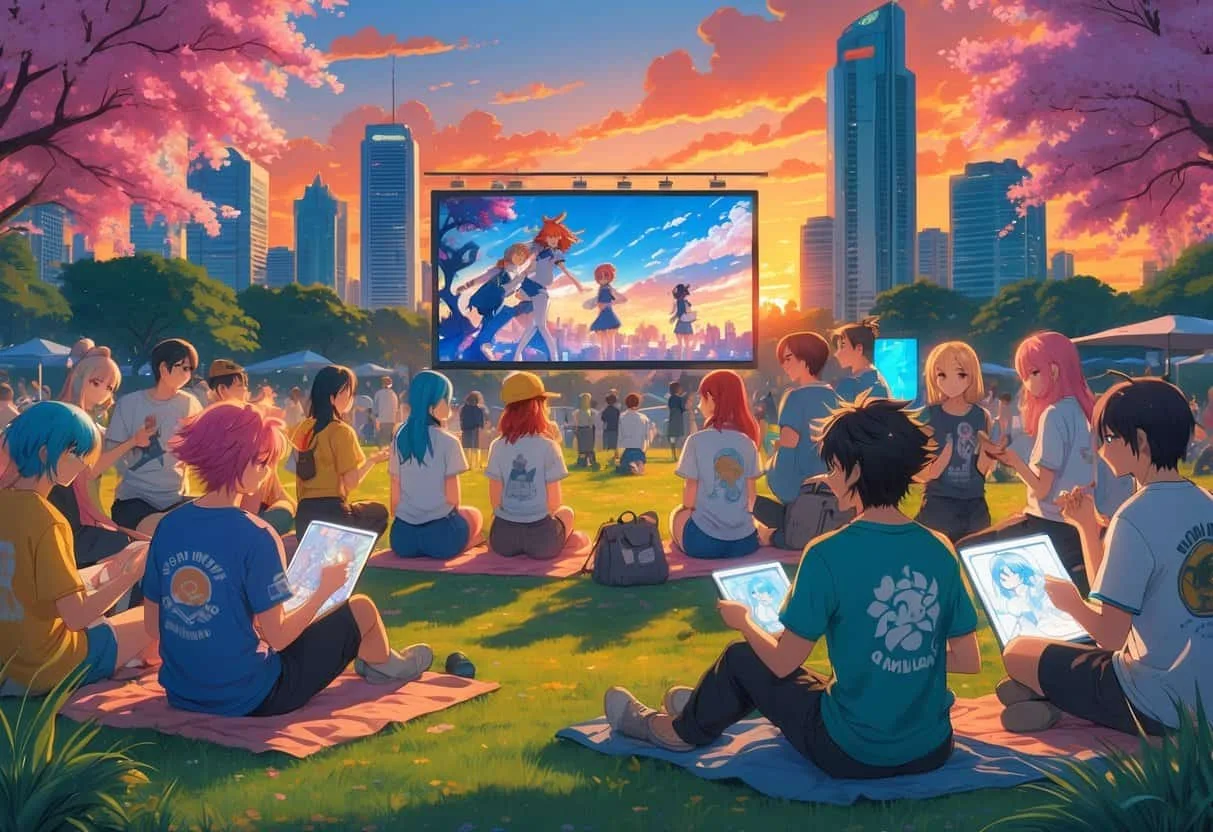
The term “otaku” carries a complex weight, originally denoting an obsessive, perhaps socially awkward devotion to niche interests in Japan. In Australia, the term has been reclaimed with less stigma, becoming a badge of pride within a community that has built its own infrastructure from the ground up. Australian anime clubs, such as those run through universities like the University of Sydney’s AnimeSydney or RMIT’s Anime@RMIT, function as social hubs where members discuss seasonal shows, organize viewing parties, and run artist alleys. These clubs frequently host cross-cultural events that pair anime screenings with Western board game nights or live-action superhero movie marathons, cementing the blended identity.
Online, Australian otaku have carved out spaces on Discord, Reddit’s r/anime, and local Facebook groups like “Australian Anime Fans United.” These digital communities foster a collaborative environment where members share cosplay progress photos, debate the merits of sub versus dub, and crowdfund fan projects. The discourse often highlights a uniquely Australian dialectics: a deep respect for Japanese voice acting and cultural nuance sits alongside a celebration of English dubs that use Aussie slang or reference local humor. This dual loyalty results in a community that feels neither purely imported nor entirely local, but something in between.
Community identity is also reinforced through language. A noticeable subset of Australian fans learn Japanese not just for functional understanding but as an expression of cultural appreciation. Japanese language courses at community colleges and private tutors often see spikes in enrollment correlated with anime convention seasons. Yet these same fans will passionately discuss how certain dub performances—like the Australian-accented characters in Mad Max-inspired anime or fan-made parodies—enhance their connection to the material. This linguistic flexibility is a microcosm of the broader fandom: able to shift registers from stringent purism to playful hybridity without contradiction.
Influence of Pop Culture and Popular Culture
Pop culture in Australia is not an immovable monolith; it is a fluid exchange between global trends and local tastes. The anime fandom both reflects and contributes to this dynamic. Western blockbuster franchises such as the Marvel Cinematic Universe and DC’s extended universe sit comfortably alongside Attack on Titan and Demon Slayer in fan conversations. A 2023 survey by the Australia Council for the Arts indicated that 47% of respondents aged 16–30 regularly consumed Japanese anime or manga, with 62% of those also reporting high engagement with Western comic book properties. This data underscores the non-exclusive consumption pattern: fans aren’t choosing one over the other; they’re curating a personal media diet that draws from multiple traditions.
This cross-pollination extends into how pop culture events are curated. Oz Comic-Con and Supanova Expo exemplify the trend by featuring guests from both Japanese anime studios and American comic book publishers. Panels might jump from a behind-the-scenes look at Studio Trigger’s latest project to a Q&A with a Marvel artist, with audiences seamlessly following both. The programming reflects an understanding that the modern Australian attendee does not compartmentalize their fandom into “East” and “West”; they traverse these categories with ease.
Even corporate branding has taken note. Australian fast-food chains have released anime-inspired commercials, and local clothing brand BlackMilk Clothing has produced limited-edition lines featuring Sailor Moon graphics alongside classic horror and sci-fi movie themes. Such collaborations are profitable precisely because the target market sees no conflict between a love for Hayao Miyazaki’s poetic naturalism and a nostalgia for 1980s American cartoons. The cultural landscape has become a palette from which fans paint their own hybrid identities.
Eastern and Western Influences on Australian Anime Fans
Adoption of Manga and Comic Books
The Australian book market has seen a remarkable surge in manga sales. According to Nielsen BookScan, manga volume sales in Australia grew by 74% between 2020 and 2022, outpacing general fiction growth by a wide margin. Bookstores like Kinokuniya in Sydney and Minotaur in Melbourne dedicate entire floors to manga, but they are often positioned mere meters away from shelves stacked with Western graphic novels and superhero trades. This proximity in retail space mirrors the mental shelf-space of fans: it’s common to see a customer purchase the latest Chainsaw Man volume alongside a Watchmen reprint.
What’s distinctive about Australian adoption is the way readers map the storytelling techniques of one form onto the other. Manga’s cinematic pacing, use of silent panels, and emotional interiority have influenced local comic creators, who incorporate those elements into stories set in Australian cities or bush landscapes. Conversely, Western comics’ emphasis on tight, multi-issue arcs and splash-page spectacle has rubbed off on local manga-influenced webcomics. Artists like Svetlana Chmakova, though not Australian, have inspired a generation of local creators who publish on platforms like WEBTOON and Tapas, blending manga’s right-to-left flow with Western dialogue conventions and color palettes.
Libraries have also played a quiet but crucial role. Many Australian public libraries now stock manga collections, often with bilingual tagging and reader advisory services that group manga, bandes dessinées, and American graphic novels under one graphic storytelling umbrella. This institutional blending removes cultural barriers and encourages young readers to see manga not as an exotic import but as one of many valid storytelling mediums. The result is a readership that grows up with a naturally cosmopolitan view of sequential art.
Engagement with Tropes, Moe, and Narrative Styles
Japanese anime has a rich vocabulary of tropes—moe (the evocation of protective affection for characters), tsundere (a character who is initially cold before showing warmth), and isekai (protagonist transported to another world)—that can initially seem alien to viewers raised on Western plot structures. Australian fans, however, have become adept at reading these tropes with nuance. Rather than dismissing them as clichés, many fans treat them as genre markers akin to the beats of a superhero origin story or a romantic comedy meet-cute. This comparative literacy allows them to appreciate the artistic choices behind the tropes while also enjoying Western narratives that subvert or parallel them.
A particularly interesting fusion occurs in fan fiction communities. Archives like Archive of Our Own (AO3) host thousands of works by Australian authors that deliberately cross anime canons with Western media universes. A My Hero Academia and X-Men crossover, for instance, not only combines characters but also reflects on the different philosophies of heroism: the collective, duty-bound ethos of Japanese heroes versus the more individualistic, morally ambiguous tradition of Western mutants. These stories become a space for fans to work through cultural contrasts, not just to mash characters together.
This dual fluency also influences how fans evaluate new shows. An Australian otaku might critique a Western-produced animated series for lacking the slow-burn emotional payoff typical of a Studio Ghibli film, while simultaneously praising an anime for its tight, three-act structure reminiscent of a Hollywood screenplay. The brain, so to speak, has developed multiple operating systems, and toggling between them becomes second nature. This critical agility enriches the viewing experience and fosters a community that values narrative craft over cultural origin.
Impact of Comics, Anime, and Film on Local Creativity
Australian indie animation and filmmaking have absorbed the visual grammar of anime in ways both overt and subtle. Productions such as the short film The Cat Piano (2009) and more recent works like Scarygirl (2023) exhibit an aesthetic that, while distinctly Australian in setting and voice, borrows anime’s expressive character design, dynamic camera angles, and willingness to shift chibi styles for comedic effect. These creators grew up with Neon Genesis Evangelion and Disney in equal measure, and their portfolios reflect that.
Similarly, the gaming scene sees frequent cross-pollination. Australian game developers like Studio Drydock have cited visual novel and JRPG influences in titles such as Wylde Flowers, where the pastoral charm of a rural Australian town is rendered with the kind of soft, luminous art style familiar to players of Stardew Valley or Rune Factory. This isn’t simple imitation; it’s a synthesis that creates something new. The presence of anime aesthetics in Australian-made games also acts as a soft power export: when international players encounter these works, they see an Australian culture that is not just beaches and bush but also deeply engaged with global pop art.
Film festivals have become key sites for this creative exchange. The Japanese Film Festival Australia, run by the Japan Foundation, screens not only live-action features but also anime retrospectives that often include Q&As with directors. These events attract a diverse audience, including Australian film students who later incorporate anime’s visual storytelling techniques into their own short films. Madman Entertainment, an Australian distributor, has long been a major gatekeeper, bringing anime to local screens and even supporting local anime-inspired productions through grants and partnerships. This institutional support solidifies anime’s influence within the Australian creative ecosystem.
Role of Social Media and Comic Art
Social media platforms like Instagram, Twitter (X), and TikTok serve as the circulatory system of the Australian anime fandom, pumping hybrid art styles across the country in real time. Australian artists such as @jenbartel (who now works internationally) often post sketches that juxtapose anime-style lineart with Western comic coloring techniques, receiving immediate feedback from a global audience. This instantaneous exchange accelerates stylistic fusion, as trends born in a Tokyo illustration circle can be reinterpreted by a Brisbane artist within days.
Platform-specific cultures also shape expression. On TikTok, Australian cosplayers frequently post transformation videos that start with a Western influencer aesthetic and end with a full anime makeup and costume look, visually emphasizing the ease with which they shift between cultural modes. The comment sections reveal a younger demographic that sees such transitions as normal; they don’t frame it as a binary but as a spectrum. Hashtags like #AnimeAus and #AusCosplay aggregate thousands of posts, creating a searchable archive of local hybrid creativity.
Perhaps most significantly, social media has allowed Australian Indigenous artists to bring their own cultural perspectives into anime-inspired work. Artists like Bindi Waugh and Charlotte Allingham create pieces that incorporate traditional Indigenous art patterns with anime character designs, producing something entirely new that speaks to their layered identities. This work challenges the notion that anime fandom is solely an imported culture; instead, it becomes a canvas onto which multiple heritages can be projected. The visibility of such art on social media helps the broader Australian anime community recognize that the East-West binary itself is an oversimplification—there are many more cultural layers at play.
Fandom Expression Across Entertainment, Fashion, and Events
Cosplay and Comic Conventions
Australian comic and pop culture conventions have evolved into true hybrid events. At any given Supanova or Oz Comic-Con, it’s common to see a cosplayer dressed as Tanjiro from Demon Slayer posing for photos next to someone in a hand-built Iron Man suit. Cosplay craftsmanship has reached professional levels, with Australian makers winning international awards for their armor-building and fabric work. The community explicitly values technical skill, and tutorials often circulate that teach techniques applicable to both anime mecha builds and Western fantasy cosplay.
What distinguishes the Australian cosplay scene is its emphasis on cross-cultural “closet cosplays” and mashups. A fan might reinterpret the Justice League as Edo-period samurai, or turn Goku and Vegeta into punk rockers. Local cosplay competitions often feature categories specifically for crossover or “fanimation” designs. These events celebrate not just fidelity but also creative reinterpretation, reinforcing the idea that the characters belong to the fans, not just the copyright holders. The result is a physical, embodied form of the cultural blend that defines the fandom.
Music, Sports, and Fashion Trends
The fusion of anime with other cultural domains is increasingly visible on Australian streets. Japanese breakfast pop, or J-Pop, gets remixed into club nights like “Anime Allstars Night” in Melbourne, where DJs spin openings from Naruto alongside Western hyperpop, creating a dance floor that bridges Tokyo and London. Australian artists like Mallrat have openly credited anime soundtracks as influences, and collaborations between local musicians and animators often produce music videos with an unmistakable anime aesthetic.
Sports fandom, too, has embraced anime. Several A-League football clubs have held “anime round” events where players warm up in special shirts featuring manga-style versions of team mascots. The Gold Coast Titans, an NRL club, collaborated with an Australian manga artist to create a short manga series about the team’s origin story, distributing it both physically and via social media. This was met with enthusiasm from fans who appreciated the effort to speak their cultural language, proving that the East-West blend is now marketable to mainstream sporting audiences.
Fashion exhibits the most tangible evidence of hybridity. Brands like Perth-based Lazy Oaf (though UK-originated, widely worn in Australia) and local streetwear labels produce anime graphic tees that pair iconic characters with bold, often ironic, slogans. At anime conventions, you’ll see attendees wearing traditional kimonos alongside sneakers and bucket hats—a look that is neither traditional Japanese nor purely Western, but a distinctly post-modern Australian ensemble. This sartorial code signals belonging: if you see another person on the train wearing a One Piece hat with a local brand hoodie, you know they’re likely in the same cultural orbit.
Representation of Superman and Supergirl
Superman and Supergirl stand as towering symbols of Western heroism, yet they’ve been warmly adopted by Australian anime fans. The interest isn’t merely coincidental; both characters embody themes of being an outsider, living between two worlds—a narrative that resonates with the immigrant experience that defines much of Australian society. Many anime series similarly feature protagonists grappling with dual identities, from the half-demon Inuyasha to the country-divided pilots of 86. This thematic overlap makes Superman and Supergirl feel less like foreign imports and more like spiritual relatives of shonen protagonists.
Fan art and cosplay often reimagine these DC heroes through an anime lens. Artists give Supergirl a more expressive, manga-style face, with exaggerated emotional reactions that don’t appear in Western comics. Some even redesign her costume to incorporate elements reminiscent of magical girl outfits, complete with transformation sequences. At conventions, cosplayers might pair a Clark Kent costume with a Konoha headband, deliberately signaling a crossover that speaks to their personal taste rather than any canonical crossover. This playful recontextualization strips the characters of their purely American identity and makes them malleable symbols of hope and justice that any fan can project onto.
Merchandisers have noticed this cross-pollination. Australian pop culture stores now stock figures that sit Superman next to Goku on the same shelf, and collector events feature panels on “Anime and the American Superhero.” The cultural lines have blurred so thoroughly that for many younger fans, the distinction between a Kryptonian and a Saiyan is less important than the heroic values they share. This normalization of the Eastern-Western blend in even the most iconic Western characters shows just how deeply integrated the two styles have become in the Australian imagination.