Table of Contents
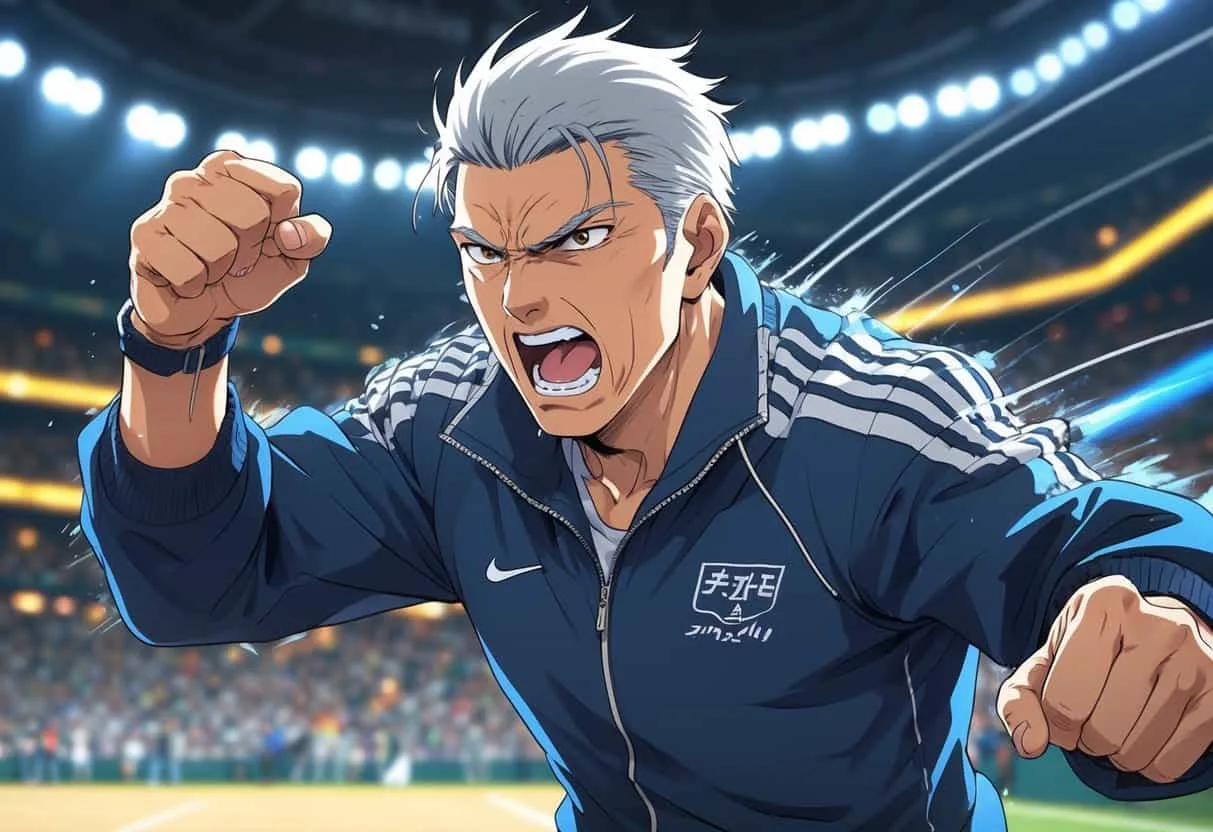
If you have watched even a handful of sports anime, you’ve likely noticed a striking pattern: the coaches are almost always overwhelmingly intense. They yell, they push, they demand perfection at every turn, and they rarely settle for anything less than total commitment. This ferocity isn’t just for dramatic effect; it is woven into the DNA of the genre because it mirrors real-world coaching philosophies, cultural expectations, and the high-stakes nature of competitive sports. In anime, intensity becomes a shorthand for caring. A coach who screams until their voice breaks, who designs grueling drills, and who never stops expecting more is a coach who sees potential that the athlete herself might not yet recognize.
That intensity functions on multiple levels: as a character motivator, a narrative engine, and a cultural commentary on how societies shape young people through sport. By examining these hyper-vivid mentors across a range of series, we can uncover the deeper motivations behind their methods, the impact they have on their teams, and why they resonate so strongly with audiences.
The Psychology Behind the Intensity
At its core, a coach’s intensity in anime aligns closely with established psychological drivers of motivation. Many coaches operate from a place of deep personal investment—they want their athletes to experience growth that goes beyond the scoreboard. The loud, confrontational style often reflects what psychologists call autonomy-supportive coaching taken to an extreme, where the coach sets high expectations and provides relentless feedback, but does so because they believe the athlete is capable of rising to the challenge. This isn’t mindless aggression; it’s a calculated method to trigger a breakthrough.
Consider self-determination theory, which says people are motivated by autonomy, competence, and relatedness. Intense anime coaches ruthlessly target competence. They create an environment in which failure is not an option, forcing players to confront their limits and rebuild themselves. The harshness often comes wrapped in a firm belief that the athlete can exceed what they think possible. For instance, when Haikyuu!!’s Coach Ukai screams at Hinata to stop jumping blindly and start reading the setter, he isn’t belittling him; he’s shining a spotlight on a skill gap that, once closed, will make Hinata unstoppable.
This dynamic also plays into the concept of “tough love.” Research on athlete development suggests that a demanding coach can accelerate mental toughness, provided there is an underlying layer of trust. Anime takes that trust and turns it into dramatic gold. The best intense coaches skillfully balance a public persona of ferocity with private moments of vulnerability, which reassures the player—and the audience—that the pressure is an act of faith, not cruelty.
Archetypes of the Intense Anime Coach
Anime sports coaches aren’t a monolith; their intensity manifests in distinct archetypes, each serving a different narrative function. Recognizing these archetypes helps deconstruct why their methods feel so authentic even when they’re exaggerated for effect.
| Coach (Anime, Sport) | Intensity Style | Core Motivation | Key Impact on Team |
|---|---|---|---|
| Coach Ukai (Haikyuu!!, Volleyball) | Vocal strategist, quick to anger but quick to praise improvement | To prove that a small, unpolished team can outthink giants | Instills tactical discipline and unshakable trust among teammates |
| Coach Anzai (Slam Dunk, Basketball) | Silent, imposing presence with occasional explosive outbursts | To channel rebellious talent into disciplined team play | Transforms a delinquent into a basketball prodigy through sheer moral authority |
| Coach Kataoka (Diamond no Ace, Baseball) | Tyrannical perfectionist who never accepts half-hearted effort | To forge a national champion through grit and self-sacrifice | Creates a high-alert, never-complacent environment that forges resilience |
| Coach Alex (Free!, Swimming) | Warm but relentlessly demanding, uses psychological pressure | To help swimmers face past trauma and rediscover their love for the water | Teaches that technique without emotional honesty is incomplete |
| Coach Kagetora (Kuroko no Basket) | Eccentric, loud, and unapologetically meticulous | To show that unorthodox methods can break conventional limits | Forces players to embrace their unique playing styles instead of copying stars |
Each of these coaches pushes the boundaries of what mentorship can look like. They are not mere background figures; they are the fulcrum on which entire story arcs pivot. When Kataoka benches the ace pitcher in Diamond no Ace, the silence that follows is heavier than any scream. That is the ultimate expression of intensity—expectation so high that failure is punished not with anger but with the temporary removal of the privilege to play.
High-Stakes Competition: Why Every Match Feels Like Life or Death
To understand why anime coaches are always so intense, you have to look at the world they inhabit. High school sports in anime are typically structured around single-elimination tournaments like the Spring or Summer Nationals. A single loss can end a season, and for third-year students, it can end an entire athletic career. The stakes are final, and the coach carries the emotional burden of knowing that their decisions can either honour three years of sacrifice or render them meaningless.
This brutal reality legitimizes the coach’s intensity. They aren’t just training players to get better slowly over time; they are preparing them for a do-or-die crucible where a split-second lapse erases everything. Series like Kuroko no Basket and Haikyuu!! amplify this by showing how coaches work through the night to devise counter-strategies, obsess over opponents’ videotapes, and sometimes risk their health to be on the sideline. The pressure from the audience, the school, and even the local community is palpable. A coach’s roar on the court is often the voice of that collective expectation, translated into a single human being who refuses to let the moment slip away.
This tournament-centric narrative also explains why coaches rarely allow moral victories. “You did your best” is a phrase they might utter after a loss, but it never excuses a lack of preparation. The intensity before the match ensures that, win or lose, the team can face the outcome without regret.
Behind the Tough Exterior: The Secret Care of Intense Coaches
If anime coaches were only terrifying taskmasters, they would quickly become cartoonish. What makes them enduringly compelling is the care they hide beneath the fury. The best examples of this duality come in quiet moments: a coach bringing rice balls to an extra practice, visiting a sick player’s home, or defending their team against hostile administration decisions. These acts of kindness reframe every shouted order as a gesture of love.
In Prince of Tennis, Coach Sumire Ryuzaki embodies this beautifully. She runs the Seishun Academy tennis club with a grandmotherly authority that oscillates between warm encouragement and sharp, unforgiving truth-telling. She might smile while handing over a training menu designed to break her players’ limits, but her eyes betray a fierce protectiveness. Similarly, in Medalist, figure skating coach Tsukasa Akeuraji is intense not because he wants to dominate his students but because he sees himself in their struggle. His intensity is a projection of his own desire to overcome past failures, and he channels it into a near-obsessive attention to every edge and spin.
The athlete feels the pressure, but they also feel seen.
This hidden tenderness aligns with real coaching philosophies in Japan, where the sensei-student relationship often resembles a familial bond. A coach who pushes you to the brink is also the first to console you when you break. Such storytelling provides emotional catharsis and deepens the viewer’s respect for the coach character.
Storytelling Impact: Driving Player Growth and Emotional Arcs
From a narrative standpoint, the intense coach is a writer’s best tool. They externalize the internal conflict many athletes feel—the doubt, the complacency, the fear of aiming too high. By having a coach yell “Don’t you dare give up!” at the exact moment the protagonist wants to collapse, the story transforms a private struggle into a public battle that raises the stakes for everyone watching. The coach becomes the voice of the theme itself: growth only happens through discomfort.
This is why the most memorable character developments in sports anime almost always involve a clash with authority. When Kageyama from Haikyuu!! struggles to shed his dictatorial precision, it’s Coach Ukai and teacher advisor Takeda who orchestrate the situation that forces him to trust others. The intensity isn’t just punishment; it’s a carefully engineered scenario for transformation. Similarly, in Slam Dunk, Coach Anzai’s occasional moments of terrifying anger—like grabbing Sakuragi by the collar—serve as a wake-up call, snapping the hot-headed prodigy out of his ego and back toward the fundamentals. The anger is a narrative pivot, not just an emotion.
The rhythm of a sports anime often follows a pattern: the coach pushes, the athlete resists, the athlete hits rock bottom, and then the coach—through a mix of continued pressure and unexpected empathy—guides them to a new level. Without the intense push, there is no credible rise. The audience cheers because that breakthrough feels earned, and the coach’s earlier harshness suddenly makes tragic sense. It’s a storytelling loop that never grows old because it mirrors the universal human experience of being held to a standard by someone who believes we are better than our current selves.
Cultural Context: How Japanese Values Shape Coaching Intensity
To fully appreciate why anime coaches operate with such fervor, it helps to place them within the cultural frameworks that influence Japanese sports. Concepts like ganbaru (doing one’s utmost), gaman (endurance), and the priority of the group over the individual are deeply ingrained. A coach is not just teaching technique; they are entrusted with shaping character, a responsibility that the wider society takes seriously.
Koshien and the National Obsession with High School Baseball
No cultural touchstone explains intense coaching better than Koshien, Japan’s national high school baseball tournament. This single-elimination spectacle captures the entire country’s attention. Coaches in baseball anime like Diamond no Ace and Major are frequently depicted as stern, unyielding figures because real-life Koshien coaches often embody that same gravitas. The “1000-fungo drill” and strict hierarchy on the team reflect the belief that baseball is a forge for moral development. The coach who pushes through tears and injuries is simply upholding a tradition that equates suffering with virtue.
The intensity we see in anime is not a distortion; it is a dramatization of an actual expectation that coaches will use every moment to build resilience, because those who survive it will carry the lesson for life.
Senpai-Kohai Dynamics and the Coach’s Role
The hierarchical relationship between senpai (seniors) and kohai (juniors) also bleeds into coaching. The coach sits at the apex of this pyramid, and their authority is rarely questioned in public. In anime, this dynamic intensifies the drama: when a player dares to talk back, it signals a catastrophic rift that must be resolved for the team to function. The coach’s fury in such moments is often about restoring order and reinforcing the collective mentality. When that same coach later bends the rules to support a struggling athlete, it feels like a seismic shift, a sign that the player has matured enough to deserve individual attention beyond the strict hierarchy.
This cultural code gives the coach’s shifts between sternness and gentleness enormous narrative weight.
Effort and Discipline as Virtues
Japanese sports culture often values effort over innate talent—a concept known as “kono naka de ichiban yaruki wa aru?” or the admiration for those who work hardest. Intense anime coaches are the gatekeepers of this value. They reward hustle, penalize laziness, and sometimes seem to ignore natural genius if it isn’t paired with humility. In Kuroko no Basket, Riko Aida’s data-driven coaching style juxtaposes with the Seirin team’s raw effort; she demands rigorous conditioning and precise adherence to her nutritional plans because she believes discipline will close the talent gap. Her intensity is a manifesto: skill is earned, not given.
This ethos resonates strongly with Japanese audiences and is a direct reflection of how coaches in real-life school clubs often operate, embedding effort into the team’s identity.
Real-World Parallels: What Sports Psychology Says About Tough Coaches
The archetype of the intense anime coach isn’t rooted solely in fantasy. In the realm of sports psychology, demanding coaching can produce elite performance when applied judiciously. Studies on coaching styles have shown that a supportive yet demanding approach—sometimes called an authoritarian-autonomy-supportive hybrid—can foster intrinsic motivation and resilience. Athletes who trust that their coach’s high standards come from genuine care are more likely to embrace challenges, even when the feedback stings.
This research also warns of the dangers: without that foundational care, harsh coaching becomes abuse, not mentorship. Anime is careful to thread this needle. The coach who makes players run until they vomit is almost always the same person who stays late to teach them the mechanics of their mistake. This narrative framing transforms potentially toxic behavior into a demonstration of commitment. Real-life coaches like Geno Auriemma in women’s basketball or John Wooden in college basketball have wielded similar intensity, balancing relentless pursuit of perfection with deep personal investment.
In Japan, sumo stable masters (oyakata) mirror this, ruling their wrestlers with an iron fist yet treating them as family. Anime distills these dynamics into a purer, more emotionally charged form, making the coach both a source of fear and the ultimate pillar of support.
Conclusion: The Enduring Appeal of the Intense Coach
Anime sports coaches are always so intense because they are the gravitational center of the story. They represent the voice of ambition, the weight of tradition, and the promise of transformation. Through their roars and rare smiles, they teach characters—and by extension, viewers—that greatness is forged in discomfort and sustained by the belief that someone won’t give up on you even when you want to give up on yourself. Whether on a volleyball court, a figure skating rink, or a baseball diamond, these coaches leave an indelible mark. Their intensity is not a flaw to be fixed but a feature that makes the victories sweeter and the defeats more meaningful.
As long as anime continues to explore the beauty of human effort, the shouting coach will remain one of its most unforgettable hallmarks, reminding us that the hardest pushes often come from the hearts that care the most.