Table of Contents
The Modern Antihero: A Mirror to Complexity
Anime fans often gravitate toward antihero characters because these figures capture something deeply human. Unlike straightforward heroes or one‑note villains, an antihero lives in a space where virtue and vice coexist. They carry emotional baggage, make questionable choices, and resist easy categorization. This blend of light and shadow makes them feel more immediate and believable than a paragon of unshakable goodness.
Their internal contradictions mirror the complicated nature of real people, pulling viewers into a story that refuses to flatten morality into simple binaries. When you watch an antihero navigate a broken world, you are engaging with questions of identity, justice, and personal responsibility that echo your own lived experience. The appeal is not about endorsing their worst actions; it is about recognizing the struggle behind them.
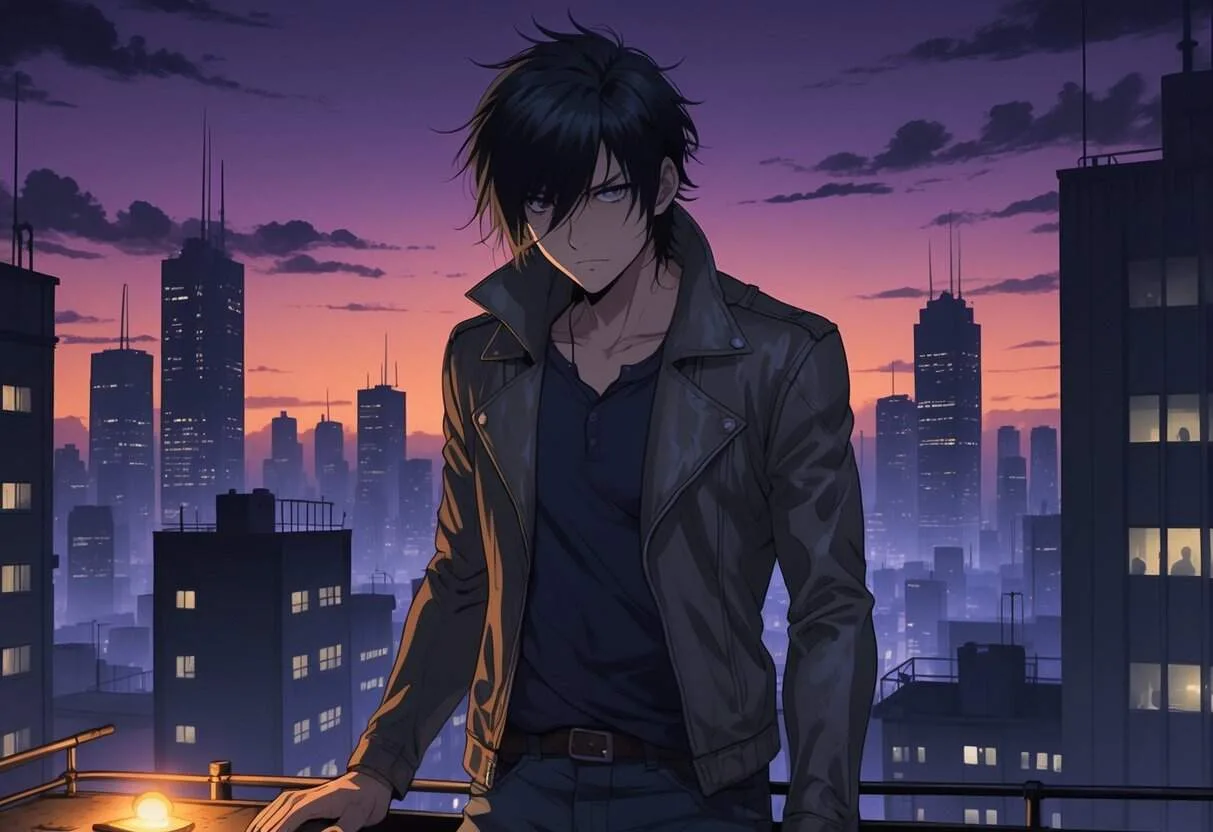
Traditional heroes often follow a clear moral compass—doing the right thing for the right reasons, even when the cost is high. Antiheroes subvert that template. They may lie, manipulate, or harm others while still pursuing a goal you can understand. This generates a friction that keeps you guessing. Their path is not a straight line toward redemption or ruin; it is a messy journey full of contradictory signals that feels remarkably similar to real life.
Many viewers discover that rooting for an antihero unlocks a more layered emotional reaction. You do not simply cheer for them; you question them, argue with their decisions, and sometimes see uncomfortable facets of your own tendencies. That active engagement transforms passive watching into a kind of moral exercise. In a media landscape saturated with polished protagonists, the antihero offers something rare: a reflection of a world where the boundary between right and wrong is rarely drawn in permanent ink.
The Allure of Antihero Characters in Anime
Anime has long provided a fertile ground for antiheroes, partly because the medium often embraces psychological depth and tonal flexibility. Series like Death Note, Code Geass, Berserk, and Attack on Titan center on protagonists who are brilliant, broken, or both. Their appeal lies not only in their visual design or dialogue but in the way their stories challenge conventional heroic fantasy.
When a protagonist operates outside traditional morals, the narrative can explore themes that a more idealistic tale might avoid. Questions of sacrifice, the nature of justice, the poison of revenge, and the cost of power are all vivid when the person driving the story is morally compromised. This narrative flexibility gives creators room to craft plots that feel suspenseful and thematically rich, while giving fans a protagonist they cannot fully predict.
Defining the Antihero Archetype
An antihero is a central character who lacks qualities typically associated with heroism—honor, altruism, courage, or a pure moral compass. They do not fit the “villain” label because their objectives often align with some form of justice, personal code, or protective instinct. Instead, they occupy a grey middle where self-interest and empathy collide in volatile ways.
Light Yagami from Death Note exemplifies this. He begins as an exceptionally intelligent student who acquires a notebook that can kill anyone whose name is written in it. His stated goal is to purge the world of criminals and become a god of a new, peaceful society. Yet his methods involve murder, manipulation, and a growing god complex. You may understand his initial frustration with a flawed justice system, but his descent forces you to decide at what point his actions become indefensible.
Guts from Berserk presents a different antihero template: a warrior driven by trauma and rage who commits brutal acts yet maintains a fierce protective instinct toward those he cares about. His violence is repellent and yet born of profound pain.
What binds these characters is a psychology that defies simple categorization. They are not wrong just for the sake of it; they are pursuing outcomes that, in their minds or perhaps yours, retain a kernel of legitimacy. This keeps the audience tethered to them even when they stray far beyond acceptable conduct.
Complex Psychology and Character Development
Antiheroes engage you through their psychological layers. Where a traditional hero might exhibit stable virtues, an antihero often wrestles with trauma, guilt, fear, or obsession. Their flaws are not minor rough edges; they are core traits that drive the plot forward. This creates room for growth that feels earned rather than scripted.
Consider Thorfinn from Vinland Saga. He begins as a revenge‑obsessed young warrior, blind to anything except killing the man who murdered his father. His early arc is defined by rage and emptiness. Over time, he confronts the vacuousness of vengeance and gradually transforms into a person seeking a land of peace. That transformation is powerful precisely because he started so far from any heroic ideal.
The journey from a hollow shell to a man with purpose resonates because it acknowledges that change is slow, painful, and often incomplete.
This commitment to psychological realism makes antihero narratives feel closer to dramatic literature than to simple action fables. You watch not just to see what they do, but to understand why they do it. The internal conflict becomes as gripping as any physical battle, and sometimes more so.
Exploring Moral Ambiguity and Themes
Moral ambiguity is the operating system of antihero fiction. These stories pose questions that do not have tidy answers. Is it acceptable to sacrifice a few for the many? Can a corrupted means serve a just end? What does redemption look like for someone who has caused unforgivable harm?
Attack on Titan pushes this to its limit with Eren Yeager, whose trajectory from determined freedom fighter to a figure of global destruction challenges every assumption about protagonist sympathy. Early in the series, you may have rooted for his righteous anger against monstrous titans. By the end, the moral ground has shifted so drastically that you must reexamine everything you believed about him. The series does not spoon‑feed a correct response; it invites you to sit with discomfort and debate it.
This thematic ambition elevates anime beyond spectacle. It encourages conversations about ethics, trauma, and political violence that linger long after the credits roll. Antiheroes serve as the perfect vehicle for such exploration because they are not bound by the need to model ideal behavior. They can fail, regress, and make catastrophic mistakes while still driving the narrative toward insight.
Contrasting Antiheroes with Traditional Protagonists
The clearest way to appreciate the antihero is to measure them against the classic hero. Traditional protagonists—think of early Goku from Dragon Ball or Tanjiro from Demon Slayer—usually embody kindness, selflessness, and a commitment to protecting the innocent. Their struggles are external; they fight clearly defined villains and rarely compromise their principles. Their moral clarity can be aspirational and comforting.
Antiheroes flip this dynamic. Their external conflicts are inseparable from internal ones. They may hurt allies, consort with enemies, or abandon principle when it suits a larger plan. The tension comes from watching someone you care about do something you cannot fully endorse. That discomfort is exactly what many fans find more stimulating than a straightforward good‑versus‑evil arc.
| Feature | Traditional Protagonist | Antihero |
|---|---|---|
| Moral Orientation | Clear division: good vs evil | Consistently ambiguous |
| Motivation Source | Altruism, justice, duty | Personal code, trauma, or obsession |
| Typical Actions | Honorable, self‑sacrificing | Pragmatic, sometimes cruel |
| Narrative Engine | Overcoming external evil | Inner turmoil and moral conflict |
By replacing certainty with complexity, antiheroes mirror a world where doing the right thing is rarely straightforward. This realism, wrapped in the heightened aesthetics of anime, is a large part of their magnetic pull.
Why Anime Fans Identify with Antiheroes
Identification goes deeper than admiration. When you see a character whose struggles echo your own sense of imperfection, the emotional distance between you and the screen collapses. Antiheroes become vehicles for personal reflection, and that intimacy forges a strong viewer‑character bond.
Relatability Through Flawed Characters
Perfect characters can inspire, but they rarely feel like us. Antiheroes, with their tempers, regrets, and self‑sabotaging habits, mirror the textured reality of being human. You don’t need to share their extreme circumstances to recognize the loneliness of a bad decision or the sting of a principle compromised under pressure.
Shinji Ikari from Neon Genesis Evangelion is a quintessential example. He is often criticized for being indecisive, whiny, and self‑hating. Yet those very traits made him a landmark character for legions of fans who saw their own adolescent anxiety and depression reflected in his messy attempts to connect. He is not a hero in the triumphant sense, but his struggle to simply exist within crushing expectation made him relatable to an intensely personal degree.
This sense of recognition is powerful. When an antihero wrestles with shame or loneliness, you may feel less alone in your own. The flawed character becomes a companion in complexity rather than a distant ideal.
Fandom Culture and Creative Expression
Antiheroes fuel an active fan culture because their open‑ended nature invites reinterpretation. When a character’s morality is debatable, fans produce essays, analyses, and headcanons that fill gaps left by the text. You will find sprawling discussions on platforms like Reddit or MyAnimeList dissecting a single choice an antihero made, with evidence drawn from scattered episodes.
Cosplay and fan art extend that creative conversation visually. A cosplayer portraying Lelouch vi Britannia might emphasize his regal posture and hidden eye, while another focuses on his vulnerability immediately after making a devastating strategic decision. These varied interpretations testify to the character’s richness. Because there is no single “right” reading, the community thrives on exchange, debate, and artistic risk‑taking.
Fanfiction in particular gravitates toward antiheroes, exploring what‑if scenarios—redemption arcs that the official story denied, or darker paths that were only hinted at. This participatory culture transforms the character from a passive object of consumption into a collaborative space where meaning is constantly renegotiated.
Redemption Arcs and Transformation
A redemption arc can be one of the most emotionally resonant devices in storytelling, and antiheroes are its ideal subjects. Because they start from a place of damage or moral compromise, their journey toward repair feels monumental. It promises that change is possible even when you have made terrible mistakes.
Vegeta from Dragon Ball Z follows this blueprint. He enters the story as a merciless warrior who has destroyed planets. Over hundreds of episodes, he evolves—grudgingly allying with former enemies, starting a family, and finally acknowledging his own destructive ego. His growth is uneven and marked by relapses, which makes the eventual sincerity of his sacrifice and care feel earned rather than cleanly scripted.
Watching an antihero inch toward a better self offers a form of hope that is grounded in difficulty. It does not pretend that atonement is easy or that scars disappear. Instead, it shows that even fractured people can work toward repair, one messy decision at a time.
Fan Preferences and Emotional Responses
Emotional reactions to antiheroes are rarely simple. You might find yourself rooting for them in one scene and recoiling in the next. This vacillation is not a bug; it is the source of the character’s vitality. Feeling anger and compassion simultaneously deepens your investment because you are actively negotiating your own values.
Many fans report that purely virtuous heroes eventually feel flat because their emotional palette is narrow. When you know a hero will always choose the selfless path, the suspense evaporates. With an antihero, the moral stakes remain alive. The possibility of failure, betrayal, or sudden violence keeps you alert. This sustained tension produces a more visceral connection and often more memorable moments.
Antiheroes Beyond Anime: Cultural Impact and Representation
While anime has refined and popularized the antihero archetype, its influence extends across global media. You will encounter morally complex protagonists in Western television, video games, and comics, often drawing from the same well of audience hunger for authenticity.
Influence in Western Media and Crossovers
In contemporary Western shows, the antihero has become almost a default mode for prestige drama. Tony Soprano, Walter White, and Saul Goodman owe their narrative DNA to the same impulse that shapes anime antiheroes: a desire to make viewers complicit in morally questionable journeys. What anime contributes is a visual language and emotional intensity that Western creators sometimes borrow or adapt in projects like Arcane, which blends trauma‑driven character work with animation that has deep roots in Japanese aesthetics.
Comics have also long trafficked in antiheroism. Wolverine, The Punisher, and Venom operate with personal codes that often clash with institutional justice. The Batman mythos itself edges close to antihero territory when Bruce Wayne’s methods verge on obsession and brutality. Anime’s willingness to push protagonists into truly irredeemable territory has influenced a new wave of creators at companies like Image Comics, where flawed and morally ambiguous leads have become standard fare.
Video game franchises such as Capcom’s Devil May Cry feature protagonists like Dante, whose cocky, mercenary attitude with an undercurrent of loss aligns closely with anime antihero sensibilities. This cross‑pollination creates a global culture where fans move fluidly between media, recognizing the same archetypal patterns.
Archetypes Across Media: The Archer, Assassin, and Miko
Certain antihero types recur so often that they function as modern myths. The “Archer” archetype—a skilled marksman whose moral flexibility lets them take shots that a knight would refuse—appears in characters like Ciel Phantomhive’s servant Mey‑Rin in Black Butler or even as morally grey snipers in Western fiction. The bow or gun becomes an extension of precision that does not care about nobility, only about results.
The “Assassin” is an even more direct antihero mold. Figures like Kiritsugu Emiya from Fate/Zero operate under a cold utilitarian logic: kill one to save many. Their methods violate every humanitarian instinct, yet their goals may align with preventing larger catastrophes. This creates an agonizing friction that forces viewers to confront uncomfortable ethical arithmetic. In video games such as Assassin’s Creed, protagonists blend shadowy violence with a personal code that challenges organized authority.
The “Miko” or shrine maiden archetype, rooted in Japanese folklore, can also subvert purity. In series like Inuyasha, Kikyō appears as a tragic priestess whose preserved existence is animated by jealousy and longing, not serene detachment. Her holy status collides with very human bitterness, creating an antihero whose spiritual power is shadowed by emotional darkness. These archetypes resonate because they use familiar cultural roles and then destabilize them, proving that role and morality are not automatically linked.
Fan Events and Community Gatherings
Live spaces such as San Diego Comic‑Con Hall H panels and dedicated anime conventions celebrate antiheroes with intensity. Q&A sessions with creators, voice actors, and writers often center on the psychology of characters like Eren or Lelouch, and audience questions reveal the depth of personal connection. You will see cosplayers meticulously recreating antihero designs because those looks communicate internal conflict—torn capes, hidden eyes, or scarred faces tell a story before a word is spoken.
Fan meetups organized around specific series or archetypes allow participants to share their favorite interpretations. A panel on “Morally Grey Characters” might draw hundreds, with attendees debating whether certain decisions were justified. These gatherings are not just passive appreciation; they form an ongoing public dialogue that enriches the source material. The communal dissection of antihero behavior fosters a sense of belonging among people who see their own complexities reflected in fiction.
Legal and Copyright Considerations
Creating or sharing antihero stories in fan spaces raises real legal issues. Characters from established properties—whether owned by RRR (a specific film property) or global gaming companies like Capcom—are protected by copyright law. Unauthorized reproduction of character designs, storylines, or entire arcs can infringe on those rights, even if the work is non‑commercial fan art or fiction.
Some rights holders are tolerant of fan creativity, viewing it as free promotion, while others strictly enforce their intellectual property. Understanding the boundaries set by publishers like Image Comics or international distributors is important for any creator who wants to publish derivative work. If you aim to produce original content, writers and artists can draw from the antihero tradition without directly copying protected expressions. Originality in character motivation, backstory, and visual design can channel the same complex energy without legal exposure. Familiarity with WIPO’s resources on copyright helps navigate these waters.
The Psychological Appeal of Moral Complexity
Beyond narrative trends, there is research and theory that helps explain why the antihero resonates so strongly. Your brain processes moral ambiguity in fiction in ways that are distinct from how it evaluates real‑world actions, and that distance allows a safe exploration of uncomfortable questions.
Psychologists note that identifying with an antihero can satisfy a need for cognitive complexity. Viewers who prefer morally grey characters often score higher on measures of need for cognition—a desire to engage in effortful thinking. The ambiguous signals sent by an antihero demand that you integrate conflicting information, which can be more intellectually rewarding than cheering for unambiguous good.
Why We Root for the Imperfect Hero
Part of the attraction stems from the relief of imperfection. Characters who fail, lash out, or make selfish choices give you permission to accept your own flaws. When an antihero manages to accomplish something meaningful despite their damage, it suggests that your own imperfections do not disqualify you from a meaningful life.
There is also a vicarious thrill in watching someone break rules that you follow. The antihero can voice what polite society suppresses: anger, resentment, a desire for personal justice outside sluggish institutions. This does not mean you want to emulate them, but experiencing those emotions through a fictional lens provides a kind of catharsis.
The Role of Catharsis and Empathy
Aristotle’s idea of catharsis—the purging of emotion through art—applies directly to the antihero experience. When you witness Kiritsugu Emiya’s heartbreaking choices in Fate/Zero, you may feel sorrow, horror, or anger. Because these emotions are contained within a narrative, they can be processed without real‑world consequence. This emotional release can be restorative and help you reflect on similar, albeit less extreme, dilemmas in your own life.
Empathy also expands because antiheroes demand that you try to understand mindsets very different from your own. You may never condone revenge, but watching Guts’s childhood trauma unfold in Berserk gives context to his rage. That contextual understanding does not excuse brutality, but it does exercise the empathetic muscles essential for navigating a world full of people whose backgrounds differ from yours.
Crafting Memorable Antiheroes: Lessons for Storytellers
For writers and artists inspired by anime’s approach, creating a compelling antihero requires a delicate balance. The character must be morally compromised enough to generate tension, yet retain a grounding quality that prevents the audience from disengaging entirely.
Building Internal Conflict That Feels Authentic
The most resonant antiheroes carry a wound that is inseparable from their worldview. That wound might be betrayal, loss, or systemic injustice, and it should inform their choices without turning them into one‑note trauma responders. Show the character making decisions that make sense given their past, even when those decisions are destructive. Let them experience consequences—guilt, isolation, or unexpected tenderness—that complicate their self‑image.
Pacing is also critical. An antihero who flips from ruthless to noble overnight undercuts the realistic psychology that makes the archetype powerful. Change should be incremental, with relapses that remind the audience how entrenched their patterns are. This mirrors actual behavioral change and keeps the story credible.
Using Contrast Characters to Sharpen the Antihero
Side characters can illuminate the antihero’s nature through contrast. A traditional hero ally who challenges the antihero’s methods forces both characters to articulate their values. A clear‑cut villain can also provide a foil, showing by reflection that the antihero still belongs to a different category. These relational dynamics prevent the story from becoming a solipsistic blur of grey and ground it in emotional stakes the audience can feel.
Ultimately, the most lasting antiheroes are those who make you feel more, not less. They complicate your relationship with fiction and, in doing so, send you back into the world with a richer appreciation for the messiness of being human.