Table of Contents
In the scrolling feeds of 2025, anime aesthetics have cemented themselves as the visual lingua franca of Instagram and Pinterest, captivating a global audience with a distinct fusion of bold storytelling and hyper-expressive art. What began as a niche interest has erupted into a dominant design language, reshaping how millions curate their digital identities, decorate their living spaces, and even choose their outfits. The phenomenon transcends simple fandom; it represents a sophisticated cultural dialog where nostalgia, innovation, and the universal language of emotion collide, making every carefully pinned mood board and every pastel-filtered Reel a piece of a larger, interconnected narrative.
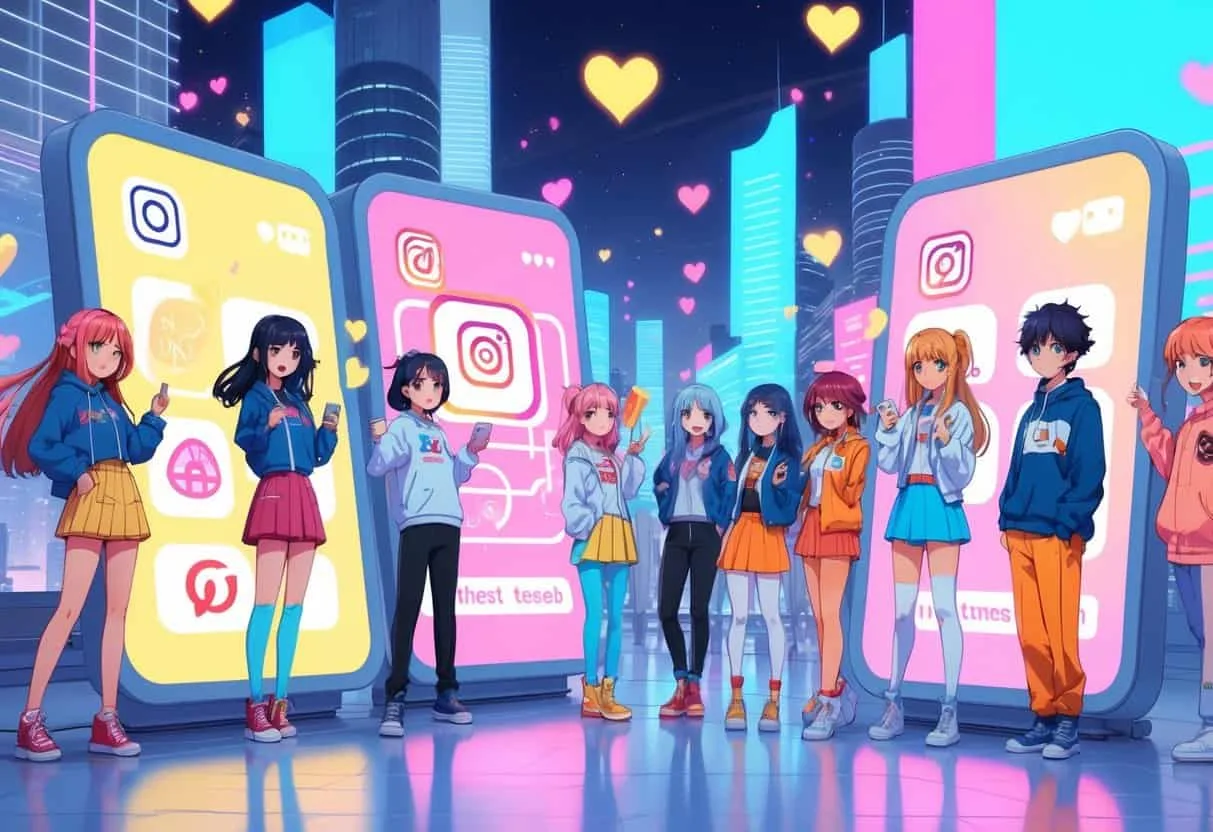
The digital ecosystems of 2025 reward visual clarity and emotional immediacy, and anime delivers both with an almost algorithmic precision. Its signature blend of clean linework, saturated color, and exaggerated expressions allows even a single frame to convey a complex inner world, making it perfectly suited for the glancing attention of infinite scroll. This deep integration is no accident; it is the culmination of decades of cultural export, platform evolution, and an increasingly borderless online community that finds its truest reflection not in photographs, but in the stylized dreamscapes only animation can provide.
The Anatomy of Visual Takeover: Why Anime Wins Your Attention
The dominance of anime on image-first platforms is rooted in the basic mechanics of visual perception. Instagram and Pinterest are designed to surface content that keeps users engaged, and studies consistently show that high-contrast, brightly colored images with strong focal points outperform muddy, realistic photography in passive browsing contexts. An anime illustration is a symphony of deliberate design choices: thick, confident outlines separate characters from backgrounds; hair and eyes are rendered in impossible hues that signal personality at a glance; and dynamic compositions often mimic the dramatic angles of cinematography. According to research on visual salience, such high-saturation and sharp-edge elements trigger a measurably faster cognitive response, effectively hacking the brain’s attention system in a feed built for speed.
Beyond the biological advantage, anime aesthetics offer a complete escape from algorithmic sameness. In a digital landscape flooded with beige minimalism and the hyper-realism of beauty influencers, the overt stylization of an anime post — whether it is a soft-focus shoujo-inspired scene or a grainy, neon-drenched cyberpunk still — breaks the pattern, acting as a reset button for fatigued eyes. This visual disruption is valuable currency on platforms where stopping the scroll is the first and most critical metric. Pinterest’s own annual trend data, as seen in their Pinterest Predicts reports, has repeatedly flagged the rise of “anime core” and “manga room decor” as breakout interests, proving that the aesthetic is not just a fleeting vibe but a sustained driver of discovery and curation.
The Algorithm as Curator of a New Visual High-Culture
Social algorithms have evolved to become deeply reciprocal engines of taste. When a user saves a Studio Ghibli-inspired bedroom setup to their “Dream Spaces” board, the platform does not just see a pin; it identifies a constellation of related nodes — pastel color palettes, minimalist clutter, natural light, a specific era of emotional storytelling — and begins to feed the user an increasingly refined stream of anime-inflected content. This creates a self-reinforcing loop where discovery feels personal and intimate, encouraging users to go deeper into niche sub-aesthetics like “cyber-sakura” or “witchy anime dusk.” The result is an environment where anime is not merely consumed but actively co-created, as users mix and match visual cues to build their own custom aesthetic dialects.
Instagram’s shift towards Reels and its emphasis on shareable visual motifs has further turbocharged this cycle. A looping clip of an anime-inspired character blinking slowly in a dark, rainy city, set to a lo-fi beat, becomes a template that thousands can remix with their own art or photography. The architecture of the platform turns anime into participatory culture, dissolving the line between creator and audience and ensuring a constant, relentless production of fresh content that feeds the algorithm’s insatiable appetite for novelty.
Emotional Architecture: Storytelling in a Single Pixel
What separates an anime aesthetic post from a simple cartoon is the profound narrative weight it carries. Japanese animation has always excelled at mono no aware, the bittersweet awareness of impermanence, and this philosophical underpinning translates powerfully into static imagery. A picture of a girl holding an umbrella beneath a cascade of cherry blossoms is not just a pretty composition; it is an instant invocation of a story about spring, transience, and gentle melancholy. This depth of reference provides a shortcut to emotional authenticity, which is in short supply in the polished, often cynical world of social media marketing.
The global anime market size, which Grand View Research estimates reached well over $30 billion in recent years, is fueled by this emotional connectivity. Fans do not just watch anime; they internalize its iconography. On Pinterest, this manifests in boards dedicated to “Anime Scenes That Feel Like a Hug,” where users collect images of characters in quiet libraries, sunlit kitchens, or rainy balconies, substituting the aggressive positivity of mainstream social media with an aesthetic of gentle acceptance. This shift towards visual comfort has placed anime aesthetics at the center of wellness and self-care trends online, proving that the style’s power is as much therapeutic as it is aesthetic.
Cottagecore, Ghibli, and the Global Nostalgia Loop
Perhaps the most visible crossover between anime aesthetics and mainstream Western trends is the fusion with cottagecore. While cottagecore initially drew from European pastoral ideals, its digital expression has been almost entirely colonized by the visual language of Hayao Miyazaki’s My Neighbor Totoro and Kiki’s Delivery Service. The overgrown gardens, the hand-sewn herb satchels, the sunbeams filtering through wooden window frames — these scenes are more often than not rendered in a soft, anime-inspired style that evokes a shared childhood nostalgia, even for those who did not grow up watching the films.
This nostalgia is a potent binding agent. It allows a teenager in São Paulo and a graphic designer in Seoul to share a visual touchstone that feels personal and historically rooted, yet entirely modern. The stylization of anime removes the specifics of time and place, replacing them with an idealized, utopian version of rural life that functions as a perfect canvas for the aspirational daydreams Pinterest was built to host. This cross-pollination extends to darker aesthetics like grunge and punk, where the gritty, kinetic energy of 1990s anime like Akira or Neon Genesis Evangelion provides the raw, unvarnished emotional texture missing from airbrushed influencer feeds.
The Creator Economy and the DIY Aesthetic Revolution
The tools of creation have democratized anime aesthetics entirely. With tablets and apps like Procreate widely accessible, the visual language that once required entire animation studios to produce is now being replicated, remixed, and reborn in bedrooms worldwide. The hashtag #AnimeArt on Instagram has accumulated hundreds of millions of posts, but more interestingly, the aesthetic has bled into everyday lifestyle content, where real-world fashion and decor are styled to look like they belong in an anime sequence. This blurring of reality and animation has given rise to a unique type of influencer: the real-life anime protagonist, whose hair color, wardrobe, and room decor are all coordinated according to a strict, narrative-driven palette.
TikTok has become the primary engine for spreading these DIY anime aesthetics at lightning speed. A creator demonstrating how to style a “soft boy anime outfit” or a “vaporwave anime room makeover” can generate millions of views overnight. The platform’s sound and effect libraries enable even those without strong drawing skills to participate by filming real-world scenes and applying filters that mimic anime color grading and frame rates. Data from TikTok’s creative center shows that the hashtag #AnimeAesthetic has amassed over 12 billion views, a staggering number that underscores the aesthetic’s transition from subculture to mainstream pop culture. This virality feeds directly back into Pinterest and Instagram, where the most popular TikTok looks are deconstructed and saved as permanent reference boards.
Fashion, Decor, and the Fully Styled Life
The influence on physical goods has become inescapable. Fast-fashion retailers now launch “anime academia” and “cyberpunk streetwear” collections that borrow heavily from the silhouettes and detailing of classic anime characters. Interior design trends on Pinterest are heavily skewed towards what users call “anime room aesthetics”: a layering of LED neon strips, transparent ghost chairs, ramen shop-style lanterns, and, of course, walls plastered with manga panels. These are not just decorative choices; they are deliberate identity-signaling tools. By curating a physical space that looks like it could be a background cel from a Makoto Shinkai film, individuals are telling a story about their values: a preference for calm, introspective, imaginative worlds over the harsh realism of the daily news cycle.
This lifestyle integration is the endgame of any successful online aesthetic. When the digital becomes physical, the visual trend achieves a permanence that transcends social media volatility. The local cafes designing their interiors to look like a Ghibli film, the bookstores selling “manga moments” as curated vignettes, the makeup tutorials replicating the “anime blush” — these are all indicators that anime aesthetics are no longer just a filter to be applied, but a fundamental way of seeing and designing the world.
Cultural Exchange in a Borderless Digital Age
The global footprint of anime aesthetics reveals a fascinating, two-way flow of cultural influence. While the roots are undeniably in Japanese artistic traditions — from the dramatic compositions of Hokusai’s woodblock prints to the conceptual depth of postwar manga — the current digital expression is a hybrid born of international collaboration. Western artists draw on anime style to address local issues, creating Black anime characters that embody Afrofuturist themes or depicting mundane European suburban life through the nostalgic lens of a Studio Ghibli palette. This is not appropriation but an ongoing, respectful conversation, facilitated by platforms that connect niche communities instantly.
The result is a cultural product that is simultaneously foreign and deeply personal. On Pinterest, a board dedicated to “Korean anime-inspired café interiors” sits next to a board for “French cottagecore anime girls,” each a unique synthesis of geographies and styles. This fluidity makes anime aesthetics profoundly inclusive and resistant to the gatekeeping that plagues many other fan cultures. It invites reinterpretation, actively encouraging users to inject their own identity markers into the template, which in turn creates a richer, ever-evolving visual lexicon that keeps the aesthetic from feeling stale or repetitive.
The Sci-fi Horizon: From Android Dreams to AI Realities
Looking forward, anime aesthetics are poised to absorb and redefine the next wave of technological anxiety and wonder. The visual motifs of cyberpunk — neon reflections on wet pavement, holographic advertisements, cybernetic body modifications — have been filtered through an anime lens for decades, and in 2025, they are resurgent as we grapple with the realities of artificial intelligence and ubiquitous computing. Images inspired by Ghost in the Shell and Cyberpunk: Edgerunners are dominating mood boards, expressing a collective unease and excitement about a future that feels increasingly like a science fiction narrative. These visuals provide a safe space to process complex ideas about consciousness and identity, dressed in the seductive sheen of a highly aestheticized dystopia.
At the same time, the rise of generative AI tools like midjourney and Stable Diffusion has sparked a vibrant and controversial new chapter in anime aesthetics. Artists are using these tools to prototype ideas, while others fear the devaluation of hand-drawn craft. Regardless of the debate, the output has been a staggering proliferation of anime-style imagery, much of it hyper-polished and algorithmically optimized for exactly the kind of engagement platforms love. This flood of content is testing the limits of taste, but it also demonstrates the strength of the aesthetic’s core principles: even when an image is generated by a machine, the strong emotional silhouettes and color compositions that define anime art continue to provoke genuine emotional responses in viewers. The challenge for the future is not the scarcity of beautiful imagery, but the curation of it — a challenge that makes the human-curated boards of Pinterest and the influencer-filtered feeds of Instagram more culturally significant than ever.
As augmented reality filters become more sophisticated, the line between the viewer and the anime aesthetic will continue to dissolve. Already, users can walk through their own city streets and see them transformed in real time into the neon-soaked streets of Neo-Tokyo via their phone screens. The aesthetic is no longer confined to a screen you look at; it is becoming a layer you live inside, a permanent mood that can be overlaid onto the mundane world. In this context, anime aesthetics are not just dominating Instagram and Pinterest in 2025; they are fundamentally restructuring how we expect reality to feel, one beautifully drawn frame at a time.