Table of Contents
How Naruto Built an Unforgettable Legacy Through Masterful Storytelling
The original Naruto series didn’t just dominate anime charts for over a decade—it reshaped the shonen genre by prioritizing raw emotion and steady personal growth over flashy power-ups. The story worked because it anchored itself in a simple truth: the audience needs to believe in the hero’s pain before they celebrate his victories. Masashi Kishimoto built a narrative engine that turned small moments into massive emotional payoffs, and that consistency is what still binds millions of fans to the Hidden Leaf Village.
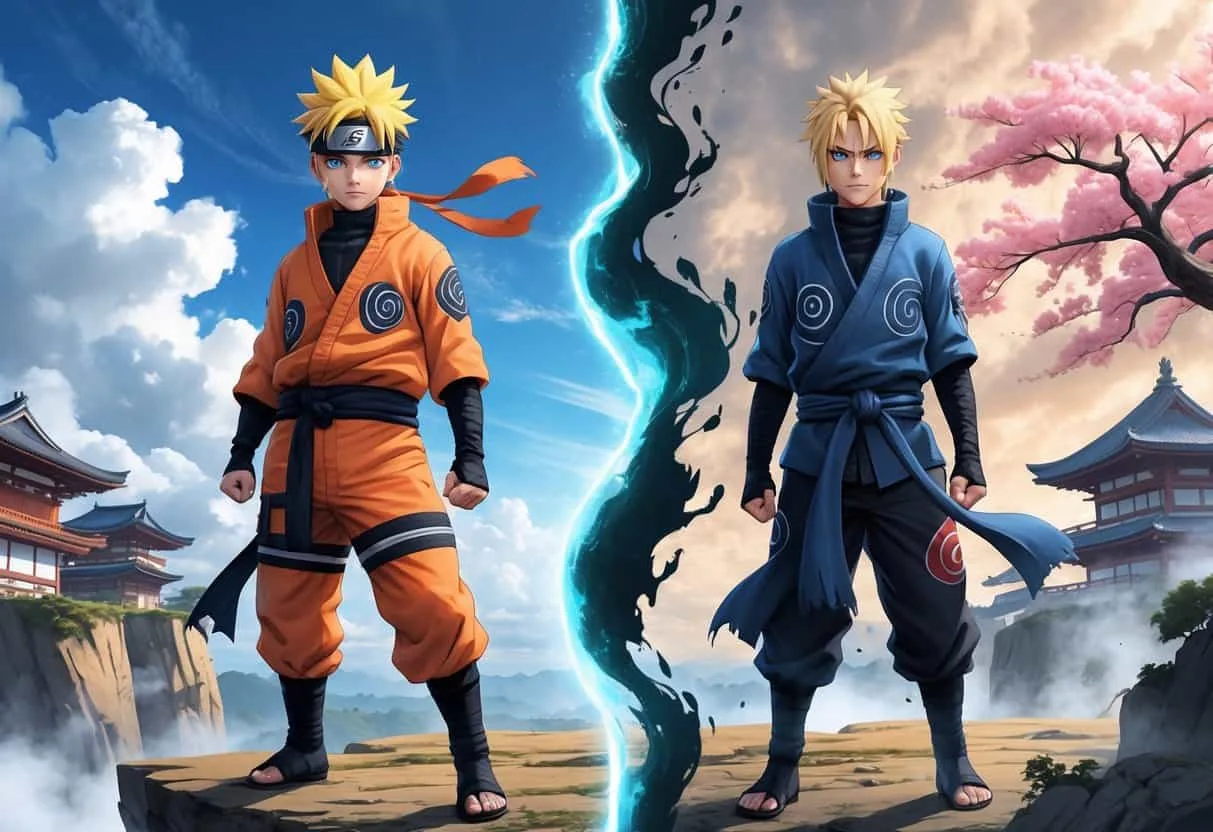
Naruto succeeded because it made you feel like you were climbing the ranks right alongside its characters. From the bell test with Kakashi to the devastating loss against Sasuke at the Valley of the End, every arc tightened the emotional screws. This isn’t just nostalgia talking—serious analysis from outlets like Anime News Network’s retrospective highlights how Kishimoto’s focus on grief, inheritance, and forgiveness gave the series a literary weight that set it apart from typical battle manga. The characters carried generational trauma (the Uchiha massacre, Gaara’s isolation, Nagato’s warped peace), and those burdens fueled conflicts that felt unavoidable and real.
Clear Goals and Relatable Struggles
Every major character in Naruto operated under a visible, understandable motivation. Naruto wanted to become Hokage not for the title, but to finally be seen as a person. Sasuke’s quest for vengeance was dark but rooted in a horror that was fully shown to the audience—the image of Itachi standing over their parents’ bodies. Sakura’s desire to stand beside her teammates, not behind them, gave her a tangible arc (flawed as it sometimes was).
Even the supporting cast had clear drives: Rock Lee wanted to prove that hard work could defeat genius; Hinata sought to change her timid nature; Shikamaru simply wanted to avoid trouble but was pulled into leadership by his sense of duty. This transparency made it easy to root for them. The Chunin Exams arc remains a masterclass in juggling over a dozen characters while giving each one a defining moment. You saw their weaknesses, their training, and then their breakthroughs. There was no shortcut—not even for the protagonist who harbored a demon fox.
Naruto’s mastery of the Rasenshuriken, for instance, was a grueling multi-episode process that mirrored the real persistence required to master a skill.
Emotional Payoffs Earned Through Suffering
Naruto understood that action without stakes is just noise. The series consistently forced its heroes into impossible choices. Jiraiya’s death wasn’t just a plot device to make Naruto stronger; it was a devastating loss that shattered the idealism of the young ninja and introduced him to the cycle of hatred in the most personal way. When Naruto later confronted Pain, the philosophical debate wasn't filler—it was the culmination of 350 episodes of built-up pain and learning.
The series tied emotions directly to its themes: the loneliness of a jinchuriki, the sacrifice of a mentor, the redemption of a villain. Gaara’s transformation from monster to Kazekage is one of the most celebrated redemption arcs in anime because you witnessed every step of his torture, his madness, and his painful realization that love could still exist. As noted by a Screen Rant analysis, the show didn’t just tell you about the cycle of hatred; it showed you its birth, its infectious spread, and its only possible cure: empathy. That’s storytelling that respects its audience’s intelligence.
A World That Breathes and Grows
Konohagakure felt alive because Kishimoto layered history into every corner. The Will of Fire, the rivalry between the Senju and Uchiha, the origins of chakra from Kaguya Otsutsuki—all of it unfurled slowly, making the world feel vast without overwhelming new viewers. Ninja ranks actually mattered. A chunin was distinct from a jonin, and the gap in power was respected and shown. The missions the teams undertook (catching a cat, escorting a bridge builder) grounded the early arcs in a reality that made the later god-tier battles feel like a shocking escalation rather than the norm.
This careful construction allowed the story to pivot from low-stakes survival to world wars without breaking the internal logic. The introduction of the Akatsuki, each member with a unique and monstrous goal, kept the threat level rising while exploring more facets of the ninja world’s corruption. By the time the Fourth Great Ninja War erupted, you understood exactly what was being fought for because the series had spent years making you care about every shinobi who showed up on that battlefield.
The Core Weaknesses That Keep Boruto from Reaching the Same Heights
Boruto: Naruto Next Generations began with a daunting task: follow up a cultural phenomenon without erasing the hard-won peace that Naruto fought to achieve. The problem is that peace is narratively boring. The series has struggled to invent conflicts that feel organic rather than forced by a need to justify its existence. The result is a sequel that often feels like it’s checking boxes—scientific ninja tools, alien gods, a moody protagonist—without earning the emotional weight those elements require.
Boruto’s biggest obstacle is the suffocating presence of its predecessor. The new generation can’t develop naturally because the old generation solves every problem before the danger becomes truly desperate. When Naruto can level a mountain, what stakes are left for a team of genin?
Living in the Shadow of Giants
Boruto Uzumaki is introduced as a prodigy who resents his father’s absence. It’s a valid emotional setup, but it’s executed with so much privilege that his complaints feel petty next to the orphaned, despised childhood of his father. Boruto has a loving family, immense talent, and the admiration of his peers. His struggle is that his dad works too much. That’s a real-world issue, but in a shonen narrative that once thrived on life-or-death desperation, it lands as dramatically hollow.
The side characters suffer even more. Sarada Uchiha, arguably the most compelling new hero with her goal to become Hokage and her questions about her clan’s dark history, is consistently sidelined. Mitsuki’s origin deep dive had potential but often reverts to a one-note obsession with Boruto. Metal Lee’s anxiety, Shikadai’s intellect—they’re all concepts that never fully bloom because the story keeps looking back at Naruto and Sasuke to carry the heavy lifting. A detailed CBR breakdown points out that when Kawaki—a character directly tied to the Otsutsuki and packed with tragedy—arrives, the plot momentarily sharpens, but it often defaults to having Boruto react rather than drive the narrative himself.
Pacing That Kills Urgency
One of the most common criticisms of the Boruto anime is its overwhelming amount of low-impact filler. While Naruto certainly had its filler arcs, they were often inserted between canon arcs and could be skipped. Boruto’s anime-original content makes up a large portion of the runtime, but it rarely explores meaningful backstories or raises the stakes. Instead, you get light slice-of-life episodes that, while sometimes charming, undermine the sense that a great threat is looming.
The main plot—the clash with the Otsutsuki and the prophecy of a destroyed Konoha—moves in fits and starts. When a massive revelation does occur, it’s often resolved so quickly that the emotional fallout doesn’t have time to settle. The anime’s need to stay behind the manga’s progress forces a rhythm where tension builds, then evaporates for ten episodes of random missions. This stop-start flow makes it difficult to invest in the long-term narrative.
Power Progression Without the Struggle
In Naruto, the acquisition of a new technique felt like a milestone. Naruto’s failure to produce a simple clone in the first episode was a deliberate starting point; his mastery of it by the hundreds in the first chapter was a triumphant payback. Boruto flips this dynamic. Boruto accidentally learns a forbidden shadow clone technique as a child. He masters the Rasengan in days and even adds a nature transformation by accident.
His Karma seal essentially gifts him god-tier abilities that once cost Naruto a near-death battle and Kurama’s cooperation.
This rapid power scaling eliminates the underdog spirit that defined the franchise. When the protagonist can handle threats that would have crushed his father at the same age, the viewer’s sense of danger evaporates. Kawaki and Boruto quickly reach levels that leave the rest of the cast irrelevant, mirroring the late-stage power inflation of Shippuden but without the years of buildup that made that inflation feel like a natural climax.
Direct Comparisons: Battle Philosophy, Animation, and Thematic Depth
When you put the two series side by side, the differences extend beyond plot—they’re embedded in how the shows present their action and what they’re ultimately trying to say.
The Art of Battle Choreography vs. Spectacle Overload
Naruto’s early fights are legendary because they were tactical. The battle between Shikamaru and Temari, or the desperate struggle of Lee versus Gaara, relied on strategy, environment, and deeply personal stakes. You could follow the logic of the fight, and every injury mattered. The choreography was physical and grounded, even when jutsu entered the fray.
Boruto often substitutes strategy for sheer visual noise. The Otsutsuki battles, while spectacular, devolve into beams of light and planet-busting punches that lack spatial coherence. There’s no sense that a well-placed kunai could turn the tide. The scientific ninja tool element, meant to introduce a new layer of tactics, often just serves as a shortcut to let characters fire off high-level moves without the training. It’s a metaphor for the series itself: accessible power without the satisfying grind.
Animation Style: The Hand-Drawn Soul vs. Digital Shine
Studio Pierrot’s work on Naruto evolved from the janky early episodes into the fluid masterpiece that was episode 30 of Shippuden, a sakuga showcase directed by Atsushi Wakabayashi. The animation had weight. Characters moved through space with a sense of momentum, and the variation in line art during emotional highs (like Pain’s distorted faces) added psychological depth.
Boruto benefits from modern digital production, resulting in consistently clean character models and vibrant color palettes. However, its high points, such as the famous episode 65 (Naruto and Sasuke vs. Momoshiki), are exceptions that prove the rule. That episode, led by animator Chengxi Huang and heavily influenced by the Naruto movie style, is a kinetic triumph. Yet outside of those peaks, the series often relies on stiff CGI for large creatures and uses digital shortcuts that strip away the hand-crafted intensity. The grittiness that made the ninja world feel dangerous is sanitized under a glossy finish, a shift discussed in fan communities and in an Anime News Network feature on the visual evolution of long-running shonen.
Thematic Confusion in a Post-War World
Naruto had a clear thesis: that empathy could break the oldest cycles of hatred. That message was delivered through sacrifice, death, and painful forgiveness. Boruto seems unsure of what it wants to say. Is it about the dangers of technology surpassing tradition? Is it about the emptiness of being born into privilege?
Is it about destiny versus free will, as Boruto and Kawaki grapple with their Karma seals? The series flirts with all these ideas but never commits to one with the same fierce clarity.
The flash-forward opening scene of the series, showing an older Boruto facing Kawaki over a ruined Konoha, promised a dark and consequential journey. Yet the years of content leading there rarely maintain that tone. The result is a story that feels like it’s biding time until it can unleash the tragic event that will finally force its characters to grow up. Screen Rant’s ongoing analysis has noted that the series’ potential is hidden under layers of indecision about whether to be a lighthearted continuation or a brutal deconstruction.
Why the Legacy Continues to Lean on the Original
At its core, Naruto thrived because its story was rooted in pain that was universal. The fear of being alone, the desire to protect the people who gave you a second chance, and the struggle to break free from the destiny others wrote for you—these are feelings that resonated across cultures. Boruto inherited a beautiful, peaceful world, but in doing so, it lost the very engine that drove its predecessor. Peace is the goal of any hero, but it’s the enemy of a thrilling sequel.
The new series struggles to make its villains feel as philosophically sound as Pain or as menacing as Orochimaru. The Otsutsuki are powerful, but their motivations—consuming chakra fruit to evolve into gods—lack the human tragedy that made Akatsuki members like Itachi or Konan so unforgettable. Until Boruto finds a conflict that wounds its characters on a level that can’t be healed by a rasengan, it will remain a shadow of what came before. The foundation is there, especially in the slow-burning friction between Boruto and Kawaki, but the house isn’t built yet. Fans are still watching, hoping the story will finally deliver on its initial, explosive promise.