Table of Contents
What Does Slice of Life Anime Actually Mean?
Slice of life anime focuses on the ordinary — the small, quiet moments that shape a person’s day. It doesn’t need grand battles, supernatural twists, or high-octane action. Instead, these shows thrive on the rhythm of everyday existence: walking to school, cooking dinner, laughing with friends, or wrestling with a quiet heartbreak. The phrase itself, borrowed from the French tranche de vie, captures exactly that: a transparent cross‑section of a character’s life, presented without melodrama or distortion. When someone asks, “What is slice of life anime?” the truest answer is that it’s a mirror held up to the viewer’s own world, polished just enough to highlight the beauty we often miss.
Characters in these series aren’t heroes chosen by destiny. They’re students sitting through a dull class, coworkers navigating office politics, or neighbors exchanging small talk in a convenience store. The genre’s power lies in that accessibility. It invites the audience to find meaning not in epic quests but in the soft ache of a sunset walk, the nervous energy of a first confession, or the comfort of a shared meal after a long week. Unlike fantasy or mecha anime that build entirely new worlds, slice of life builds familiarity, and that makes its emotional punches land with surprising weight.
The Historical Roots of Slice of Life Anime
The term “slice of life” entered the cultural conversation between 1890 and 1895, originally used in French theatre to describe plays that depicted unvarnished everyday reality. Japanese animation adopted this philosophy decades later, though it didn’t become a distinct genre overnight. Early works like Tetsuwan Atom (Astro Boy) and Sazae-san planted the first seeds. While Astro Boy was primarily a sci-fi action series, it occasionally paused to show characters dealing with schoolyard conflicts or family dinners — moments that foreshadowed what the genre would become. Sazae-san, on the other hand, was a game‑changer.
Starting in 1969 and still airing today, it’s a pure domestic sitcom that follows the daily life of a Japanese family. Its staggering longevity proves that audiences crave gentle, relatable storytelling just as much as they crave spectacle.
The genre’s aesthetic and narrative identity solidified through the work of Studio Ghibli directors Isao Takahata and Hayao Miyazaki. Their 1979 television adaptation of Akage no Anne (Anne of Green Gables) was a masterclass in showing how a character’s inner world blossoms through daily chores, friendships, and disappointments. Later films like Only Yesterday and Whisper of the Heart doubled down on this approach, proving that a story about a young girl writing her first novel or a woman revisiting her childhood could be as compelling as any hero’s journey. These filmmakers didn’t invent slice of life, but they elevated it into an art form that treats the mundane with the same reverence reserved for myth.
Key Characteristics That Define the Genre
Slice of life anime isn’t a monolith. It bends and blends with other genres — romance, comedy, drama, even fantasy — while maintaining a recognizable core. What unites these shows are a few consistent traits.
Realistic Settings and Grounded Physics
The world of a slice of life series rarely breaks its own rules. Gravity works. Bills arrive. People get colds. Even when supernatural elements exist, as in Fruits Basket, the focus stays on how that magic affects everyday relationships, not on elaborate lore.
The school classrooms, cramped apartments, and rainy street corners aren’t just backdrops; they’re characters in their own right, shaping how the cast moves and feels. This grounding allows the viewer to slip inside the story without suspension of disbelief.
Character-Driven Narratives Without Epic Stakes
In slice of life anime, the climax might be as simple as a character finally saying “thank you,” or as delicate as two friends mending a misunderstanding. The stakes are intimate: belonging, self‑acceptance, romantic connection. Because the story doesn’t rely on life‑or‑death tension, the writers have room to explore nuanced emotions through lingering silences, hesitant dialogue, and small gestures. A shared earphone, a handwritten note, a dropped bento — these become monumental symbols of care.
Emphasis on Atmosphere and Mood
Many slice of life shows create an almost sensory experience. The sound of cicadas in summer, steam rising from a teacup, the golden glow of a late‑afternoon classroom — they’re engineered to evoke nostalgia or calm. This atmospheric focus gives rise to a subgenre called iyashikei (healing anime), titles like Yuru Camp and Non Non Biyori that exist purely to soothe the audience. They’re not about achieving a goal; they’re about resting inside a moment.
Slice of Life Romance and Other Subgenre Crossovers
Pure romance anime often accelerates toward a confession or a kiss like a train racing to a station. Slice of life romance, by contrast, savors the journey. It’s less interested in the destination than in the quiet, incremental steps that bring people closer. A boy notices the way a girl tucks her hair behind her ear. Two classmates study in a library where the only sound is turning pages.
These series understand that intimacy is built in ordinary time.
When Slice of Life Meets Romance
Shows like HoriMiya and My Senpai is Annoying exemplify this blend. In HoriMiya, the main couple doesn’t just fall in love — they learn to reveal the messy, unpolished versions of themselves that they hide from the rest of the world. The relationship grows through shared lunches, household chores, and late‑night phone calls. Similarly, My Senpai is Annoying uses the workplace as its canvas, letting romantic tension simmer beneath daily office banter and after‑work drinks. Neither show needs a villain or a ticking clock; the emotional stakes stem from whether these characters will let themselves be truly seen.
Other Hybrid Forms
- Comedy‑driven slice of life: Series like Nichijou and Azumanga Daioh amplify the absurdity hidden inside routine. A principal suplexes a deer; a transfer student causes chaos simply by existing. The humor comes from how seriously characters react to ridiculous scenarios within otherwise normal settings.
- Fantasy‑tinged slice of life: Titles such as Mushishi and Natsume’s Book of Friends incorporate spirits and folklore but anchor them in gentle, episodic storytelling. The supernatural becomes a metaphor for loneliness, empathy, and the desire to connect.
- Working‑life and hobby‑focused stories: Shirobako and Kakushigoto pull the curtain back on creative industries, while Hyouka turns a high school classic literature club into a space for low‑stakes mystery. Each episode feels like an afternoon spent with curious, endearing people.
Why Slice of Life Anime Resonates With a 2025 Audience
The world in 2025 is saturated with information, notifications, and pressure to optimize every hour. In that context, slice of life anime functions as a kind of emotional palate cleanser. It offers permission to slow down. Watching a character enjoy a cup of coffee or gaze out a window isn’t a plot contrivance — it’s an invitation to be present. For viewers navigating anxiety, burnout, or simple exhaustion, these series provide a space where productivity isn’t required.
The mere act of existing is enough.
Psychologically, the genre taps into something profound. By depicting stable routines and small victories, it reinforces a sense of order and control. Characters who struggle with social anxiety, like Shouko Komi in Komi Can’t Communicate, show that growth doesn’t have to be loud or linear. The show celebrates tiny breakthroughs — making one new friend, eating lunch in a group — as triumphant. This normalization of gentle progress resonates deeply in a culture that often equates success with speed.
Moreover, the genre’s diversity within its quiet framework means almost anyone can find a mirror. A young professional might see themselves in Wotakoi: Love Is Hard for Otaku, where adults balance work, hobbies, and romance. A rural teen might connect with Silver Spoon, a story about a city boy discovering agricultural life. The lack of hyper‑stylized violence or convoluted worldbuilding lowers barriers, making slice of life a welcoming entry point for new anime viewers and a timeless comfort for veterans.
The Evolution of Slice of Life Through the Decades
Tracking the genre’s growth reveals how anime as a whole has matured. In the 1970s and 1980s, slice of life was largely confined to family‑oriented fare. Sazae-san and Chibi Maruko-chan set the tone, focusing on multi‑generational households and gentle life lessons. The 1990s introduced more experimental titles. Kare Kano (His and Her Circumstances) mixed rapid‑fire visual gags with serious psychological introspection, while Great Teacher Onizuka used a school setting to explore societal issues through the lens of an unconventional teacher.
The 2000s exploded with variety. Clannad and Kanon proved that slice of life could make an audience weep, using supernatural elements to deepen emotional stakes without betraying the genre’s grounded heart. Aria the Animation perfected the iyashikei model, transporting viewers to a terraformed Venice where gondoliers practiced the art of everyday wonder. Meanwhile, K‑On! sparked a wave of “cute girls doing cute things” anime, a template that dominated the early 2010s with hits like Yuru Yuri and Love, Chunibyo & Other Delusions.
Today’s slice of life landscape is more eclectic. Bocchi the Rock! tackles social anxiety with inventive animation and humor, appealing to a generation that values mental health representation. Spy x Family, while part action‑comedy, spends huge chunks of its runtime on domestic bliss — cooking disasters, school admissions interviews, a family learning to trust one another. It’s proof that the genre no longer needs to be “just” one thing; it can bleed into spy thrillers and still feel cozy.
How Slice of Life Anime Differs From Other Genres
New viewers sometimes confuse slice of life with drama or seinen romance. The differences are subtle but significant. While a pure drama like Your Lie in April uses everyday settings, its narrative engine is tragedy and a singular goal (a final performance). Slice of life might contain dramatic moments, but it doesn’t build toward a single cathartic peak. The story’s arc is cyclical, mirroring seasons or school years, and resolution often comes through quiet acceptance rather than dramatic transformation.
Compared to shonen, slice of life lacks the “training arc → battle → power‑up” loop. Character development isn’t measured in power levels but in emotional intelligence. Natsuki Subaru in Re:Zero might suffer through death loops, but Hitori Gotou in Bocchi the Rock! grows simply by learning to look her bandmates in the eye. The latter’s progress feels closer to how real human change works: gradual, non‑linear, and often invisible to outsiders.
Slice of life also maintains a unique relationship with time. Shorter episode counts — often 12 or 13 — are common, which lets the audience drop into a character’s life for a season and then move on. There’s rarely a cliffhanger demanding immediate binge‑watching. Instead, the viewer leaves feeling as though they’ve visited a friend and can return whenever they need to. That narrative restraint is a design choice, not a weakness.
Essential Slice of Life Anime to Watch in 2025
Whether you’re new to the genre or looking to refresh your watchlist, these series showcase the breadth of what slice of life can offer. Each one balances relatable storytelling with a distinct personality.
1. Fruits Basket: The Final – A Masterclass in Emotional Payoff
As the third season of the 2019 reboot, Fruits Basket: The Final brings one of anime’s most beloved overarching narratives to a close. At its heart, it’s a story about generational trauma, hidden identities, and the courage it takes to forgive. Tohru Honda’s relentless empathy gradually untangles the cursed bonds of the Sohma family, but the slice of life framing — shared meals, school festivals, quiet rooftop conversations — keeps the supernatural elements grounded. Every tear feels earned because the show spent seasons building ordinary contexts for extraordinary pain.
2. HoriMiya – When Two Worlds Softly Collide
Kyouko Hori is the polished honor student; Izumi Miyamura is the quiet loner with a hidden collection of piercings and tattoos. Outside school, their true selves emerge without fanfare. HoriMiya thrives on the small discoveries that define teenage relationships: the first time someone calls you by your given name, the moment you realize their house feels more like home than your own, the awkward tenderness of meeting parents. The series wraps its romance in a blanket of everyday life, proving that the most meaningful dramas happen in kitchens and on walks home.
3. My Senpai Is Annoying – Workplace Warmth With a Slow‑Burn Romance
If you’ve ever had a coworker who drives you crazy but also makes your day better, this series will feel intimately familiar. Futaba Igarashi, a small but fiercely competent office worker, constantly clashes with her loud, big‑hearted senior Harumi Takeda. The title is misleading; it’s less about genuine irritation and more about how affection hides behind banter. Episodes follow business trips, casual drinking parties, and awkward rides home, quietly building a relationship where both characters must face what they actually want. It’s a reminder that adult life, for all its responsibilities, still leaves room for shy smiles.
4. A Couple of Cuckoos – A Contemporary Twist on Unlikely Cohabitation
When Nagi Umino and Erika Amano learn they were switched at birth, their parents propose a simple solution: they should get married, inherit both families, and call it a day. What follows is a chaotic yet heartfelt negotiation of identity, obligation, and genuine connection. The series uses its absurd premise to explore real questions: What does it mean to belong to a family? Can a relationship built on expectation ever become genuine? Despite the high‑concept setup, the show’s strength lies in cooking scenes, homework sessions, and rooftop talks that feel stolen from real adolescence.
5. Tokyo 24th Ward – A Slice of Life Thriller Hybrid
This one pushes the genre’s boundaries. Set on an artificial island in Tokyo Bay, the story follows three childhood friends whose past is torn apart by a tragic fire. A year later, mysterious visual messages start forcing them into life‑or‑death moral choices. While the thriller elements are loud, the core of the show is the quiet disintegration and repair of a friendship. It’s a slice of life narrative painted with a sci‑fi brush, using the heightened stakes to ask what we owe the people we’ve grown up with.
Beyond the Big Names: More Gems Worth Your Time
If you’ve already devoured the heavy hitters, consider these:
- Natsume’s Book of Friends – A boy who can see spirits learns empathy by returning their names. Its quiet, episodic storytelling is iyashikei at its finest.
- Barakamon – A calligrapher exiled to a rural island finds inspiration in the daily chaos of village life. Few shows capture the rhythm of community so beautifully.
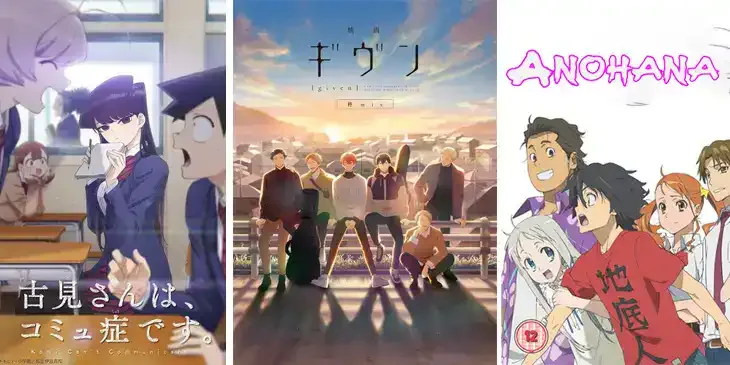
- Komi Can’t Communicate – With a protagonist aiming to make 100 friends despite crippling social anxiety, this series treats communication disorders with humor and genuine sensitivity.
- Yuru Camp – A group of high school girls go camping, and nothing apocalyptic happens. It’s pure, radiant comfort that makes you want to brew a cup of hot cocoa.
- Blue Period – While driven by a passion for art, the core of this series is the mundane grind of skill‑building and the emotional toll of self‑doubt. A profound slice of life for anyone who has ever tried to create something.
The Future of the Genre
As anime continues to globalize, slice of life is poised to tackle even broader themes without losing its intimate scale. Upcoming productions are experimenting with diverse cultural backgrounds, mental health narratives, and the specific textures of modern adult life — think remote work, aging parents, and changing gender norms. The genre’s flexibility means it can absorb those topics without breaking. A show about a freelance illustrator struggling with deadlines is, at its core, the same as a show about a feudal‑era tea shop assistant: both examine how people find peace inside the roles they’ve been given.
Technology, too, will influence how slice of life stories are told. Social media now threads through daily experience, and anime has started to reflect that — characters send Line messages, scroll through Instagram, or navigate the weirdness of going viral. As the line between online and offline identity blurs, the genre will likely mine that tension, asking what it means to be “ordinary” in a curated world. But no matter the packaging, the promise will remain the same: a quiet story that says, “Your life, as it is, is enough.”
Closing Thoughts
Slice of life anime endures because it trusts the viewer. It doesn’t demand constant stimulation or hyperbolic emotion. Instead, it offers companionship — a space to breathe, laugh softly, or cry without explanation. Whether you gravitate toward romantic confession on a school rooftop, the meditative silence of a hillside camp, or the ridiculous antics of office workers after one too many drinks, the genre has a corner carved out just for you. In 2025, when the pace of life shows no sign of slowing, that corner feels more valuable than ever.
Give one of these titles a chance. Let the rhythm of its world replace your own for a few episodes. You might be surprised by how much stays with you, long after the credits roll.