Table of Contents
What Is Iyashikei Anime and Why It Offers a Much-Needed Escape
Iyashikei anime is a genre designed to calm and soothe the viewer. Unlike series built around high-stakes conflict or rapid plot progression, these shows focus on peaceful, everyday moments, gentle storytelling, and environments that feel like a slow exhale. The Japanese term "iyashi" means healing, and "kei" means type or style, so the category literally translates to "healing type." For anyone craving a break from the constant noise of modern life, Iyashikei offers a quiet sanctuary. The stories rarely rush; instead, they let you settle into a comforting rhythm that helps reduce stress and gently restore mental balance.
The genre’s appeal rests on its simplicity. These anime are not about conquering villains or racing toward a dramatic climax. They’re about small joys: a shared meal, a walk through a sun-dappled forest, the sound of rain on a window, or the warmth of a conversation by a fire. Many viewers describe the experience as a mental vacation, a way to hit pause and just breathe. In a world where constant stimulation is the norm, Iyashikei provides a rare permission to slow down and savor what’s right in front of you.

The Roots of Iyashikei: How a Cultural Need Shaped a Genre
Iyashikei didn’t emerge from a marketing plan. It grew organically in Japan during the 1990s, a time when the country was reeling from economic stagnation following the burst of the asset price bubble and the devastating Kobe earthquake of 1995. The collective stress and trauma created a demand for media that could offer relief, not escapism in the form of fantasy, but real emotional comfort. Anime and manga began to reflect this need, and by the early 2000s, works like Yokohama Kaidashi Kikō and Aria had defined the template.
These early touchstones were often serialized in seinen magazines—publications aimed at young adult men—but the audience quickly broadened. The genre wasn’t about adrenaline; it was about restoration. Shows featured quiet rural landscapes, unhurried pacing, and characters who found meaning in everyday rituals. This was a deliberate counterpoint to the high-octane shonen and mecha series that dominated the airwaves. The intent was not to entertain through excitement, but to soothe through presence.
Key early examples like Yokohama Kaidashi Kikō (known for its tranquil vision of a post-apocalyptic countryside where a robot café owner watches the world slowly change) set a philosophical tone. The genre borrowed from the Japanese aesthetic concept of mono no aware—the bittersweet awareness of impermanence—to find beauty in fleeting moments. This deep cultural root is what gives Iyashikei its enduring resonance; it’s not just relaxation, it’s an appreciation of life’s transient grace.
Defining Traits: How Iyashikei Stands Apart from Slice-of-Life
At first glance, Iyashikei looks like a subset of slice-of-life anime, but the distinctions are important. While slice-of-life often includes humor, light drama, or romantic tension, Iyashikei strips away almost all conflict. The emotional weight is not carried by a will-they-won’t-they romance or a comedic misunderstanding; it’s carried by atmosphere. Episodes may consist of nothing more than characters foraging for wild vegetables, restoring an old shop, or watching the stars. The absence of traditional plot hooks is intentional—the goal is to empty the mind, not to hook it.
There are several core features you’ll notice across the genre:
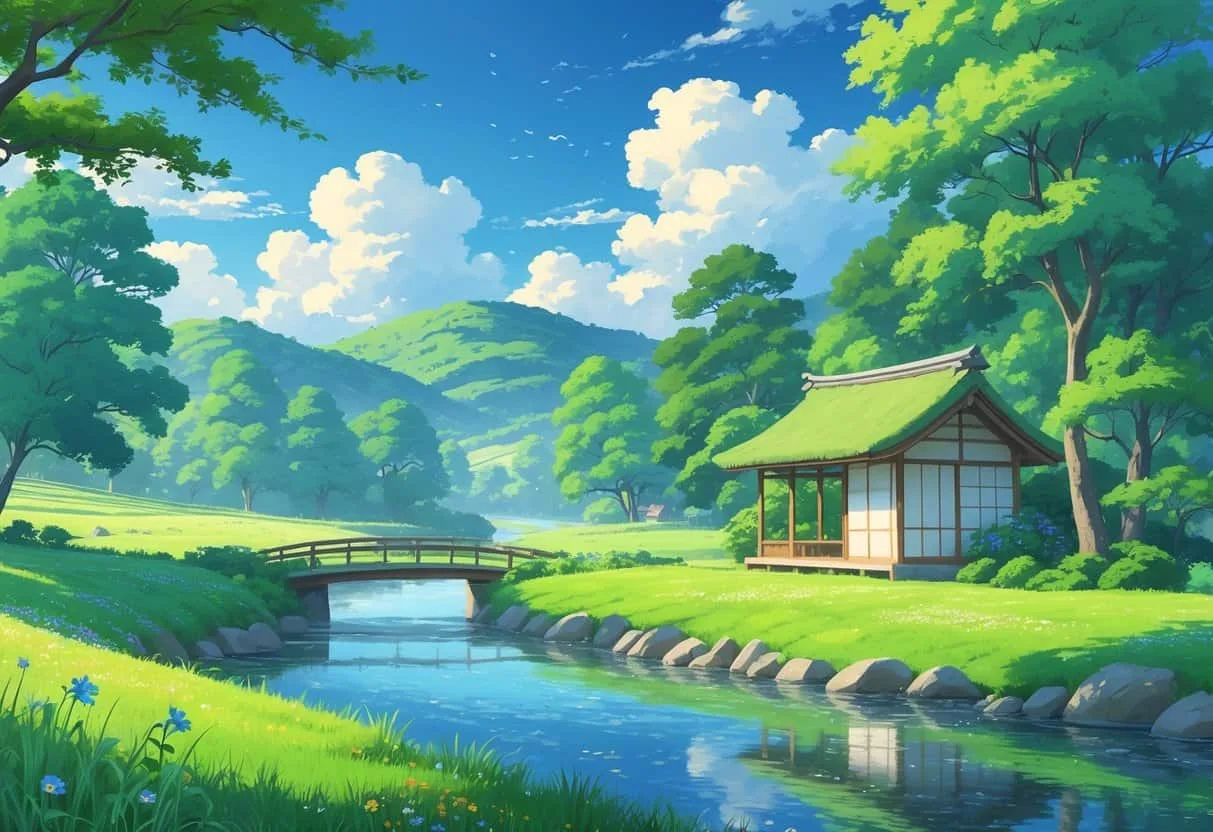
- Pristine natural settings: Deep forests, clear rivers, mountain trails, and quiet coastlines are the default backdrops. The animation often emphasizes seasonal changes, soft lighting, and ambient soundscapes like cicadas or trickling water.
- Minimal character conflict: Protagonists are kind, patient, and cooperative. Antagonists essentially don’t exist. Disagreements, if they appear, are mild and quickly resolved.
- Deliberate, unhurried pacing: Scenes linger. A character cooking a meal might take up five minutes of screen time, with each step shown in loving detail.
- Emphasis on sensory experience: Food preparation, tea ceremonies, gardening, or simply feeling the texture of a handcrafted object become focal points, inviting the viewer to be fully present.
- Subtle emotional arcs: Growth happens incrementally, often through quiet realizations rather than dramatic speeches.
Compared to other genres, the contrast is stark. Where a shonen anime might feature a tournament arc to push its hero to new limits, an Iyashikei show might spend an entire episode on a group of friends learning to make pottery. Even within the broader slice-of-life category, shows like K-On! have a bubbly energy and goal-oriented structure (the girls strive for the school festival) that Iyashikei deliberately avoids. The genre’s mantra might be: nothing happens, and that’s exactly the point.
The Psychological Anchor: Why Slow Stories Reduce Stress
Research into media psychology suggests that slow, predictable content can lower cortisol levels and activate the parasympathetic nervous system. When you watch a character calmly perform a repetitive task—like kneading bread or polishing a wooden counter—your own heart rate can synchronize with the rhythm. This phenomenon, often called "entrainment," explains why so many people turn to Iyashikei as a pre-bedtime ritual or a lunch-break reset. The brain isn’t required to track complex plot threads; it’s free to simply observe and rest.
Additionally, the genre often incorporates elements of shinrin-yoku, or forest bathing, a Japanese practice of immersing oneself in nature to improve well-being. By visually replicating the textures of the natural world, these shows offer a proxy experience that can evoke similar feelings of calm. It’s not a replacement for actual nature, but it can serve as an accessible emotional reset in the middle of a busy day.
Essential Iyashikei Anime That Define the Genre
The beauty of Iyashikei is its consistency. Once you find a show that resonates, you can often trust the entire genre to deliver. Below are standout series that have come to define healing anime, each offering a distinct flavor of tranquility.
Laid-Back Camp (Yuru Camp): The Art of Outdoor Solitude and Togetherness
Laid-Back Camp follows a group of high school girls who share a love for camping, but it splits its focus between solo excursions and group trips. The protagonist, Rin Shima, often camps alone, finding peace in the quiet ritual of setting up a tent, building a fire, and reading a book as the sun sets over Mount Fuji. The other girls, part of the school’s Outdoor Activities Club, bring a cheerful social energy. The genius of the show is how it validates both introverted and extroverted forms of relaxation.
The anime is packed with practical camping tips, from choosing a sleeping bag to using a camping stove, but it never feels like a tutorial. It’s an invitation. The soundtrack, filled with acoustic guitar and gentle woodwinds, wraps around you like a warm blanket. Laid-Back Camp has been credited with boosting real-world camping interest in Japan, a testament to how effectively it transmits the joy of simple outdoor living. You can stream it on Crunchyroll.
Non Non Biyori: The Gold Standard of Rural Slowness
Set in the fictional village of Asahigaoka, where the nearest convenience store is a long bike ride away and the school has only five students spanning different grades, Non Non Biyori is a masterclass in atmosphere. The show captures the magic of a rural childhood: catching crayfish in a stream, running through fields of cosmos flowers, and sitting on the veranda to eat watermelon on a hot day. The comedy arises naturally from the characters’ innocence, not from forced gags.
One of the most iconic scenes is simply the opening shot of the first episode, where a young girl named Renge plays the recorder by a railing as the landscape stretches out behind her. No dialogue, no plot setup—just a moment of pure, unadulterated presence. The series reminds you that joy can be found in the mundane, a core healing anime principle. Its gentle humor and profound calm have made it a touchstone for the genre. Watch it on Crunchyroll.
Aria: Neo-Venezia and the Magic of Everyday Wonder
Aria transports you to a terraformed Mars, now a water-covered planet called Aqua, where the city of Neo-Venezia is an exact replica of Venice. The story follows Akari, a young gondolier trainee, as she discovers the hidden miracles of her city. Each episode is a gentle pilgrimage to a new corner of the canals, where a chance encounter or a long-standing tradition reveals something beautiful about connection and living in the moment.
The series is deeply influenced by Japanese aesthetics, particularly mono no aware, and it frequently pauses to reflect on the fleeting nature of a perfect afternoon or a heartfelt conversation. The pacing is so slow that the show actively teaches you how to watch it—breathing with the ripples, noticing the way light falls on water, listening to the soft lapping sounds. It’s meditation in animation form. For many, Aria is not just an anime but a philosophy. Find it on Funimation.
Mushishi: A Meditative Journey Through the Unseen World
While darker in tone than other entries, Mushishi earns its place as a healing anime through its hypnotic pacing and reverence for nature. The protagonist, Ginko, travels a rustic, pre-industrial Japan investigating "mushi"—primordial lifeforms that exist in a liminal space between the physical and spiritual. Each episode is a self-contained fable, often exploring themes of loss, coexistence, and the delicate balance between humanity and the natural world.
The show’s healing power lies in its refusal to offer easy answers. Problems are not solved by fighting; they are understood, accepted, and sometimes simply endured. The ambient soundtrack and muted color palette create a trance-like state, making it a perfect series to watch one episode at a time when you need to reflect rather than escape. Its philosophical approach has influenced countless later works and remains a benchmark for atmospheric storytelling. Available on Crunchyroll.
Flying Witch: A Gentle Infusion of Magic and Daily Life
Flying Witch follows Makoto, a young witch in training, as she moves to the countryside to live with her relatives. According to the customs of her world, witches must become independent at 15 and contribute to their communities. What could be a premise for epic spellcasting becomes instead a series of cozy vignettes: picking wild herbs, visiting a local café, and learning to fly (rather clumsily) in an open field. The magic is understated and woven into the fabric of ordinary life.
The show’s charm is its refusal to dramatize the supernatural. A mandrake root is pulled from the ground with little fanfare; a phantom appears just to deliver a gift. The normality of it all makes the world feel safe and welcoming. It’s a series that whispers rather than shouts, and its easygoing warmth has made it a favorite for those seeking a gentle escape. Stream it on Crunchyroll.
The Broader Influence of Healing Anime Beyond Its Borders
Iyashikei’s impact extends well beyond its immediate circle. Its emphasis on restorative quiet has bled into other anime genres and even into manga publishing practices. In sports manga, for instance, series like Haikyuu!! or Run with the Wind incorporate long, reflective moments between characters that owe a debt to the healing aesthetic. The focus is not solely on victory but on personal growth, teamwork, and the emotional rewards of effort. Similarly, some adventure manga now include entire chapters of camping or cooking that serve as narrative pauses, directly inspired by Iyashikei’s success.
Publishers such as Yen Press have recognized the crossover appeal, releasing English editions of healing manga like Laid-Back Camp and Yokohama Kaidashi Kikō in beautiful, oversized formats that invite you to linger on the art. The genre has also shaped the rising popularity of "cozy" media across the globe, influencing everything from video games (think Animal Crossing or Stardew Valley) to the slow-living movement in lifestyle content. The desire for healing stories is clearly universal.
Streaming Accessibility and Global Discovery
The digital age has been kind to Iyashikei. Streaming platforms like Crunchyroll and Funimation have made the genre readily available worldwide, often with high-quality subtitles and dubs. The on-demand nature of streaming fits perfectly with the genre’s ethos: you can watch a single episode at any time, without commitment, as a momentary retreat. Seasonal curation also helps, as many platforms now feature "healing" or "relaxing" recommendation lists, guiding newcomers to foundational titles.
Because the genre relies on atmosphere rather than plot, it’s also uniquely accessible to viewers of all language backgrounds. The emotional communication is often visual and aural, reducing the cognitive load of reading subtitles. This has contributed to Iyashikei’s growing international fanbase, with online communities sharing screenshots of particularly serene moments as a form of digital self-care.
Iyashikei as a Mental Health Tool in Everyday Life
Viewers around the world increasingly treat healing anime as a legitimate wellness resource. In a culture that often glorifies hustle and productivity, these shows offer a counter-narrative: rest is valuable. Watching a 20-minute episode of a character slowly preparing tea and gazing at the moon can shift the nervous system out of fight-or-flight mode. Mental health professionals are even beginning to explore the use of calming media as an adjunct to therapy, recognizing that guided relaxation through gentle narratives can help manage anxiety and insomnia.
The experience is akin to a mental holiday. You don’t travel anywhere; you simply allow your mind to settle into a world where nothing demands your attention. It’s a reminder that healing doesn’t always require grand gestures—sometimes it’s just about sitting quietly with a story that holds you without asking anything in return.
Final Thoughts on Bringing Iyashikei Into Your Life
Iyashikei anime is more than a genre label; it’s an invitation to reframe how you engage with media. In a landscape full of content designed to hook and stimulate, these shows ask you to do less, feel more, and notice the beauty in stillness. Whether you start with the campfires of Laid-Back Camp, the rice fields of Non Non Biyori, or the gondola rides of Aria, you’ll find a gentle companion for your quiet moments. The healing isn’t in the plot—it’s in the pause.