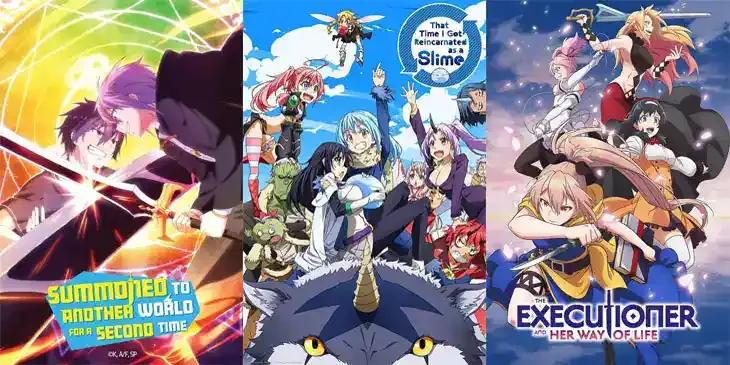
Table of Contents
Defining the Genre
Isekai anime—translated directly from the Japanese 異世界 as "another world"—represents one of the most commercially dominant and creatively elastic subgenres in contemporary animation. The premise is deceptively simple: a protagonist leaves their ordinary existence behind and awakens in an alternate realm, whether by summoning, accidental transportation, reincarnation, or a mysterious portal. What distinguishes isekai from broader portal fantasy traditions is the genre's specific cultural vocabulary and its recurring structural patterns that have crystallized over decades of Japanese storytelling.
At its narrative core, isekai functions as a vehicle for radical transformation. The protagonist—frequently depicted as an underachiever, a corporate drone, or a social outcast—sheds the constraints of their original life and inherits extraordinary abilities, knowledge, or status in the new world. This rebirth fantasy resonates deeply with audiences who recognize the suffocating weight of societal expectations. The genre's emotional engine runs on the promise that somewhere beyond the mundane, a version of yourself exists who matters, who possesses agency, and who can reshape reality according to your choices.
Not every isekai follows the same blueprint. Some protagonists retain their original bodies and navigate the new world through wit and adaptation. Others are reincarnated as slimes, swords, vending machines, or even hot springs—a testament to the genre's capacity for absurdist experimentation. The unifying thread remains the displacement itself: the fundamental rupture between worlds creates dramatic tension, comedic friction, and philosophical questions about identity that more straightforward fantasy settings rarely explore.
Where Did Isekai Anime Come From?
The ancestral roots of isekai stretch deep into Japanese folklore. The tale of Urashima Tarō, a fisherman who visits the Dragon Palace beneath the sea and returns to find centuries have passed, contains the essential isekai DNA: transportation to a fantastical realm, temporal dislocation, and the bittersweet consequences of crossing between worlds. This story, first adapted to animation by Seitaro Kitayama in 1918, established a template that would evolve dramatically over the following century.
Western literature contributed parallel threads. Lewis Carroll's Alice's Adventures in Wonderland, L. Frank Baum's The Wonderful Wizard of Oz, and C.S. Lewis's The Chronicles of Narnia all feature ordinary children stepping through portals into magical domains. Japanese creators absorbed these influences and synthesized them with distinctly Eastern narrative sensibilities, producing something that feels simultaneously familiar and entirely new to global audiences.
The modern isekai genre crystallized during the 1980s and 1990s. Haruka Takachiho's novel series Warrior from Another World and Yoshiyuki Tomino's television series Aura Battler Dunbine (1983) are widely recognized as the first contemporary isekai works. Dunbine transported its protagonist from Earth to the medieval fantasy world of Byston Well, where he pilots insectoid mecha in a war between feudal kingdoms. This fusion of science fiction and high fantasy established a precedent for genre hybridization that remains central to isekai's appeal.
Throughout the 1990s, landmark series refined the formula. El-Hazard: The Magnificent World (1995) sent its ensemble cast through ancient ruins into a desert realm of political intrigue and ancient technology. The Vision of Escaflowne (1996) merged shoujo romance with mecha combat on the war-torn planet Gaea. These productions invested heavily in world-building, musical scores, and character development, demonstrating that isekai could support sophisticated dramatic storytelling rather than mere escapist fantasy.
The true explosion, however, arrived in the 2010s. Light novel platforms like Shōsetsuka ni Narō ("Let's Become a Novelist") democratized publishing, allowing amateur writers to serialize isekai stories directly to hungry readerships. Hits like Sword Art Online, Re:Zero, and That Time I Got Reincarnated as a Slime spawned multimedia franchises encompassing anime adaptations, manga, games, and merchandise. The genre had transformed from a niche interest into an economic juggernaut.
Is Isekai a Fantasy Anime?
Isekai operates primarily within the fantasy register, but the relationship is more nuanced than simple genre classification suggests. Most isekai anime construct worlds governed by magical systems, populated by mythical creatures, and structured around quests or kingdom-building. The protagonist's modern knowledge often functions as a distinctive advantage—engineering principles, culinary techniques, or economic theories that revolutionize the fantasy society they encounter. This collision between contemporary rationality and pre-modern settings generates much of the genre's narrative friction and comedic potential.
Yet isekai extends beyond pure fantasy. Some entries lean heavily into science fiction, presenting alternate worlds as distant planets, virtual reality simulations, or parallel dimensions with technological civilizations. Sword Art Online traps players inside a digital MMORPG where death in the game means death in reality—a premise that blurs the line between isekai and cyberpunk. The Saga of Tanya the Evil reincarnates a ruthless salaryman into an alternate-history World War I setting where magic exists alongside artillery and trench warfare. The genre's boundaries remain porous, absorbing conventions from horror, romance, political thriller, and slice-of-life comedy.
This taxonomic flexibility helps explain isekai's extraordinary output volume. Studios can tailor the basic template to any demographic or taste, producing grimdark revenge narratives alongside cozy farming simulators. The only non-negotiable element is the crossing itself—the moment when the known world falls away and something utterly strange takes its place.
The Four Types of Isekai
Literary scholars and anime critics have developed useful taxonomies for understanding how isekai stories manage the relationship between worlds. These categories clarify the genre's structural diversity and help viewers identify which narrative mode a particular series employs.
1. Portal-Quest Isekai
Portal-quest isekai features an explicit gateway between the ordinary world and the fantastical realm. The protagonist physically passes through this threshold—a mysterious door, a magical circle, a digital interface, or even death itself—and the narrative tracks their journey through unfamiliar territory, often toward a defined objective. The portal may remain open, allowing return travel, or seal permanently, trapping the protagonist in their new circumstances.
Key examples include:
- Spirited Away (2001): Chihiro passes through a tunnel into a spirit bathhouse and must labor to free her transformed parents, navigating a world governed by contracts, names, and ancient debts. Available on Netflix.
- Death March to the Parallel World Rhapsody (2014): A game programmer awakens inside a fantasy RPG world after falling asleep at his desk, carrying his development tools and administrative privileges. Stream on Crunchyroll.
- The Rising of the Shield Hero: Four young men are summoned through a legendary ritual to serve as cardinal heroes, each wielding a sacred weapon against dimensional incursions called Waves.
The portal-quest structure emphasizes exploration and mission. The protagonist's movement through geographic and social space mirrors their internal transformation, and the quest provides narrative momentum that sustains long-running serialization.
2. Immersive Isekai
Immersive isekai dispenses with the portal entirely. The narrative begins and remains within a fantastical world, never referencing Earth or establishing a mundane baseline from which the protagonist was displaced. The viewer experiences the setting directly, without a surrogate newcomer learning its rules alongside them. This approach trusts the audience to absorb cultural context through observation rather than exposition.
Notable immersive stories include:
- Kiki's Delivery Service (1989): A young witch leaves home as part of her training and establishes a flying courier business in a coastal town. No other world exists as reference; the magic is simply part of daily life. Watch on Netflix.
- Made in Abyss: An orphan girl descends into a colossal chasm filled with ancient relics and strange creatures, pursuing her missing mother. The Abyss itself functions as the alternate world, though no portal separates it from the surface settlement above.
Immersive isekai rewards patient world-building. Freed from explaining how a modern person reacts to magic, creators can develop internally consistent societies with their own histories, conflicts, and mythologies. The result often feels more holistic and self-contained than portal-based alternatives.
3. Intrusion Isekai
Intrusion isekai reverses the directional flow. Instead of the protagonist traveling to another world, elements from that other world invade our reality. Marvelous beings, artifacts, or forces cross the threshold and must be negotiated, concealed, or integrated into ordinary life. This inversion creates opportunities for dramatic irony and social commentary, as fantastical elements disrupt the bureaucratic, economic, and cultural systems of modern society.
Key intrusion narratives include:
- The Tale of Princess Kaguya (2013): A celestial being is discovered inside a bamboo stalk and raised as a human daughter, but her otherworldly origin eventually demands her return. Stream on Netflix.
- The Devil Is a Part-Timer! (2012): The Demon Lord Satan flees his conquered realm through a dimensional gate and finds himself stranded in modern Tokyo, where he must work at a fast-food restaurant to pay rent. Available on Netflix.
- Miss Kobayashi's Dragon Maid: A dragon from another world appears in a programmer's apartment and becomes her live-in maid, with increasingly absurd consequences.
The intrusion mode generates comedy through incongruity and drama through concealment. Characters must navigate dual identities, keep supernatural secrets from mundane authorities, and reconcile their extraordinary origins with the banal demands of paying bills and maintaining relationships.
4. Liminal Isekai
Liminal isekai occupies the threshold itself. The portal becomes a permanent space where both worlds coexist and intermingle, producing establishments, communities, or institutions that serve patrons from multiple dimensions. These stories often focus on hospitality, commerce, or diplomacy, emphasizing connection rather than conquest.
Notable liminal stories include:
- Isekai Izakaya "Nobu" (2012): A Japanese pub's back door opens onto a medieval fantasy city, and the establishment serves both regular Tokyo customers and knights, mages, and merchants from another realm. Stream on Netflix.
- Restaurant to Another World (2012): Every Saturday, the door of a Western-style restaurant in Tokyo connects to various fantasy locations, allowing elves, dragons, and beastfolk to enjoy curry rice and parfaits. Available on JustWatch.
Liminal isekai emphasizes the pleasures of cultural exchange. Food becomes a diplomatic language; shared meals bridge species and civilizations. These stories celebrate the mundane comforts that transcend dimensional boundaries—the universal appeal of a well-cooked meal, a warm welcome, and a space where anyone can belong.
Common Tropes and Narrative Conventions
Isekai has developed an extensive toolkit of recognizable tropes that signal genre membership to seasoned viewers. Understanding these conventions illuminates both the genre's creative strengths and its tendency toward formulaic repetition.
The overpowered protagonist dominates the landscape. Upon arrival, the hero receives abilities that far exceed those of native inhabitants—often through divine blessing, game mechanics, or exponential growth curves. Rimuru Tempest in That Time I Got Reincarnated as a Slime begins as the weakest monster type but rapidly accumulates powers through absorption, eventually founding a nation that rivals established kingdoms. This power fantasy gratifies audiences who feel disempowered in their daily lives, offering vicarious mastery over environments that respond predictably to effort and talent.
The adventurer's guild serves as the genre's default social institution. New arrivals register at a guild hall, receive a rank based on assessed ability, and accept quests posted on a public board—ranging from goblin extermination to dragon slaying. This structure imports video game logic into narrative form, providing clear progression metrics and episodic mission structures that facilitate serialized storytelling.
Harem dynamics frequently accompany male protagonists, who accumulate romantic admirers with minimal effort. While often criticized as pandering wish-fulfillment, the harem structure also reflects the protagonist's growing social capital—their ability to attract followers demonstrates their rising status and competence within the new world's hierarchy.
Technological and cultural uplift appears when protagonists introduce modern inventions to medieval settings. Rice cultivation, soy sauce production, bathhouse construction, and democratic governance are common imports. These sequences gratify audiences by demonstrating the practical value of contemporary knowledge while allowing protagonists to earn gratitude and influence through peaceful means rather than combat prowess alone.
Psychological Appeal and Cultural Context
Isekai's massive popularity cannot be explained solely through narrative mechanics. The genre resonates because it addresses specific psychological needs within its primary audience—young adults navigating precarious economic conditions, social isolation, and uncertain futures.
The fantasy of tabula rasa—the clean slate—powers much of isekai's emotional engine. Protagonists leave behind student loans, demanding bosses, family obligations, and reputational baggage. In the new world, no one knows their failures or limitations. They can reinvent themselves without the accumulated weight of personal history. For viewers trapped in circumstances that feel inescapable, this fantasy offers temporary liberation through identification.
Meritocratic justice represents another core appeal. Isekai worlds tend to operate on transparent rules: effort produces measurable results, skill determines status, and villains receive punishment proportional to their cruelty. This stands in stark contrast to real-world systems where hard work does not guarantee security and injustice often goes unaddressed. The genre constructs moral universes where protagonists can identify problems, develop solutions, and implement them without bureaucratic obstruction or systemic corruption.
The found family trope addresses contemporary loneliness. Protagonists assemble loyal companions—often from marginalized species or social positions—and build communities based on mutual respect rather than biological obligation. These relationships model forms of belonging that transcend traditional kinship structures, offering templates for connection in an era of declining marriage rates and dispersed social networks.
Essential Isekai Anime to Watch
The following selections represent the genre's range, from cozy agrarian fantasies to brutal survival narratives. Each demonstrates distinctive approaches to the core isekai premise while maintaining the emotional accessibility that defines the genre's broad appeal.
Farming Life in Another World (Isekai Nonbiri Nouka)
Hiraku Machio dies young after a lifetime of misfortune, and a remorseful deity offers him reincarnation in a pastoral fantasy realm with a single wish granted. Hiraku requests the ability to farm—a modest ambition that blossoms into an entire village-building enterprise. The series distinguishes itself through gentle pacing and genuine interest in agricultural processes: soil preparation, crop rotation, irrigation engineering, and livestock management receive detailed attention. As various species—elves, demons, beastfolk, and dragons—settle around Hiraku's homestead, the community develops organic governance structures and economic interdependence. The show embodies isekai's capacity for restorative storytelling, where the central conflict is not violent confrontation but the steady, satisfying labor of building a home and feeding your neighbors.
The Rising of the Shield Hero (Tate no Yūsha no Nariagari)
Naofumi Iwatani's summoning as the Shield Hero immediately goes wrong when the kingdom's princess frames him for assault and the populace brands him a pariah. Stripped of resources, allies, and reputation, he must survive through commerce, crafting, and the grudging cooperation of a demi-human slave named Raphtalia whom he purchases out of desperate necessity. The series explores darker territory than most isekai: systemic betrayal, institutional corruption, and the psychological damage of social ostracism. Naofumi's gradual rebuilding of trust—both in others and in himself—forms the emotional spine of the narrative. His shield, a purely defensive artifact, symbolizes the protective instincts he develops toward his found family even as his cynicism threatens to consume him.
The show's exploration of trauma and recovery distinguishes it from more straightforward power fantasies, though its thematic ambitions occasionally clash with its harem-elements and video-game mechanics.
That Time I Got Reincarnated as a Slime (Tensei Shitara Suraimu Datta Ken)
Satoru Mikami, a 37-year-old corporate manager, dies protecting a colleague from a random attacker and awakens as a slime—typically the weakest monster in any fantasy bestiary—in a sealed cave. His dying wish grants him the power to absorb and replicate the abilities of anything he consumes, and his first act of friendship involves swallowing the imprisoned Storm Dragon Veldora to analyze the magical seal binding him. This mutually beneficial arrangement launches Rimuru Tempest (the name Veldora bestows) on a trajectory toward unprecedented power and political influence. The series excels at systems-building: Rimuru's community of monsters develops diplomatic relations with neighboring nations, establishes trade routes, and eventually founds the Jura Tempest Federation as a recognized state. Politics, economics, and cultural integration receive as much attention as combat, producing a satisfyingly comprehensive vision of nation-building that rewards long-term investment.
Demon Slayer: Kimetsu no Yaiba
While primarily classified as dark fantasy rather than strict isekai, Demon Slayer engages heavily with the genre's emotional architecture. Tanjiro Kamado returns from selling charcoal to find his family slaughtered by a demon, his sister Nezuko transformed into one of the very creatures he must now hunt. His journey into the Demon Slayer Corps—a secret society operating in the shadows of Taisho-era Japan—functions as a crossing into a hidden world governed by supernatural law. The breathing techniques that slayers employ represent a parallel magic system accessible only to initiates, and the demon hierarchy under Muzan Kibutsuji constitutes an alternate social order coexisting with human civilization. Tanjiro's unfailing compassion, even toward the demons he must destroy, introduces moral complexity that elevates the series beyond revenge narrative.
The story's resolution, which shows descendants living peacefully in a demon-free modern era, echoes isekai's concern with worlds in transition and the legacies that protagonists leave behind.
Re:Zero - Starting Life in Another World (Re:Zero kara Hajimeru Isekai Seikatsu)
Subaru Natsuki's transportation to the kingdom of Lugunica comes with no special abilities, no blessed weapons, and no divine guidance—only the horrifying power of "Return by Death," which rewinds time to a previous checkpoint whenever he dies. This mechanic transforms the standard isekai power fantasy into a grueling psychological ordeal. Subaru cannot explain his ability to anyone without triggering fatal consequences, forcing him to endure repeated deaths, watch loved ones perish in timelines he must abandon, and accumulate traumatic memories that no one else shares. The series interrogates isekai conventions rather than indulging them: Subaru's grand romantic gestures toward the half-elf candidate Emilia mask possessive entitlement, his strategic knowledge is purchased through suffering rather than innate brilliance, and his desperate need to matter in this new world drives him toward self-destructive choices. Re:Zero represents the genre's capacity for genuine psychological depth when creators are willing to treat the isekai premise as a source of horror rather than wish-fulfillment.
The Genre's Future Trajectory
Isekai's saturation of the anime market has produced inevitable backlash. Critics point to interchangeable protagonists, lazy world-building, and reactionary gender politics as symptoms of creative exhaustion. Yet the genre continues to evolve through self-parody, deconstruction, and unexpected hybridization. Series like KonoSuba mine isekai conventions for comedy, while The Executioner and Her Way of Life inverts the formula by following an assassin tasked with killing summoned "otherworlders" before their powers destabilize reality. The genre's fundamental premise—that another world might offer what this one cannot—remains too emotionally potent to exhaust through repetition alone.
What began as scattered folkloric motifs and experimental novels has become a dominant mode of contemporary anime production, shaping audience expectations and industry economics for over a decade. The isekai genre persists because it articulates something genuine about modern experience: the longing for a place where your efforts matter, your relationships endure, and the world responds to your presence with recognition rather than indifference. Whether that place exists through a portal, in a game world, or beyond death itself, the journey toward it continues to captivate millions.