Table of Contents
Anime has a way of embedding itself into our imagination, leaving us craving stories that the original creators never put on screen. Fan fiction steps in to satisfy that hunger, offering interpretations that live in the gaps between episodes, after the credits roll, or in entirely reimagined worlds. It transforms passive viewership into active participation, letting you reshape plots and explore character layers the official canon doesn’t address.
Fan fiction isn’t just a creative outlet; it’s a parallel narrative universe where every viewer can become a storyteller. The works produced in this space range from brief character sketches to epic novel-length sagas, all driven by a love for the source material and a desire to push it beyond its boundaries.
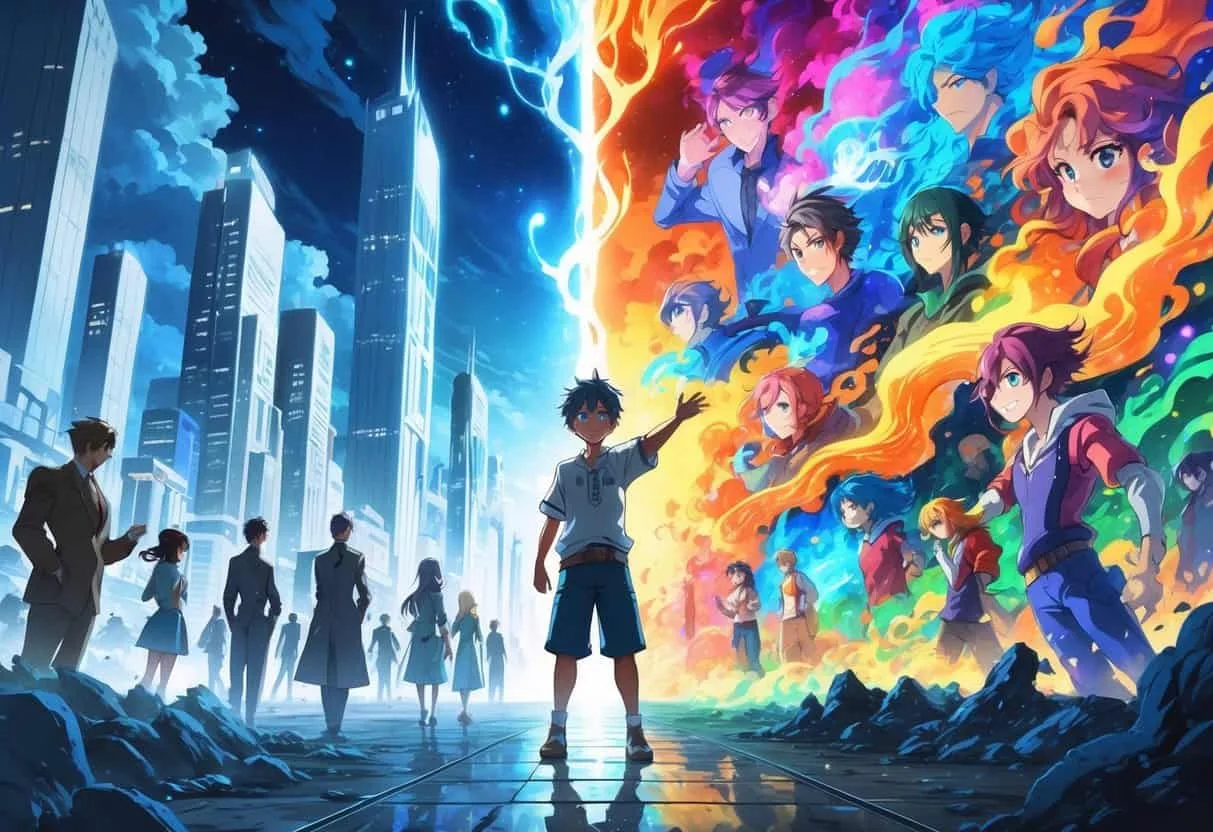
This limitless creative engine adds emotional texture to the stories you already cherish. It fills in backstories that were only hinted at, builds relationships that canon never dared to develop, and confronts themes that official narratives often sidestep. When you engage with fan fiction, you’re not just reading extra material; you’re joining a conversation that stretches across the entire fandom, one that continually reshapes what the anime means.
Expanding Beyond Canon Storytelling
Official anime narratives are structured around a fixed set of events, but fan fiction dismantles those constraints. It allows you to ask “what if” and then build a credible answer. This freedom broadens your understanding of the anime universe, revealing facets that the original authors never explored.
Alternative Universes and Crossovers
Alternate universes (AUs) are a cornerstone of fan fiction. Writers relocate characters into high school classrooms, coffee shop settings, fantasy realms, or dystopian futures. A Naruto ninja might become a salaryman, or a My Hero Academia student might attend a normal college without quirks. These AU scenarios challenge you to see familiar personalities adapt to unfamiliar rules, often highlighting traits that canon backgrounds suppress.
Crossovers take this a step further by merging anime with other series or media. You might read a story where Attack on Titan soldiers encounter the Avatar: The Last Airbender benders, or where One Piece pirates find themselves trapped in the world of Demon Slayer. Such mash-ups create unprecedented character dynamics and plot collisions. They reveal how core motivations—honor, survival, friendship—transcend their original settings, and they invite you to imagine battles, romances, and alliances that official studios would never produce.
Filling the Narrative Gaps
Every anime leaves loose threads. Fan fiction weaves them into full garments. Writers expand on time skips, off-screen training arcs, and the quiet moments between major battles. They craft stories about what happened before the story began—the childhood of a villain, the first love of a sidekick—or long after the final episode’s resolution.
These untold arcs often include:
- Detailed prequels exploring character origins that the manga only summarized
- Side missions that explain how supporting characters acquired their skills
- Epilogue-style tales depicting the next generation’s challenges
- Daily life vignettes that humanize heroes and villains alike
By filling in these gaps, fan fiction turns a linear plot into a living world. You gain a more intimate understanding of why characters make the choices they do, and you inhabit the world more fully, visualizing corners the camera never entered.
Transformative Character Evolutions
Canon may sketch a character’s arc, but fan fiction often paints the complete psychological portrait. Writers dive into introspective pieces that dissect a hero’s guilt, a rival’s hidden softness, or a villain’s redemptive potential. It’s common to see a typically stoic protagonist grappling with anxiety or a comic relief character confronting genuine trauma.
This transformative characterization sometimes draws on widely accepted fan interpretations—often called fanon—to steer growth. A character who was sidelined in the anime might become a brilliant strategist; a villain might be reimagined as an anti-hero with sympathetic motives. These explorations are not just escapism. They offer you a lens to examine identity, morality, and resilience, enriching the original material by showing what happens when characters are allowed to break type.
Deepening Character Relationships and Themes
Official anime often hints at complex emotional bonds but must conform to broadcast constraints, runtime limits, or the creator’s vision. Fan fiction ignores those constraints, diving into the relationships and themes that resonate most deeply with audiences.
Diverse Pairings and Romantic Exploration
Fan fiction is famous for its shipping culture, which pairs characters in ways the canon never does. You’ll find male/male (yaoi) pairings, female/female (femmeslash) relationships, and non-traditional romantic configurations that reflect a broad spectrum of viewer identities and desires. Even established canon couples might be re-examined under a more honest, tender, or stormy light.
Writers explore romantic and sexual dimensions with a freedom that television standards rarely permit. Stories can range from slow-burn courtships full of subtle glances to explicitly intimate encounters that treat sexuality as a natural part of the characters’ lives. In the hands of a skilled writer, these narratives don’t feel gratuitous; they deepen your empathy for the characters by showing their vulnerabilities, desires, and the trust they build in private moments.
Navigating Angst and Mature Content
Many anime shows allude to dark themes—war, loss, abuse—but rarely unpack them fully. Fan fiction fills that void by addressing trauma, mental illness, and moral ambiguity head-on. You can read stories where a hero suffers from post-traumatic stress after a brutal conflict, or where a character’s secret pain finally gets the narrative attention it deserves.
These angst-driven pieces often employ hurt/comfort dynamics, where one character supports another through an emotional or physical crisis. Such stories are cathartic for readers who identify with the struggles depicted. They validate feelings that mainstream media glosses over, providing a safe container for exploring heavy material. Because fan fiction is tagged and warned for content, you can choose exactly how deep into the darkness you want to go.
Giving Side Characters Their Due
For every protagonist, there are dozens of side characters who barely get lines. Fan fiction rectifies that imbalance. A background classmate from Naruto, a nondescript guild member from Fairy Tail, or a one-arc antagonist from Jujutsu Kaisen can become the star of their own sprawling saga. These stories flesh out motivations, imagine hidden talents, and build relationships that make the entire cast feel alive.
When a side character steps into the spotlight, you often discover a richness that the original anime overlooked. This broadened perspective transforms a simple story into an intricate community, where every individual has a history worth telling.
The Community Ecosystem of Fan Works
Fan fiction is not created in isolation. It thrives within a collaborative network of writers, artists, editors, and readers who collectively push creativity forward. Understanding this ecosystem helps you see why fan fiction has become such a durable and influential part of fan culture.
Beta-Reading and Collaborative Writing
Many fan fiction authors work with beta-readers—volunteers who review drafts for grammar, continuity, and emotional impact before publication. This collaborative step elevates the quality of stories. A beta-reader might point out a character inconsistency, suggest a more resonant phrase, or simply encourage a writer to trust their instincts.
Platforms such as Archive of Our Own and dedicated fandom forums make it easy to find betas. The exchange of feedback creates bonds that often extend beyond a single story, forming friendships and mentorships. Author’s notes frequently thank beta-readers by name, acknowledging that good fiction is rarely a solo endeavor. This communal ethic reinforces the idea that fan fiction is a shared art form.
Fan Art, Videos, and Multimedia Integration
Prose is just one medium. Fans also produce illustrations, comics, animations, and fanvids—video edits set to music—that interpret and expand upon written stories. An evocative piece of fan art can bring a fanfic scene to life visually, while a fanvid might capture the emotional arc of a novella-length work in three minutes of carefully edited footage.
These multimedia projects circulate on social media, linking back to the stories and introducing them to new audiences. The exchange is symbiotic: a writer’s narrative provides the concept, and an artist’s visual amplifies its reach. Fandom recommendations lists curated on blogs and video platforms further knit the community together, helping you discover hidden gems and form friendships with like-minded enthusiasts.
Legal Landscapes and Canon Respect
Fan fiction operates in a legal gray zone, but the landscape has stabilized significantly thanks to the advocacy of organizations like the Organization for Transformative Works. Most creators and rightsholders adopt a policy of tolerance as long as fan works are noncommercial and clearly labeled as unofficial. Understanding this helps you navigate the space responsibly.
Writers use tags like “non-canon” or “AU” to alert readers that a story diverges from the official timeline. Disclaimers frequently note that the characters belong to their original creators. These practices are not just about legal protection; they’re a sign of respect for the source material. They keep the fandom community healthy by clarifying that fan fiction complements canon rather than threatening it. In return, the community can freely explore radical reinterpretations without confusing new fans about what is “official.”
Case Studies and Iconic Fandom Contributions
To appreciate fan fiction’s impact, it helps to look at specific anime fandoms where transformative works have left a measurable mark. These case studies illustrate the vast range of what fan fiction can accomplish.
Enduring Fan Fiction Fandoms
Some anime series maintain startlingly active fan fiction scenes decades after their original run. Naruto fan works, for example, continue to produce modern-day AUs, time-travel fix-its, and elaborate political dramas set in the Hidden Villages. One Piece fandom thrives on explorations of the vast world Oda created, spinning off side adventures for minor pirate crews and inventing backstories for Devil Fruits. Bleach and Death Note retain strong followings that constantly reinterpret their iconic mind games and spiritual conflicts.
More recent hits like Demon Slayer and Jujutsu Kaisen have already amassed large fan fiction archives. The speed with which fans write alternate endings or explore character studies after a major canon event shows how responsive and dynamic this creative space is. You can visit a site like FanFiction.net’s anime section to see the sheer volume of ongoing storytelling spanning thousands of titles.
Ships and Character Reinterpretations
Certain pairings become so beloved that they develop their own mini-fandoms, complete with recurring tropes and inside references. For instance, the rivalry-turned-partnership between Naruto and Sasuke has inspired countless works that explore the psychological depth of their bond, often delving into what it means to forgive and trust. In the Bleach universe, Ichigo’s relationships with characters like Rukia or Byakuya invite reinterpretation through romance, friendship, or even adversarial respect.
Original characters (OCs) also find a home in these narratives. A writer might insert a new student into My Hero Academia’s U.A. High School to explore quirk dynamics from a fresh perspective, or create an ancient spirit in Inuyasha to expand the lore. These additions are not mere inserts; when done well, they challenge canon characters to grow in unpredictable ways.
How Fan Works Shape Anime Culture
Fan fiction influences more than just the fans who consume it. Popular fanon interpretations can bleed into fan art, cosplay, and even the way voice actors and creators talk about their characters at conventions. Doujinshi—self-published fan comics—are sold at Comiket and similar events, sometimes by creators who later become professional manga artists themselves. This pipeline from fan work to professional career demonstrates the vitality of transformative creation.
Online discussions, theory-crafting, and character analyses often reference well-known fan fiction tropes. The line between fan commentary and the fandom’s collective imagination blurs. When a theory becomes so widespread that it is accepted as almost canonical, you see how fan fiction can retroactively color the original work. It expands what the anime means, making it a co-owned cultural artifact rather than a static product.
Why Fan Fiction Matters to the Anime Experience
Fan fiction transforms the relationship between viewer and art. It turns a solitary act of watching into a participatory, communal process of meaning-making. The stories you read and write become a way to process the emotions the anime stirred, to question its assumptions, and to find representation that might be missing from the screen.
By expanding narratives, deepening relationships, building communities, and generating new cultural forms, fan fiction adds something that even the most brilliant canon cannot: an infinite number of personal, passionate, and profoundly creative extensions of the worlds you love. It ensures that as long as there are fans who dream, no anime story truly ends.