Table of Contents
The Core Question: Legacy Defined in the Dragon Ball Universe
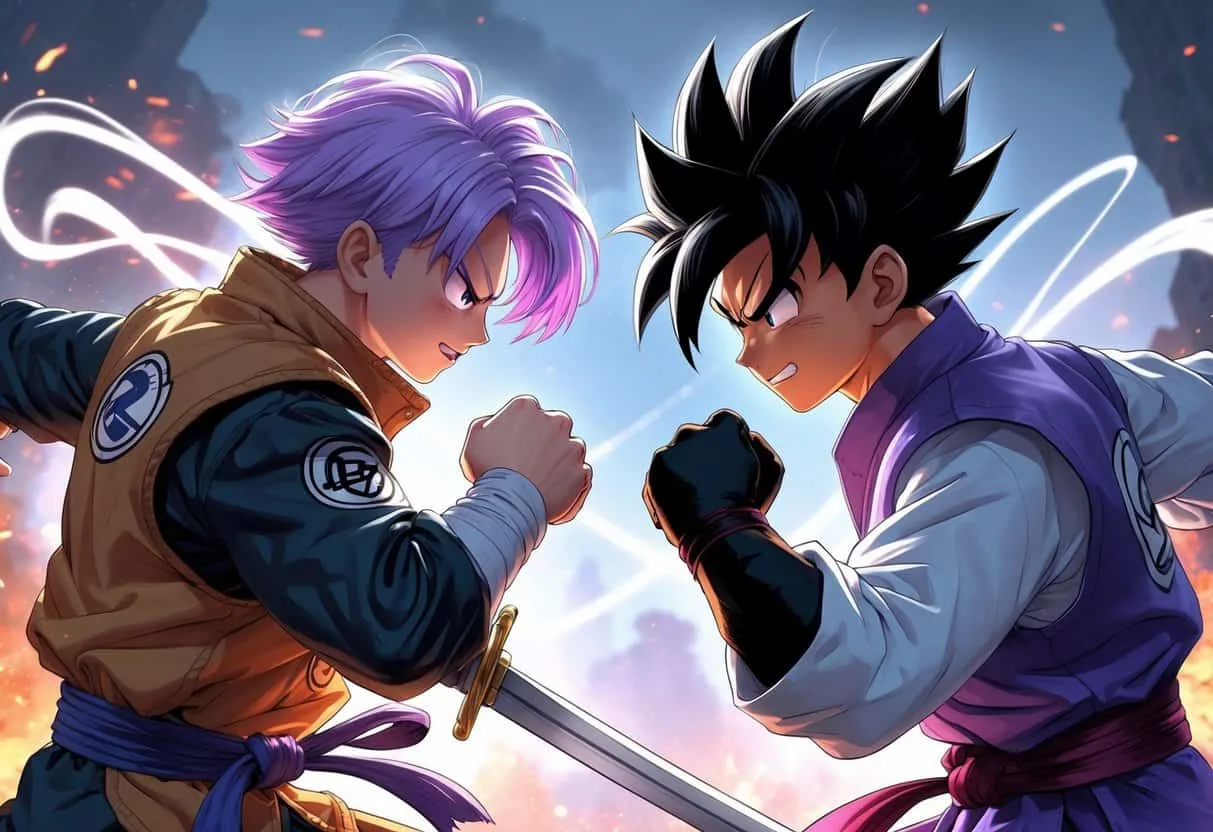
When Dragon Ball fans debate the next generation, two young Saiyans inevitably take center stage: Trunks and Goten. Both arrive with incredible natural power, share a hilarious rivalry, and fuse into one of the most chaotic warriors the series has ever seen. Yet their paths diverge sharply after the Buu Saga, and the question of which one left a more meaningful legacy becomes a fascinating lens through which to view the franchise’s later years. Trunks is often credited with a stronger narrative footprint, thanks to his serious moments and future timeline counterpart, while Goten’s impact is largely tied to fusion and lighthearted family dynamics. This exploration goes beyond surface power comparisons to examine their backgrounds, contributions to pivotal arcs, training philosophies, and lasting influence on the world of Dragon Ball.
At its heart, the comparison isn’t about which boy is more likeable—both have devoted fanbases—but about how their stories resonate across multiple series and media. Trunks carries the weight of two timelines and a legacy of survival; Goten embodies the carefree spirit of a peaceful era, yet his potential feels permanently undersold. By tracing their journeys from childhood through adulthood, we can see why Trunks stands as the more fully realized character while Goten remains an untapped well of Saiyan promise.
Origins and Family Influence
Both youngsters inherit extraordinary lineages, but their home environments shape their personalities and fighting foundations in starkly different ways. Understanding these formative years explains much of what follows in their respective arcs.
Trunks: The Prince’s Burden and a Genius Mother
Trunks Briefs enters the world as the son of Vegeta, the proud Saiyan prince, and Bulma, the sharpest scientific mind on Earth. Growing up at Capsule Corporation, he’s surrounded by cutting-edge technology, immense wealth, and a father who views him as both a source of pride and a future warrior. Vegeta’s training is not gentle; he pushes Trunks into the gravity chamber from an early age, instilling discipline and a relentless drive to surpass limits. This upbringing mirrors Vegeta’s own royal Saiyan ethos but tempered by Bulma’s pragmatism and occasional scolding, giving Trunks an interesting blend of arrogance and groundedness.
Even more defining, however, is the shadow of his future self. Future Trunks—a time-traveling, battle-hardened survivor—casts a huge influence over the boy’s identity. The younger Trunks grows up hearing tales of a devastated world where his parents died and androids reigned. That awareness injects a subtle seriousness beneath his cocky exterior. In Dragon Ball Super, this duality blooms as he confronts Goku Black and Zamasu, proving that the Trunks legacy spans timelines and tragedies.
His Saiyan instincts, refined by Vegeta’s tutelage, make him a fighter who can switch from a cheeky child to a determined defender in an instant.
Goten: The Peaceful Prodigy
Goten, born to Goku and Chi-Chi during a stretch of relative peace, lives a childhood far removed from the constant threat of extinction. Goku’s frequent absences—first due to death, then training—mean Goten’s early influences are his protective mother and the occasional presence of his older brother Gohan. Chi-Chi, adamant about education, tries to steer Goten away from fighting, but his Saiyan blood proves irresistible. By the age of seven, Goten has already achieved Super Saiyan without any formal training, a feat that even Gohan needed rage and near-death experiences to unlock.
His fighting style develops through play. He spars with Trunks in the woods, invents goofy moves, and approaches battle as a game. This easygoing attitude is both a gift and a limitation. While Goku’s optimistic nature shines through Goten’s personality, the absence of consistent, harsh training means he never internalizes the same depth of combat strategy. Chi-Chi’s emphasis on academics and Goku’s laid-back parenting style leave Goten with huge power but relatively little combat maturity, a pattern that persists well into Dragon Ball Super.
Mentors and the Weight of Bloodlines
Trunks’ primary mentor is Vegeta, who drills into him the importance of pride, technique, and domination. Time in the Hyperbolic Time Chamber together during the Buu Saga hones Trunks’ abilities dramatically. Conversely, Goten’s main guide is Gohan, whose patient and protective teaching reflects his own gentle nature. When Gohan trains both boys for the World Martial Arts Tournament, you see the difference in approach: Vegeta barks orders from the sidelines, while Gohan calmly explains and encourages. These contrasting methods explain why Trunks develops a sharper independent edge, while Goten thrives most when partnered.
Both boys also inherit a legacy of legendary fathers, but that inheritance functions differently. Trunks must live up to a father who never stops improving; the pressure becomes a catalyst. For Goten, being Goku’s son means living in a monumental shadow without the same urgent push. Goku’s habit of leaving the Earth’s safety to his children in Dragon Ball Super puts Goten in an awkward spot—powerful but directionless, a recurring theme that undercuts his legacy.
Contributions to the Series and Major Story Arcs
Both Trunks and Goten have participated in some of the franchise’s most iconic battles, yet their roles vary wildly between supporting players and central figures. The way each boy contributes to the narrative reveals a lot about their respective impact.
Dragon Ball Z: The Android and Buu Sagas
Trunks’ debut as a mysterious youth who slices Mecha Frieza in half remains one of the most jaw-dropping moments in Dragon Ball Z. His warning about the androids reshapes the entire timeline, setting off a chain of training and preparation that culminates in the Cell Games. Even the younger Trunks, not yet born in that future, benefits from the ripple effects. In the Majin Buu Saga, Trunks steps up as a fighter alongside Goten, and his training under Vegeta’s gravity chamber produces a confident, capable warrior who nearly matches his father’s fierce spirit.
Goten enters the story later, during the Buu Saga, but his introduction is still memorable. Discovering Super Saiyan with almost no effort astounds Gohan and the audience. His bond with Trunks leads to the fusion technique, which becomes the Z Fighters’ best hope against Super Buu. Without Goten’s innate power and his willingness to play along with Trunks’ schemes, Gotenks never rises to Super Saiyan 3 and cannot push Buu to the brink. So while Goten’s solo contribution is limited, his role as half of Gotenks is pivotal to that arc’s climax.
Dragon Ball Super: The Divergence Sharpens
In the Dragon Ball Super era, the gap between the two characters widens dramatically. Future Trunks returns with a harrowing tale of Goku Black, forcing the timeline’s heroes to confront threats that god-level powers can barely handle. This arc cements Trunks as a tragic hero who has watched his world burn twice. His emotional growth, new techniques like the Sword of Hope, and the heartbreaking decision to abandon his original timeline give him a narrative weight that lingers far after the arc ends.
Goten, meanwhile, is largely sidelined. While he appears in the Tournament of Power build-up and some slice-of-life episodes, he never gets a serious fight or a transformation beyond his standard Super Saiyan. The decision to keep him and Trunks on the sidelines during the Universe Survival arc is a widely discussed writing choice; it keeps them safe but denies them the growth that would solidify their legacies. Dragon Ball Super: Super Hero gives Goten and Trunks a few fun moments as teen heroes, but the bulk of the spotlight remains on Gohan and Piccolo. This pattern cements a frustrating reality: Trunks, especially his future counterpart, gets complex storytelling while Goten functions best as a charming secondary presence.
The Fusion Phenomenon: Gotenks’ Legacy
No discussion of either character is complete without Gotenks. The fusion of Trunks and Goten produces a fighter whose personality embodies the best and worst of both: Trunks’ arrogance and creativity combined with Goten’s playfulness and impulsiveness. Attacks like the Super Ghost Kamikaze Attack and the Galactic Donut are so wildly inventive that they’ve become fan favorites. Gotenks is the only fusion to reach Super Saiyan 3 without years of intense training, and his near-victory against Super Buu proves the raw potential locked inside the boys.
However, Gotenks also reveals the limitations of their individual growth. The fusion is powerful but unstable, often breaking apart at the worst possible moment due to overconfidence or poor timing. Neither Trunks nor Goten can achieve Super Saiyan 3 on their own, which highlights how their combined might relies on cooperation rather than independent mastery. Gotenks remains an iconic piece of Dragon Ball lore, but he underscores that both characters need each other to reach the heights that their fathers can achieve alone.
Power, Training, and Combat Philosophy
Analyzing raw power levels in Dragon Ball is a rabbit hole, but the distinct ways these two Saiyans train and fight offer clear insight into why Trunks has the superior combat legacy.
Training Approaches Under Different Pressures
Trunks’ training regime is, from the start, military-grade. Vegeta’s gravity room sessions push him into life-or-death scenarios early; the Cell Saga era shows a young Trunks already comfortable in 150x gravity. Future Trunks, of course, learned through actual war—surviving against Androids 17 and 18 without super gadgets or a safety net. That trial-by-fire creates a fighter who thinks tactically, conserves energy, and knows when to retreat, even though his pride often screams otherwise. In Super, Future Trunks demonstrates a mastery of hand-to-hand combat that keeps him alive against foes far stronger than him.
Goten’s training is far more recreational. Most of his early fighting experience comes from sparring with Trunks in the woods, treating combat like a game. The brief time he spends with Gohan in the Hyperbolic Time Chamber focuses almost entirely on fusion synchronization rather than individual strength. Because he’s so naturally gifted, Goten never develops the same hunger for improvement that defines his father. This lack of rigorous mentorship manifests in Super, where Goten’s attempts to get stronger often revolve around mimicking others rather than forging his own path.
Battle Experience and Notable Opponents
The list of enemies Trunks has faced alone underscores his solo legacy. Future Trunks alone battles Mecha Frieza, King Cold, the androids, Imperfect Cell, Dabura, and later Goku Black and Zamasu. Each fight forces him to evolve, both emotionally and tactically. The younger Trunks, while less traumatized, still sees action against Majin Buu, various tournament opponents, and even participates in the fight against Beerus’ early visit (albeit briefly). These experiences compound, building a resume that few Z Fighters can match.
Goten’s solo fight record is thin. Outside of sparring, his most notable individual combat is a short skirmish with Buu and some tournament-round battles. He never has a defining one-on-one victory against a major villain. His strength emerges almost exclusively in tandem with Trunks, either in coordination or as Gotenks. As a result, his battle IQ remains underdeveloped, and when moments call for solo heroics, the narrative usually turns to Trunks or an adult.
Transformations and the Saiyan Ceiling
Both achieve Super Saiyan at record-breaking ages. Trunks adds Super Saiyan 2 later, a form that visibly pushes him into a new tier of speed and aggression. In the future timeline, Trunks even hones a rage-fueled variant of Super Saiyan 2 that lets him briefly tangle with Goku Black. Goten, however, never shows a solo Super Saiyan 2 transformation in canon material. While he likely possesses the potential, the absence of that on-screen evolution leaves him perpetually behind.
Super Saiyan 3, available only through fusion, demonstrates that their combined ki can transcend normal limits, but that achievement belongs to Gotenks, not to either boy alone.
An official Dragon Ball site often lists character power statistics, and while these are sometimes ambiguous, the trend is consistent: Trunks’ multiple transformations and battle-tested techniques place him as the more individually formidable fighter. Goten’s power is not in question—it’s his motivation and the narrative attention given to his growth that falter.
Legacy and Cultural Impact
Trunks’ and Goten’s places in the broader Dragon Ball culture are shaped as much by fan reception as by canon events. Popularity polls, spin-off media, and the direction of recent stories make it clear which character has left the deeper mark.
Fan Adoration and Iconic Moments
Trunks, especially his future version, ranks consistently high in global popularity polls. His dramatic entrance in the Android Saga, the heart-wrenching loss of his mentor Gohan, and his ultimate victory over the androids in his timeline are moments that fans cite as some of the most emotional in the series. The Dragon Ball Super Future Trunks arc, while controversial in its ending, reignited interest in his character and proved he could carry a major storyline decades after his introduction. Games like Dragon Ball Xenoverse 2 and Dragon Ball FighterZ often feature multiple Trunks variants, each with unique movesets and story roles, further expanding his footprint.
Goten’s fanbase is more niche but enthusiastic. He’s beloved for his sunny disposition and the comedic chemistry he shares with Trunks. As part of the fusion duo, he enjoys a surge of popularity; Gotenks’ scenes reliably rank among the Buu Saga’s most re-watched clips. However, when fans discuss dream matchups or future storylines, Goten rarely headlines the conversation. Instead, he’s usually mentioned in the same breath as “Gotenks” or “the boys,” rarely as a standalone draw.
Spin-Offs, Games, and Merchandise
Looking at derivative media tells the same story. Trunks receives numerous figures, premium statues, and even standalone OVA specials like The History of Trunks. Major video game titles like Dragon Ball Z: Kakarot dedicate entire DLC packs to his future timeline. In contrast, Goten-centric merchandise exists but is far less common. Most Goten figures are part of fusion sets or paired with Trunks.
He appears in games like Dragon Ball Legends and Dokkan Battle, but his cards and variants rarely drive meta strategies—Trunks units, on the other hand, often dominate.
This discrepancy is partly logistics—Trunks simply has more material to draw from due to his dual-timeline existence. But it’s also a reflection of narrative weight. When a character anchors some of the most dramatic and consequential moments in a 30-year franchise, merchandisers naturally lean into that popularity. Goten’s sunny energy is charming, but it doesn’t push units off shelves the way a sword-wielding, timeline-hopping hero does.
Influence on the Next Generation Storytelling
Trunks’ legacy continues to influence how Dragon Ball handles its younger heroes. His future self’s solo survival arc sets a template for characters like Pan, who may face similar struggles in upcoming stories. The emotional beats of his saga—loss, resilience, and the fight to protect remnants of a broken world—have inspired fan works and even official side stories. In Dragon Ball Super: Super Hero, teen Trunks gets a few moments of glory during the Red Ribbon Army crisis, showing that even his main timeline version can be positioned as a future guardian of Earth.
Goten’s influence is more subtle. He represents a peace-time Saiyan, a version of his father who never had to fight for survival. That concept is interesting in theory, but the franchise has yet to fully explore it. When fans and writers imagine future arcs, they often pair Goten with Trunks or Gohan, rarely allowing him to drive a plot independent of others. His most vital legacy may be the idea that not every Saiyan needs trauma to become strong—a notion relevant in a more peaceful universe.
Still, until that theme gets its own dedicated arc, it remains more potential than legacy.
A Comparative Overview: Two Paths, One Universe
The table below distills the key differences that define each fighter’s place in Dragon Ball’s enduring saga:
| Aspect | Trunks | Goten |
|---|---|---|
| Narrative Importance | Central in multiple timeline-shattering arcs | Crucial during the Buu Saga, largely supportive elsewhere |
| Emotional Depth | Driven by loss, survival, and heavy responsibility | Carefree, loyal, but lacks high-stakes personal challenges |
| Transformations | Super Saiyan, Super Saiyan 2, rage-boosted variants | Super Saiyan (canon), potential for growth unrealized |
| Spin-off Presence | Frequent lead in games and specials | Relies heavily on fusion or group roles |
| Fan Perception | Seen as a tragic, powerful hero | Cherished as a lighthearted, under-utilized talent |
Trunks’ legacy is built on struggle and centrality. His many forms, his timeline-hopping heroics, and his ability to carry mature storylines give him a timeless quality that resonates across generations. Goten’s legacy is brighter but narrower—a symbol of what could be if the narrative ever decided to invest in his solo journey. Neither character is weak; they simply occupy different tiers of cultural and narrative impact. For now, the evidence points toward Trunks as the character with the more substantial, enduring legacy in Dragon Ball history.