Table of Contents
Few character archetypes in anime ignite as much debate and devotion as the tsundere. A fusion of prickly hostility and hidden tenderness, the tsundere keeps viewers guessing whether the next moment will bring a sharp retort or a humiliatingly sweet confession. Audiences have spent decades dissecting the emotional whiplash of characters like Rin Tohsaka, Kurisu Makise, and Hitagi Senjougahara—figures who dominate fan polls and launch a thousand think pieces. Understanding the tsundere’s core traits reveals why this personality type remains a narrative powerhouse, driving comedy, romance, and even high-stakes action with equal force.
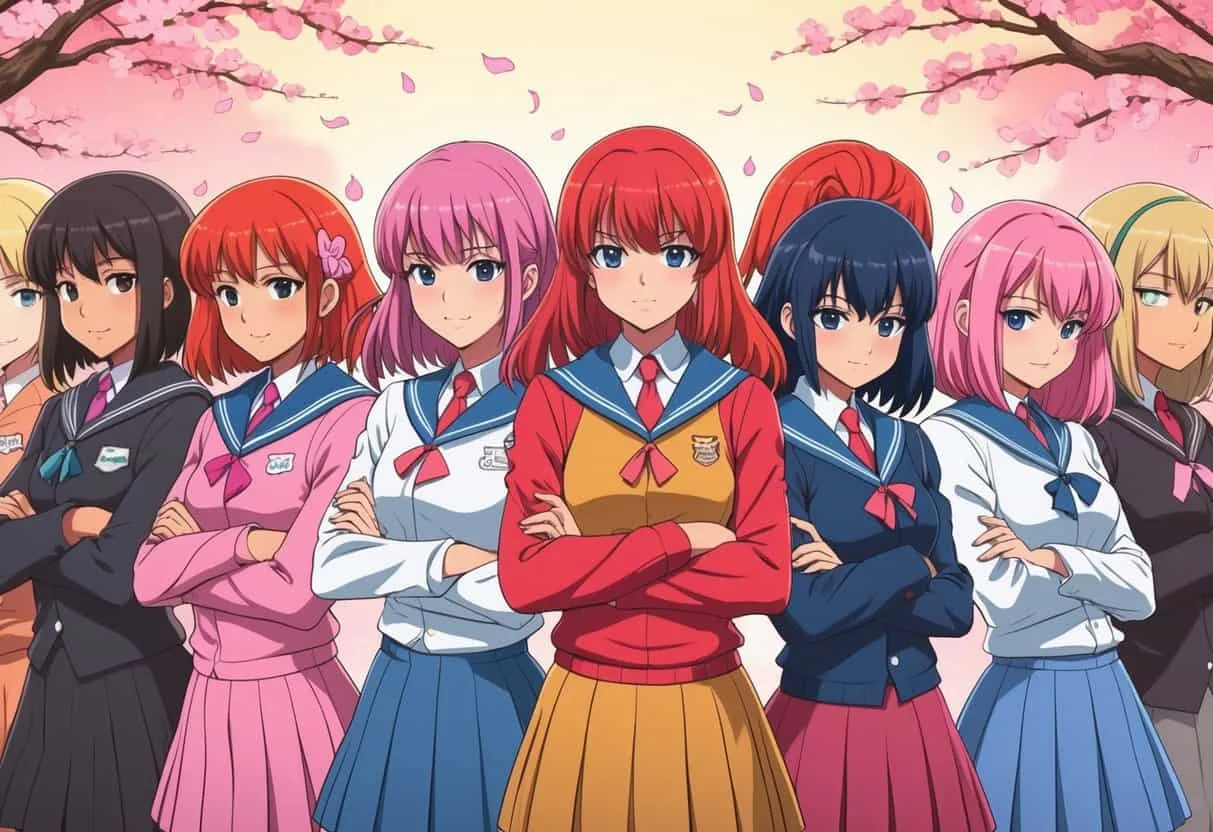
What Defines a Tsundere? Psychology, Origins, and Evolution
The term “tsundere” blends two Japanese onomatopoeic phrases: tsun tsun, meaning to turn away in irritation or anger, and dere dere, to become lovestruck or affectionate. Originally emerging from dating sims and visual novels in the late 1990s, the archetype describes a character who starts off cold, confrontational, or outright mean, only to gradually unveil a gentler, deeply caring interior. This shift isn’t random—it often stems from embarrassment, insecurity, or the inability to express vulnerability directly.
Early tsundere portrayals were simpler: a childhood friend who calls the protagonist an idiot while secretly packing an extra lunch. As anime storytelling matured, so did the tsundere. Modern tsunderes operate on a spectrum. Some cycle between frosty indifference and tender warmth within a single episode, while others require an entire series to crack their shell. The emotional seesaw creates a compelling rhythm—every harsh word hints at an underlying ache, and every blush feels like a hard-won victory.
This duality works because it mirrors a real psychological conflict: the fear of rejection battling the desire to connect. For audiences, watching a tsundere struggle to say “thank you” or admit affection feels both painfully awkward and deeply relatable. The archetype also offers writers a versatile tool. In comedy, the sudden flip from rage to shyness generates slapstick and wordplay. In drama, the slow erosion of emotional walls can form the backbone of a series’ entire emotional arc.
Even in action shows, a tsundere’s protective anger often masks a fierce loyalty that resonates with viewers long after the fight scenes end.
Tsundere vs. Kuudere, Himedere, and Other Closely Related Types
Conflating all emotionally reserved characters under the tsundere umbrella blurs important distinctions. Recognizing the difference between a tsundere and archetypes like the kuudere or himedere sharpens your appreciation of what makes each one tick.
Kuudere characters remain icy and emotionally detached, rarely raising their voice or showing visible distress. They express affection through quiet actions—a perfectly timed cup of tea, a subtle glance of concern—rather than through vocal explosions. The kuudere’s calm exterior never cracks into the tsundere’s signature outbursts. Rei Ayanami from Neon Genesis Evangelion stands as the definitive kuudere, her flat affect masking a profound, wordless care for those around her.
Himedere types demand to be treated like nobility. Their emotional state hinges on whether others acknowledge their perceived superiority. Unlike a tsundere, a himedere isn’t hiding affection behind anger; they openly expect adoration and become petulant when denied it. Erina Nakiri from Food Wars! initially displays classic himedere traits—she expects deference and scoffs at anyone she deems beneath her—though her character later expands into a more complex blend of pride and vulnerability.
Other variants further define the landscape. A yandere appears sweet and affectionate at first but harbors an obsessive, often violent possessiveness. A dandere is simply shy and quiet, rarely speaking until they feel completely safe, without the initial prickliness that defines a tsundere. The table below provides a quick-reference look at three frequently confused types:
| Archetype | Dominant Emotional Mode | Affection Expression | Classic Example |
|---|---|---|---|
| Tsundere | Hot-and-cold, irritable then warm | Harsh words followed by blushing kindness | Taiga Aisaka (Toradora!) |
| Kuudere | Icy composure, minimal expression | Subtle protective gestures, rarely verbal | Rei Ayanami (Neon Genesis Evangelion) |
| Himedere | Demanding, regal, entitled | Expects adoration; may soften only when status is acknowledged | Erina Nakiri (Food Wars!) |
Equipped with these distinctions, you can better spot how a character’s specific emotional armor—be it anger, ice, or royal pride—shapes each scene and relationship.
Iconic Tsundere Characters Across Anime History
Tsundere characters have evolved dramatically since the archetype’s inception, yet the most memorable examples always balance internal contradiction with believable growth. Here are the figures who defined, redefined, and occasionally subverted the tsundere mold.
The Pioneers: Characters Who Established the Tsundere Blueprint
Before the term became a household name among anime fans, certain characters were already carving the template. Naru Narusegawa from Love Hina remains a foundational example. To most of the Hinata House residents, she’s a studious, short-tempered girl who frequently launches the protagonist into the stratosphere with a single punch. Yet her outbursts are proportional to her fear of being emotionally exposed. Naru’s loyalty and quiet moments of support—helping Keitaro study, worrying about his health—set the emotional baseline that later tsunderes would build upon.
Louise Françoise Le Blanc de La Vallière from Zero no Tsukaima pushed the archetype into magical-fantasy territory. Her explosive tantrums and relentless verbal abuse of Saito hide an aristocratic upbringing that never taught her how to express genuine care. The series dedicates entire arcs to peeling back Louise’s bravado, exposing the lonely girl who misunderstands her own feelings. Her journey from unprovoked hostility to trembling confession established a rhythm that countless romance series would later borrow.
No discussion of early tsunderes can ignore Asuka Langley Soryu from Neon Genesis Evangelion. Asuka’s arrogance and aggressive competitiveness serve as a fortress against deep-seated trauma and abandonment fears. She berates Shinji, challenges authority, and demands recognition of her superiority, but her breakdowns reveal an immense, childlike need to be loved and valued. Asuka demonstrated that a tsundere could anchor not just romantic comedy, but psychological drama of the highest order, lending the archetype serious dramatic legitimacy.
Modern Icons: Deeper Layers and Sharper Wit
The 2000s and 2010s saw tsunderes become more self-aware, playful, and emotionally intricate. Taiga Aisaka from Toradora!—the “Palmtop Tiger”—epitomizes the modern tsundere’s appeal. Short, fierce, and perpetually ready to bite, Taiga initially antagonizes Ryuuji with physical violence and insults. What makes her arc so compelling is the symmetry between her emotional defenses and his. Both characters mask their vulnerabilities with performance, and as Taiga’s feelings shift from annoyance to love, the viewer experiences every mortifying, heart-squeezing step.
Toradora! on MyAnimeList remains a prime entry point for anyone wanting to study tsundere mastery.
Rin Tohsaka from Fate/stay night reframes tsundere traits through the lens of a mage’s pride and duty. She’s competent, calculating, and unwilling to show softness to Shirou, whom she considers a reckless amateur. Her cold front, however, cracks whenever her genuine concern for his safety overrides her carefully crafted image. Rin’s chemistry with Shirou relies on verbal fencing, not physical comedy, making her a highly quotable and sharp-witted tsundere who thrives in the visual novel’s dialogue-rich structure. More details on her complex characterization can be found on the TYPE-MOON Wiki.
Kurisu Makise from Steins;Gate offers a science-minded variation. Initially dismissive and quick to label Okabe as an insufferable delusion, she gradually becomes his most trusted intellectual ally. Her tsundere nature manifests less through violence and more through sarcastic retorts, stubborn denials, and adorably flustered reactions when Okabe praises her. The series uses these moments to highlight the deepening bond between two brilliant, socially awkward individuals, proving that a tsundere partnership can fuel a gripping sci-fi thriller. For an overview of her role in the series, check out Kurisu’s character page.
Kaguya Shinomiya from Kaguya-sama: Love Is War injects strategic brilliance into the archetype. Her cold, calculating exterior as the Shuchiin Academy vice president hides a deeply smitten girl who would rather orchestrate elaborate psychological battles than simply admit she likes Miyuki Shirogane. Kaguya’s inner monologues, often depicted in hilarious chibi-style breakdowns, turn the tsundere struggle into a battle of wits, making every romantic advance feel like a decisive military campaign. The gap between her elegant composure and her internal panic defines the show’s comedic heart.
Unconventional and Crossover Tsundere Examples
Not every tsundere fits the high-school romance mold. Some wield the archetype in fantasy guilds, military settings, or shonen battlefields. Erza Scarlet from Fairy Tail is a towering figure of discipline and intimidation whose stern orders terrify her guildmates. Yet Erza’s fierce protectiveness and occasional vulnerability—her weakness for cute costumes and her childhood trauma—reveal a profoundly caring soul. She proves that tsundere qualities can manifest as maternal ferocity, not just romantic embarrassment.
Male tsunderes broaden the archetype even further. Edward Elric from Fullmetal Alchemist bristles with pride, reacts explosively to comments about his height, and pushes people away with his sharp tongue. Underneath the bluster, however, is a devoted brother willing to sacrifice everything for Alphonse. His emotional arc demonstrates that tsundere behavior can stem from guilt, responsibility, and a refusal to appear weak. Similarly, Vegeta from Dragon Ball Z has been analyzed by countless fans as one of anime’s most enduring male tsunderes.
His constant refusal to openly acknowledge his care for Bulma and Trunks, expressed instead through furious training and begrudging acts of heroism, fits the classic tsundere pattern transplanted into a planetary-scale action saga.
Hitagi Senjougahara from Bakemonogatari takes a unique, razor-sharp approach. She weaponizes her words, threatening bodily harm with a deadpan expression, yet her early hostility is a trauma response—a fortress built after a horrific physical violation. As she lowers her guard with Koyomi Araragi, her affection takes the form of possessive, occasionally unhinged declarations of love that still carry a sharp edge. This blend of kunai-like verbal cruelty and unwavering devotion carves a tsundere subcategory all its own, one where the “dere” phase feels earned through genuine psychological healing.
The Enduring Influence of the Tsundere on Storytelling and Fan Culture
The tsundere archetype does more than generate viral clips of blushing meltdowns. It shapes narrative structure, deepens character development, and anchors entire fan communities.
Driving Character Development through Emotional Contradiction
Tsundere characters inherently possess friction. A gap between their public persona and private feelings forces conflict—either internal or interpersonal—that must be resolved for the character to grow. This built-in tension gives writers a clear roadmap: establish the shell, drop hints of warmth, engineer a breaking point, and deliver a cathartic confession. Along the way, the audience witnesses a believable transformation. Taiga’s journey from violently rejecting Ryuuji to relying on him completely, or Rin’s evolution from treating Shirou as an annoyance to trusting him as a partner, feels earned precisely because the resistance was so formidable.
Moreover, the tsundere’s struggle to vocalize affection often mirrors a universal human experience. Many people have lashed out when they felt exposed or deflected a compliment with sarcasm. Watching a character stumble through these same motions fosters a powerful sense of empathy. The archetype also allows for comedic relief in otherwise heavy narratives. In death-filled epics like Fate/stay night, Rin’s flustered denials provide a necessary emotional release valve without undercutting the stakes.
Fan Communities and the Tsundere Phenomenon
Tsunderes consistently dominate character popularity polls, inspire an avalanche of fan art, and fuel endless debate over which character is the “purest” example. This devotion stems from the archetype’s unpredictability. A fan never knows if the next episode will deliver a vicious verbal takedown or an accidental handhold that sends the character into a blushing spiral. That anticipation keeps conversations alive across forums and social media for years after a series ends. Memes about classic tsundere tropes—the “It’s not like I did it for you” line, the flustered slap, the hair twirl—circulate endlessly, solidifying the archetype’s place in global pop culture.
Conventions and cosplay events also reflect the tsundere’s reach. Characters like Rin Tohsaka, Kurisu Makise, and Kaguya Shinomiya are cosplay staples not only because of their distinctive designs but because fans connect with the dual nature they represent. Wearing a tsundere’s costume feels like inhabiting a character who’s tough on the outside but full of heart—a wish-fulfillment of emotional complexity.
Tsundere Outside the Romance Genre: Naruto and Beyond
The tsundere lens enriches more than romantic comedies. Sakura Haruno from Naruto embodies a tsundere-adjacent role within a ninja epic. Early in the series, she openly criticizes Naruto’s antics and fixates on Sasuke with a superficial crush. Her blunt dismissals of Naruto often mask a growing respect she cannot easily articulate. As the series progresses, Sakura’s protective instincts sharpen, and her emotional walls gradually crumble.
While not a textbook tsundere in the romantic sense, her character arc gains texture when viewed through the archetype’s framework—her initial harshness giving way to deep, fierce loyalty for both her teammates. The Narutopedia entry on Sakura details this evolution.
Even in sports anime and historical dramas, tsundere traits pop up. Sullen rivals who refuse to admit they enjoy a teammate’s company, commanders who berate soldiers while secretly risking their own lives—these variations all draw from the same emotional well. The archetype’s flexibility ensures it remains a go-to device for creators across genres, seasons, and decades.
Why the Tsundere Endures
The tsundere’s staying power is no accident. At its core, the archetype dramatizes the frightening, exhilarating process of letting someone in. Every cold shoulder is a challenge, every blush a victory. In a medium that often excels at external spectacle, tsunderes remind us that the most gripping battles are sometimes the ones fought inside a character’s own heart. Whether you’re charmed by Taiga’s tiny fists, dissecting Kaguya’s mind games, or cheering for Vegeta’s begrudging fatherhood, the tsundere offers a unique, emotionally charged lens through which to experience anime’s vast storytelling landscape.