Table of Contents
India’s animation industry is picking up speed, and so are the creators steering its future. While the term “anime” typically points to Japanese animation, a growing wave of Indian studios and independent artists is embracing anime-inspired aesthetics, blending them with local storytelling traditions to create something entirely new. If you’re curious about who’s really shaking things up in Indian anime and animation, there are a few studios and individuals you should absolutely keep an eye on.
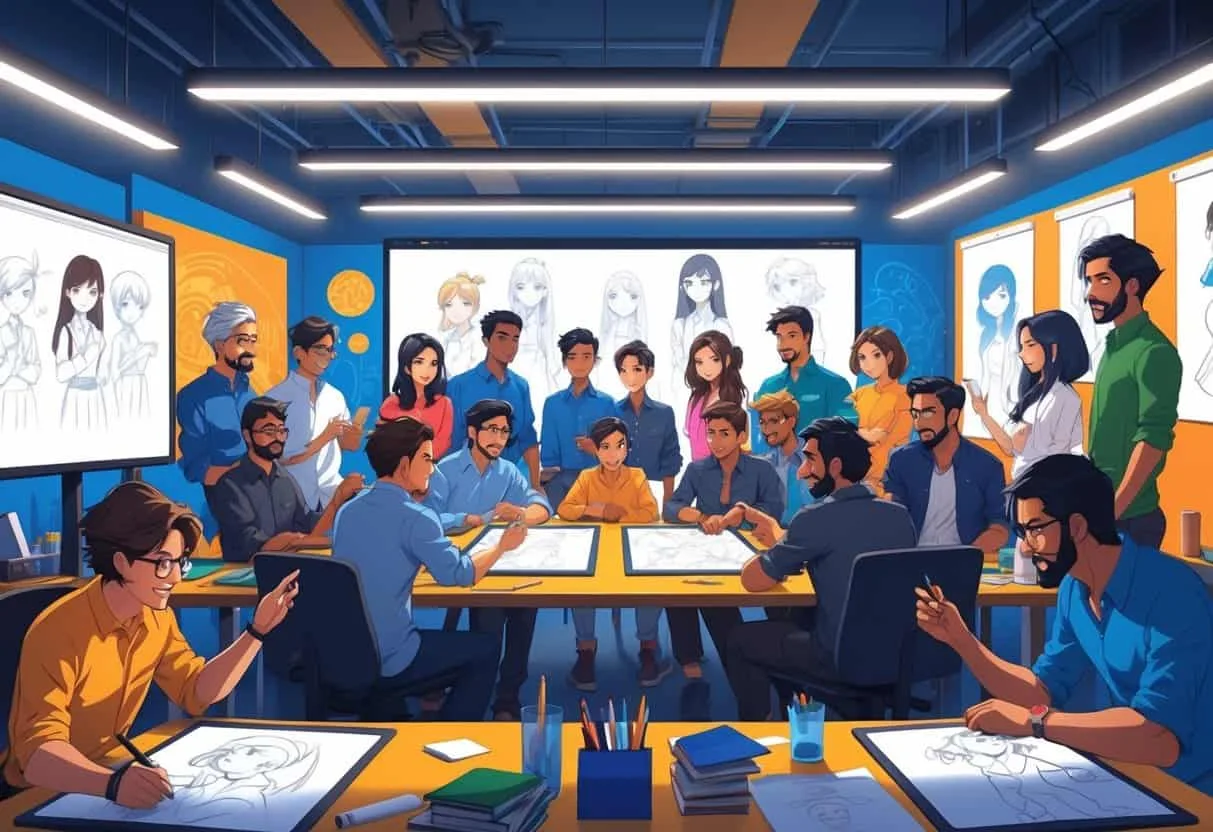
Studios like Studio Durga and Toonz Media Group are at the forefront, deftly merging hand-drawn and digital techniques to create visuals that feel both modern and deeply rooted in Indian culture. Meanwhile, content creators on YouTube, such as DaddyVyuk and AnimeTmTalks, are building communities that discuss, dissect, and celebrate Indian anime and manga, giving fans a dedicated space to explore this emerging scene. By spotlighting these producers and entertainers, you start to appreciate how India is carving its own niche in the vast world of animation.
Key Takeaways
- Indian animation studios are leading a creative shift toward anime-inspired storytelling without losing cultural identity.
- Visionary directors, character designers, and writers are crafting narratives that appeal to both local and global audiences.
- Streaming platforms and community champions on YouTube are accelerating the visibility and popularity of Indian anime.
Pioneering Indian Anime Creators
Behind every memorable series or film stands a team of creators who push the medium forward. Indian anime, in particular, owes its growing identity to directors who dare to experiment, designers who fuse tradition with bold new looks, and writers who give ancient tales a contemporary beat. Their work spans every stage of production, and you can feel the raw energy in the final results.
Visionary Directors and Producers
If you trace the roots of Indian anime-inspired storytelling, you’ll find directors like Rajorshi Basu, whose film Karmachakra is widely regarded as India’s first true anime-influenced feature. Basu, founder of Studio Durga, layered Japanese-style frame composition and pacing over a story soaked in Kolkata’s urban texture and Indian mysticism. The result didn’t feel like a copy of a Japanese show; it felt like a confident, indigenous take on the anime language.
On the producing side, veterans such as Ram Mohan laid the groundwork decades ago. Often called the father of Indian animation, Mohan co-founded Graphiti Multimedia and produced the Indo-Japanese classic Ramayana: The Legend of Prince Rama. His insistence on high-quality pre-production and artist training gave new directors the scaffolding they needed to take creative leaps. More recently, Sharad Devarajan of Graphic India has pushed the envelope by shepherding projects like The Legend of Hanuman, which borrows the visual rhythm and emotional intensity often associated with anime while remaining unmistakably Indian. Producers like these connect funding, talent, and distribution, ensuring that ambitious ideas don’t stay locked on a storyboard.
Award-Winning Character Designers
Walk into any studio creating Indian anime, and character designers are the first to hand you a window into the world. They don’t just draw; they build visual personalities that carry the story’s emotional weight. Designers working on series like Karmachakra fused Japanese shoujo and shonen proportions with Indian facial features, traditional attire, and subtle cultural motifs—think bindi placements that change with a character’s mood or hair accessories that echo temple jewelry. This approach makes characters instantly recognizable yet never cliché.
Within established houses like Toonz Media Group and Prayan Animation, designers have racked up international awards for projects that cross cultures. Their process starts from the script, sculpting silhouettes that reflect a character’s inner conflict. Because the Indian anime scene is still young, these artists often wear multiple hats, influencing color scripts and background art to ensure the whole visual package feels cohesive. When the design works, it’s not just a pretty face on screen; it’s the emotional anchor that keeps viewers coming back.
Innovative Writers in Indian Anime
Anime lives and dies on its scripts, and Indian creators are tackling this head-on. Writers in the niche are digging into India’s epics, folklore, and even hard-hitting urban issues to craft narratives that feel both mythic and urgently personal. The writing team behind Karmachakra, for instance, wove a mystery thriller around concepts of karma and reincarnation without ever sounding like a textbook. They let the anime frame do the talking, using silence, motion, and pacing to build tension.
Elsewhere, scriptwriters for the animated series The Adventures of Tenali Raman modernised classic wit-fables so that they resonate with today’s children while preserving the cleverness Chhota Bheem’s writers infused a similar energy into a smaller, more localized underdog story. The innovation lies in how these writers structure arcs—often longer, episodic sagas in the anime tradition—rather than wrapping everything up in 11 minutes. This patient storytelling is precisely what makes Indian anime stand out, and it’s winning notice from festivals and streaming platforms that increasingly demand stories with genuine cultural texture.
Leading Indian Animation Studios Shaping the Industry
The studios pushing Indian anime forward come in different shapes and sizes. Some have weathered decades of change; others are fresh-faced and hyper-focused on the anime aesthetic. Together, they’re building an infrastructure that lets Indian creators produce work that competes visually and narratively with anything coming out of Tokyo or Los Angeles.
Powerhouses of Indian Animation
When you talk about scale and reliability, names like Toonz Media Group, Maya Digital Studios, and DQ Entertainment sit at the top. Toonz, headquartered in Thiruvananthapuram with offices worldwide, is one of Asia’s largest animation production houses. It has co-produced everything from Wolverine and the X-Men to original IP like Gummy Bear, and its teams are fluent in the hybrid 2D-3D pipeline that anime-inspired projects often demand. Maya Digital, founded by the late Ram Mohan, continues to train generations of artists through its Maya Academy of Advanced Cinematics while delivering 2D series that reach millions of Indian homes. DQ Entertainment, meanwhile, built its reputation on international co-productions such as The Jungle Book and Peter Pan, mastering the art of delivering animation that meets strict global broadcast standards.
These powerhouses offer something else that’s less glamorous but critical: a pipeline. Aspiring anime creators who might start with a festival short can plug into these studios’ networks and tools, refining their craft under the guidance of veterans who have shipped hundreds of episodes. This is how techniques like smear frames, impactful key poses, and dynamic camera moves—staples of anime—get internalised rather than imitated.
New-Age Anime and Hybrid Studios
A newer crop of studios has emerged with the explicit goal of making anime-style content from Indian soil. Studio Durga leads the charge, not only with Karmachakra but also with an active community around its Patreon and Discord, where fans watch the creative process unfold. The studio’s approach is deeply collaborative, often involving freelancers who cut their teeth on international anime productions and want to bring that knowledge home.
Capsicum Mediaworks, operating out of Pune, has carved out a space in 2D and 3D animated videos for global clients while maintaining an obvious affection for anime-style character acting and background art. Their reel shows a versatility that stretches from corporate explainers to short narrative pieces with fluid action sequences. Another name worth watching is Plexus Studios, a relatively young outfit that experiments with a heavily stylized 2D look reminiscent of experimental Japanese indies, though they’ve kept their major projects under wraps for now. These smaller studios are agile, able to pivot quickly and adopt new tools like Blender’s Grease Pencil or AI-assisted inbetweening, which gives them an edge in speed and creative risk-taking.
Studios with Global Footprint
Several Indian studios now contribute to films and series that you might not immediately associate with India. Prayan Animation Studio, for example, has delivered work for European broadcasters and American streaming services, with character animation and clean-up teams handling projects that require the expressive timing anime fans love. Reliance Animation and Prime Focus, while older names, have over the years executed VFX and character animation for Hollywood blockbusters—experience that trickles down when they develop in-house anime-style concepts. By maintaining international quality benchmarks, these studios elevate the entire Indian ecosystem, proving that homegrown teams can handle complex schedules and creative demands at a global level.
Groundbreaking Projects and Notable Works
The best way to understand Indian anime’s trajectory is to watch the works that have already broken through. These projects range from full feature films to bite-sized series, but they share a common DNA: a willingness to blend Indian cultural elements with anime’s visual and storytelling toolkit.
Popular Indian Anime and Animated Series
Karmachakra remains the poster child—an independent film funded partly through community support, depicting a supernatural mystery that unfolds through moody backdrops, expressive character animation, and a soundtrack that merges electronic beats with Indian classical instrumentation. It premiered internationally and caught the attention of anime fans who were stunned that something this unapologetically “anime” had been made entirely in India.
On the more mainstream side, The Adventures of Tenali Raman brought a classic folkloric figure into fluid 2D motion, using comic timing and exaggerated expressions that echo classic anime comedy. Baahubali: The Lost Legends, while leveraging 3D animation, adopted anime-style dramatic framing and emotional arcs that made it a hit on Amazon Prime Video. The upcoming Chakra: The Invincible, backed by Graphic India, is another ambitious series that pairs an Indian superhero concept with manga-inspired visuals.
Iconic Animated Films
When Indian studios take on a feature, the results can be spectacular. The 1992 Indo-Japanese co-production Ramayana: The Legend of Prince Rama is still hailed as a benchmark of cross-cultural animation, with character designs by Nizo Yamamoto and a narrative precision that feels both epic and intimate. More recently, Karmachakra has proven that an indie team can produce a feature-length anime story that holds its own on the festival circuit. And studios like Green Gold Animation have demonstrated with Chhota Bheem and the Throne of Bali that Indian animation films can travel across borders, even if they lean more toward a Disney-like style than pure anime.
Beyond well-known titles, a wave of short films is hitting YouTube and film festivals. These shorts—many entirely self-funded—tackle everything from mental health to mythology using anime visuals, and they often serve as calling cards for creators aiming to secure backing for a full series.
Cross-Cultural Collaborations
The most exciting work often happens when Indian studios partner with Japanese, Korean, or Western producers. Co-productions like Ramayana: The Legend of Prince Rama set the template, but modern collaborations are more frequent and varied. Toonz Media Group has worked with Turner International to produce shows that air globally, and its teams have absorbed Japanese animators’ approach to layouts and mechanical design through direct mentorship programs.
Streaming platforms are the new facilitators. Netflix, Amazon Prime, and Disney+ Hotstar are increasingly commissioning Indian-animated content that draws on anime inspirations, and they encourage partnerships that bring Japanese production techniques into Indian studios. The result is a two-way street: Indian stories gain visual sophistication, and international audiences discover a fresh perspective on familiar genres.
Innovation, Collaboration, and Future Trends
The dialogue between Indian creators and the global anime industry is fueling technical and creative leaps. Whether it’s the software used to render dreamlike sequences or the new genres animators are dipping into, the horizon looks expansive.
Blending 2D and 3D Techniques
Many Indian anime projects now combine the warmth of hand-drawn 2D characters with the depth of 3D backgrounds and props. Studios in Kerala, particularly in the Technopark hub, are experimenting with real-time rendering engines like Unreal Engine to light 2D animations, a trick that keeps the organic feel of drawn lines while adding cinematic depth. AI-assisted tools are also entering the workflow for inbetweening and colorization, allowing small teams to sustain the high frame counts that action-heavy anime scenes demand without burning out. This hybrid pipeline is lowering the barrier for independent animators and giving rise to a more experimental, adult-oriented animation style that wouldn’t be out of place in a late-night anime block.
Visual Effects and CGI Boosting Indian Anime
Visual effects have become a quiet superpower for Indian anime. Studios like Prime Focus and Reliance Animation, which have credits on Hollywood films, are pouring that expertise back into domestic projects. You’ll see this in the lighting of a twilight forest scene or the volumetric smoke during a supernatural confrontation—details that make an anime sequence feel immersive rather than flat. When Indian creators collaborate with companies like Walt Disney and Sony, they absorb quality control processes that directly elevate the polish of their own films. This transfer of knowledge is a big reason why a movie like Karmachakra could achieve a look that stands shoulder to shoulder with mid-budget Japanese films, even on a fraction of the budget.
Expanding Horizons: Gaming and Stop Motion
The boundary between animation and interactive media is dissolving, and Indian animators are loving it. Several studios now accept work on game cinematics and in-game animation, applying anime-style motion to characters in titles that blend Indian mythology with action RPG mechanics. A game like Raji: An Ancient Epic may not have been developed by a pure animation studio, but its cutscenes and character movement speak the same visual language that anime fans recognize and appreciate. More animators are learning game engines, not just to make films but to prototype interactive stories where the viewer influences the narrative—a format Japanese studios have explored with visual novels and anime-style adventure games.
Stop motion, too, is having a moment. Small collectives in Mumbai and Bengaluru are crafting tactile, hand-built worlds that recall the best of Laika studios, and they are incorporating Indian folk art forms into the characters’ design. One such short, screened at Annecy, used puppet animation to tell a Rajasthani desert legend, and its success has spurred interest in funding more stop-motion projects that can sit alongside anime-influenced works in festival lineups. This diversification of craft means that the phrase “Indian anime” is expanding to include a range of handmade, stylized storytelling methods, all sharing a common commitment to emotional impact and visual boldness.
Streaming Platforms and Community Champions
Excellent animation can’t make waves if nobody sees it. The twin engines driving visibility for Indian anime are global streaming platforms and a passionate, hyper-engaged fan community on YouTube and social media.
OTT Platforms Commissioning Indian Anime
Netflix, Amazon Prime Video, and Disney+ Hotstar have all begun to invest in animated content that draws on anime sensibilities. Series like The Legend of Hanuman on Disney+ Hotstar use dramatic lighting, kinetic action choreography, and emotionally charged musical scores that mirror the best of Japanese anime, while still telling a story deeply anchored in Indian scripture. Amazon’s Baahubali: The Lost Legends and Netflix’s global distribution of Mighty Little Bheem show that Indian animated IP can travel, and platform executives are now actively scouting for projects that bring an “anime feel” without losing the local flavor. This environment gives studios a direct line to millions of viewers worldwide, reducing dependence on traditional broadcast slots and enabling niche projects to find their tribe.
YouTube Creators Driving the Fandom
On YouTube, channels like DaddyVyuk and AnimeTmTalks have become virtual town squares for Indian anime fans. DaddyVyuk reviews not only mainstream anime but also Indian indie projects, breaking down animation quality, voice acting, and cultural nuances with a sharp, entertaining lens. AnimeTmTalks regularly hosts live discussions and reaction videos, building a loyal community that dissects episodes frame by frame. These creators do more than entertain; they act as tastemakers who can launch a small studio’s short film into the spotlight overnight. Their comment sections are filled with aspiring animators, writers, and voice actors, making the whole ecosystem feel participatory.
When a new Indian anime trailer drops, these channels are often the ones who first contextualise it and ramp up excitement.
The feedback loop between YouTube communities and the studios is incredibly tight. Creators frequently incorporate fan suggestions, and some have even crowd-funded equipment or outreach programmes that allow budding animators to learn the craft. This grassroots energy is one of the strongest forces propelling Indian anime forward, ensuring that as the technology and budgets grow, the spirit stays as fierce and inventive as ever.