Table of Contents
The modern gacha game ecosystem operates on a constant stream of fresh content. While standard units and seasonal events maintain a baseline of player interest, nothing ignites aggregation charts and community forums quite like an anime crossover event. These collaborations offer more than just new power levels; they tap directly into the emotional connection players hold for popular franchises. A single pull on a banner featuring a beloved anime protagonist bridges the gap between passive consumption of media and active immersion in it. The best collaborations do not merely drop a static JPEG into your inventory; they translate narrative weight, signature soundtracks, and unique combat physics into an entirely new interactive context.
The fundamental appeal rests on the hybrid mechanics of gacha games, where limited-time exclusivity creates a palpable fear of missing out against a backdrop of high-fidelity art and strategic combat. When a developer secures the rights to an iconic anime series, the result is a handshake between two creative forces that delivers specific gameplay innovation. Whether it is the steam-powered mechs of Sakura Taisen arriving in a post-apocalyptic shooter or the demon-slaying blades of Demon Slayer slicing through a turn-based fantasy world, these crossovers transform standard character collection into a celebration of pop culture.
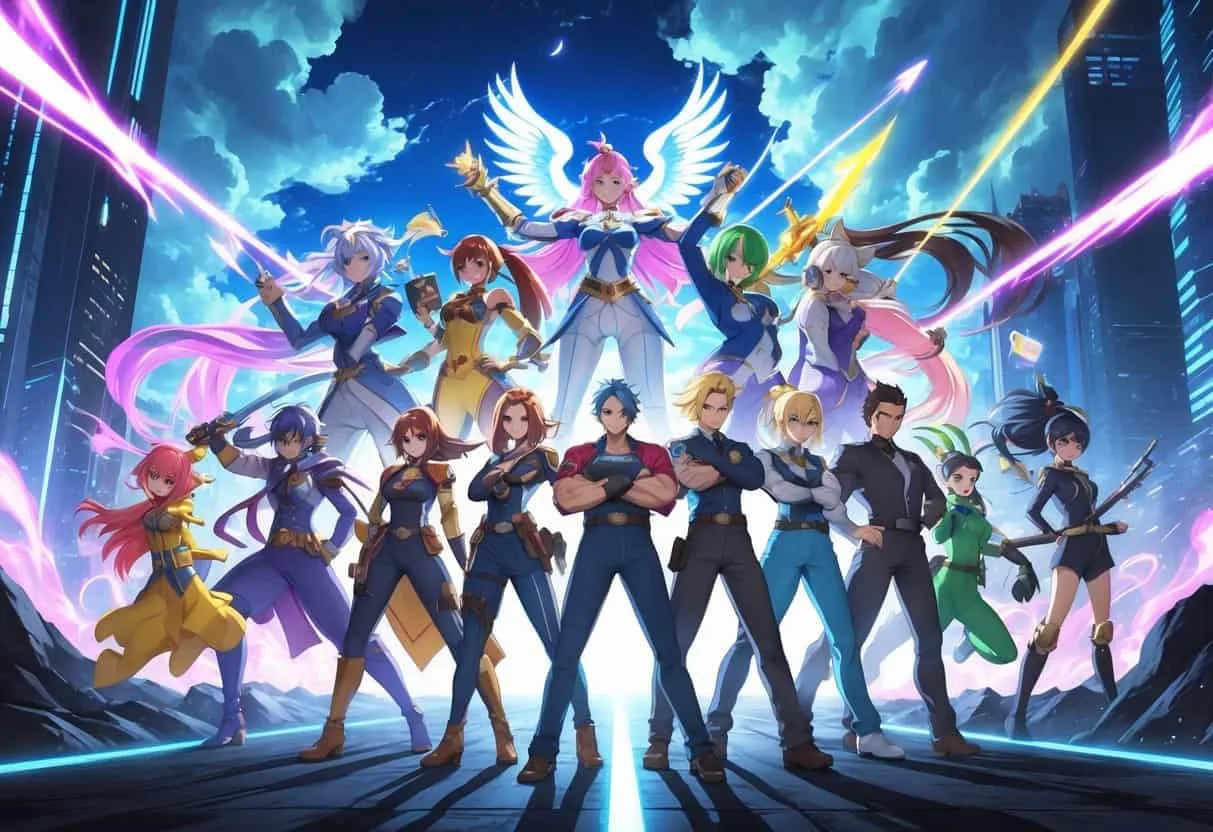
Deconstructing the Anatomy of a Successful Crossover
Not all crossover events are built with the same care. A surface-level collaboration offers a themed skin for a standard weapon. A truly great crossover reconstructs the guest character’s entire identity within the host game’s engine. Players immediately notice the distinction between a "collab" that respects the source material and one engineered solely for a quick revenue spike. The latter often fades from memory as soon as the servers update, while the former leaves a permanent mark on the game’s meta and community culture.
Gameplay Integration Beyond Static Art
The highest praise for a crossover unit comes from its mechanical ingenuity. Developers must answer a complex question: how do you translate decades of established anime lore into a balanced, 4-skill rotating kit without breaking the game? The solution requires deep collaboration between the game’s combat designers and the anime’s licensing holders. For example, adapting a berserker rage mechanic from a shonen anime into a risk-reward health-draining buff creates a high-skill-ceiling character. The integration of original Japanese voice-over work and iconic musical scores directly into the unit’s special attack animations reinforces the immersion, making the character feel imported rather than imitated.
Visual Fidelity and Thematic Cohesion
Lighting, shading, and rigging are the silent pillars of a crossover’s success. When a 2D animated character enters a 3D gacha world, the art team must construct a cel-shaded model that looks identical to the source material from every angle. It requires distinct shaders to mimic the "flat" look of traditional anime while fitting the game's environmental lighting. Thematic cohesion further demands that the guest character fits the established lore, usually handled via a "dimensional rift" or "summoner’s portal" narrative device. A chaotic entry often spawns the best event storylines, pitting the logic of the visiting anime against the established rules of the host universe.
Pioneering and Genre-Defining Anime Crossovers
Looking through the history of mobile gaming, certain crossovers serve as cultural benchmarks. They did not just add characters; they rewired the expectations of the player base and even influenced the decisions of rival developers. From classic mecha operations to modern dark fantasy isekai, the scope of these collaborations has grown exponentially. The following examples highlight how specific events became case studies in live-service excellence.
Steam Meets Shell Casings: Final Gear x Sakura Taisen
The Sakura Wars franchise represents a beautiful hybrid of Taisho-era romance, musical theater, and steam-powered mech combat. Bringing the Imperial Combat Revue into a military mecha title like Final Gear created a perfect thematic fusion. This collaboration was not satisfied merely adding Sakura Shinguji as a generic pilot portrait. Instead, it introduced the Koubu Kai mech as a fully rendered, playable UR unit. The physics engine was modified to reflect the mechanical heft of the steam engine, complete with venting heat signatures and heavy ground impacts.
The contrast between Sakura’s elegant sword-fighting animations and the game’s usual high-caliber artillery showcased how a crossover could introduce alternative combat philosophies without destabilizing the entire meta.
The Isekai Invasion: Re:Zero and Tensura in Epic Seven
Smilegate Megaport’s Epic Seven has become a vanguard for anime crossovers, setting a high bar with the inclusion of Re:Zero – Starting Life in Another World. Games frequently stumble when translating support characters, but Rem’s "freeze" and "counter" mechanics directly translated her demon-maid synergy into a fearsome PvP presence. Emilia’s ice magic was not merely a damage-over-time effect; it incorporated unique crowd-control visual seals that matched the anime’s spell circles. Later, the arrival of Rimuru Tempest from That Time I Got Reincarnated as a Slime further demonstrated how a multi-form character could evolve within a single battle instance, offering a dynamic, shapeshifting combat style that remains a rarity in the genre.
Shonen Titans: Attack on Titan in Granblue Fantasy
Cygames has a history of ambitious retooling of its combat engine for guest IPs. When Attack on Titan arrived in the skies of Granblue Fantasy, the development team faced a vertical movement problem. To capture the essence of the Survey Corps, the event introduced a special "Omni-Directional Mobility Gear" overlay system. This allowed the crossover characters to bypass standard ground animations and engage in aerial combat loops, fundamentally shifting the turn-based rhythm players had memorized for years. The event demonstrated that crossovers can temporarily alter the very language of a game’s combat interface, not just the numbers displayed on the damage charts.
Strategic Hoarding and Optimal Resource Management
Participating in a crossover event without a plan is the fastest route to resource depletion. These banners operate on carefully engineered psychological triggers, using soft and hard "pity systems" to coerce spending. Understanding the difference between long-term account investment and instant FOMO gratification separates the high-tier strategists from the casual gamblers. Before a collaboration announcement, disciplined players already know their "hard pity" number—the total amount of currency required to guarantee the featured unit through the exchange shop.
Calculating Soft Pity, Hard Pity, and the "Sparking" System
Most modern gacha games implement a cascading probability system where the rate of pulling a top-rarity unit increases after a set number of draws without one. The guaranteed acquisition point, often called a "spark" or "hard pity," typically sits between 200 and 300 pulls. It is a common mistake to spend freely as soon as a banner drops. Smart resource management involves analyzing the "free pulls" provided by daily login events and stage clears before spending premium currency. If a major collaboration is rumored, skipping the "trap bait" standard banners released in the preceding weeks is essential to secure the limited-time UR unit.
This discipline ensures that a player can acquire an anime-exclusive unit without breaching their financial limits.
Event-Specific Currency and Ladder Efficiency
Crossover missions almost always introduce a secondary, transient currency. Optimizing your stamina (or equivalent energy) usage against the mission board must account for drop-rate efficiency. A player should identify which stage currently yields the highest "base exchange item" return per resource point spent. In augmented ladder events, prioritizing the unique crossover weapon or ultimate skill-up item is paramount. If a character requires multiple copies to unlock a special "breakthrough" tier, failure to grind the exclusive materials effectively renders the unit unviable for endgame content.
The timer on these materials is absolute; once the server maintenance hits, the special currency and its associated shop vanish, leaving the unit perpetually incomplete.
Equipment, Skills, and the "Best-in-Slot" Grind
Pulling the character is only the first phase of the crossover journey. The second phase involves the "gear check." High-level gacha games frequently lock a character’s true potential behind an exclusive weapon, artifact, or piece of equipment that can only be gained through the event. This gear often provides a massive stat boost or an entirely unique passive trait that synergizes perfectly with the character’s skill rotation. Without this piece, the character might look like a shadow of their anime counterpart; with it, they often dictate the competitive meta for months to come.
Exclusive Armaments and Unique Passives
For instance, a crossover event might drop a character-themed sword that reduces cooldowns by an extra turn whenever a debuff is cleansed. This is not just a power spike; it is a mechanical enhancement that can form the backbone of a new team composition. Gamers who aim to rank highly in PvP must re-farm these event stages relentlessly. The drop rates for these event weapons are often staggered across multiple difficulty tiers, with the "Challenge Mode" boss rush granting a limited number of crafting materials. Failing to claim these missives from the limited shop results in a permanent disadvantage.
The Risk of Power Creep and Obsolescence
A significant risk in chasing crossover gear is the "shiny toy" trap. Some collaboration items are designed with moderate stats to avoid destroying the game’s balance permanently, making them niche trophies rather than practical weapons. A savvy player consults the community-driven "theorycrafters" who dissect the math within hours of a patch. Checking whether the exclusive equipment is a permanent "best-in-slot" piece or a temporary vanity item dictates whether it is worth the energy or credit card swipe.
Enhancing the Experience Through Emulation Platforms
Mobile gaming is often perceived as a secondary experience to PC or console gaming, particularly regarding controls and screen size. However, the rise of powerful, gaming-optimized emulators has bridged this gap for gacha players. Running a crossover event grind on a smartphone’s touchscreen for six hours can be punishing on both posture and battery life. Emulators provide a comfortable alternative that often unlocks more efficient farming techniques through keyboard macros and multi-instance synchronization.
Optimizing BlueStacks and MEmu for Gacha Grinding
Using platforms like BlueStacks or MEmu Play allows you to run the game at consistent 60 FPS with advanced graphic settings that many native phones struggle to maintain during massive burst animations. The real game-changer during an anime crossover event, however, is the Macro Recorder. A player can record a simple loop of tapping the "Replay Stage" button, clearing the wave, and confirming the loot. This automation turns the tedious "grind" of an event’s currency ladder into a background task, saving physical strain and allowing players to focus on the manual-dexterity-required boss fights. Synchronization tools in these emulators also let hardcore "whales" manage multiple alt accounts simultaneously, multiplying their gacha pulling sessions without violating the host game’s terms of service.
Frame-Perfect Dodging and Input Precision
Action-based gacha games like Genshin Impact or Punishing: Gray Raven thrive on frame-perfect dodges and animation cancels. A high-end PC running an emulator map of your keyboard shortcuts eliminates the variance of a sweaty touchscreen thumb. Mapping the burst skills to a mechanical keyboard not only preserves the life of your phone’s hardware but also provides the tactile feedback necessary for the perfect counterattack sequences often required by special crossover boss stages.
The Community and Competitive Fallout of Limited Units
Once a collaboration ends and the licensing window closes, the aftermath begins. The characters obtain a "vaulted" status, disappearing into the codex for months or years. This rarity completely alters the social dynamic of the game. A veteran account showcasing a maxed-out crossover unit from a year ago often commands more respect and real-world trade value than any standard, boundless unit.
PvP Arena Shifts and "Collab Gatekeeping"
The arrival of a meta-defining anime unit can create a schism in the Player vs. Player (PvP) arena. If a limited character introduces a debuff that cannot be reliably cleansed by any standard character, the arena becomes pay-to-enter. This often leads to vocal community backlash on platforms like Reddit and Discord. Developers must tread lightly, balancing the lucrative appeal of a "must-pull" anime husband or waifu against the long-term health of the competitive ecosystem. The best collaborations offer a side-grade to the meta rather than a destructive upgrade, ensuring that while the new anime unit is powerful, a skilled player with a standard team can still secure a victory.
The Guild and Multiplayer Social Cohesion
Crossover events often feature "raid" mechanics where guild members must combine their newly summoned units to take down a massive crossover boss. These moments are the peak of mobile social gaming. Sharing a support character like Eren Yeager or Sakura Shinguji on your friend list instantly fills your support credits, fostering a cooperative spirit that standard dungeons rarely achieve.
The Future of Digital IP Integration
As technology progresses, the concept of a simple "gacha pull" is shifting toward more immersive crossovers. Augmented reality (AR) previews and custom housing systems are becoming popular rewards. The ability to place a chibi version of a crossover character in a player-owned dormitory adds a layer of simulation to the collector’s instinct. Additionally, the "Hololive" effect—where Virtual YouTuber talents cross over as playable heroes or voice actors—blurs the line between anime character and real-world performer, creating a meta-crossover that drives massive levels of viral engagement. External media distribution services, such as Crunchyroll, often break the news of these unholy alliances, signaling a deeply interwoven future where the boundaries between a game, an anime, and a real-life event cease to exist.
The goal is no longer just to collect a hero, but to inhabit a shared universe that spans across every digital screen we own.