Table of Contents
The Emotional Power of Visual Transformation
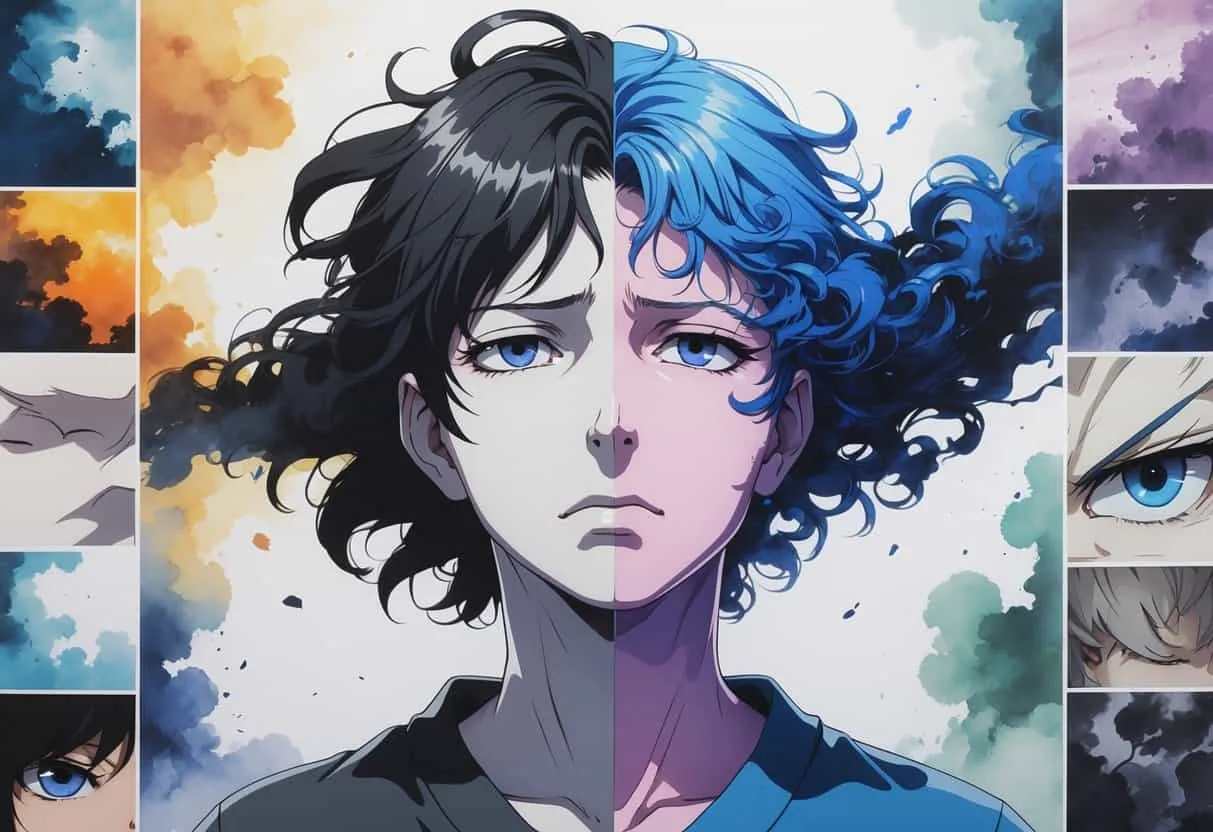
Japanese animation has always treated its visuals as more than just a delivery system for plot. When an anime suddenly shifts art style—whether through a radical simplification, a splash of surreal imagery, or a drastic change in line weight—it’s rarely a gimmick. These transformations are deliberate emotional shortcuts, a visual language that can bypass logic and land directly in the viewer’s gut. Moments of style rupture often signal a character’s psychological fracture, a tonal pivot, or a memory surfacing. They ask you to feel the scene before you understand it.
Directors and animators use these shifts to compress storytelling. A single frame can telegraph anxiety, nostalgia, or euphoria without a line of dialogue. This approach taps into something fundamental about how we process images: our brains respond to contrast. When the established visual order breaks, attention sharpens. That’s why a show that normally looks polished might suddenly become sketchy, exaggerated, or even childlike during a traumatic flashback—the discrepancy itself is the message.
Visual Storytelling and Audience Empathy
Anime often asks you to inhabit a character’s inner world, and art style shifts are one of the most efficient empathy machines in the medium. When Kaneki’s perception distorts in Tokyo Ghoul, the world bleeds into watercolor abstraction—his dissociation becomes yours. Similarly, in Mob Psycho 100, the protagonist’s emotional threshold is visually mapped: the more his feelings surge, the rougher and more expressive the line art becomes, until the climax explodes in a kaleidoscope of painted energy. You aren’t just told he’s overwhelmed; you see his psychology splintering across the screen.
This technique works because it mirrors how memory and emotion actually function. Joyful moments can feel vibrant and crisp in recollection, while trauma often returns as fragmented, desaturated images. By externalizing that internal filter, animators create a bridge between the character’s experience and the viewer’s own emotional memory. It’s a form of visual shorthand that cultures across the globe understand instinctively.
Techniques: Lighting, Color, and Line Work
Animation directors employ a toolkit of distinct methods to signal a shift. Lighting is often the first disruption. A scene bathed in warm, diffuse light might suddenly go high-contrast, with harsh shadows carving characters’ faces into masks of tension. Puella Magi Madoka Magica famously flips this switch when entering witch labyrinths, replacing its soft pastel character designs with cut-paper collage and grotesque, textured environments.
Color palettes carry equal weight. A sudden wash of monochrome can indicate memory or grief, as seen repeatedly in Violet Evergarden. A shift to oversaturated, acidic colors might signal mania or supernatural intrusion. Line work transforms too: consistent, clean lines can devolve into rough, expressive strokes that vibrate with emotion, or tighten into hyper-realistic detail to freeze a moment of horror. Even the frame rate and the texture of backgrounds may change—watercolor washes for reverie, jagged charcoal for rage, digital glitch effects for a crumbling psyche.
Each technical choice adds a layer to the emotional narrative.
The Psychological Punch of Style Rupture
Why does a sudden shift hit so much harder than a consistently stylized show? The answer lies in the brain’s prediction mechanisms. We rapidly acclimate to an anime’s visual baseline. When that baseline is broken, our cognitive processing stalls for a microsecond, forcing a heightened state of awareness. This neurological jolt maps perfectly onto moments of high emotional stakes, making the viewer’s internal state echo the character’s disruption.
Perfect Blue weaponizes this relentlessly. Satoshi Kon’s masterpiece drifts between the protagonist’s reality, her acting roles, and her psychological disintegration with such seamless visual ambiguity that the audience shares her paranoia. The art style never announces a clean border between real and imagined; instead, it slips subtly between crisp photorealism and dreamy distortion, leaving you unmoored. The emotional effect is one of genuine psychological tension, not merely spectacle.
Iconic Anime That Master Art Style Switches
Some series don’t just dabble in visual shifts—they build entire narrative arcs around them. These works demonstrate how embracing stylistic fluidity can elevate storytelling from effective to unforgettable.
Akira: Psychic Chaos Made Visible
Katsuhiro Otomo’s Akira remains a landmark of visual transformation. The film’s baseline is meticulous, near-photographic realism—Neo-Tokyo rendered with architectural precision, characters moving with grounded weight. When psychic powers erupt, that realism dissolves into a visceral nightmare of organic mutation and light. Tetsuo’s body horror sequences abandon anatomical logic entirely, morphing into a churning mass of flesh and cables that feels both deeply personal and cosmically terrifying. The contrast between the film’s disciplined opening and its final, transcendent destruction sequence leaves an indelible mark.
It’s an argument that ultimate power—and ultimate suffering—cannot be contained within ordinary visuals.
Death Note: The Morality of Shadows
Death Note uses art style shifts to externalize its philosophical duel. The series generally maintains a sleek, realistic look, grounding its supernatural premise in a recognizable world. But during the psychological showdowns between Light and L, the direction becomes operatic. Extreme close-ups, deep blacks, and sharp, almost crystalline line work turn every deduction into a visual stabbing match. When Light’s god complex intensifies, the red of his eyes and the stylized, angular shadows on his face push him toward demonic iconography.
These choices don’t just punctuate dramatic moments; they continuously reframe the moral stakes, asking whether justice itself can become a monster when pursued without limits.
Mob Psycho 100: Emotion as Raw Motion
Few anime wear their emotional core as openly as Mob Psycho 100. The series employs a distinctive, intentionally crude art style for much of its runtime, a reflection of ONE’s original webcomic. But when Mob’s emotional meter reaches its peak, the visuals undergo a staggering transformation. Lines smear into kinetic brushstrokes, colors detonate, and the world becomes a canvas for raw feeling. The animation fluidity multiplies, and the emotional catharsis is tied directly to the aesthetic rupture.
It’s a perfect synergy: the simple visual identity of the show makes you care about the character, and the explosive style shifts make you feel what he’s been holding back. Crunchyroll’s analysis of the show’s animation notes how the series weaponizes its visual inconsistency for maximum emotional resonance.
The Tatami Galaxy and Masaaki Yuasa’s Mind-Bending Fluidity
Masaaki Yuasa treats art style as a malleable substance rather than a fixed template. In The Tatami Galaxy, the protagonist’s college life unfolds through rapid-fire flashbacks and parallel universes, and the visuals mirror that instability. Characters bend, stretch, and simplify depending on the emotional register of the scene. A moment of social anxiety might compress the frame into a tight, claustrophobic pattern; a romantic revelation could bloom into soft watercolor abstraction. Yuasa’s work, also seen in Kaiba and Devilman Crybaby, consistently uses style shifts to represent psychological states as tangible environments.
It’s a philosophy that sees animation not as a window into a stable world, but as the direct expression of inner experience. The Anime News Network feature on Yuasa’s artistry details how his background in non-commercial animation freed him to prioritize emotional truth over consistency.
Studio Approaches and Director Signatures
Certain studios and directors have built their reputations on pushing visual boundaries. Their approaches reveal how art style shifts can become a signature storytelling tool rather than an occasional flourish.
Studio Ghibli and Hayao Miyazaki’s Restrained Intensity
Studio Ghibli is rarely associated with radical stylistic breaks, but its mastery lies in subtle, emotionally precise shifts. Hayao Miyazaki’s Spirited Away establishes a world of lush, painterly backgrounds and gently expressive characters. However, when Chihiro recalls her name or when Haku’s true form is revealed, the animation tightens, colors intensify, and the character designs become more detailed and dramatic. The shift is never jarring; it feels like the world itself is momentarily holding its breath, demanding total attention. This restraint makes the emotional peaks resonate without sacrificing immersion.
Miyazaki’s control over lighting and color saturation often does the heavy lifting that other directors would assign to a full style overhaul.
Kyoto Animation’s Emotional Precision
Kyoto Animation has refined a house style that blends meticulous realism with moments of expressive minimalism. In Clannad: After Story, the transition from daily life to tragedy is marked by a gradual desaturation and a rougher line quality that mirrors the protagonist’s grief. Faces that were soft and rounded become gaunt, shadows deepen, and backgrounds lose their detail, isolating the characters in an emotional void. Violet Evergarden employs similar techniques, juxtaposing the protagonist’s rigid, doll-like design against watercolor memory sequences that feel fragile and fleeting. The studio’s approach demonstrates that style shifts needn’t be ostentatious; they can be woven into the fabric of the show so seamlessly that the emotional shift is felt before it’s consciously observed.
Shaft and the Surrealist Edge
Shaft, particularly under director Akiyuki Shinbo, treats the anime frame as a canvas for symbolic abstraction. The Monogatari series is notorious for intercutting live-action photographs, text cards, and flat graphic shapes into its already stylized world. These intrusions aren’t random; they externalize the characters’ neuroses, their intrusive thoughts, and the weight of their supernatural afflictions. A conversation might suddenly cut to a stark, abstract composition that isolates a character’s emotional state. In Puella Magi Madoka Magica, the witch labyrinths employ mixed-media animation—collage, silhouette, stop-motion influences—to create spaces that feel psychically oppressive.
Shaft’s style is a masterclass in using visual dissonance to keep the viewer psychologically engaged and unsettled.
Cultural Roots and Artistic Philosophy
These stylistic experiments don’t emerge from a vacuum. They draw on deep currents in Japanese visual culture, from ukiyo-e woodblock prints to the expressive elasticity of manga. Understanding these roots helps explain why anime is so uniquely suited to visual transformation.
From Manga Panels to Moving Emotion
Manga has long embraced stylistic range within a single work. Artists like Taiyō Matsumoto (Tekkonkinkreet) or Takehiko Inoue (Vagabond) frequently switch between detailed brushwork and loose, gestural line art within the same chapter. When these works are adapted into anime, directors must translate that fluidity into motion. Studios like Studio 4°C and Science SARU have built their identities around preserving the raw, hand-drawn energy of manga in animated form. The adaptation process often amplifies the original’s emotional shifts by adding color, timing, and sound to the visual contrast.
This cross-medium dialogue ensures that style shifts feel organic to the story rather than a production gimmick.
The Aesthetics of Impermanence
Traditional Japanese aesthetics value impermanence and transience—concepts like mono no aware (the pathos of things) find a natural home in animation that refuses to stay visually static. A shift in art style can evoke the fleeting nature of a perfect moment, or the sudden rupture of loss. When a character’s world transforms visually, it echoes the Buddhist notion that all states are temporary. This cultural resonance gives anime’s visual experiments a depth that might otherwise read as mere spectacle. It’s an art form that, at its best, mirrors the instability of human emotion itself.
Nippon.com’s overview of mono no aware provides context for how this aesthetic runs through Japanese storytelling.
The Influence on Genre and Viewer Engagement
Style shifts are not confined to arthouse or experimental works. They permeate popular genres, acting as an accessible language that broadens appeal and deepens engagement.
Comedy, Harem, and Exaggerated Reactions
Comedy and harem anime lean heavily on sudden chibi transformations and exaggerated facial expressions to sell a joke or an emotional beat. The sharp contrast between a character’s normal design and a simplified, super-deformed version creates a comedic punctuation mark. In Kaguya-sama: Love Is War, the mental battles are often visualized through elaborate fantasy sequences that break away from the show’s clean, elegant baseline, dipping into rougher, more dynamic imagery. This technique pulls the viewer deeper into the characters’ inner delusions and private embarrassments. The accessibility of these shifts is a large part of why such series generate intense fan investment; the visuals signal exactly when to laugh, cringe, or root for a confession.
Long-Running Shonen and Evolving Aesthetics
Massive franchises like One Piece and Naruto use art style evolution as a tool for long-term storytelling. One Piece, for instance, began with simple, almost rounded designs that reflected the early, adventurous tone. As the narrative grew darker and the stakes rose, the animation became more detailed, the shadows deeper, and the action sequences more fluid and experimental. Key emotional moments—Ace’s death, the Straw Hats’ separation—are marked by temporary stylistic departures, including monochrome flashbacks, charcoal sketch effects, or slow-motion watercolor treatments. These shifts don’t just refresh a decades-old series visually; they honor the emotional weight the story has accumulated over time, signaling to long-time viewers that this moment matters differently.
The visual evolution of the Wano arc is a prominent example, incorporating ukiyo-e influences and cinematic techniques.
Cultivating a Visually Literate Audience
The prevalence of art style shifts has produced an anime fanbase unusually attuned to visual nuance. Viewers learn to read changes in line quality, color, and abstraction as emotional cues, often without conscious effort. This literacy deepens the viewing experience across genres, turning passive consumption into active interpretation. A show that might appear confusing or inconsistent to a newcomer can be read like an emotional map by an experienced fan. This shared visual vocabulary has helped anime maintain a vibrant, global community where breakdowns of specific animation cuts and stylistic choices are a common part of the conversation.
The technique ultimately rewards attention, making each rewatch an opportunity to uncover new layers of meaning woven into the art itself.
A Language Beyond Words
Anime’s willingness to break its own visual rules is one of its greatest strengths. When a series changes art style, it’s handing the viewer a direct line to a character’s soul—raw, unmediated, and unforgettable. From the psychic whirlwinds of Akira to the tender watercolors of a Ghibli memory, these transformations are not distractions but invitations. They ask us to stop analyzing and start feeling, to let the image speak before the mind can label it.
The technique thrives because it mirrors the way emotions actually work: sudden, disorienting, and transformative. As long as anime continues to explore the full range of human experience, it will keep finding new ways to make art styles bend and bloom under the pressure of a single, powerful feeling.