Table of Contents
What Defines a Single-Location Anime Series
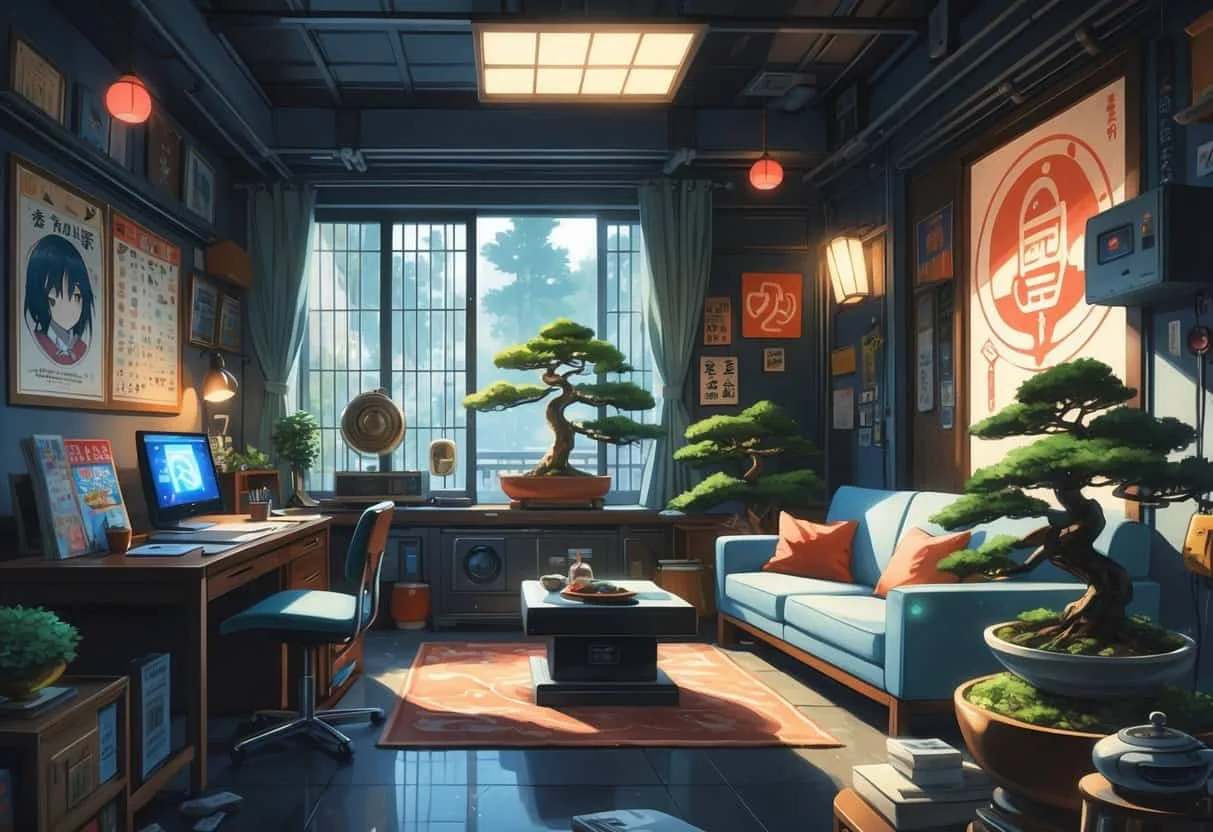
An anime grounded in a single location keeps the vast majority of its narrative within one confined space. This can be a school, an apartment complex, a desolate island, a locked building, or even a single room. The setting becomes a pressure cooker for character development and plot tension. Because characters rarely have the opportunity to leave, every object, corridor, and shadow carries narrative weight. Viewers learn to read the environment as carefully as they read dialogue, noticing subtle shifts in lighting, weather, and spatial relationships that mirror internal states.
In such series, art direction and sound design do heavy lifting. The creak of a floorboard, the hum of fluorescent lights, the way a camera lingers on a closed door—all amplify the sense of place. The limitation strips away distractions, forcing the story to rely on writing and performance. Voice actors carry the emotional arc with minimal reliance on external spectacle. When done well, the result is an immersive, almost theatrical experience that stays with viewers long after the credits roll.
The Psychological Pull of a Confined Setting
A single location naturally creates a heightened sense of awareness. Without sprawling landscapes or constant scene changes, the narrative zeroes in on human behavior. This focus makes us more attuned to body language, tone shifts, and the unspoken dynamics between characters. The setting can feel like a character itself—sometimes an ally, often an antagonist. A cramped apartment can evoke suffocation, while an empty school at night transforms into a labyrinth of dread.
Psychologically, these anime tap into our own experiences of being trapped—physically, emotionally, or socially. The setting externalizes inner conflict. When a character can't leave a house, it mirrors their inability to escape a memory, a lie, or a toxic relationship. This dual resonance makes single-location storytelling unusually potent. It does not simply entertain; it forces introspection.
For this reason, thrillers, horror, and mystery dominate the category, though drama and even comedy thrive within narrow parameters.
Frequent praise for single-location anime includes remarks about the intense atmosphere and the tight character arcs. The format demands that every scene justify its existence. There is no room for filler. Pacing becomes a precise science, and audiences feel the urgency of every exchanged glance or stumbled word. These constraints often produce some of the most tightly plotted stories in the medium.
Masterworks That Stay in One Place
Death Note: A City as a Battleground
Death Note uses Tokyo's dense, anonymous sprawl as its stage, but it rarely leaves a handful of key interiors: Light Yagami's bedroom, the task force headquarters, and later the SPK building. The city's constant surveillance and closeness fuel the cat-and-mouse dynamic between Light and L. The anime channels its energy into intellectual duels, with the setting heightening the claustrophobia of being constantly watched. Every cafe meeting and late-night strategy session feels charged with life-or-death stakes. The masterful voice performances ensure that even a simple conversation across a table crackles with tension. By anchoring the conflict in a few recurring spaces, the series builds a strong visual memory; a single shot of Light's room can evoke the entire moral descent of its protagonist.
Erased: Small Town, Big Secrets
Satoru Fujinuma's time-leaping mystery in Erased confines itself largely to the snowy streets and buildings of a small Hokkaido town. The school, the local park, the children's hideout, and the Fujinuma home become the entire universe. This tight geography makes every clue feel within reach yet maddeningly elusive. The town's quiet beauty contrasts with the darkness of the crimes Satoru hopes to prevent. Because the setting never changes, the audience internalizes the map of relationships as firmly as the map of streets.
The series uses seasonal imagery—especially snow—to signal both innocence and the cold reality of loss. Erased demonstrates that a single location, rendered with care, can support a deeply emotional and suspenseful streaming experience.
Fullmetal Alchemist: Brotherhood: Central City as Epicenter
Though Fullmetal Alchemist: Brotherhood occasionally ventures beyond Central City, the narrative repeatedly returns to this hub of military command, scientific research, and conspiracy. The streets, command centers, and underground labs of Central become a nexus for the Elric brothers' quest. By concentrating political intrigue and alchemical battles in one metropolitan area, the anime builds a robust sense of geography and power structure. You learn which alleys hide secrets and which offices harbor enemies. The city's concentric layout mirrors the layered deceptions the protagonists must unravel.
Even secondary characters become landmarks in this mental map, each assigned to specific locations that the viewer can navigate as readily as a video game level. The consistent setting anchors the sprawling cast and keeps the story from feeling diffuse.
The Promised Neverland (Season 1): Escape from Grace Field House
The first season of The Promised Neverland stays almost entirely within the confines of Grace Field House, an orphanage that doubles as a farm for demons. The children sleep, eat, learn, and plot their escape within a constant state of surveillance. This single-location constraint transforms everyday objects—a clock, a rope, a book—into instruments of rebellion or betrayal. The anime's color palette, full of bright innocence slowly consumed by shadows, turns the house itself into a psychological prison. Because the children cannot leave, each discovery about the outside world feels monumental, shifting the power balance in the room.
The series showcases how a contained setting can amplify intellectual battles, as the children must outthink their captors using nothing but the environment at hand. The tension hinges on every creaking floorboard and stolen whisper, making the orphanage a peerless example of single-location suspense.
Angels of Death: A Building of Nightmares
In Angels of Death, a girl named Rachel awakens in a basement and must ascend through a multi-floor building, each level controlled by a different murderer. The structure never changes; only the threats on each floor do. This vertical, confined progression turns the building into a dark reflection of Rachel's psyche. Every stairwell, every locked door, is a psychological barrier. The anime's horror stems not from what jumps out but from the relentless journey upward through a space that offers no comfort and no exit.
The performance of the voice actors brings unnerving personality to each floor's keeper, while the grimy, industrial design of the building reinforces the themes of madness and memory. Angels of Death proves that even a repetitive structure can sustain tension when the setting becomes a canvas for emotional violence.
Genre Experiments Within a Single Space
A single location does not confine itself to horror or thriller. The following genres have produced remarkable works that thrive within spatial limits, each using the restriction to intensify particular narrative pleasures.
Sports and Competition Under One Roof
Some sports anime choose to stage almost all action within a single gymnasium, dojo, or training facility. By removing travel and external matches, the narrative homes in on practice rituals, interpersonal friction, and incremental growth. The gym becomes a sacred space where sweat and echo define the rhythm of the story. You witness the same room through changing seasons, tournaments, and personal breakthroughs. The repetition of setting highlights character development: the freshman who once trembled at the door eventually stands at its center as a leader.
These anime remind us that the most significant victories often happen during an ordinary practice session, with no crowd and no cheering, just the quiet satisfaction of a perfect move in a familiar space. The limitation fosters an intimate, documentary-like relationship with the athletes, making each small gesture carry enormous weight.
Fantasy Worlds Contained in a Village or Fortress
Several fantasy series compress their scope to a single village, fortress, or mystical enclave to deepen worldbuilding without sprawl. Rokka: Braves of the Six Flowers, for example, traps its heroes inside a barrier-encased jungle fortress, forcing them into a deadly locked-room mystery. The fantastical elements—magic, mythical creatures, divine artifacts—gain potency because the stage is so confined. You learn the rules of the space: which stones can be enchanted, which trees hide traps, which paths lead to ambush. This limited geography makes every magical revelation feel like a breach in reality.
The story becomes a puzzle box built from the environment itself. Similarly, some shows root their fantasy in a single school for magic users, restricting the world to hallways, classrooms, and secret chambers. This setting lets political factions and rivalries simmer in close quarters, turning each corridor into a potential battleground of wits. The audience's knowledge of the map becomes a strategic asset, mirroring the characters' own attempts to survive and outmaneuver.
Survival Anime on a Remote Island
Survival series that strand characters on a single island mix environmental horror with social breakdown. Btooom! places its players on a tropical island where they must use bombs to eliminate one another. The island's jungles, beaches, and ruins become a deadly arena where every plant and terrain feature doubles as cover or grave marker. The limited setting amplifies the desperation: resources dwindle, trust evaporates, and the beauty of the landscape warps into a cruel irony. The anime's sound design—rustling leaves, distant explosions, labored breathing—immerses you in the same sensory confinement the characters endure.
Stranded on an island, the story cannot distract itself with subplots in faraway cities; everything must be resolved right here, with the tools at hand. This purity of focus creates a raw, gripping viewing experience that few sprawling adventures can match. The island becomes a microcosm of society, where the collapse of rules happens in real time before your eyes.
The Directorial and Studio Influence
Certain creators excel at turning a limited location into a world. Director Mamoru Hosoda, known for films like Summer Wars and The Boy and the Beast, often binds his stories to a family home or a single virtual space, using the walls and rooms to frame deep character arcs. He treats domestic spaces as emotional containers, where memories stick to the walls and furniture. Animator and director Makoto Shinkai, though known for sweeping landscapes, also uses small apartments and train stations to convey isolation and longing. In 5 Centimeters per Second, repeated shots of a train crossing and a small apartment create a cumulative ache precisely because the setting never changes but the characters drift apart.
Voice acting becomes disproportionately important in single-location anime. The cast cannot rely on grand visuals to carry emotion; every sigh, pause, and inflection must pull the viewer deeper into the room. Studios often prioritize casting actors who excel at subtlety and conversational nuance. The physical emptiness of the frame places a spotlight on the voice, turning dialogue into a primary action. This can be heard clearly in dubs and original Japanese tracks alike, where performances often define the audience's relationship with the characters.
Without the distraction of changing scenery, the auditory experience becomes nearly cinematic in its intimacy.
Studio Ghibli, though famous for vast natural worlds, frequently anchors its strongest emotional moments in confined interiors: the bathhouse in Spirited Away, Sophie's hat shop in Howl's Moving Castle, the seaside house in The Wind Rises. Hayao Miyazaki understands that a small room, animated with care, can hold the weight of an entire story. These spaces become shelters, prisons, or sanctuaries depending on the characters' inner lives. The detailed rendering of objects—a kettle, a window, a single flower—creates a textured reality that feels inhabited and precious. Even in fantasy, a single location anchors the magical to the human.
Streaming Renaissance and Global Access
Many single-location anime have found renewed life on streaming platforms. Netflix, Crunchyroll, Hulu, and Amazon Prime carry titles that were once obscure imports, making them instantly available worldwide with subtitles and dubbing. The accessibility has grown the fanbase for series like Death Note, The Promised Neverland, and Erased far beyond their original broadcast audiences. Streaming services have also invested in original single-location anime, recognizing the format's relatively lower production costs and high narrative payout. A locked room or isolated house requires fewer animation assets, stretching budgets while allowing for meticulous polish on character animation and sound.
The algorithms of these platforms often favor binge-worthy titles, and single-location thrillers naturally encourage consecutive viewing. The cliffhanger at the end of an episode, delivered in the same room where the next episode will begin, becomes an irresistible hook. Viewers report staying up late precisely because the setting's continuity makes the story feel like a continuous, unfolding present. The global audience also brings varied cultural interpretations to these locales: a Japanese apartment building might read as exotic to a Western viewer, adding an extra layer of atmosphere, while universal themes of entrapment and resilience bridge the gap. Voice actors, both in original Japanese and in dubbed versions, carry this international engagement through their nuanced performances, making a room in Tokyo feel like it could be anywhere in the world.
How to Choose Your Next Single-Location Anime
With so many options, selecting the right single-location series depends on mood. For intellectual tension, start with Death Note or The Promised Neverland. For emotional mystery with a touch of nostalgia, Erased delivers in a compact package. Those craving psychological horror should try Angels of Death, while fans of survival and action can explore Btooom! or Rokka: Braves of the Six Flowers. Each series uses its limited environment to amplify a specific emotional register, so identifying your preferred tone will lead you to the right show.
Consider also the visual style. Some single-location anime lean into detailed background art that rewards pausing and taking in every corner of the room; others prioritize fluid character animation within sparse backdrops to keep the focus entirely on performance. Reading reviews on sites like MyAnimeList or checking community recommendations often reveal the directorial flourishes that make a particular setting memorable. Pay attention to comments about worldbuilding and atmosphere—they frequently signal how effectively the location will pull you in. A single room can be a universe if the creators treat it as such.
Ultimately, these anime prove that limitations breed creativity. By saying no to sprawling travels, they say yes to deep character study, razor-sharp dialogue, and settings that remain burned into memory. The next time you queue up a show, consider one that never leaves its home. You might discover that the smallest spaces can hold the biggest stories. The constraints might just set your imagination free.