Table of Contents
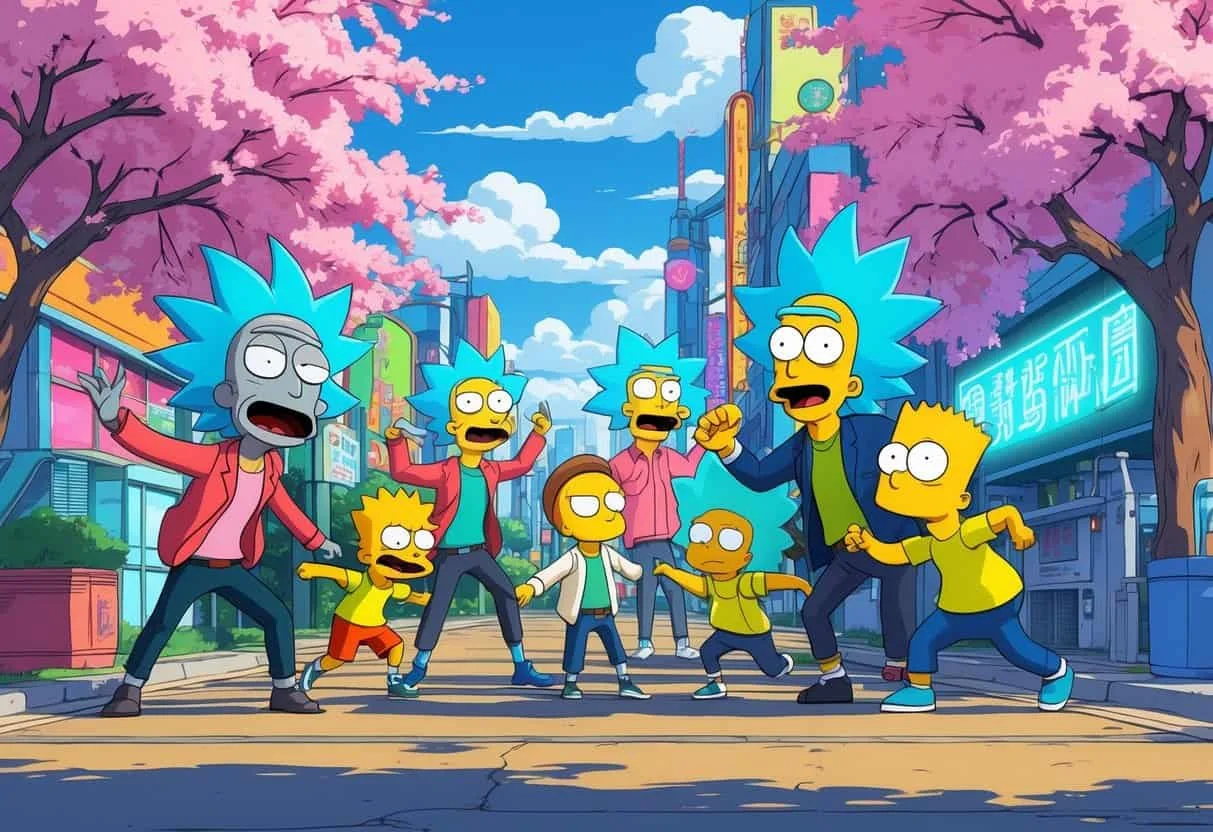
Anime has quietly become one of the most pervasive forces in Western pop culture. From the background gags in long-running sitcoms to full-throated tributes in blockbuster video games, the visual language and storytelling rhythms of Japanese animation are everywhere you look. Shows like Rick and Morty sneak in lightning-fast nods to Dragon Ball Z and Attack on Titan, while The Simpsons has never been able to resist turning Homer into a spoof of a serious anime protagonist. These aren’t throwaway jokes—they’re connective tissue between fan bases, turning casual viewing into a kind of treasure hunt.
The beauty of these references is that they work on multiple levels. If you grew up on Toonami or stayed up late watching fansubs, you’ll catch the wink and feel an instant jolt of recognition. If you didn’t, the scene still works on its own merits. That dual accessibility is a big reason why anime’s influence has grown so steadily over the last three decades, shaping not just how Western shows look, but how they write humor, action, and even emotional beats.
This cross-pollination has changed how we talk about animation as a whole. No longer is it a simple East-versus-West binary—the lines are blurring into a shared visual vocabulary that speaks to anyone who loves bold storytelling. If you’ve ever been curious about how your favorite Western cartoons channel the legacy of Studio Trigger or the panache of One Piece, you’re in exactly the right place. Once you start spotting these connections, watching your weekly lineup becomes a layered experience that feels much more globally connected.
Why Anime References Matter in Western Media
It’s tempting to dismiss a quick anime reference as a cheap gag or nostalgia bait. In practice, these moments do a lot of heavy lifting. They create instant rapport with a global fan base that numbers in the tens of millions. When Rick Sanchez suddenly enters a Super Saiyan-esque transformation, the show is acknowledging a shared cultural touchstone without needing any exposition. The people who know, know—and the people who don’t still get an absurdly entertaining visual.
Beyond the surface-level fun, these nods are evidence of a deeper artistic conversation. Western animators who grew up on import VHS tapes and morning anime blocks are now running their own shows. Their references come from a place of genuine respect, not just opportunism. A 2019 Animation Magazine feature traced this lineage from the 1990s boom through today’s creator-driven renaissance, noting that many showrunners cite anime directors like Shinichirō Watanabe and Hayao Miyazaki as foundational influences.
This dynamic also reflects a shifting media landscape where audiences expect cross-genre literacy. The same viewer who binges Stranger Things might also follow weekly Jujutsu Kaisen drops. For writers, dropping a well-placed anime reference signals that they understand their audience’s eclectic taste. It’s a form of cultural fluency that can turn a good show into a communal experience, sparking endless Reddit threads, YouTube breakdowns, and memes that keep the conversation alive long after an episode airs.
Spotlight on Western Animation: Iconic Anime Nods
Some of the most memorable anime homages unfold in the animated series many of us grew up watching or still binge today. Western animation has borrowed everything from exaggerated facial expressions to full-episode art style changes. The result is a generation of shows that feel indebted to both Marvel cartoons and the visual bombast of My Hero Academia.
Rick and Morty’s Love Letter to Shonen Tropes
Rick and Morty runs on pop culture referentiality, but its anime callbacks stand out for their specificity. Season 3’s “Vindicators 3: The Return of Worldender” sequence transforms Morty into an Attack on Titan soldier, complete with the show’s iconic vertical maneuvering gear. It’s a blink-and-you’ll-miss-it moment inside an already chaotic parody of superhero ensemble films, exactly the kind of dense layering the show thrives on.
Elsewhere, the series has fun with Dragon Ball Z. Rick’s energy beam struggles, complete with screaming power-ups and crater-forming shockwaves, are direct lifts from franchise-famous fights. In one memorable cold open, Summer goes through an entire shonen training arc compressed into a few minutes, and the visual language—speed lines, afterimages, a determined inner monologue—is textbook anime. These touches never become the whole joke; instead, they amplify the show’s hyperactivity, making even filler scenes feel larger than life.
What makes the Rick and Morty approach so effective is the show’s refusal to slow down and explain the reference. It trusts the viewer. That confidence mirrors the very anime it’s celebrating, where audiences are expected to absorb nuance through repetition and visual grammar rather than exposition. For fans keeping a mental checklist, it’s a rewarding scavenger hunt. For everyone else, the spectacle stands on its own.
The Simpsons and Its Decades-Long Anime Spoofs
The Simpsons has been parodying and paying tribute to Japanese animation since the 1990s, when anime was still a niche interest in much of America. Treehouse of Horror segments often play with anime aesthetics, but one of the sharpest examples is “The Regina Monologues,” where Homer imagines himself as a brooding Death Note character, complete with a dramatic pencil-twirl and shadow-drenched face. It’s goofy, but it also reveals a surprisingly precise knowledge of the source material’s visual tropes.
The show’s parody of Neon Genesis Evangelion in “Simpsons Already Did It” territory goes even further. The animators replicate the high-contrast lighting, the quick cuts to mysterious machinery, and even the psychological close-ups that defined Hideaki Anno’s series. Poking fun at Eva’s dense symbolism through a Springfield lens serves as both a loving homage and a reminder that The Simpsons writers’ room has been online—and watching anime—longer than many of its viewers have been alive.
These episodes matter because they normalize anime aesthetics for a massive, multi-generational audience. When a prime-time institution like The Simpsons treats anime as legitimate reference material, it chips away at the old stigma that anime was “weird” or “just for kids.” Instead, it positions the medium as an equal peer worthy of satire. More recent seasons continue the trend, with promotional images often going viral for transforming the Simpson family into different anime styles.
South Park’s Bold Anime Parodies
South Park doesn’t do subtle. When it goes anime, it goes hard. The famous “Good Times with Weapons” episode opens with the boys imagining themselves as anime warriors—switching the entire art style to mimic a high-budget shonen action sequence. The exaggerated weapon clashes, stoic warrior poses, and shimmering backgrounds are lifted straight from shows like Naruto and Bleach.
But there’s always a cutting commentary underneath. South Park uses the anime aesthetic to satirize both American gun culture and the way hyper-violent media can desensitize kids. The juxtaposition of a Saturday-morning-cartoon look with real-world consequences is part of what makes that episode so effective. And it’s funny—genuinely funny—because the anime stylization is so committed that you almost forget you’re watching a show known for its crude construction-paper aesthetic.
That commitment is worth spotlighting. When a show with South Park’s minimalist production values suddenly delivers silky smooth anime animation, it’s a flex. It says, “We could do this all the time if we wanted to, but we save it for when it hits hardest.” For anime fans, it’s a rare treat. For the uninitiated, it’s a gateway that might just spark curiosity about where those visual tropes originated.
Other Animated Series That Wear Their Anime Love on Their Sleeves
Beyond the heavy hitters, dozens of other Western cartoons have built anime references right into their DNA. Codename: Kids Next Door occasionally hit pause on its spy-kid antics to go full Dragon Ball Z during climactic battles, with characters charging up signature attacks and letting loose energy blasts. The slow-motion, impact-frame-heavy style was a clear nod to the protracted fight sequences anime fans know and debate endlessly.
Regular Show couldn’t resist either. An entire episode, “Brilliant Century Duck Crisis,” is essentially an Evangelion-style mecha showdown filtered through the show’s surreally mundane universe. The deadpan voice acting over apocalyptic imagery is a pitch-perfect recreation of the tonal dissonance that makes Eva so compelling. And Steven Universe creator Rebecca Sugar has directly cited anime like Revolutionary Girl Utena and Sailor Moon as major influences, with the show’s fusion dances and gem weapon summoning scenes playing out like magical girl transformations.
It’s fun to note that even My Little Pony: Friendship Is Magic had its anime moments, with entire episodes designed around superpowered fight scenes that wouldn’t feel out of place in a shonen jumpcut compilation. This isn’t niche anymore—it’s a standard part of the Western animation toolkit. The anime reference has become as familiar as a meta joke or a celebrity cameo, and audiences have come to expect it.
Beyond Cartoons: Anime References in Video Games, Comics, and Live Action
Anime’s fingerprints extend far beyond serialized cartoons. Video games have been the most natural crossover vehicle for years, but you’ll also find anime DNA in Western comic panels, live-action TV shows, and even theater productions. The common thread is a willingness to embrace stylized action and emotional maximalism without apology.
Video Games Where Anime Aesthetics Take Center Stage
Japanese RPGs like Persona 5 and Final Fantasy are obvious ambassadors, but Western developers have been just as eager to incorporate anime flair. Blizzard’s Overwatch makes no secret of its mecha and shonen influences—D.Va’s entire character design and ultimate ability are a love letter to Neon Genesis Evangelion and mecha anime generally, while Genji’s reflect-deflect duel with Hanzo in the “Dragons” short film plays out exactly like a classic samurai anime confrontation.
Indie games have arguably pushed this even further. Hollow Knight might look like a bug-themed fable, but its combat rhythm, silent protagonist, and worldbuilding lore draw heavily from the dark fantasy anime tradition. The game’s melancholic atmosphere and precise slash-block-dodge mechanics feel like an interactive Studio Ghibli dungeon, a connection the developers openly discussed in an IGN interview.
Mobile games are similarly invested. Genshin Impact, while technically a Chinese production, operates in the same anime aesthetic space and has become a global phenomenon by delivering cel-shaded open worlds that players on either side of the Pacific can connect with. Even the Borderlands series, with its cel-shaded graphics and over-the-top character personalities, borrows from the visual attitude of anime to differentiate itself from gritty realistic shooters. The result is an interactive landscape where anime isn’t just a genre—it’s a standard option, like “first-person” or “open-world.”
Pop Culture Crossovers and Music Industry Tributes
Anime’s visual language has become so iconic that mainstream pop stars now tap into it directly. The Guardian noted in a 2020 article that artists like Megan Thee Stallion, Billie Eilish, and Lil Uzi Vert have incorporated anime references in their music videos and stage designs. Megan’s “Otaku Hot Girl” persona and Uzi’s well-documented Naruto obsession are not just quirky footnotes—they represent a generation of creators for whom anime is as foundational as hip-hop or rock.
Live theater has also gotten in on the act. Productions like the Pokémon Live! stage show may have been a 90s oddity, but more recent immersive theater experiences borrow anime pacing and stylization to create dreamlike, nonlinear performances that echo the medium’s storytelling freedom. At major conventions like Anime Expo and New York Comic Con, you’ll see cosplay and fan-driven theater that blurs the line between Western comic traditions and Japanese visual novel structures.
Even advertising has caught on. From Gatorade’s anime-style sports commercials to fast food collaborations that feature limited-edition manga pamphlets, corporations have recognized that anime aesthetics grab attention and signal cultural currency. While these commercial references can feel shallow, they reinforce the idea that anime is now a permanent fixture of the Western pop culture landscape, not some passing fad.
Marvel, DC, and the Anime-Inspired Graphic Novel Boom
Western comic publishers have been slow to adopt overt anime styles, but the influence is unmistakable in certain books. Marvel’s Demon Days by Peach Momoko is a prime example—a complete reimagining of Marvel characters through a sumi-e and watercolor-infused manga lens. The book’s quiet, atmospheric layout feels entirely at home alongside classic Japanese folkloric comics, yet the storytelling remains firmly rooted in the Marvel universe.
DC’s Batman Ninja took the concept a step further by transporting the entire cast to feudal Japan in a feature-length anime film produced by Kamikaze Douga. The wild mecha battles and castle-transforming action were pure spectacle, but they also demonstrated how seamlessly Western superhero archetypes can merge with Japanese storytelling conventions. On a smaller scale, independent graphic novelists like Sloane Leong and Tillie Walden bring an anime-adjacent sensibility to their work, using fluid, manga-influenced paneling to explore identity and memory.
Webtoons and digital comics have accelerated this fusion. Platforms like Webtoon are filled with artists who grew up reading Shonen Jump and are now applying those panel-shaking, line-speed-heavy techniques to stories about American high school angst or magical girl deconstructions. The result is a new generation of comics that refuses to pick a lane, and the readership is here for it.
The Cultural Dialogue: How Fans and Critics Respond to Anime-Inspired Media
The conversation around anime references isn’t just about spotting them—it’s about what they mean for the future of storytelling. Fans and critics alike have turned these cross-cultural winks into a full-blown community dialogue, with every new episode or game release sparking deep analysis and heated debates.
Fan Communities and the Joy of the Easter Egg Hunt
Online spaces like Reddit’s r/anime, Twitter, and Discord servers dedicated to specific shows are where these references truly come alive. Within hours of a new Rick and Morty episode airing, you’ll find screenshot galleries comparing stills to their anime originals, frame-by-frame breakdowns of visual cues, and enthusiastic discussions about whether a given reference was an homage or a parody. The same pattern repeats for The Simpsons, where decades-long fans have compiled exhaustive lists of every anime gag the show has ever done.
Convention culture amplifies this energy. At events like Anime Festival Asia (AFA) and San Diego Comic-Con, panels dedicated to “Anime Easter Eggs in Western Animation” draw overflowing rooms. Cosplayers often blend characters—imagine Homer Simpson as a Titan or Rick Sanchez in Goku’s gi—creating a living mashup that celebrates both sources equally. It’s a grassroots form of cultural exchange that no marketing department could ever fully replicate.
The result is a participatory fandom where spotting a reference feels like joining a secret club. This sense of insider knowledge fosters loyalty and deepens engagement, turning casual viewers into dedicated followers who look forward to each new episode as a potential goldmine of nods and winks.
Critical Reception and the Authenticity Question
Critics and entertainment journalists have taken these references seriously, producing think pieces that examine whether Western shows are appropriating anime or engaging in respectful artistic dialogue. ScreenRant’s recurring coverage on the topic highlights both the cleverness and the occasional misstep, noting that slapping big eyes and speed lines onto a character without understanding the narrative context can feel hollow.
The discourse often pivots on a simple question: does the reference deepen the story, or is it a cheap shortcut to grab attention? When Adventure Time incorporates the surreal pacing and existential themes reminiscent of FLCL, critics often praise it because the reference serves the show’s own philosophical underpinnings. When a show throws in a random kawaii face with no thematic tie, it risks being called pandering.
Rather than shutting down these conversations, studios frequently lean into them. Creator interviews on platforms like Anime News Network regularly feature directors and writers explaining their favorite anime, which in turn enriches the viewing experience. This transparency fosters a sense of shared ownership—fans feel like they’re part of the creative process rather than passive consumers.
Ongoing Relevance and the Next Generation of Creators
Anime’s cultural footprint shows no signs of fading. Each new wave of artists, writers, and animators enters the industry with a media diet that includes Demon Slayer right alongside SpongeBob. The result is a creative ecosystem where the distinction between “anime” and “cartoon” feels increasingly irrelevant. Shows like The Owl House and Arcane (while French-produced) demonstrate how anime’s influence has become a baseline expectation rather than a novelty.
Streaming platforms have accelerated this trend by making it effortless to switch from a Studio Ghibli film to a Western original. The algorithm-suggested “if you liked that, try this” path naturally blends anime and Western animation into a single category in viewers’ minds. Festival lineups and awards shows also reflect this shift, with anime films regularly competing in the same categories as Pixar or DreamWorks releases.
What’s exciting is that the conversation is just getting started. As younger generations grow up in a media environment where Naruto and Avatar: The Last Airbender coexist without comment, the entire concept of an “anime reference” may one day dissolve into simply “animation reference.” Until then, the joy of spotting those connections—and the vibrant community that surrounds them—remains one of pop culture’s most engaging pastimes.