Table of Contents
If you have ever watched a Japanese animated series and found yourself mesmerized by a spirited festival, a solemn tea ceremony, or a fiercely competitive card game, you have already experienced how deeply cultural traditions are woven into anime storytelling. These episodes do more than entertain; they open a window into the heart of Japan’s living heritage. By placing characters within seasonal celebrations, family milestones, and age-old arts, anime creators invite you to understand customs that have shaped a society for centuries. This connection between fiction and real-world tradition is one of the strongest reasons why anime resonates with viewers across the globe.
Anime often serves as a cultural ambassador, bringing the colors, sounds, and emotions of Japanese life to your screen. Whether it is a bustling matsuri under fireworks or a quiet New Year’s shrine visit, these moments feel authentic because they are drawn from lived experience. The careful depiction of festivals, martial disciplines, and artistic practices lets you learn about customs that might otherwise remain distant. In this article, we will explore the anime episodes that not only celebrate these traditions but also use them to deepen character arcs and narrative impact.
Key Insights Into Anime’s Cultural Traditions
- Anime episodes frequently center on real Japanese festivals, connecting storylines to seasonal rhythms and community rituals.
- Family ceremonies and coming-of-age milestones are portrayed with a sensitivity that mirrors modern Japan’s blend of old and new values.
- Traditional arts such as karuta, rakugo, and shamisen receive dedicated series and standout episodes that revive interest in fading practices.
- Martial arts themes go beyond combat to highlight discipline, respect, and philosophical roots drawn from Japanese warrior codes.
- The global reach of anime has turned cultural episodes into catalysts for tourism and pop culture exchange, making local traditions internationally recognized.
- Technology-focused anime often incorporate festivals and rituals, demonstrating how Japan imagines the future while honoring its past.
Festivals and Seasonal Celebrations on Screen
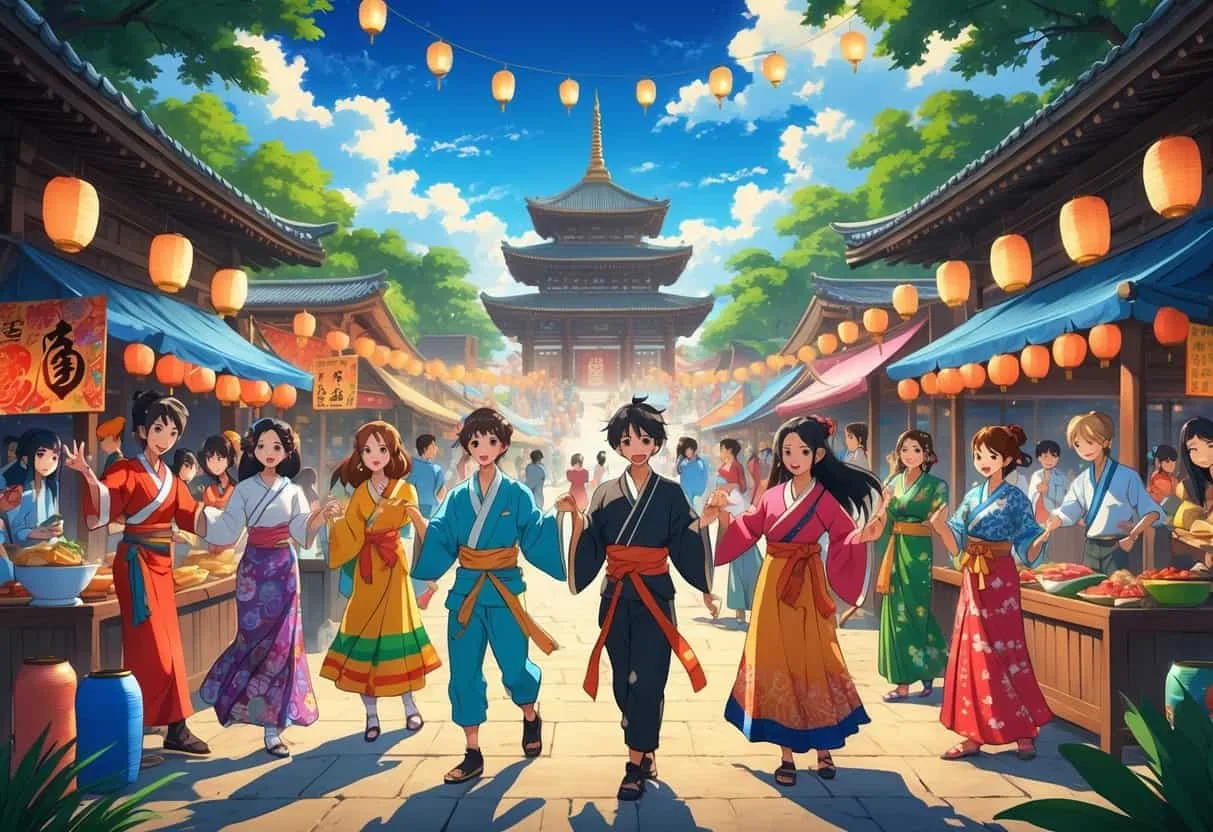
Japanese festivals punctuate the year with distinct energy, and anime studios capture that vibrancy with meticulous detail. The matsuri episode is almost a genre of its own, often using the backdrop of glowing lanterns and yukata-clad crowds to heighten romance, comedy, or supernatural encounters. In series like Natsume’s Book of Friends, the New Year’s Eve installment draws you into the quiet beauty of hatsumode, the first shrine visit of the year. As Natsume walks through snow-dusted paths and listens to temple bells ring 108 times for purification, the episode reveals layers of folk belief and seasonal transition.
Similar attention appears in Barakamon, where the vibrant Obon festival becomes a turning point for the protagonist’s personal growth. Obon, an occasion to honor ancestral spirits, fills the small island village with dance, food stalls, and a shared sense of belonging. The animators illuminate the bon odori dance circle with a warmth that makes you feel the island’s pulse. Likewise, Toilet-Bound Hanako-kun uses Tanabata, the star festival, as a narrative device that intertwines wishes written on paper strips with supernatural mysteries, reminding you how folklore breathes within modern storylines.
Even slice-of-life series like Non Non Biyori and Hanasaku Iroha dedicate entire episodes to local shrine festivals, where the entire community rallies together. The sound of taiko drums, the chatter around yakisoba stalls, and the glow of handheld fireworks create an immersive sensory experience. These episodes do not simply place a festival in the background; they make you a participant. When the climax unfolds beneath a burst of hanabi, you understand why communal celebration is so central to Japanese identity. For a closer look at how anime portrays such events, Crunchyroll offers a curated collection that highlights festival episodes across genres.
Family Rituals and Coming-of-Age Milestones
Family life in anime often reflects Japan’s deep-rooted emphasis on bonding during seasonal holidays and personal milestones. Episodes that revolve around Shōgatsu (New Year’s) or Shichi-Go-San (a rite for children aged three, five, and seven) provide glimpses into domestic rituals that might otherwise feel private. In Horimiya, the New Year’s Eve segment focuses on the simple act of gathering with loved ones, eating toshikoshi soba, and reflecting on the passing year. The quiet conversations between Hori and Miyamura speak to the universal comfort found in tradition, while the cultural specificity of shrine visits and monetary gifts anchors the scene unmistakably in Japan.
March Comes in Like a Lion takes a nuanced approach, weaving the autumn harvest festival and Hinamatsuri (Girls’ Day) into Rei’s journey toward emotional healing. His interactions with the Kawamoto sisters over traditional sweets and displays of ornamental dolls show how household rituals can become lifelines for those struggling with isolation. The series treats these moments with a gentle reverence, allowing you to absorb the cultural context without heavy exposition.
Coming-of-age themes frequently align with school entrance ceremonies, graduation days, and the ritual of seijin shiki (Coming of Age Day). Clannad and A Silent Voice feature graduation sequences that emphasize not only the academic transition but also the cultural weight of stepping into adult responsibility. Cherry blossoms, the emblem of fleeting beauty, fall across these scenes, symbolizing both an end and a beginning. By linking personal growth to cultural ceremonies, anime reminds you that individual identity is often shaped within a community’s shared timeline.
Traditional Arts, Games, and Performing Arts Reborn
Japan’s heritage of refined pastimes finds vivid representation in anime that centers on arts like karuta, rakugo, and shamisen music. Perhaps the most prominent example is Chihayafuru, which turned the competitive card game of kyogi karuta into a worldwide sensation. The game, based on the Hyakunin Isshu anthology of classical poetry, demands lightning reflexes and deep literary memory. As Chihaya and her friends train, you encounter the poems’ historical roots, hearing verses composed by Heian-era nobility. The series showcases tournaments with formal attire and recitation styles that respect centuries-old tradition, making you appreciate how a seemingly niche pastime can ignite fierce passion.
To explore the rules and history behind the game, the Britannica entry on karuta serves as a helpful primer.
Equally captivating is Showa Genroku Rakugo Shinju, which immerses you in the storytelling art of rakugo. Through the life of a rakugo performer, you witness the rigorous training, the theatrical conventions, and the tension between preserving tradition and embracing innovation. The anime’s meticulous depiction of stage mannerisms and classic stories illustrates how oral traditions rely on a living lineage of artists. When Yotaro performs a retelling of an old comic tale, you sense the weight of cultural transmission happening in real time.
Those Snow White Notes introduces the shamisen, a three-stringed instrument central to folk music and Tsugaru-jamisen. The protagonist’s journey to find his own musical voice parallels the broader story of an instrument that has evolved from accompaniment for narrative ballads to a solo powerhouse. Meanwhile, Barakamon devotes substantial attention to calligraphy, showing how the discipline of brush and ink can channel a person’s inner state. Each stroke becomes a meditation, and the protagonist’s struggle with creative block mirrors the traditional value placed on achieving mushin, or mind without disturbance. These series ensure that endangered or specialized arts remain visible to younger audiences both in Japan and abroad.
Martial Arts and the Spirit of the Warrior
Martial arts anime do far more than stage explosive battles; they embed philosophy, respect, and lineage into every fight sequence. Dragon Ball Z remains a global cornerstone, with Goku’s transformation into a Super Saiyan signaling not just a power boost but a decisive moment of personal and ancestral awakening. The kamehameha technique, with its ritualized stance and naming, echoes the disciplined forms of traditional kata. When you rewatch the legendary clash with Frieza on Planet Namek, the fight doubles as a narrative about surpassing limits through intense training—a value deeply ingrained in Japanese martial culture. For a detailed breakdown of these transformative moments, the Dragon Ball Wiki’s Super Saiyan page provides a thorough overview.
Naruto ties its combat system directly to ninja lore and shinobi discipline. The Chunin Exam arc is a treasure trove of strategic thinking, honor-bound rivalries, and the hidden meanings behind hand signs known as in. The show’s jutsu techniques draw on folk beliefs about elemental manipulation and the power of incantation, giving each confrontation an air of ritual. Naruto’s own growth from outcast to hero mirrors the coming-of-age trials that samurai apprentices once endured, reimagined for a world of chakra and tailed beasts.
Beyond these heavyweights, Rurouni Kenshin offers a historical lens, set during the Meiji era when the samurai class was abolished. Kenshin’s reversed-blade sword and his vow never to kill reflect the tension between the old warrior ethos and a modernizing society. Episodes that explore swordsmithing, dojo etiquette, and the code of bushido give you a panoramic view of a cultural transition. Samurai Champloo, while more anarchic, still references Edo-period customs like tea ceremony duels and the etiquette of wandering swordsmen, wrapping them in hip-hop aesthetics. Even sports-adjacent series such as Bamboo Blade introduce you to kendo, where armor-clad practitioners shout men, do, kote, embodying the same respect and repetitive discipline you find in older martial arts.
Global Influence and the Rise of Anime Tourism
Anime’s international distribution through platforms like Crunchyroll, Netflix, and the Toonami block on Cartoon Network has propelled traditional Japanese culture into the global mainstream. When a series depicts a festival or a shrine ritual, viewers from Brazil to France experience it as part of the narrative, often leading them to research the custom further. This cultural spillover has shaped everything from Western video games’ incorporation of Japanese festival themes to the growing popularity of hanami (cherry blossom viewing) in cities around the world.
The tourism industry has seized on this phenomenon, with “anime pilgrimages” becoming a recognized travel niche. Locations featured in Your Name (Kimi no Na wa) and Demon Slayer have seen a surge in visitors who want to walk the same temple paths or stand where their favorite characters shared a scene. The Suginami Animation Museum in Tokyo and the Ghibli Museum in Mitaka are just two hubs where fans can explore the intersection of animation and cultural heritage. Municipalities like Hida in Gifu Prefecture have collaborated with anime creators to promote traditional districts, weaving fictional stories into real-world economic revitalization. To plan a trip that traces the footsteps of anime culture, the Japan National Tourism Organization’s anime pilgrimage guide is an excellent starting point.
Streaming services have also begun curating thematic collections, grouping episodes under tags like “Japanese Festivals” or “Cultural Heritage,” which further educates global audiences. This deliberate packaging turns passive viewing into active cultural discovery. As you watch a matsuri unfold in a small village, the screen does double duty as a travelogue, inspiring real journeys that benefit local communities. The cycle reinforces the idea that anime is not a sealed world but a bridge to tangible traditions.
Technology Meets Tradition: Robots and Festivals
Japan’s identity as a leader in robotics and consumer technology often appears in anime alongside deeply traditional settings, generating a productive tension. The Gundam franchise, particularly Mobile Suit Gundam Wing, intersperses futuristic mechanical battles with ceremonies that honor fallen pilots. The design of the mobile suits themselves draws on samurai helmet aesthetics, and the series occasionally pauses for memorial services that mirror Shinto mourning customs. This blend signals that even in outer space colonies, Japanese rituals provide emotional anchors.
Robotics;Notes takes a more direct approach by setting its story within a school robotics club competing in exhibitions that feel like high-tech festivals. The tournament sequences are framed with the same communal excitement as a summer matsuri, complete with audience cheers and vendor stalls. The protagonist’s building of a giant robot echoes the real-world tradition of tetsujin (iron man) festivals in regional Japan, where local engineering spirit merges with celebratory pageantry.
Studio Ghibli’s The Wind Rises, though a film, similarly showcases how traditional aesthetics intersect with technological ambition. The protagonist’s airplane designs are inspired by the curves of a fish bone and the sweep of traditional woodworking lines, underscoring a design philosophy that sees no contradiction between heritage and innovation. In series like Ghost in the Shell, Shinto amulets hang in cyborg apartments, and seasonal festivals continue in hyper-digitized cities. These details insist that tradition is not erased by technology but coexists, reframed for new generations. The message is clear: celebrating one’s cultural roots is not a retreat into the past but a foundation from which to build the future.
As you continue exploring anime, look for the quiet moments between the action—the bow before stepping onto a tournament floor, the carefully wrapped furoshiki gift, the ringing of a shrine bell. These scenes carry the weight of generations, and they are some of the most unforgettable gifts that Japanese animation offers to the world.