Table of Contents
Anime has long served as a powerful medium for exploring the deepest corners of the human psyche, and few topics are as profoundly moving as the depiction of post-traumatic stress disorder. Across genres from dark fantasy to psychological thriller, creators craft stories where characters carry invisible scars that shape every thought, decision, and relationship. These portrayals go beyond simple plot devices; they offer a window into how survival changes a person.
Characters like Kaneki from Tokyo Ghoul or Guts from Berserk bring the anguish of PTSD into sharp focus, demonstrating that trauma does not simply vanish after the danger passes. Rather, it lingers in flashbacks, hypervigilance, and fractured identities. By witnessing their struggles, you gain a nuanced understanding of the lasting impact of traumatic events—and sometimes a glimpse of hope.
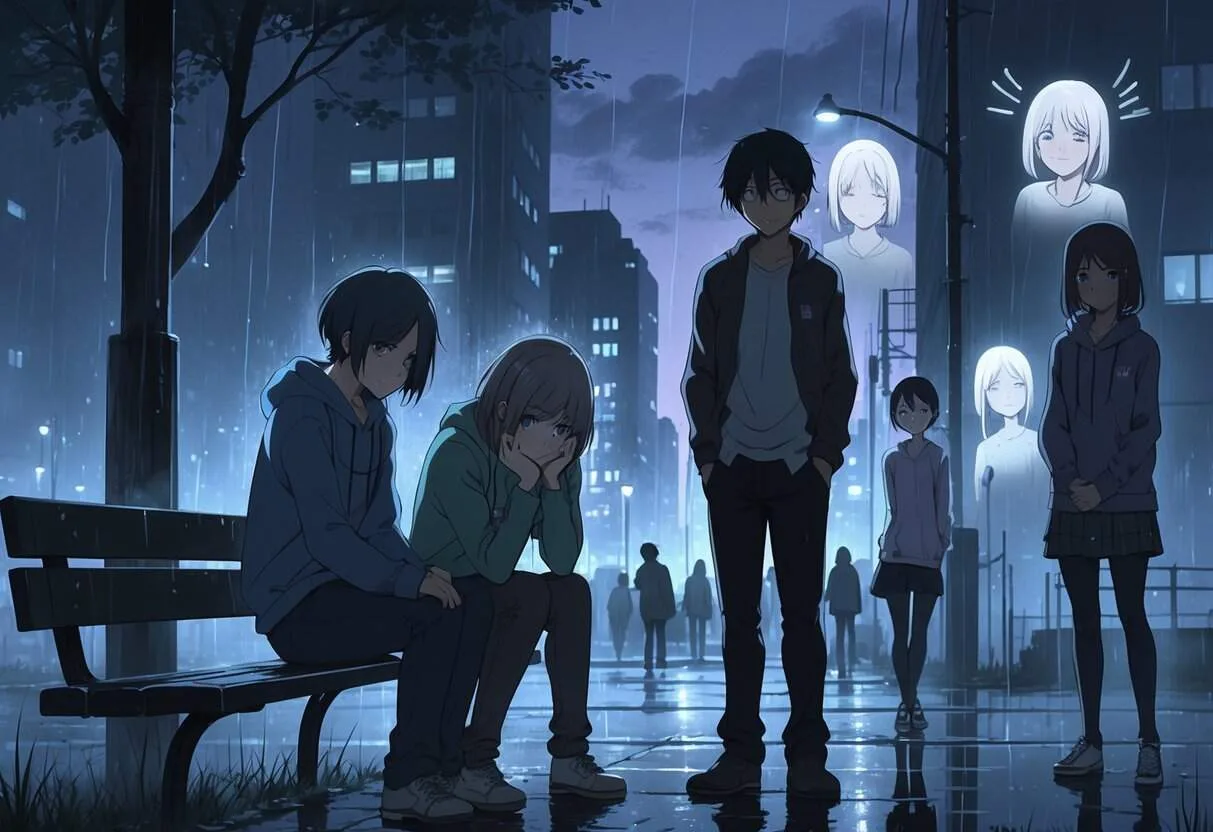
Understanding PTSD in Anime
Post-traumatic stress disorder is not a monolithic experience. In anime, it manifests through a spectrum of symptoms that reflect both clinical understanding and artistic interpretation. Writers often consult psychological research or draw from real-world accounts to ensure their characters’ reactions feel authentic. This commitment to realistic portrayal helps you see PTSD as more than a label—it becomes a lived, breathing part of a character’s journey.
Definition and Core Symptoms
Post-Traumatic Stress Disorder develops after a person experiences or witnesses a terrifying event. According to the American Psychiatric Association, symptoms fall into four clusters: intrusive memories, avoidance, negative changes in thinking and mood, and changes in physical and emotional reactions. In anime, you see these clusters vividly. Intrusive memories appear as sudden flashbacks or nightmares that transport a character back to the moment of horror. Avoidance might mean refusing to enter certain locations or steering clear of people who remind them of the trauma.
Negative changes surface as persistent guilt, emotional numbness, or a bleak outlook on the future. Arousal symptoms take the form of being easily startled, constant edginess, or angry outbursts.
These symptoms are not always spelled out in dialogue. Instead, anime creators rely on visual storytelling and subtle character behavior to convey the internal chaos. A trembling hand, a sudden scream in the night, a character freezing when a sound triggers a memory—all of these moments make PTSD tangible for the audience.
How PTSD Manifests Across Anime Characters
The way PTSD surfaces depends heavily on a character’s age, background, and the nature of the trauma. A child who grew up on a battlefield will exhibit very different signs than a teenager who survived a single catastrophic event. You might notice characters dissociating, withdrawing into their own minds as a defense mechanism. Others become hyper-aggressive, lashing out because the world feels perpetually unsafe. Some bury their trauma under obsessive routines or a false persona, only for the cracks to show under pressure.
Anime often uses these manifestations to deepen character arcs. For example, a once-idealistic hero may become cynical and unpredictably violent after a devastating loss. The trauma doesn't just add flavor; it becomes the engine of their development, forcing them—and you—to confront the question of whether healing is possible. This nuanced approach helps destigmatize mental health struggles and encourages viewers to recognize that survival is an ongoing process, not a single victory.
Iconic Anime Characters Living with PTSD
Several beloved and complex characters stand out for the way their trauma is woven into their identity. Each case illustrates a different facet of PTSD, from dissociative episodes to a shattered sense of self. Examining them individually reveals how anime uses personal history to shape motivation, relationships, and even the overall narrative.
Ken Kaneki: The Fractured Self in Tokyo Ghoul
Ken Kaneki’s transformation from a gentle bookworm into a half-ghoul is a textbook journey through trauma. The sudden, grotesque torture he endures warps his perception of reality. He develops a white-haired, more ruthless alter ego that emerges during times of extreme stress—an almost literal dissociation. His PTSD manifests in uncontrollable flashbacks, a fractured inner monologue, and an identity crisis that leaves him questioning who he truly is. Kaneki’s struggle to accept both the human and ghoul parts of himself mirrors the difficulty many trauma survivors face in integrating their past with their present.
Psychological studies on dissociation help explain Kaneki’s “Rize” persona and his lapses into violence as a coping mechanism. His story is a poignant reminder that trauma can fracture a person’s identity so profoundly that healing requires learning to live with all the fragments.
Guts: The Unforgiving Cycle of Pain in Berserk
Guts’ entire life reads like a catalog of trauma. Born from a hanged corpse, raised by a mercenary band, and later forced to watch the Eclipse ritual devour his comrades, he carries layers of physical and emotional scars. His PTSD appears as blinding rage, chronic hypervigilance, and a near-constant state of fight-or-flight arousal. He sleeps with his massive sword in hand, and any touch risks triggering a violent flashback. Guts embodies the struggler archetype—someone who keeps moving forward not because he has hope, but because stopping means being consumed by the darkness.
What sets Guts’ portrayal apart is the raw physicality of his trauma. The Berserker Armor literalizes his dissociative survival mode, allowing him to fight beyond human limits while threatening to shred his body and mind. Through Guts, Berserk explores how unaddressed trauma can become a self-reinforcing cycle, where new horrors only pile onto older wounds, until a person exists solely to endure.
Shinji Ikari: Abandonment and Existential Terror in Evangelion
Shinji Ikari is a case study in attachment trauma and the profound emptiness that follows childhood neglect. Abandoned by his father, he grows up starved for validation and terrified of intimacy. When forced to pilot a giant bio-machine, his psyche collapses under the pressure. Shinji’s PTSD shows up as crippling anxiety, depressive spirals, and moments of complete emotional shutdown. He repeatedly freezes in combat, reliving past rejections and fearing that any mistake will lead to total abandonment.
Neon Genesis Evangelion masterfully uses abstract imagery and internal monologue to depict Shinji’s inner world. Trains, rooms, and shadowy figures represent his entrapment. His trauma is not a single event but a pervasive condition formed by years of emotional starvation, making his journey one of the rawest examinations of mental illness in anime.
Reiner Braun: The Soldier with a Split Persona in Attack on Titan
Reiner Braun stands as one of the most psychologically complex characters in Attack on Titan. His PTSD stems from bearing an impossible dual identity—a Warrior of Marley and a soldier of Paradis. The dissonance becomes so unbearable that his mind fractures into two distinct personalities, each shielding him from the full weight of his actions. Reiner suffers from dissociative amnesia, nightmares, and a crushing survivor’s guilt that leads him to suicidal ideation. He openly acknowledges that the only reason he keeps living is to fulfill a duty, not out of any desire for a future.
The series uses Reiner to illustrate how trauma can be passed down through generations and how war dehumanizes everyone, including the aggressors. His portrayal challenges viewers to empathize with a character who has committed atrocities, emphasizing the psychological cost of fanaticism and the hollow aftermath of violence.
Gaara: From Cursed Child to Empathetic Leader in Naruto
Gaara’s early life is defined by isolation and the constant threat of assassination—even by his own father. The tailed beast sealed within him and the murder attempt by his uncle create a foundation of severe attachment trauma. As a child, he copes by believing his only purpose is to kill others, adopting a cold, almost psychotic detachment. His PTSD appears as paranoia, insomnia (because the demon inside will take over if he sleeps), and explosive rage. The sand’s automatic defense is a symbol of his emotional fortress: it protects him but also cuts him off from human connection.
Gaara’s eventual transformation after his clash with Naruto shows that trauma does not have to be a life sentence. Through genuine acceptance and the formation of healthy bonds, he rebuilds his identity and even becomes the village’s Kazekage. His arc demonstrates that while PTSD leaves permanent marks, recovery is possible when a person finds a community that sees their pain.
Goblin Slayer: Obsession as a Shield from Pain
The titular character of Goblin Slayer channels his childhood trauma into a singular, all-consuming purpose: exterminating goblins. Having witnessed his village’s brutal destruction and the violation of his sister, he exists in a state of chronic emotional numbness. He rarely shows emotion, speaks in monotone, and views everything through the lens of tactical efficiency. His hyperfixation serves as both a coping mechanism and a symptom—by never stopping to process the horror, he keeps the flashbacks at bay, but at the cost of a full emotional life.
What makes Goblin Slayer’s portrayal interesting is his gradual, almost imperceptible, opening to his party members. Small acts of trust, like removing his helmet in their presence or allowing them to take on auxiliary tasks, show that even deeply embedded trauma can begin to thaw within a supportive network. His quiet struggle reminds you that healing does not always look like a dramatic breakthrough; sometimes it is a slow, deliberate act of not giving up.
The Art of Portraying Trauma
Anime relies on a rich toolkit of visual and auditory techniques to convey the inner turmoil of PTSD. Because the medium can bend reality, it can externalize the subjective experience of trauma more viscerally than live-action often can. The careful orchestration of imagery, pacing, and sound places you directly inside the character’s fractured mind.
Visual Symbolism and Cinematography
Directors use color palettes, lighting, and surreal imagery to signal a character’s mental state. A scene may wash out in monochrome when a flashback begins, or the screen might fracture like broken glass when a character feels overwhelmed. Recurring motifs—chains, cages, shattering mirrors—represent a trapped psyche. In Evangelion, the recurring image of a train station where Shinji never arrives symbolizes his paralysis and fear of moving forward. These visual metaphors bypass logical thought and hit you on an emotional level, mimicking the way traumatic memories intrude unbidden.
Framing also plays a critical role. Characters in the grip of a panic attack are often shown in claustrophobic close-ups, with the background blurring or warping. The world tilts, reflecting their loss of stable footing. This kind of deliberate cinematography creates empathy without a single line of exposition.
Storytelling Techniques: Flashbacks and Internal Monologue
Flashbacks are the most direct method for illustrating PTSD, but anime often layers them with non-linear editing to mimic the disorder’s disorienting effect. A character might hear a sound, and the screen will cut abruptly to a terror-filled memory, then back to the present where they are visibly shaking. This jarring back-and-forth replicates intrusive recollections.
Internal monologue gives you access to the character’s self-talk, which is frequently fraught with guilt, self-loathing, and fragmented logic. In Tokyo Ghoul, Kaneki’s mental landscape becomes a literal dialogue between his various selves, showing how trauma compartmentalizes the psyche. By letting you hear these conflicting voices, anime strips away any comfortable distance and makes the suffering intimate.
Soundscapes and Voice Acting
Sound design is often the unsung hero in portraying PTSD. A sudden high-pitched tone during a flashback, the slowing of ambient noise when a character dissociates, or the use of a heartbeat thundering over dialogue can trigger a physiological response in the viewer. Voice actors bring an additional layer of authenticity—fragile whispers, uneven breathing, and sudden screams communicate the unpredictability of trauma. When Reiner Braun breaks down, his choked, halting speech conveys more about his shattered psyche than any visual could alone.
How PTSD Shapes Character Development and Identity
Trauma rarely exists in a vacuum within these stories. It becomes the crucible in which a character’s identity is forged, shattered, or remade. For many, the struggle with PTSD defines their motivations and moral boundaries. Gaara’s path from bloodthirsty weapon to protective leader hinges on his ability to reinterpret his past pain as a source of empathy rather than hate. Conversely, Guts remains trapped in his identity as a lone struggler because letting go of his anger feels like betraying the dead.
This dual impact—both destructive and potentially transformative—mirrors the reality that trauma can create deep wounds while also forcing a person to discover reserves of resilience. Anime often highlights that identity does not fully recover to a pre-trauma state; instead, characters must integrate the experience into a new, more complex self.
The Role of Support Systems in Recovery
No character heals in complete isolation. The presence—or absence—of a support network significantly influences a character’s trajectory. In Goblin Slayer, the party that forms around him becomes an anchor, offering quiet acceptance rather than demanding change. Shinji’s tragedy lies partly in his inability to accept the imperfect love offered by Misato and Asuka, leaving him adrift. Gaara’s introduction of a genuine bond with Naruto acts as the catalyst for his complete reinvention.
These relationships underscore that professional therapy is not the only path to managing PTSD; peer support, camaraderie, and unconditional acceptance can be lifelines. Anime rarely depicts formal counseling, which reflects both cultural attitudes and the narrative focus on internal journeys. However, the emphasis on human connection sends a powerful message: healing often requires someone to witness your pain without flinching.
Viewer Empathy and Mental Health Awareness
When anime treats PTSD with sincerity, it does more than entertain—it educates. You witness the internal logic of avoidance, the exhausting effort of appearing “normal,” and the courage it takes to get out of bed on days when the past feels more real than the present. For viewers who have experienced trauma, these representations can be validating. For others, they build a bridge of understanding that counters stigma and fosters compassion.
Shows like Attack on Titan and March Comes In Like a Lion (which, while focused on depression, shares similar emotional honesty) prove that anime can be a meaningful contributor to global conversations about mental health. By grounding fantastical settings in authentic human reactions, these series remind you that trauma is a universal human experience, and that seeing it portrayed with dignity is a step toward collective healing.
A Spectrum of Survival
From Kaneki’s shattered psyche to Goblin Slayer’s quiet determination, anime’s exploration of PTSD is as varied as the people who live with it. The medium’s ability to externalize internal chaos through bold visuals and sound makes these stories unforgettable and profoundly human. You leave them not with a simple moral, but with a deeper recognition that survival is messy, nonlinear, and wholly worthy of respect.