Table of Contents
The Genesis of Fan-Driven Distribution in the 1990s
The 1990s represented a pivotal era when anime burst through Japan's borders not through corporate strategy, but through the dedication of fans armed with VCRs and a passion for storytelling. Before streaming platforms and official DVD releases, access to Japanese animation outside Asia was extremely limited. A handful of shows like Speed Racer or Robotech had aired on television in heavily edited forms, yet the vast majority of series remained locked behind language and distribution barriers. Fansubbing emerged as a grassroots solution to this scarcity. Individuals and small groups acquired raw Japanese VHS tapes, painstakingly translated the dialogue, and overlaid subtitles using analog video equipment.
This process transformed a niche interest into a global phenomenon, creating an underground library of content that would define a generation of viewers.
VHS tapes became the physical currency of this movement. Their recordable, reusable nature made them ideal for duplication and mailing. A single fansubbed copy could be passed from hand to hand, copied dozens of times, and eventually reach viewers in places where anime was completely unknown. This decentralized, peer-to-peer distribution network predated the internet's widespread adoption and relied on trust within fan communities. Local clubs, pen pal circles, and early online forums like Usenet's rec.arts.anime coordinated exchanges.
The system was slow by today's standards—a tape could take weeks to arrive—but it built a shared sense of anticipation and camaraderie among fans who felt like pioneers discovering hidden treasures.
The technical limitations of VHS actually fueled the movement's growth. A standard VHS tape could hold only 2-3 episodes on SP mode, or up to 6 on EP mode with degraded quality. Fans debated whether to prioritize visual fidelity or quantity. Groups often chose EP mode to fit entire story arcs, accepting grain and color bleeding as the price of access. This scarcity increased the value of each tape, with fans sometimes trading multiple blanks for a single desired episode.
The physicality of the medium—the feel of the tape, the sound of the VCR loading it—created a ritual that digital distribution could never replicate.
The Anatomy of a VHS Fansub Operation
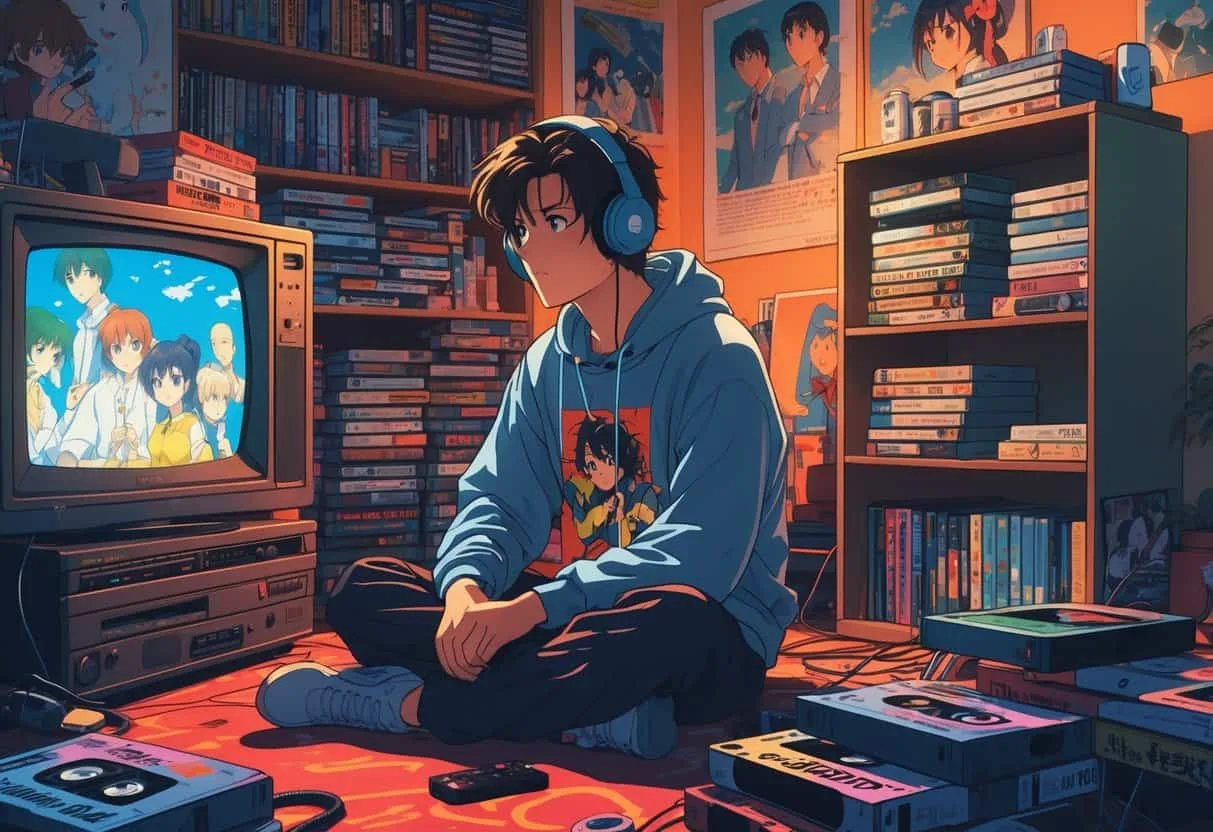
Creating a fansubbed tape was a labor-intensive process that demanded technical skill, linguistic knowledge, and relentless patience. Unlike modern digital subtitling, which can be done with software in hours, 1990s fansubbing involved multiple analog stages that could take days or weeks for a single episode. The journey began with sourcing the original content, often from laser discs, broadcast recordings, or imported VHS tapes purchased at premium prices. This raw material was the foundation upon which the entire fan translation was built.
Sourcing Raw Material and Overcoming Technical Hurdles
Obtaining anime in its original Japanese form required creative strategies. Fans in Japan would record series off television and send the tapes overseas, while others purchased expensive import copies from specialty stores in cities like Los Angeles or New York. The quality of these sources varied widely—some were crisp first-generation recordings, while others were grainy multi-generation copies. The next challenge involved video equipment. Fansubbers used high-end VCRs, genlock devices, and character generators to overlay subtitles directly onto the video signal.
Timing the text to match spoken dialogue was done by ear, with volunteers watching scenes repeatedly to ensure accuracy. Mistakes meant restarting the entire recording process, as corrections could not be easily edited on a completed tape. This hands-on, mechanical workflow attracted individuals who loved both anime and the challenge of video engineering, forming a unique subculture within the fandom.
Translation, Timing, and Quality Control
The heart of any fansub was the translation itself. Volunteers with varying levels of Japanese proficiency tackled scripts, often relying on dictionaries, word-of-mouth, and context clues. The goal was not merely literal translation but creating subtitles that conveyed the tone, humor, and cultural nuances of the show. Once translated, text had to be carefully timed and formatted to appear on-screen legibly. Because most home equipment could only generate white block letters with limited font options, readability was a constant concern.
Groups developed style guides for consistency, and some even added small notes explaining unfamiliar Japanese terms or cultural references. This attention to detail elevated fansubs from crude bootlegs to respected artifacts within the community. Reputably produced tapes from groups like Anime-Project or Central Anime were highly sought after, with fans willing to pay for materials and shipping just to obtain them.
The Role of Tape Trading Circles
Beyond individual groups, larger trading circles emerged to coordinate the movement of tapes across continents. Organizations like the Anime Fan Access Project and regional clubs maintained lists of available series, member addresses, and duplication rules. A typical trade worked on a "send one blank, return one filled" basis, but some circles required a small fee to cover shipping and tape costs. These circles also enforced quality standards: if a member sent a poor copy, they might be blacklisted. The trust-based system demanded accountability, and many fans developed long-term relationships with trading partners they never met in person.
This network taught organizers how to manage logistics at scale, skills that later proved valuable when moving to digital distribution.
Key Fansub Groups and Their Cultural Impact
Several fansub groups rose to prominence during the 1990s, each leaving an indelible mark on how anime was consumed internationally. These teams were often organized loosely, with members specializing in translation, timing, typesetting, or distribution. They operated under pseudonyms and communicated via mailing lists or bulletin board systems. While their work existed in a legal gray area, these groups were driven by a genuine mission to expand access to anime and cultivate appreciation for Japanese pop culture.
Pioneering Teams and Breakthrough Titles
Groups like Studio Nippon and KAA (Kawaii Anime Association) were among the first to produce fansubs of series that would become legendary. Neon Genesis Evangelion, for instance, reached Western viewers primarily through fansubs in the mid-90s, years before its official English release. The complex psychological themes and religious symbolism sparked intense discussion in fan circles, fueling demand for more sophisticated storytelling. Similarly, Cowboy Bebop and Revolutionary Girl Utena built passionate followings through tape-traded episodes. These titles challenged the perception of anime as mere children's cartoons and attracted adult audiences who valued mature narratives.
You can learn more about the history of such series on the Anime News Network Encyclopedia, which documents many early fansub efforts.
Building Trust and Reputation
Quality was the currency of the fansub world. Groups that consistently delivered accurate, well-timed subtitles with good video quality earned loyal followings. This reputation was critical because much of the distribution relied on trust—you might send a blank tape and return postage to a stranger, hoping they would honor the agreement and send back a copy of a desired series. Fansubbers often included contact information and requests for feedback in their tapes, fostering a sense of direct connection between creators and viewers. Over time, these interactions helped refine best practices and established informal standards that later influenced professional subtitling.
The academic work of Sean Leonard, discussed in his paper on the fan-based economy of anime, provides an in-depth look at these community dynamics.
Specialized Groups for Niche Genres
Some fansub groups focused on specific genres that mainstream American distributors would ignore. Shoujo titles like Fushigi Yugi and Cardcaptor Sakura found dedicated subbers who appreciated emotional romance and magical girl themes. Mecha series such as Gundam Wing and Martian Successor Nadesico attracted engineers who relished technical details. Even experimental works like Serial Experiments Lain reached Western audiences through tiny one-person operations. This genre specialization ensured that diverse storytelling styles entered the global market, building fanbases that would later convince licensors to take risks on unconventional shows.
Cultivating a Global Anime Community
The fansub network did more than distribute episodes; it built a worldwide fandom that transcended geographic and linguistic boundaries. Through VHS tapes, enthusiasts in different countries could share not only shows but also artwork, music, and a growing body of fan-created content. This exchange helped anime evolve from a solitary hobby into a vibrant communal experience.
Conventions as Cultural Crucibles
Anime conventions emerged as physical manifestations of the fandom fueled by fansubs. Early gatherings like Anime Expo (started in 1992) and Otakon (started in 1994) provided spaces where fans could meet face-to-face, cosplay as their favorite characters, and—crucially—buy, sell, or trade fansubbed tapes. Dealer rooms often featured rows of tables stacked with VHS copies of series that had never been officially released in English. For many attendees, conventions were the only reliable way to discover new titles and connect with fellow fans. The energy of these events propelled otaku culture into the mainstream, laying the groundwork for the huge conventions of today that attract hundreds of thousands of attendees annually.
For more on the history of these events, check the Fancons archive which tracks convention growth over time.
Zines, Mailing Lists, and Early Digital Networks
Before the web became ubiquitous, fans used printed zines and email lists to organize tape trades and share reviews. Publications like Animeca and Protoculture Addicts offered criticism, translations, and industry news, often alongside ads for fansub distributors. These zines circulated by mail, creating a parallel distribution system for information. On the digital front, services like CompuServe and AOL hosted anime club forums where trading partners connected. These early online communities preserved a wealth of knowledge about fansub etiquette, technical guides, and even ASCII art signatures that announced a tape's creator.
The transition from these analog and early-digital networks to the modern internet began in the late 90s, but the core ethos of sharing and community remained intact.
School Clubs and Local Meeting Groups
High school and college clubs became grassroots hubs for tape trading. Students would pool money to buy blank tapes and pay for duplication services, then screen episodes in lecture halls or living rooms. These gatherings often included discussions about translation accuracy, Japanese culture, and favorite characters. Club members would take turns duplicating tapes for new members, creating a small-scale duplication pipeline. Many future anime industry professionals got their start running these clubs, learning how to manage groups and negotiate with rights holders.
The social bonds formed during these VHS-era meetings often lasted decades, evolving into online communities and professional networks.
The Legal Gray Zone and Industry Response
The VHS fansub boom operated in an ambiguous legal space that sparked ongoing debates about copyright, ethics, and cultural exchange. Japanese animation studios and rights holders were largely unaware of the scale of this underground activity until it had already become a global force. When they did take notice, the response was a mixture of caution, conflict, and eventual collaboration.
Copyright Complications and Ethical Debates
Fansubbing, by its nature, involved copying and distributing copyrighted material without authorization. Under both Japanese and international law, this constituted infringement. However, in the pre-internet era, policing thousands of individual traders was nearly impossible. Furthermore, many within the industry recognized that fansubs were driving demand for merchandise and official releases. The ethical debate split the fan community: some argued that fansubs harmed creators, while others saw them as a vital cultural bridge that introduced anime to markets where no alternatives existed.
This moral complexity is explored in detail by scholars at New York University and the University of Tokyo, who have studied the phenomenon as an early example of participatory culture and global media flow.
From Tolerance to Transition
As the 90s progressed, the anime industry began to professionalize its international distribution. The success of series like Pokémon and Sailor Moon on television proved that there was a lucrative market for officially translated content. Companies like ADV Films and Funimation started licensing titles and releasing professional dubs and subtitled VHS and DVD sets. They often targeted series that had gained popularity through fansubs, effectively capitalizing on the pre-existing demand. This period saw a shift from a largely tolerant attitude toward fansubbing to a more enforcement-minded approach, especially once digital fan distribution on the internet began to replace physical tapes.
Cease-and-desist letters became more common as studios moved to protect intellectual property in a changing media landscape.
The Unspoken Business Relationship
In many cases, fansubbers and official licensors maintained an unspoken understanding. Some licensors even relied on fansubs to test market demand before committing to a release. A series that generated hundreds of tape copies was a safer investment than an unknown title. This relationship is documented in publications like Publishers Weekly which covered how niche manga and anime markets evolved during this period. The unofficial quality control provided by fansub groups also helped distributors identify which series had lasting appeal, saving them from expensive market research.
The Enduring Legacy of the VHS Fansub Era
The methods and media of the 90s fansub scene may seem archaic now, but their impact on global anime culture is unmistakable. The circuits established through VHS trading directly shaped contemporary distribution models, fan practices, and even official approaches to subtitling. The community-first mentality that defined those early days continues to resonate in online fan spaces and modern streaming ecosystems.
How Fansubs Shaped Modern Streaming
Today's simulcast systems, where new anime episodes are subtitled and streamed worldwide within hours of a Japanese broadcast, owe a debt to the fansub roots. The push for speed, quality, and global accessibility was first championed by fans working with tape decks. When services like Crunchyroll launched, they initially relied on user-uploaded content—a direct lineage to the fan distribution ethos—before transitioning to legal licensing. The feedback loop between fan demand and official supply, proven effective by VHS traders, now informs how companies decide which series to license and subtitle. This legacy is also visible in the detailed, stylized subtitling used in official releases today, which often resembles the meticulous work of early fansub groups.
Nostalgia and the Collector's Market
For many older fans, VHS fansubs represent a cherished era of discovery and community. The physical tapes, with their handcrafted labels and sometimes quirky translation notes, are now collector's items that evoke a sense of nostalgia. Online communities such as Reddit's animepiracy and the Internet Archive host scans and recordings of old fansubs, preserving them as historical artifacts. Even as high-definition digital versions dominate, the tactile experience of popping a worn VHS into a VCR remains a powerful symbol of how anime fandom built itself from the ground up. The VHS boom of the 1990s was not just about watching shows—it was about creating a culture that valued passion, creativity, and connection over profit and convenience.
That spirit endures every time a new fan discovers anime and searches for a community to share it with.
The Final Generational Bridge
As 90s fans become industry professionals, record label executives, and streaming curators, the influence of VHS-era fandom continues to shape business decisions. Many current licensing acquisitions are driven by people who first encountered those titles on fourth-generation fansub tapes. The emotional attachment to certain series, born from the effort it took to obtain them, translates into a willingness to invest in official releases. This generational bridge ensures that the risks fans took in the 90s pay dividends decades later, not just in nostalgia but in a thriving global industry that still honors the underground roots that launched it.