Table of Contents
The Quiet Power of Beginnings
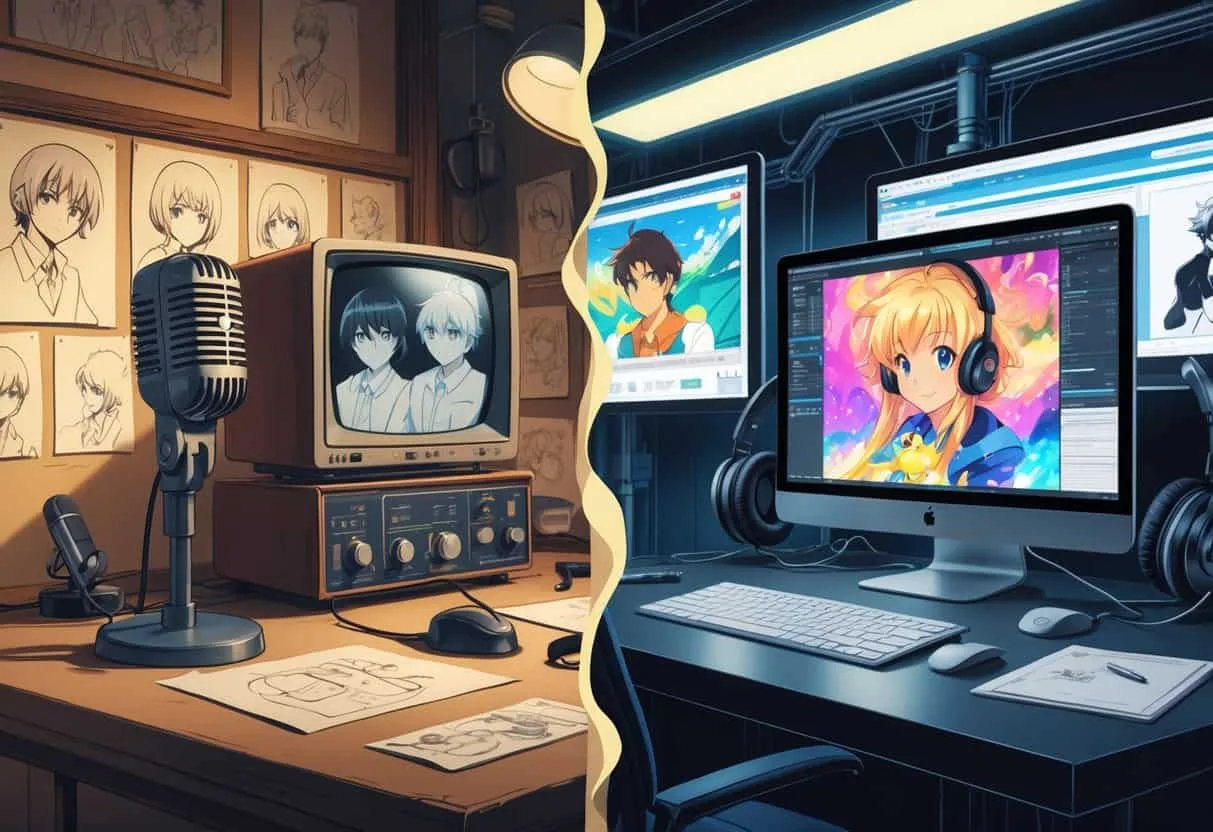
Anime openings rarely launch into action without a guiding voice. A few carefully chosen sentences can define a world, announce a conflict, or whisper a theme that will echo through an entire series. Opening narrations are not accidental; they are a deliberate narrative device, and the way creators use them reveals how storytelling conventions, technology, and audience expectations have shifted across decades. The contrast between classic and modern approaches is stark—one built on clarity and instruction, the other on immersion and suggestion. By examining these styles side by side, it becomes possible to understand what was gained, what was left behind, and why the first words still matter.
What Opening Narrations Actually Do
Before comparing eras, it helps to isolate the core jobs an opening narration performs. These functions remain consistent even when the execution changes.
Setting the Emotional Register
The very tone of the narrator’s voice signals the emotional palette of the show. A deep, measured delivery primes the viewer for epic tragedy; a wry or playful cadence signals comedy or satire. Classic anime often opted for a stately, almost theatrical register, while modern series might shift from a whisper to a scream within seconds. The choice is never neutral—it is the first note in a psychological soundtrack that tells you exactly how to feel before you even meet the characters.
Frontloading Essential Information
A well-constructed narration acts as a compression algorithm. In a few seconds, it can establish a geopolitical conflict, the rules of a magic system, or the central moral dilemma. This is especially valuable in speculative fiction where audiences need a foothold. In classic series, this explanation was often overt and literal. In today’s anime, the same information may be threaded through metaphor or juxtaposed against contradictory images, requiring the viewer to hold two truths at once.
Forging a Contract with the Viewer
Narrations promise a certain kind of experience. When Cowboy Bebop intones “Once upon a time, in the future…” or Fullmetal Alchemist states the law of equivalent exchange, they are making a pact: abide by these rules, and you will understand the story’s emotional logic. Classic narrations made these contracts explicit. Modern narrations often embed the contract in a sensory moment, trusting the audience to infer the terms.
The Classic Era: Instruction, Identity, and Cultural Echoes
Classic anime treated opening narrations as a public service. Many series operated on the assumption that viewers might be unfamiliar not just with the story, but with the medium itself. Narration was a handrail.
Formal Delivery and Predictable Structure
Shows from the 1960s through the mid-1990s often opened with a sonorous male voice delivering a précis of the premise. The language was declarative. The narrator did not emote excessively; authority mattered more than intimacy. This style has roots in Japanese storytelling traditions—rakugo and ningyō jōruri used narrators to guide audiences through complex tales where visual representation was limited. Anime carried that function into a new medium, making the narrator a bridging consciousness between screen and spectator.
Filling the Gaps of Limited Animation
Early anime production relied on hand-painted cels and often featured limited motion. A narrator could describe off-screen action, compress a lengthy manga arc into a few lines, or explain the stakes of a robot battle while the mecha stood still. The classic Gundam series frequently used such narration to situate each episode inside a sprawling space opera timeline. The voice did the heavy lifting that the animation budget could not.
Standout Examples: Astro Boy and Akira
Osamu Tezuka’s Astro Boy set the template. Each episode began with a crisp explanation of the futuristic setting and the central tension between humans and robots. The narrator’s voice gave emotional permission to care about an android child while simultaneously nudging the viewer toward philosophical questions about consciousness and prejudice. It was an elegant tool that made a children’s show intellectually transportable.
Akira arrives later but still belongs to the classic lineage in spirit. Its opening narration—“On July 16, 1988, a new type of bomb was used…”—is a curt historical jolt. The words are minimal, almost bureaucratic, and yet they detonate a world. Neo-Tokyo emerges from that terse announcement fully formed. Unlike Tezuka’s clarity, Akira uses narration to underline how little the characters understand their own history, creating an irony that lingers.
(For a deeper exploration of Akira’s layered storytelling, see Anime News Network’s feature.)
The Modern Shift: Visual Storytelling and the Compressed Hook
Modern anime inherits a visually literate audience. Animation budgets allow for sweeping camera movements, intricate background art, and character acting that can communicate volumes in a single frame. Narration did not vanish, but it mutated.
Shortened, Accelerated, and Embedded
Where classic narrations might run for thirty or forty seconds, modern equivalents often deliver their payload in ten or fifteen. The information density is higher, and the language is less explanatory and more atmospheric. Instead of telling you the world’s rules, a modern narration might show a breaking wall, a raining ash, and a cold voice stating, “That day, humanity received a grim reminder.” The line becomes iconic precisely because it is incomplete—the viewer must do work to fill the gap.
Voice Acting as Emotional Architecture
Digital recording and advanced voice direction have transformed narration from announcement into performance. A narrator can now crack with suppressed rage, quiver with grief, or deadpan into a void. Actors craft a psychological signature in just a few syllables. In Death Parade, the quiet, almost bored tone of the arbiter’s opening lines immediately establishes the unsettling emotional flatness of the afterlife bar. In Re:Zero, Natsuki Subaru’s internal narration bleeds into the formal opening, dissolving the fourth wall and making subjective experience the central filter.
Attack on Titan: A Benchmark in Brevity
Hajime Isayama’s Attack on Titan opens with a sonic punch: a heartbeat, a swell of strings, and a voice that sounds like a weathered survivor. The words—“On that day, mankind received a grim reminder…”—do not explain the Titans, the walls, or the politics. They deliver a trauma. Viewers are thrust into a sensory experience that marries sound design, Hanjiro Sakamoto’s score, and the narrator’s restraint. This fusion is representative of modern technique: narration is no longer a prelude but a component of a total audiovisual event.
The result is an opening that feels less like a summary and more like a scar. The series’ ongoing cultural weight is partly due to that initial jolt. (See Crunchyroll’s discussion of how sound and narration shape the show’s atmosphere.)
My Hero Academia and the Legacy of the First Statement
Kohei Horikoshi’s series begins with Izuku Midoriya’s adult voice recalling a childhood reality: “All men are not created equal.” The statement is blunt, quasi-documentarian, yet utterly personal. It sets up the series’ central tension between biological determinism and earned heroism. Unlike classic narrations that described a world from outside, this narration is saturated with subjectivity. The audience is inside the protagonist’s memory, not a textbook.
The technique has become widespread, reflecting an industry-wide pivot toward limited, character-bound perspectives.
Comparative Anatomy: Classic vs. Modern in Practice
To see these differences in sharp relief, it is useful to hold two approaches up against the same criteria.
Explicit Clarity Versus Productive Ambiguity
Classic narration valued legibility above all. The viewer was never meant to wonder what was happening. That philosophy served an era when anime was often encountered episodically, sometimes out of order, on broadcast television or physical media. Modern narration often courts productive confusion. The viewer is meant to wonder, to theorize, to re-watch.
This aligns with streaming culture, where entire seasons are binged and audiences delight in unspooling complexity. Ambiguity has become a feature, not a flaw.
Audience Positioning and Cognitive Effort
Watching a classic anime with heavy narration feels like being taken by the hand. The narrator is an authority, and the viewer is a guest. Modern anime reverses this: the viewer is often positioned as an investigator or a witness, and the narrator may be unreliable, damaged, or withholding. This flips the cognitive load. You are expected to assemble meaning, not just receive it.
It is a more active, sometimes exhausting, mode of engagement, but one that rewards close attention and fuels online fan communities.
The Role of Music and Sound Design
Classic series frequently used narration over minimal or stately background music. The voice was the track. Today, composers and sound directors treat the opening narration as part of a mix. In Demon Slayer, Tanjiro’s narration cuts through snowfall and wind, the ambience given as much weight as the words. In Jujutsu Kaisen, the narrator’s prophetic declarations are often layered over sharp, percussive sound effects, turning the voice into a rhythmic element.
This integration means that removing a modern narration often renders the opening incomprehensible—it is not a removable narration track but a load-bearing artistic choice.
Technology’s Hand in the Shift
Changing tools reshaped what was possible. Hand-drawn cels forced economy; digital pipelines encouraged experimentation. Narration that once had to be locked early—recorded in a single take, synced to a fixed visual edit—can now be revised, pitch-shifted, and woven into complex soundscapes late in production. This flexibility lets directors treat narration less like text and more like texture.
Streaming platforms also exert a quiet influence. The first 90 seconds of a pilot are a cliff edge; if a viewer is not captured, they click away. Modern opening narrations are thus engineered for maximum impact with zero wasted syllables. The old staid recitations would likely fail a modern algorithmic attention economy. Directness has been replaced by pressure.
Audience Perception: Nostalgia vs. Novelty
Longtime fans often cite classic narrations with affection. The voice of Dragon Ball Z’s Japanese narrator, Jouji Yanami, is legendary in Japan for its booming, grandfatherly warmth. Those intros were comfort food. Modern narration is often too jagged to serve the same function, but it can create deep fandom around a single line—think of the endless memes and tribute videos constructed from Eren Jaeger’s dire proclamations.
Newcomers to classic anime sometimes find old narration clunky or over-explained, a sign of a slower, less sophisticated medium. This is anachronistic judgment, but it reflects the extent to which media literacy has changed. Viewers now are trained to read visual language fluently; they do not need a narrator to announce that a world is dystopian, because a single red-tinted wide shot of ruined buildings does that job. Classic creators were not naive; they were working with a different contract between story and spectator.
Hybrid Forms and the Road Ahead
Some contemporary series deliberately invoke classic narration styles for effect. Ranking of Kings uses a gentle, storybook narrator that would not feel out of place in a 1970s fantasy anime. The intent is to evoke innocence and then subvert it as the plot darkens. Vinland Saga has a narrator with the weight of an epic historian, grounding the Viking saga in a sense of fate that echoes classical tragedy. These hybrid approaches demonstrate that the techniques are not obsolete; they are available as conscious stylistic choices.
The future of opening narration likely lives in customization. Interactive streaming technology could eventually allow viewers to select how much contextual narration they receive. Already, recap-heavy intros are sometimes skippable. The logic may extend further: a first-time viewer might opt for a lore-rich narrator, while a rewatcher chooses a silent, purely visual start. Anime has always been a medium of remixing, and narration conventions will continue to be remixed alongside everything else.
The Words That Open Worlds
Comparing classic and modern opening narrations is not an exercise in declaring one superior. It is an archaeological dig into the assumptions each era made about its audience. Classic anime believed in the clarifying power of a steady voice. It wanted you to understand, to settle in, to trust. Modern anime believes in the evocative power of fractured, sensuous moments.
It wants you to feel, to lean forward, to question. Both approaches have produced indelible art, and both reveal that the first words of a story are never just filler. They are a door. Whether it swings wide open or creaks just a crack, what you find on the other side depends entirely on how you were invited in.