Table of Contents
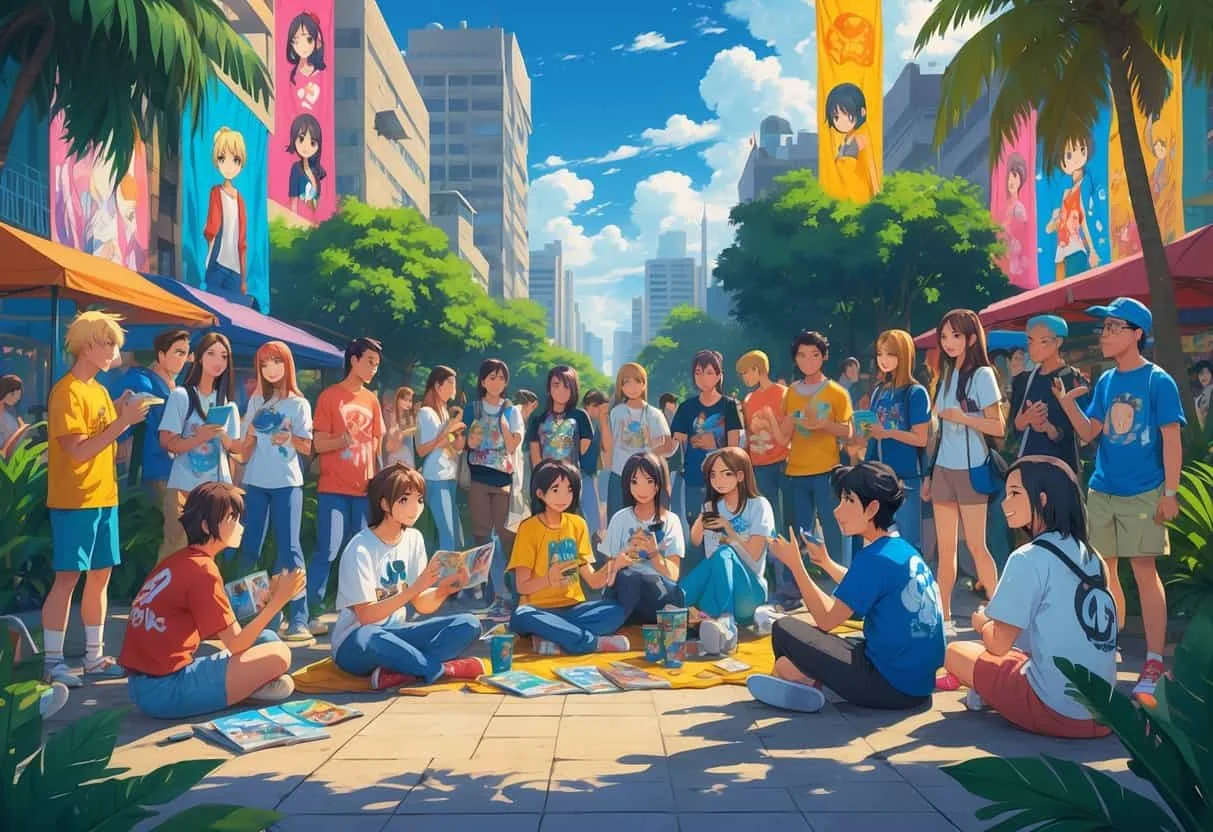
Anime's presence in South America feels almost native now, woven into everyday conversations, streaming habits, and even local fashion. That deep integration did not happen by accident or through corporate marketing alone. Fan communities across the continent have been the true engine behind the spread of Japanese animation, translating series, organizing events, and creating cultural spaces where enthusiasm could thrive. These grassroots efforts not only made anime more accessible but also reshaped how media is consumed, discussed, and produced in the region. What began with scattered tape trading has evolved into a powerful, interconnected network that influences everything from language learning to tourism.
Across Argentina, Brazil, Chile, Peru, and Colombia, the story of anime is a story of fans taking ownership, building bridges between cultures, and transforming a foreign medium into something unmistakably local.
The Historical Roots of Anime Fandom in South America
Anime first arrived in South America during a period when television stations were hungry for affordable, syndicated content. Unlike in many English-speaking markets, local broadcasters in countries like Brazil, Argentina, Chile, and Peru were relatively open to foreign animation, and they programmed it generously. The result was a generation of viewers who absorbed Japanese series alongside American cartoons, often without a clear distinction between the two. This early exposure created a baseline familiarity that later waves of dedicated fandom would build upon, and it established anime as a staple of childhood memory for millions across the continent.
Pioneering TV Broadcasts and the First Wave
In the 1960s and 1970s, shows such as Astro Boy, Kimba the White Lion, and Speed Racer aired across the continent. Brazilian TV introduced National Kid — a live-action tokusatsu series that shared the Japanese spirit — and later Mazinger Z, which became a cultural phenomenon with its giant robot battles and dramatic storylines. Argentina and Chile saw similar flows: Candy Candy and Heidi, Girl of the Alps captured young audiences in the 1970s, while Captain Tsubasa (known as Supercampeones in Spanish-speaking markets and Captain Futebol in parts of Brazil) fueled a passion for soccer-themed storytelling throughout the 1980s. The key was that these series were dubbed into Spanish or Portuguese, lowering the barrier for children and families. There was no "otaku" label yet — these were just cartoons — but the distinctive art styles, emotional depth, and serialized storytelling planted seeds that would later sprout into dedicated fandom.
In Peru, Saint Seiya became a national obsession upon its broadcast in the early 1990s, while in Colombia, Dragon Ball and Dragon Ball Z achieved near-universal recognition among children and teenagers.
VHS Trading and the Birth of Fan Subbing
By the late 1980s and early 1990s, access to new anime slowed as television lineups shifted toward domestically produced content and American imports. Eager fans began trading VHS tapes of series recorded from Japanese satellite TV or imported from the United States. This informal network was the precursor to today's digital fan distribution. Enthusiasts who understood Japanese started producing fansubs — homemade subtitles synced to raw video — often working in collectives that spanned multiple countries. These early efforts, shared via postal mail and later on early internet forums like IRC channels and Usenet, kept the flame alive for series like Dragon Ball, Saint Seiya, and Sailor Moon, which became unmissable staples in South American pop culture.
In Brazil, groups like Anime-X and Fãs do Anime organized distribution networks that reached thousands of viewers, while in Argentina, fan-run clubs held weekly screenings in community centers and university auditoriums. The VHS era was defined by scarcity and dedication: every tape was a treasure, every shared episode a communal event.
Community-Driven Accessibility: Fansubs, Scanlations, and Digital Spaces
Long before legal streaming services offered simulcasts, South American fans had already built robust pipelines for accessing anime. Fansubbing groups emerged across the region, specializing in Spanish and Portuguese translations that made new episodes available within days of Japanese broadcast. These teams operated on passion alone, pairing linguistic skill with technical know-how to produce polished subtitles. Their work was not just about watching a show — it was an act of cultural mediation, ensuring that dialogue, idioms, and even cultural references made sense to local audiences. Groups like Kaizoku Fansubs in the Spanish-speaking world and Smash Fansubs in Brazil became trusted names, known for their accuracy and speed.
They also served as gateways for fans to learn about Japanese culture, from honorifics to seasonal traditions, enriching the viewing experience beyond the surface-level plot.
Manga scanlation groups mirrored this effort, translating and editing entire volumes of Japanese comics before official publishers like Panini and Ivrea had any presence in the market. Combined, these practices created a parallel distribution system that educated millions of readers and viewers, effectively laying the customer base that later supported official releases. Today, many of those fan translators have gone on to work professionally for publishers and streaming companies, demonstrating the depth of expertise cultivated in these communities. The transition from fan-driven to professional work is a testament to the skills developed in these grassroots environments — skills that are now essential to the industry's growth in Latin America.
Conventions and Live Events: The Heartbeat of Fandom
If online communities are the circulatory system of anime fandom, conventions are its beating heart. South America now hosts some of the largest anime and pop culture events outside Japan and North America. These gatherings transform the ephemeral connections of social media into tangible experiences, drawing tens of thousands of attendees and breathing economic life into host cities. Conventions also serve as launchpads for new series, with distributors and streaming platforms using them to build buzz among the most engaged fans.
Major South American Conventions
Brazil's Anime Friends regularly draws over 150,000 visitors per event, featuring Japanese musical acts, exclusive premieres, and sprawling dealer halls that stretch across multiple pavilions. Argentina's Anime Expo Argentina and Chile's Anime Expo Santiago follow close behind, while Peru's Kotonoha and Colombia's SOFA have become major fixtures in their respective regions. In Venezuela, the Anime & Comics Convention in Caracas continues to draw large crowds despite economic challenges, proving the enduring appeal of these gatherings. Convention organizers partner with publishers like Panini and streaming platforms like Crunchyroll to offer panels and exclusive merchandise, yet the real energy comes from fans themselves — through cosplay masquerades, artist alleys, and informal meetups that turn a convention center into a temporary city of shared obsession. The economic ripple effects are substantial: hotels, restaurants, and local transportation all benefit from the influx of attendees, and cities increasingly view anime conventions as valuable tourism assets.
Smaller, university-based festivals and regional gatherings also play an essential role, especially in areas far from capital cities. In northern Brazil, events like Anime Nordeste and Anime Belém serve as crucial access points for fans who cannot travel to Rio or São Paulo. Similarly, in the Andean regions of Peru and Bolivia, local festivals provide affordable entry points for newcomers and reinforce a sense of belonging that keeps the community intergenerational. These events often feature workshops on drawing, cosplay construction, and Japanese language, further deepening the cultural engagement.
Social Media and the Globalization of Local Fandoms
The arrival of Facebook, Twitter, Instagram, and later TikTok supercharged fan activity across South America. Dedicated groups on Facebook, some with hundreds of thousands of members, became hubs for news, memes, and episode discussions. WhatsApp chains and Telegram channels allowed for real-time chat during simulcasts, while TikTok introduced anime clips to demographics that might never have searched for them on purpose. The algorithm-driven nature of these platforms meant that a single viral video — a cosplayer transforming into a Demon Slayer character, a fan edit set to a popular Latin song — could reach millions of viewers across the continent within hours.
This digital ecosystem also amplified local creativity. Brazilian, Argentine, and Mexican influencers built massive followings by analyzing series, recreating iconic scenes, or simply reacting to episodes. Their content, often produced in Portuguese or Spanish, made anime feel native rather than imported. It also caught the attention of Japanese studios, who began to see South America not as an afterthought but as a priority market for licensing and community engagement. The rise of VTuber culture in Latin America, with creators like Luna and Gori attracting large audiences, further illustrates how anime aesthetics have been absorbed into local digital expression.
Streaming platforms have responded by adding more regional content and localized features, recognizing that the South American audience is not just large but also highly engaged and influential in global fandom conversations.
Creative Expression: Cosplay, Fan Art, and Cultural Dialogue
Fan communities are not passive consumers; they are active producers. Cosplay is the most visible example. At conventions, fans transform into characters from Naruto, Demon Slayer, or Neon Genesis Evangelion with astonishing detail. For many, cosplay is more than a hobby — it is a craft that demands sewing, makeup, wig styling, and prop-building skills. The result is a vibrant, participatory art scene where cultural values like dedication and individual expression intersect.
In countries like Brazil and Argentina, cosplay competitions are serious affairs with cash prizes and sometimes even scholarships, reflecting the high level of skill and commitment within the community. Cosplayers also use their art to explore identity, often blending traditional South American elements — such as Andean textiles or Brazilian carnival aesthetics — into their costumes, creating a fusion that is uniquely local.
Fan art and fan fiction extend this creativity into the digital realm. Platforms like Pixiv, DeviantArt, and Archive of Our Own host thousands of works by South American authors and artists, often reimagining characters within their own cultural contexts. A My Hero Academia fan comic might depict characters in a Brazilian favela, while a Sailor Moon fan fiction could explore themes of Argentinian political history. These works can spark conversations about identity, race, and gender, subtly challenging both the source material and local social norms. By inserting themselves into the narrative, fans turn anime into a mirror that reflects their own lives, making the medium a tool for self-expression and social commentary.
Economic Impact: Merchandise, Tourism, and Soft Power
Anime fandom is also an economic force. The demand for merchandise — figures, apparel, stationery, and snacks — has given rise to specialized online stores and physical shops across the continent. Large retailers and small entrepreneurs alike cater to a market that values authenticity and variety. Even the second-hand market for rare figures and art books thrives, facilitated by Facebook groups and local marketplaces like Mercado Livre in Brazil and MercadoLibre in Spanish-speaking countries. Conventions generate significant revenue for host cities, with attendees spending on travel, accommodation, food, and merchandise.
In São Paulo, for example, the Anime Friends event generates an estimated economic impact of over $20 million annually, supporting local businesses and creating temporary jobs.
Anime-driven tourism has similarly gained momentum. Inspired by settings in shows like Your Name or the real-world districts featured in Tokyo Revengers, South American fans increasingly plan trips to Japan with itineraries built around anime locations. The Japanese government has recognized this interest, supporting initiatives that link cultural exports to inbound tourism. Direct economic ties are also strengthening: Japanese studios now explore co-productions with Brazilian animation houses like TV PinGuim and Split Studio, and Latin American voice actors have become celebrities in their own right, with fans traveling across borders to meet them at conventions. All of this activity feeds back into local economies, creating jobs and reinforcing the cultural relevance of anime across the region.
Navigating Copyright, Piracy, and Official Streaming
The same community spirit that built fansub networks has often placed fans in tension with copyright law. For decades, unofficial distribution was the only way to watch many series. Even today, when platforms like Netflix, Crunchyroll, and Amazon Prime Video offer extensive catalogs, licensing gaps mean that some titles remain unavailable in certain countries, or appear months after Japanese airing. That delay can drive fans back to unofficial sources — not out of malice, but out of a desire to participate in the global conversation without spoilers. The situation is particularly acute for older series and niche genres, which may never receive official distribution in the region.
The industry has responded by improving access. Crunchyroll's aggressive expansion into Latin America, including dubbing and subtitling in Spanish and Portuguese, is a direct acknowledgment of the region's importance. Some companies even partner with former fansubbers to ensure high-quality translations. Netflix has invested in original anime productions and has licensed a broad catalog of series for the Latin American market, while Sony's Anime Digital Network and other platforms have also entered the fray. Still, the balance between protecting intellectual property and honoring the community's longstanding role in cultural mediation remains delicate.
The solution lies not in crackdowns but in building services that surpass what pirate sites can offer in speed, quality, and price. Services like Anime Onegai, a streaming platform specifically targeting the Latin American market, represent a step in the right direction, offering free, ad-supported access to a curated library of titles.
Anime as a Mirror: Identity, Representation, and Social Commentary
Anime often explores themes of alienation, self-discovery, and resistance against oppressive systems — narratives that resonate powerfully in South America. Through fan communities, these stories become springboards for discussing local realities. For instance, a series about marginalized youths in a dystopian city might spark conversations about inequality in São Paulo or Lima. A gender-bending character like those in Wandering Son or Ouran High School Host Club can open a safe space for LGBTQ+ fans to discuss identity in societies where such topics are often stigmatized. In countries with high levels of social inequality, anime's stories about perseverance and self-improvement — such as Naruto or One Piece — take on an even deeper significance, offering messages of hope and agency to viewers facing real-world challenges.
Online forums and convention panels become spaces for critical analysis, where fans decode symbolism and draw parallels to regional literature or history. In Argentina, fans have drawn connections betweenNeon Genesis Evangelion and the country's economic collapse of 2001, reading the series as a meditation on systemic failure and collective trauma. This intellectual engagement elevates anime from mere entertainment to a legitimate cultural text. It also demonstrates how fandom can amplify marginalized voices, as fan fiction and art often center characters or relationships that official media neglect. In this way, South American anime communities contribute to a broader cultural dialogue that circulates across borders, enriching the global understanding of both anime and the region itself.
Future Directions: Co-Productions, Regional Growth, and New Platforms
The relationship between South American fan communities and the anime industry is no longer one of unilateral consumption. We are entering an era of co-creation. Brazilian illustrators and animators increasingly work on Japanese productions, while local studios produce original animation influenced by anime aesthetics. Events like the Anime Summit bring Japanese creators to Latin America to hold workshops and scout talent, recognizing that the next big hit might come from a fan who grew up watching old VHS tapes. The success of projects like Grisaia: Phantom Trigger and Vampire in the Garden, which involved Latin American artists, signals a growing trend toward cross-border collaboration.
Streaming technology continues to lower access barriers, and artificial intelligence may eventually enable real-time translation of episodes, further shrinking the gap between Japanese release and global availability. However, the human element remains irreplaceable: the cultural nuance that fansubbers bring to their translations, the community building that happens in convention halls, and the creative spark of fan artists cannot be replicated by algorithms. The challenge for fan communities will be to maintain their unique culture of volunteerism, creativity, and critical conversation in an environment where commercial interests grow ever larger. If history is any guide, they will adapt and thrive, just as they did when moving from tape trading to internet downloads, and from IRC channels to TikTok. The next generation of South American otaku will build on the foundations laid by their predecessors, finding new ways to connect, create, and share their love of anime.
The story of anime in South America is, at its core, a story about people who refused to wait for permission. They built networks, honed skills, and shared what they loved until the rest of the world paid attention. The cultural and economic landscape we see today — the packed convention halls, the bilingual streamers, the anime-inspired fashion, and the cross-continental friendships — is their creation. And it is still being written, episode by episode, fan by fan, across the vibrant and ever-evolving communities of a continent that has made anime its own.