Table of Contents
The Foundational Purpose of the Dragon Balls
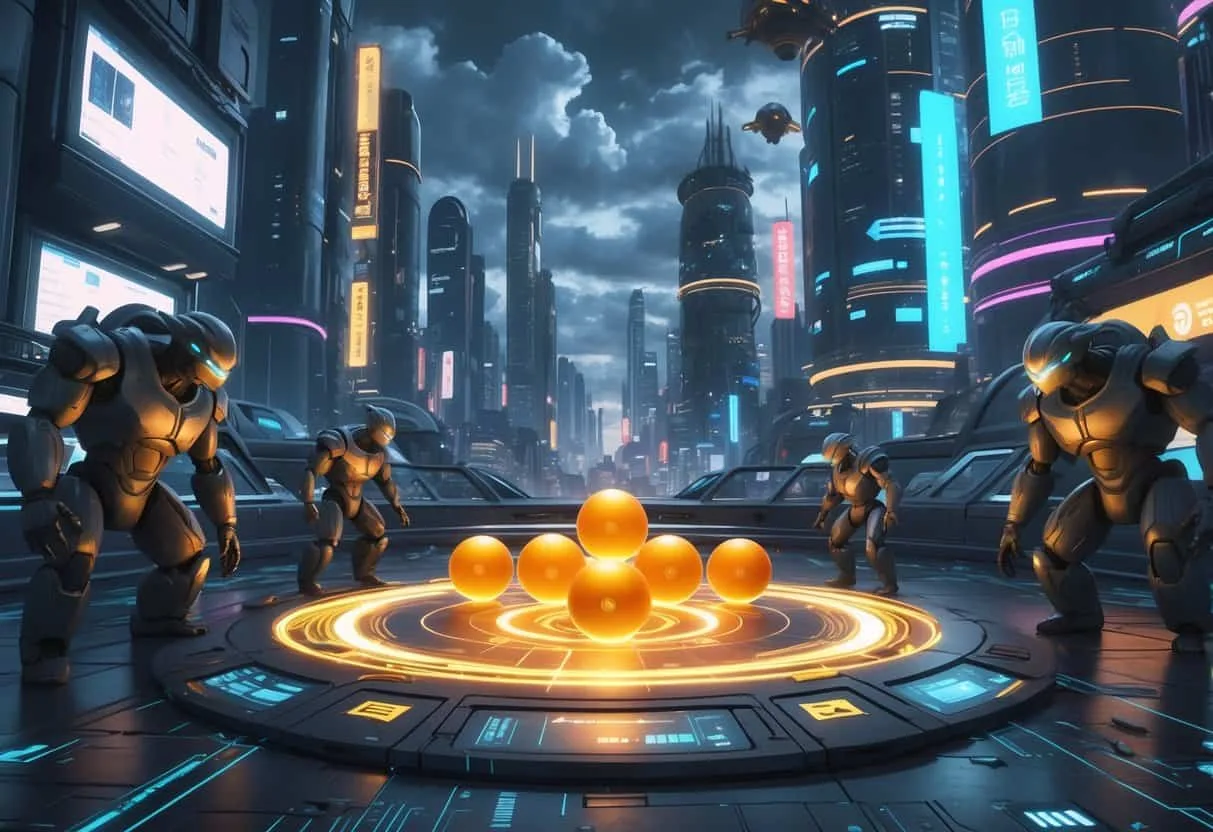
The Dragon Balls are far more than simple plot coupons. They anchor the show’s entire cosmology, giving every arc a reason to push beyond ordinary martial-arts spectacle. Strip them away and the series would lose its connective tissue—the promise of a reset, the hunt that forces characters to explore, and the unspoken rule that no tragedy is truly final.
Akira Toriyama introduced the orbs in the original Dragon Ball manga as a playful riff on the “seven sacred objects” trope, but over hundreds of chapters they evolved into a full-fledged magical system. Their rules matter: they scatter after each use, they turn to stone for a year, and the Eternal Dragon cannot grant the same wish twice. Those limits keep the Dragon Balls from becoming a simple cheat code and instead embed them into the rhythm of the story’s world.
What began as a whimsical journey for Bulma to wish for a perfect boyfriend became a framework that tied Namekian lore, divine hierarchy, and even multiversal dynamics into one coherent narrative. Every major era—from the Red Ribbon Army to the Tournament of Power—hinges on the Dragon Balls not just as targets, but as catalysts for change that ripple through entire civilizations.
Origins and the Namekian Connection
Earth’s Dragon Balls weren’t invented out of thin air. Toriyama grounded them in the broader mythos by revealing that they were created by the Namekian Kami, who himself came from a distant world where such artifacts are common. That choice transformed the Dragon Balls from a local curiosity into a universal constant. Suddenly, the story could introduce Namek’s own set—larger, more powerful, and guarded by the Grand Elder—opening a whole arc of interplanetary hunting and moral complexity.
Each planet’s Dragon Balls reflect its guardian’s personality and power. Earth’s eternal dragon Shenron is regal but bound by Kami’s limitations; Porunga of Namek is a towering, muscular figure who can grant three wishes and revive multiple people at once. The Dragon Ball wiki documents how these variations are not arbitrary—they directly mirror the cultural values and challenges of their respective peoples. Namekians, with their history of near-extinction, demanded a dragon capable of mass resurrection, while the gods of Universe 6 and 7 later introduced the Super Dragon Balls, planet-sized orbs that can grant any wish without restriction, underscoring the hierarchy of divine power.
The Namekian connection also gave the Dragon Balls a tragic edge. When Frieza’s forces slaughtered the Namekian villagers and later when Vegeta executed Guru’s people, the stakes became intimately tied to the survival of the race that could create these orbs. The Dragon Balls, then, are not impersonal magical items; they carry the weight of a dying culture, and every wish comes with a subtle reminder of those who paid the price to keep such power alive.
Shaping the World Through the Hunt
The search for the Dragon Balls is the series’ most reliable engine for world-building. Early Dragon Ball arcs used the quest to introduce remote villages, terrifying wildernesses, and rogues’ galleries like the Pilaf Gang. The Red Ribbon Army saga turned the hunt into a military campaign, with Goku systematically dismantling an oppressive regime just to recover a single orb. The landscape itself became a character, each Ball located in a distinct biome that demanded unique strategies and allies.
In Dragon Ball Z, the stakes expanded dramatically. Tracking the Dragon Balls meant traveling to Namek, navigating its treacherous landscape, and reading untranslatable energy signatures. The hunt wasn’t just a fetch quest—it was a race against Frieza’s scouter technology and Vegeta’s brutal opportunism. Every step exposed new facets of the series’ universe: space travel, alien politics, and the terrifying scale of cosmic tyranny.
The Dragon Balls also inspire local traditions and fears. Earth’s human society knows about the Shenron legend—the wish-granting dragon is part of their folklore, not just a background detail. When the orbs are gathered and the sky darkens, ordinary citizens react with awe and terror, reminding the audience that this magic exists in a world that otherwise resembles our own. That blend of the mundane and the supernatural is a hallmark of Toriyama’s style, and the Dragon Balls are the primary vehicle for it.
| Aspect | Role of Dragon Balls |
|---|---|
| Mythological Anchor | Created by Namekians, reflecting planetary guardians and divine hierarchy |
| Plot Engine | Drives exploration, introduces new locations, and forces cross-cultural encounters |
| Emotional Weight | Tied to the survival of races, personal loss, and the cost of resurrection |
Deus Ex Function or Storytelling Device?
No discussion of the Dragon Balls can ignore the elephant in the room: they are the ultimate safety net. Critics have long accused the series of cheapening death and consequences with its easy resurrections. The term “deus ex machina” gets thrown around, but the reality is more nuanced. Toriyama intentionally baked the Dragon Balls into the rules of the universe; they aren’t an abrupt outside intervention, but a known law of nature that characters plan around from the start.
What separates the Dragon Balls from a lazy narrative crutch is that the characters themselves treat them as a finite resource that comes with problems. Gathering them is dangerous. Using them attracts attention. And when wishes are wasted—like Oolong’s infamous panty wish or Pilaf’s juvenile demands—the opportunity vanishes, raising stakes through scarcity rather than permanent loss.
Resurrections and the Illusion of Finality
Death in Dragon Ball is rarely permanent. From Krillin’s first murder at the hands of Tambourine to the mass extinction during the Buu saga, the Dragon Balls consistently restore the status quo. This pattern can make climaxes feel less definitive—why invest in grief when a trip to Namek can fix everything? Yet the series often cleverly subverts that expectation. The rules stipulate that a person can only be revived once by Earth’s Shenron, and only groups of people who died under specific circumstances can be brought back.
The Android and Cell arcs turned the Dragon Balls’ reliability into a source of horror. When Cell killed Trunks, the future timeline revealed a world where the Dragon Balls had been destroyed, leaving death irreversible. That bleak contrast sharpened the stakes of the main timeline—every victory felt fragile because the safety net could be ripped away at any moment. An analysis on CBR points out that the loss of a Dragon Ball user often forces the cast to confront mortality without magic, and some of the series’ most powerful moments emerge from that exact tension.
Resurrections also serve character arcs. Goku’s decision to stay dead after the Cell Games wasn’t just a plot twist—it was a recognition that the Dragon Balls had skewed Earth’s balance, and his presence attracted threats. That choice gave Gohan room to grow and gave the world a temporary reprieve, all while the Dragon Balls waited, inert, as a symbol that true heroism sometimes means letting go of easy fixes.
Narrative Stakes and the Pacing Gamble
The Dragon Balls’ existence forces the series to pace itself differently from stories where death is absolute. Fights can escalate to apocalyptic levels because the audience knows a ritual exists to undo the damage. However, the writers must constantly re-establish jeopardy by threatening the Balls themselves. Villains like King Piccolo, Frieza, and Baby Vegeta all target the orbs precisely because they nullify the villains’ advantages. The race to protect or claim the Dragon Balls becomes a recurring script beat that, while sometimes repetitive, injects urgency into sagas that might otherwise feel like endless brawls.
This structure creates a rhythm: a period of peace, a gathering crisis, a desperate hunt, and then a wish that either solves everything or introduces a new complication. When the formula works—as in the Namek saga, where the Dragon Balls were simultaneously the MacGuffin, the bargaining chip, and the only hope against Frieza—the pacing is masterful. When it falters, episodes can drag with characters idly waiting for the dragon to recharge. The Super era addressed this by introducing the time-skipping limits, forcing characters to think more creatively about their resources.
Exposition Through Wishes
Beyond resurrections, the Dragon Balls serve as a narrative shortcut for world exposition. When Shenron or Porunga speaks, they often deliver lore directly, explaining cosmic truths that would be awkward to convey through dialogue alone. For instance, the dragon reveals the existence of the Super Saiyan God ritual, the nature of the Universe 6 tournament, and the ancient origins of the Namekian book of legends.
This technique risks feeling like an info dump, but Toriyama offsets it by making the dragon itself a character with personality and limits. Shenron’s impatience, Porunga’s formal politeness, and the shadow dragons’ resentment in GT all add texture. The wish mechanism becomes a two-way interaction: the characters must phrase their requests carefully, and the dragon’s interpretation can have unforeseen consequences. That subtle unpredictability means the Dragon Balls aren’t a vending machine—they’re a dialogue with a higher power, and the answers aren’t always tidy.
Influence on Character Development and World Dynamics
Forging Allies and Shifting Motivations
The Dragon Balls don’t just move the plot; they forge the relationships that define the franchise. Goku’s alliance with Bulma began with a simple radar and a shared goal. Vegeta’s entire arc—from ruthless invader to reluctant defender of Earth—hinges on his exposure to a world where wishes can correct his past crimes and give him a second family. Without the Dragon Balls offering the possibility of redemption, Vegeta’s pride might have kept him on a destructive path forever.
Later arcs amplify this. When the Z Fighters pool their resources to gather the Dragon Balls, they are essentially cooperating on a project that binds them by mutual dependence. Piccolo’s fusion with Kami, Krillin’s marriage to Android 18, and even Mr. Satan’s unlikely heroism during the Buu crisis all trace back to circumstances set in motion by wishes or the scramble to obtain them. The Dragon Balls turn individual ambition into collective endeavor, which is a surprisingly sturdy foundation for character growth.
Saiyans, Humans, and the Genetic Ladder
The Dragon Balls highlight a fascinating divide between the inherently powerful Saiyans and the ordinary human cast. Goku sees the orbs as a tool for adventure and a safety net for his friends; Vegeta initially views them as a shortcut to surpass his limits, but later learns that some wishes—like restoring his tail or becoming immortal—carry a cost to his pride. The Super Saiyan transformations themselves are not directly granted by wishes, but the Dragon Balls profoundly influence the journey to power. For instance, the wish to revive Frieza in Resurrection F led directly to Goku and Vegeta unlocking Super Saiyan Blue, a transformation achieved through divine training, not magic, but catalyzed by a wish’s consequences.
Human characters exist in a precarious position. Krillin, Yamcha, and Tien rely on the Dragon Balls not for power but for survival—the orbs are their lifeline when cosmic threats erase entire cities. Videl’s induction into the Z Fighters’ circle came through witnessing their casual use of wishes and the stark difference between mundane martial arts and the world of magic. Even Bulma, a genius engineer, uses the Dragon Balls for selfish ends (like her periodic five-minute youth wishes), yet her technology—built to track the orbs—fundamentally reshapes global communication and defense systems. The Dragon Balls create a weird economy where human ingenuity might match Saiyan strength in indirect ways, and that tension enriches the world.
Technology, Society, and the Butterfly Effect
Bulma’s Dragon Radar is arguably the most impactful piece of technology in the Dragon Ball world. It transformed the ancient ritual of hunting into a relatively quick GPS task, which accelerated the series’ pace and forced Toriyama to introduce new obstacles (like underwater or magically shielded locations) to keep the quest challenging. Over time, the radar became a symbol of how human curiosity and science can domesticate even the most mythical artifacts.
The societal impact is more subtle but fascinating. As the Dragon Balls become public knowledge—especially after the Cell Games were televised and Mr. Satan took credit for saving the world—ordinary people started to believe in magic. Cults, tourist traps, and even government agencies begin factoring the Dragon Balls into their worldview. Dragon Ball Super shows this integration casually: King Furry’s administration is aware of the orbs and treats the Z Fighters as an unofficial peacekeeping force. The Dragon Balls shift from forbidden treasure to a kind of cosmic public utility, and that normalization is a silent world-building masterstroke.
Even the gods and angels monitor the Dragon Balls as a point of universal balance. Whis and Beerus often comment on how the Super Dragon Balls represent a power that predates the multiverse itself, and Zeno’s authority exists above even that magic. This hierarchy means that the simple orange spheres Goku collected as a child are the low-tier nodes of a vast celestial network. The Dragon Balls thus connect street-level adventures to divine politics, making every wish potentially consequential on a scale the characters can’t fully comprehend.
Broader Cultural Impact and Media Influences
The Dragon Balls have transcended their anime origins to become a shorthand for narrative collectibles in global pop culture. Their influence extends beyond fandom into game design, TV tropes, and even Western storytelling philosophies. Part of this is the sheer elegance of the setup: seven items, one grand prize, and a time limit that resets the board. It’s a loop that game developers, tabletop dungeon masters, and screenwriters have been riffing on for decades.
Role-Playing and the Collectible Quest
In tabletop RPGs, the idea of collecting pieces of a shattered artifact to summon a powerful entity or grant a wish is a direct descendant of the Dragon Ball formula. Dungeon Masters structure entire campaigns around this premise, knowing it encourages exploration, negotiation, and moral dilemmas. Video games from Crash Bandicoot (collect gems for a hidden ending) to Genshin Impact (travel across regions to gather elemental oculi) owe a debt to the orbs’ design. Even Dragon Ball Z: Kakarot leans heavily into side-quests where players gather Dragon Balls to wish for rare items, demonstrating how seamlessly the mechanic integrates with RPG progression.
The Dragon Balls also pioneered the idea of a “world-changing reward” that resets after use, creating a cycle that keeps players engaged without permanently breaking the game balance. This cyclical nature—gather, wish, scatter, regather—mirrors the way live-service games use seasonal collectibles or limited-time objectives to maintain interest. The dopamine loop is practically identical, and its origins in Toriyama’s manga are undeniable.
Legacy in Gaming and Transmedia
Outside of licensed Dragon Ball games, the orbs have become a recurring Easter egg. Borderlands features Vault Keys that function similarly; Destiny has its Raid relic collection phases; and even Super Mario 64’s Power Stars follow a thematic parallel of numbered collectibles unlocking a greater reward. The cultural lexicon has absorbed the Dragon Balls to the point where “gathering the Dragon Balls” is a colloquial phrase among gamers for assembling a critical set of items.
Musicians, streamers, and pro athletes reference the Dragon Balls in tattoos, merchandise, and victory celebrations. Broly’s armor and the iconic orange star-patterned spheres appear in streetwear collaborations, and the image of Shenron coiling around a wish is a staple of convention art. This cross-media penetration transformed the Dragon Balls from a plot device into an icon of ambition and wish fulfillment, instantly recognizable even to those who have never watched a single episode.
Parallels with Narrative Engines in Other Media
The Dragon Balls share DNA with the “MacGuffin map” found everywhere from The Legend of Zelda’s Triforce shards to the Infinity Stones of Marvel comics. However, the Dragon Balls stand apart because their use isn’t just about acquiring power—it’s about problem-solving after the fact. The moral weight comes not from the hunt, but from the wish. What do you ask for? How does your choice reflect your character?
That interactive quality makes them a storytelling device closer to a game’s dialogue wheel than a static treasure.
Cyberpunk narratives frequently employ a similar device: a piece of tech or data that can rewrite reality, but only if the protagonist navigates a web of moral trade-offs. The hacking objectives in Deus Ex: Human Revolution or the reality-bending augmentations in Cyberpunk 2077 offer that same “wish with consequences” tension. The Dragon Balls taught a generation of creators that a perfect reward is never perfect—it comes with a price, a timer, or a hidden cost that the hero must accept. That lesson is why the orbs remain a gold standard for narrative wish-granting.
In the end, the Dragon Balls are both a deus ex machina and a profound world-building tool because they are fully integrated into the logic of their universe. They answer the question “What would a world with resurrection look like?” with optimism, humor, and just enough tragedy to keep the stakes real. That delicate balance is why the series endures, and why every new arc finds a fresh excuse to scatter the orbs once more.